
Chef Lupita
Acitrón de Cidra Conventual
Puebla's convent-style acitrón, made from cidra peel instead of endangered biznaga, built through repeated syrup soakings until the cubes turn firm, translucent, and ready for rosca or chiles en nogada.
A cooking platform built around craft, culture, and the stories behind what we eat.
Created by
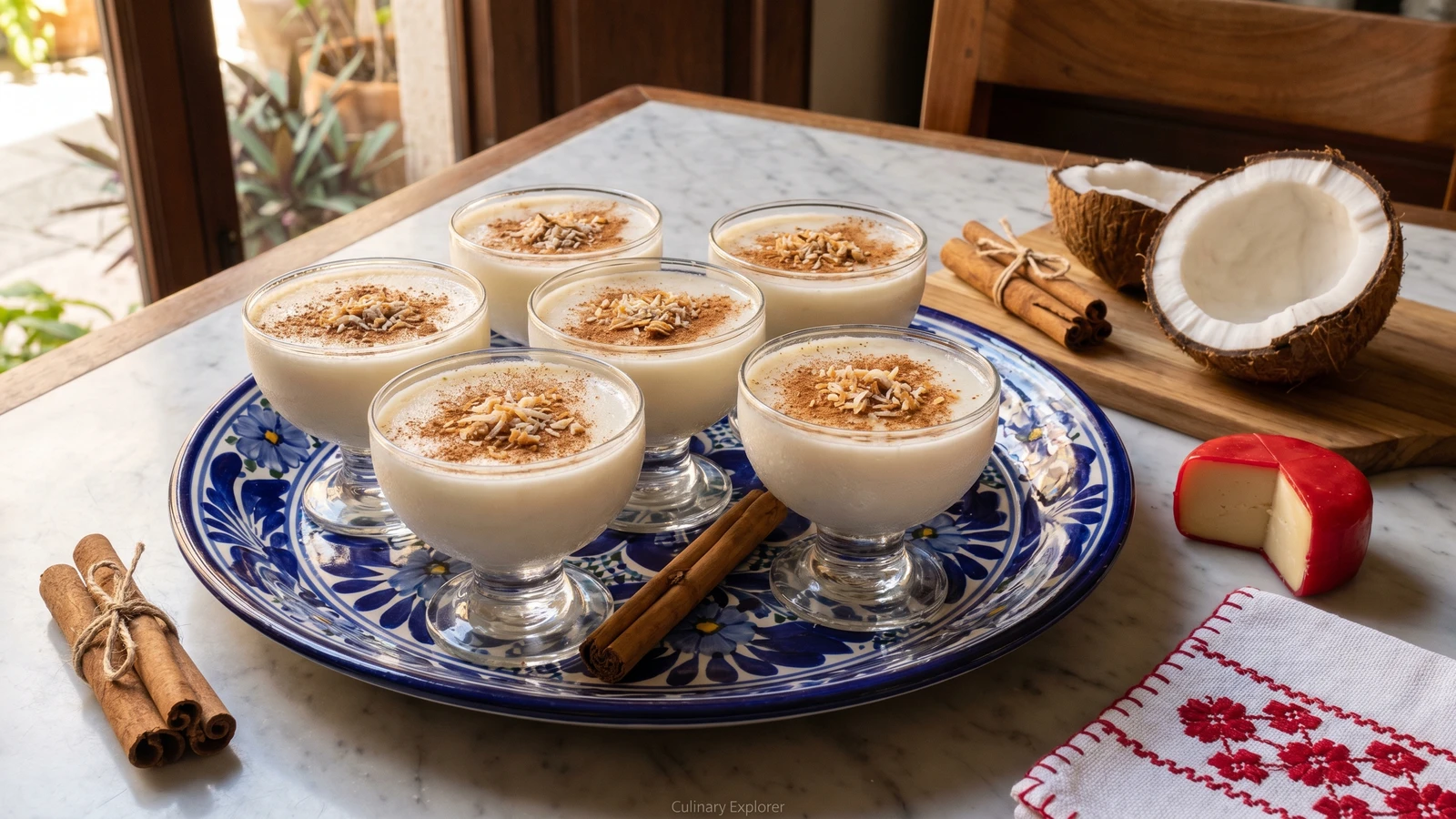
Yucatán's chilled coconut pudding, built on fresh grated coco, whole milk, maicena, and Mexican canela. Served fría from glass cups along the playas of Chelem and Progreso.
This is Yucatán. Specifically the coast: Chelem, Progreso, Telchac. The peninsula where coconut palms line the playa and the coco seco shows up at the Mérida markets by the truckload. The cremita is what the dulcerías and the marisquerias serve cold at the end of a long lunch, in little glass cups with footed bottoms, scattered with canela. It is not flan. It is not natilla. It is its own thing and it belongs to the Yucatecan coast.
The coco has to be fresh. Grated by hand from a mature coconut you cracked yourself. The canned coconut milk does work, and I use it here for richness, but if you skip the fresh grating you have made a different dessert. The texture of the fresh coco is the dish. You feel it on your tongue. You taste the oil that comes out of the meat as it simmers. Without it, this is just sweet milk pudding. With it, this is cremita yucateca.
The canela has to be Mexican canela. Ceylon, soft, fragrant, the kind that crumbles between your fingers. Not cassia, not the hard sticks they sell at the supermarket. If your canela does not break when you press it, find a better source. The Lucas de Gálvez market in Mérida sells it in bundles tied with twine.
My mother did not make this dish. She was from Jalisco and her dulces were ate, jericalla, capirotada. But I learned this cremita from a señora in Chuburná who served it to me in a glass cup on her patio, with a piece of queso de bola on the side, and told me her mother taught her with a wooden spoon and a warning: cold milk for the maicena, always. Recetas probadas y garantizadas.
Coconut arrived in Mexico in the 16th century by way of the Manila Galleon trade, which brought the Asian coconut to the Pacific coast of Colima and Guerrero before the variety spread to the Yucatán Peninsula via Caribbean routes. The dulces de coco tradition of Yucatán draws on three converging influences: the Maya familiarity with starch-thickened atoles, the Spanish convent tradition of milk-and-sugar puddings (natillas, manjar blanco), and the Lebanese-Yucatecan diaspora's contributions to the region's pastry culture beginning in the late 19th century. Cornstarch (maicena), industrially produced in Mexico from the early 20th century onward and marketed by the Maizena brand, replaced the labor-intensive arrowroot and rice flour thickeners of earlier coastal puddings and standardized the silky texture that Yucatecans now recognize as cremita.
Quantity
1
cracked open, water reserved, flesh grated fine on the small holes of a box grater (about 2 cups grated)
Quantity
4 cups
Quantity
1 can (13.5 ounces)
Quantity
3/4 cup
Quantity
1/2 cup
Quantity
2 sticks
Quantity
1/4 teaspoon
Quantity
1 teaspoon
Quantity
for serving
Quantity
for serving
| Ingredient | Quantity |
|---|---|
| fresh mature coconut (coco seco)cracked open, water reserved, flesh grated fine on the small holes of a box grater (about 2 cups grated) | 1 |
| whole milk | 4 cups |
| full-fat coconut milk | 1 can (13.5 ounces) |
| granulated sugar | 3/4 cup |
| cornstarch (maicena) | 1/2 cup |
| Mexican canela (Ceylon cinnamon) | 2 sticks |
| fine sea salt | 1/4 teaspoon |
| pure vanilla extract | 1 teaspoon |
| toasted grated coconut (optional) | for serving |
| ground Mexican canela (optional) | for serving |
Pierce two of the eyes of the coconut with a clean nail and a hammer. Drain the water into a glass and reserve it. Place the coconut on a folded towel and strike it firmly around its equator with the back of a heavy knife or a hammer until it splits. Pry the white flesh from the shell with a butter knife. Peel off the brown skin with a vegetable peeler. Grate the flesh fine on the small holes of a box grater. You should have about two cups. This is the work that no can of coconut milk can replace. The fresh coco is what makes this cremita yucateca and not a generic coconut pudding.
In a heavy-bottomed saucepan, combine three and a half cups of the whole milk, the canned coconut milk, the canela sticks, and the salt. Bring to a bare simmer over medium heat, then lower the heat and let it steep for ten minutes. The milk should taste of canela before you go any further. Mexican canela is soft and fragrant. Cassia is hard and harsh. The difference is the dish.
Add the grated fresh coconut and the reserved coconut water to the infused milk. Stir in the sugar. Let the mixture simmer gently, uncovered, for twelve to fifteen minutes, stirring often so the milk does not catch on the bottom. The coconut will soften and release its oil. The kitchen will smell like a panaderia in Mérida at five in the afternoon. That smell is the dish telling you it is ready for the next step.
In a small bowl, whisk the cornstarch into the remaining half cup of cold whole milk until completely smooth. No lumps. Cold milk only. If you stir maicena into hot milk you will spend the next twenty minutes fishing out gummy knots and the cremita will be ruined. Cold milk and patience. Así se hace y punto.
Fish out the canela sticks and discard them. Pour the cornstarch slurry into the simmering coconut milk in a slow stream, whisking constantly. Keep whisking. Within three to four minutes the mixture will thicken visibly and start to coat the back of the wooden spoon. Keep cooking and stirring for another four minutes after it thickens. Maicena needs to cook out completely or you taste the starch on the back of your tongue. The cremita is done when a spoon dragged across the bottom of the pan leaves a clear track that closes slowly.
Pull the pan off the heat. Stir in the vanilla. Pour the hot cremita immediately into six small glass cups or footed copitas, dividing evenly. The cups should be the kind you find on the marble tabletops of the dulcerías in Mérida: small, footed, transparent so you can see the cream sitting inside them. Tap each cup gently on the counter to settle the surface.
Let the cups cool on the counter for thirty minutes, until they stop steaming from the inside. Cover each one with plastic wrap pressed directly onto the surface if you do not want a skin to form. Some people in Yucatán want the skin. I want the skin. Refrigerate at least four hours, preferably overnight. The cremita is not ready until it is cold all the way through. This is a dessert for hot afternoons on the costa, not a warm pudding. Saber cocinar es saber vivir, y saber esperar también.
Just before serving, scatter a pinch of toasted grated coconut and a dusting of ground Mexican canela across the top of each cup. Set the cups out on a Talavera bandeja or a wooden tray. Serve cold, with small spoons. This is what you eat after a long lunch in Progreso, looking at the gulf.
1 serving (about 335g)
Culinary guides, cultural storytelling, and the editorial depth that makes cooking meaningful.
Discover Culinary ExplorerChef Lupita
Puebla's convent-style acitrón, made from cidra peel instead of endangered biznaga, built through repeated syrup soakings until the cubes turn firm, translucent, and ready for rosca or chiles en nogada.

Chef Lupita
Ciudad de México's Tulyehualco alegría is popped huautli folded into piloncillo honey, pressed with peanuts, pepitas, and raisins, then cut into the rectangular bars that built a pueblo's identity.

Chef Lupita
Oaxaca's pre-Columbian amaranth bar, popped on a hot comal and bound with piloncillo, honey, and the sacred Zapotec grain that the Spanish tried, and failed, to outlaw.

Chef Lupita
Querétaro's mercado candy of popped amaranto pressed with dark piloncillo syrup, pepitas, pecans, and cacahuate, a Bajío sweet that respects the seed before it decorates the table.