
Chef Lupita
Aguascalientes Beef Tongue Pozole (Pozole de Lengua)
Aguascalientes' Bajio pozole de lengua, built with cacahuazintle hominy, tender beef tongue, chile ancho and guajillo, with xoconostle brightness and table garnishes.
A cooking platform built around craft, culture, and the stories behind what we eat.
Created by
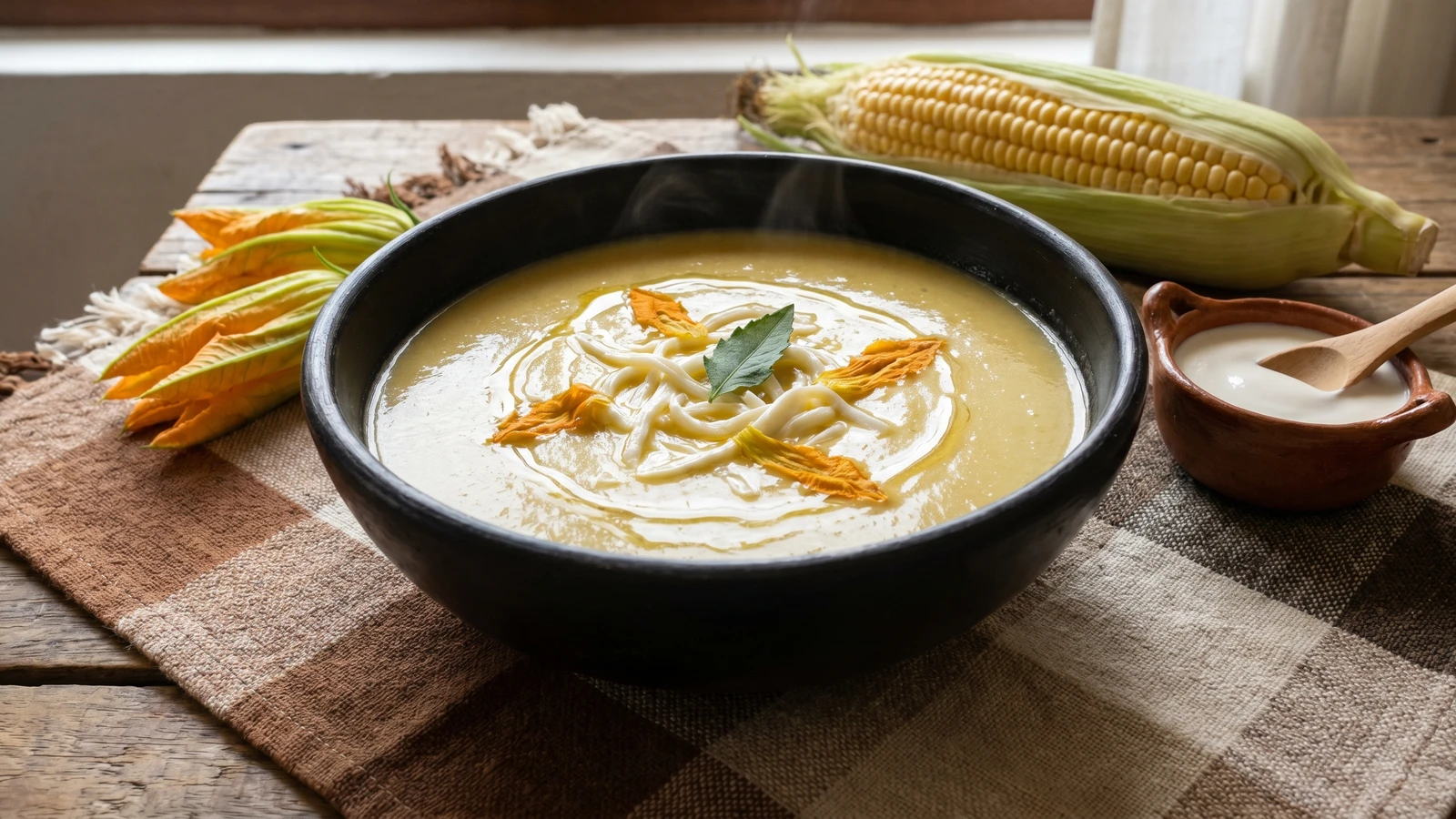
Oaxaca's velvet squash blossom soup, built from flowers pulled off the calabaza vine that morning, wilted in butter with white onion and fresh corn kernels, blended smooth and finished with a thread of crema and a torn leaf of epazote.
This is an Oaxacan soup. The Valles Centrales, specifically, where the milpa still dictates what people eat and when they eat it. Squash blossoms appear in the markets of Tlacolula and the Central de Abastos in Oaxaca city from late spring through the rainy season, bright orange trumpets sold in loose bundles by the women who grow them. When the flores are in, you cook them. When they're gone, you don't. That's the calendar.
Crema de flor de calabaza is not a complicated dish. It doesn't need to be. The blossom is delicate, vegetal, almost sweet, and the cook's job is to not bury it. You wilt the flowers in butter with white onion and a clove of garlic, add fresh corn kernels cut off the cob that morning, simmer in a light broth, and blend until it's smooth enough to coat the back of a spoon. A pour of Mexican crema at the end and a few leaves of epazote, that's all. The soup should taste like the flower, not like cream, not like onion, not like anything trying to compete.
I learned a version of this in a home kitchen outside Etla, from a senora named Doña Carmen who grew her own calabaza and picked the male flowers before the sun got too high. She told me the secret was not to touch the blossoms more than necessary. "La flor ya sabe lo que hace," she said. The flower already knows what it's doing. She was right. My mother never made this one, she was from Jalisco and her soups ran to pozole and birria, but she would have respected Doña Carmen's discipline. Saber cocinar es saber vivir.
Squash blossoms have been consumed in Mesoamerica for at least 8,000 years, predating the domestication of corn, as the calabaza (Cucurbita pepo, C. moschata, and C. argyrosperma) was one of the first plants cultivated in the milpa system alongside maize and beans. The Zapotec and Mixtec civilizations of Oaxaca's Valles Centrales were among the earliest to develop intensive milpa agriculture, and squash blossoms, particularly the male flowers that do not produce fruit, were incorporated into the diet as a practical harvest that did not reduce the squash yield. The cream soup format is a post-colonial adaptation: dairy arrived with the Spanish, but the core ingredient and the technique of wilting blossoms with aromatics into a broth trace directly to pre-Columbian cooking practice.
Quantity
30 to 35
pistils and stems removed
Quantity
2 tablespoons
Quantity
1 medium
finely chopped
Quantity
2
finely chopped
Quantity
1
stemmed, seeded, and cut into thin strips (or 1 fresh poblano if unavailable)
Quantity
from 2 ears (about 1 1/2 cups)
Quantity
3 cups
Quantity
3
Quantity
1/2 cup
Quantity
1 teaspoon, plus more to taste
Quantity
4 ounces
pulled into thin threads
Quantity
a few
torn
Quantity
a few
| Ingredient | Quantity |
|---|---|
| fresh squash blossoms (flores de calabaza)pistils and stems removed | 30 to 35 |
| unsalted butter | 2 tablespoons |
| white onionfinely chopped | 1 medium |
| garlic clovesfinely chopped | 2 |
| fresh chile de aguastemmed, seeded, and cut into thin strips (or 1 fresh poblano if unavailable) | 1 |
| fresh corn kernels | from 2 ears (about 1 1/2 cups) |
| chicken broth, preferably homemade | 3 cups |
| fresh epazote leaves | 3 |
| Mexican crema | 1/2 cup |
| kosher salt | 1 teaspoon, plus more to taste |
| quesillo (Oaxacan string cheese) (optional)pulled into thin threads | 4 ounces |
| extra squash blossoms for garnish (optional)torn | a few |
| fresh epazote leaves for garnish (optional) | a few |
Hold each blossom by its base and gently twist out the pistil from inside. It pulls away easily. Remove the small green sepals and any tough stem. Do not wash the blossoms under running water. They're thin as tissue paper and they bruise. If they're dusty from the market, wipe them gently with a damp cloth. Set aside about 4 or 5 of the smallest, brightest blossoms for garnish. Roughly chop the rest into wide ribbons.
Melt the butter in a heavy 4-quart pot or a clay cazuela over medium heat. Add the chopped onion and cook for three to four minutes, stirring occasionally, until it softens and turns translucent. Do not let it brown. This is not a caramelized onion soup. Add the garlic and the strips of chile de agua. Cook for one more minute until the garlic is fragrant and the chile strips have softened.
Add the chopped squash blossoms to the pot all at once. They will seem like too much. Give them thirty seconds. Stir gently and watch them collapse. Within two minutes the entire pile will have wilted down to a soft, golden mass barely covering the bottom of the pot. That's correct. Add the corn kernels and stir everything together for one minute to let the corn warm through and the flavors start to combine.
Pour in the chicken broth and add the epazote leaves. Bring to a gentle simmer and cook for 12 to 15 minutes, uncovered. The corn should be tender and the blossoms should have given their flavor to the broth completely. The kitchen will smell green and sweet, like a milpa after rain. Remove and discard the epazote leaves before blending.
Working in two batches if necessary, transfer the soup to a blender. Blend on high for a full minute until the texture is completely smooth and pale gold, almost the color of roasted corn. You want velvet, not chunks. Pour through a fine-mesh strainer back into the pot, pressing on the solids with the back of a ladle. Discard whatever the strainer catches. The straining is what gives you the silk finish.
Return the strained soup to low heat. Stir in the Mexican crema and the salt. Let it warm through for two to three minutes without boiling. Taste it now. The soup should taste like squash blossoms first, corn second, cream third. If the flower flavor has gotten lost, you added too much cream or cooked the blossoms too long. Adjust the salt. The broth should be assertive enough to carry the blossom's delicate flavor, not drown it.
Ladle the soup into warm bowls. Drop a loose tangle of quesillo threads into the center of each bowl. The cheese will soften in the heat and stretch when the spoon hits it. Tear the reserved raw blossoms into petals and scatter them over the top. Add a small epazote leaf. Serve immediately. Recetas probadas y garantizadas.
1 serving (about 330g)
Culinary guides, cultural storytelling, and the editorial depth that makes cooking meaningful.
Discover Culinary ExplorerChef Lupita
Aguascalientes' Bajio pozole de lengua, built with cacahuazintle hominy, tender beef tongue, chile ancho and guajillo, with xoconostle brightness and table garnishes.

Chef Lupita
Veracruz's Gulf coast rice from Alvarado, built with seafood stock, tomato, chile chipotle, epazote, shrimp, fish, jaiba, and pulpo, served loose and brothy in a clay cazuela.

Chef Lupita
Costa Chica's wet salt-beef stew, built from chile costeño, guajillo, tomato, manteca, yuca, plantain, and masa dumplings, the ranching pot of Cuajinicuilapa and Pinotepa.

Chef Lupita
Michoacán's P'urhépecha atápakua is a masa-thickened sauce and stew at once, built with pork, chile guajillo, and hierbabuena added only at the end.