
Chef Lupita
Aguascalientes Beef Tongue Pozole (Pozole de Lengua)
Aguascalientes' Bajio pozole de lengua, built with cacahuazintle hominy, tender beef tongue, chile ancho and guajillo, with xoconostle brightness and table garnishes.
A cooking platform built around craft, culture, and the stories behind what we eat.
Created by
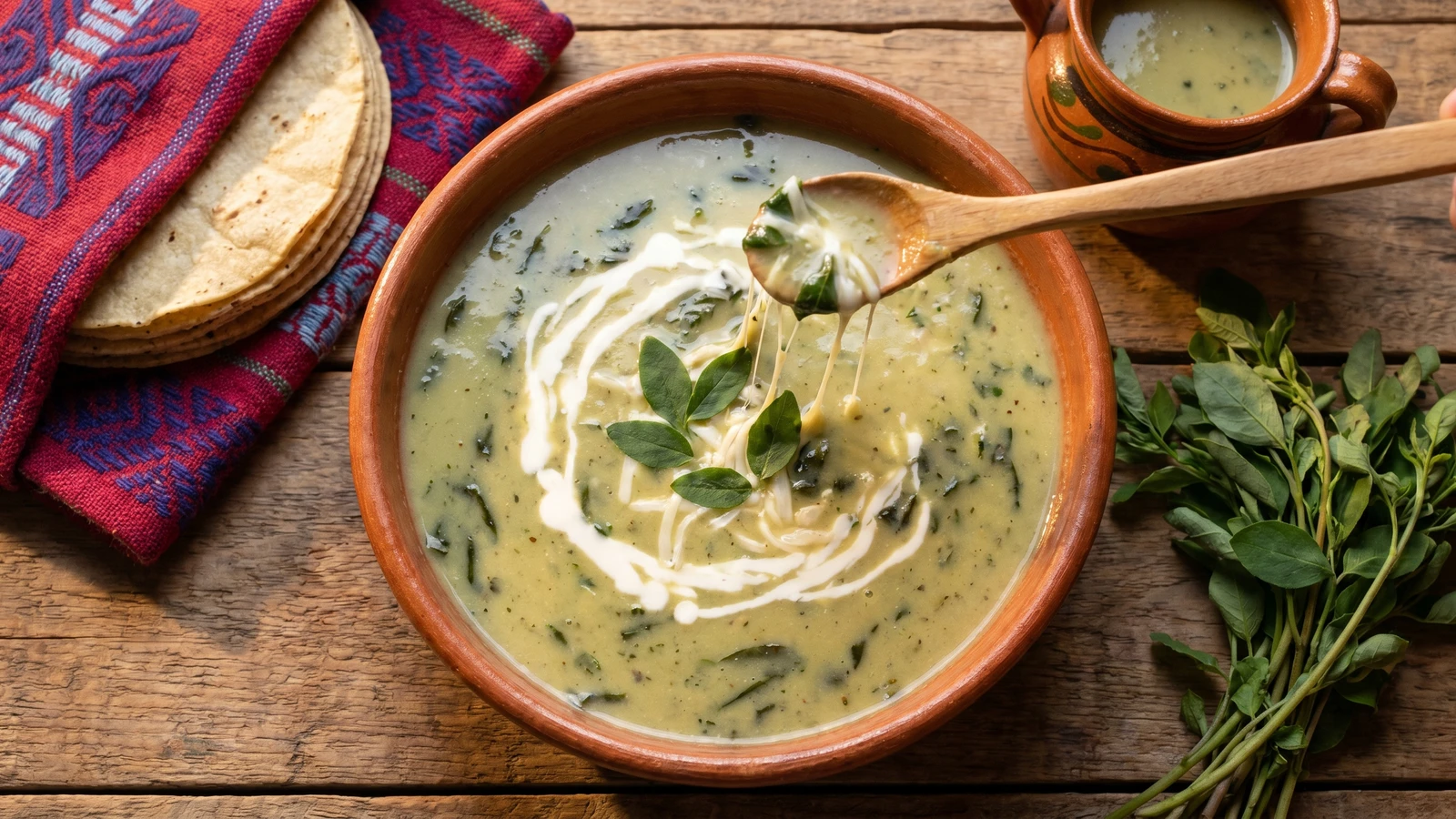
From the Zapotec weaving town of Teotitlán del Valle, a creamed soup of wild chepil leaves cooked in lard, thickened with fresh corn masa, and finished with strings of quesillo and crema that pool across the surface like the threads on a backstrap loom.
This is Oaxacan food from the Valles Centrales, from the specific stretch of dry valley between the city of Oaxaca and the mountains where the Zapotec weavers of Teotitlán del Valle have lived for centuries. The soup belongs to rainy season, when the chepil grows wild along the edges of the milpa and the women cut it by the armful.
Chepil is not epazote. It is not hierba santa. It is its own plant, a legume with small round leaves and a flavor that sits somewhere between watercress and a green bean, earthy and vegetal with a faint bitterness that disappears the moment the leaves hit hot lard. If someone tells you to substitute spinach, they have never tasted chepil. Spinach is sweet and watery. Chepil is mineral and dry, a flavor that belongs to Oaxacan soil and does not apologize for it.
The body of this soup comes from fresh corn masa dissolved into the broth, not cream, not flour, not potato. Masa. That is how the senoras of the Valles Centrales thicken a soup, and it gives the crema de chepil a texture that coats the back of a spoon without being heavy. The quesillo goes in at the end, pulled into thin strings that melt into the hot broth and stretch when you lift the spoon. The crema is a drizzle, not a flood.
I collected this recipe in Teotitlán del Valle from a woman named Dona Francisca who cooked it in a clay olla over a wood fire while her granddaughter worked the backstrap loom in the next room. She told me the soup was for any night, not for occasions. 'Es comida de diario,' she said. Daily food. But daily food in Oaxaca, when you know what you're doing, is better than most people's special occasions. Saber cocinar es saber vivir.
Chepil (Crotalaria longirostrata) is a pre-Columbian legume cultivated as a companion plant in the milpa system of Mesoamerica, where it fixes nitrogen in the soil around corn and squash. Zapotec communities in the Valles Centrales of Oaxaca have used chepil in tamales, soups, and stews for centuries before the arrival of the Spanish, and the herb's growing season, the summer rains from June through October, still dictates when this soup appears on Oaxacan tables. The masa-thickened broth technique, called 'atole' in its sweet form and applied here as a savory method, is one of the oldest soup structures in Mesoamerican cooking, predating any European cream or roux by millennia.
Quantity
2 large bunches (about 4 cups loosely packed)
thick stems removed
Quantity
2 tablespoons
Quantity
1/2 medium
roughly chopped
Quantity
2
peeled and roughly chopped
Quantity
6 cups
preferably homemade
Quantity
1/4 cup fresh masa, or 3 tablespoons masa harina dissolved in 1/2 cup warm water
Quantity
1 cup (about 2 ears)
cut from the cob
Quantity
1 teaspoon, plus more to taste
Quantity
6 ounces
pulled into thin strips
Quantity
1/3 cup
Quantity
a small handful
| Ingredient | Quantity |
|---|---|
| fresh chepil leavesthick stems removed | 2 large bunches (about 4 cups loosely packed) |
| manteca de cerdo (pork lard) | 2 tablespoons |
| white onionroughly chopped | 1/2 medium |
| garlic clovespeeled and roughly chopped | 2 |
| chicken brothpreferably homemade | 6 cups |
| fresh corn masa, or masa harina | 1/4 cup fresh masa, or 3 tablespoons masa harina dissolved in 1/2 cup warm water |
| fresh corn kernels (optional)cut from the cob | 1 cup (about 2 ears) |
| kosher salt | 1 teaspoon, plus more to taste |
| quesillo (Oaxacan string cheese)pulled into thin strips | 6 ounces |
| crema mexicana | 1/3 cup |
| fresh chepil leaves (for finishing) (optional) | a small handful |
Fill a large basin with cold water. Submerge the chepil bunches and agitate them gently to release any sand or grit. Chepil grows low in the milpa and carries dirt. Lift the leaves out, let the water drain, and repeat until the water runs clean. Strip the leaves from the thick woody stems. The thin tender stems near the tips can stay. The thick stems are fibrous and have no place in the soup. Set aside a small handful of whole leaves for finishing.
Melt the manteca de cerdo in a heavy clay olla or a thick-bottomed pot over medium heat. When the lard shimmers, add the chopped onion and garlic. Cook for three to four minutes, stirring occasionally, until the onion is translucent and the garlic is fragrant but not browned. Browned garlic turns bitter in a delicate soup like this. You want it soft and sweet.
Add the cleaned chepil leaves to the pot in two or three handfuls, letting each batch wilt down before adding the next. Stir them through the lard and onion. The leaves will collapse quickly, losing about three quarters of their volume, and the kitchen will fill with an earthy, herbaceous smell. Cook for two minutes once all the leaves are in, just enough to soften them and release their flavor into the fat. La manteca es el sabor. It carries the chepil through the whole soup.
Pour in the chicken broth. If you are using fresh corn kernels, add them now. Bring the pot to a gentle simmer over medium heat, then reduce the heat to low and let it cook for ten minutes. The corn should be just tender and the broth should taste clearly of chepil. Taste it. If the herb flavor is faint, you needed more chepil. Write that down for next time.
If using fresh masa, pinch it into small pieces and dissolve them in one cup of warm water, working it with your fingers until smooth and milky. If using masa harina, whisk it into half a cup of warm water until lump-free. Pour the masa mixture into the simmering soup in a slow stream, stirring constantly. The broth will cloud and thicken within two or three minutes into something that coats the back of a wooden spoon. This is the body of the soup. Not cream. Not flour. Masa. That is how it is done in the Valles Centrales. Asi se hace y punto.
Let the soup cook for another eight to ten minutes on low heat, stirring occasionally, until the masa flavor is cooked out and the texture is velvety. A raw masa taste means it needs more time. Season with salt now. Go slowly. The broth and the quesillo both carry salt, and you can always add more at the table. The soup should taste of chepil first, corn second, and the lard should be a quiet warmth underneath everything.
Ladle the hot soup into clay bowls. Drop a generous tangle of quesillo strips into each bowl, pushing them just below the surface so the heat softens them into stretchy, melting threads. Drizzle a spoonful of crema mexicana across the top. Scatter a few reserved whole chepil leaves over the crema. Serve immediately with warm corn tortillas on the side. The quesillo should stretch when you lift the spoon. The crema should swirl into the green-flecked broth. Recetas probadas y garantizadas.
1 serving (about 380g)
Culinary guides, cultural storytelling, and the editorial depth that makes cooking meaningful.
Discover Culinary ExplorerChef Lupita
Aguascalientes' Bajio pozole de lengua, built with cacahuazintle hominy, tender beef tongue, chile ancho and guajillo, with xoconostle brightness and table garnishes.

Chef Lupita
Veracruz's Gulf coast rice from Alvarado, built with seafood stock, tomato, chile chipotle, epazote, shrimp, fish, jaiba, and pulpo, served loose and brothy in a clay cazuela.

Chef Lupita
Costa Chica's wet salt-beef stew, built from chile costeño, guajillo, tomato, manteca, yuca, plantain, and masa dumplings, the ranching pot of Cuajinicuilapa and Pinotepa.

Chef Lupita
Michoacán's P'urhépecha atápakua is a masa-thickened sauce and stew at once, built with pork, chile guajillo, and hierbabuena added only at the end.