
Chef Dean
Apple Cinnamon Pancakes
Tender buttermilk pancakes folded with butter-glazed apple pieces and warm cinnamon, stacked high and drowning in maple syrup. This is Sunday morning the way it ought to be.
A cooking platform built around craft, culture, and the stories behind what we eat.
Created by
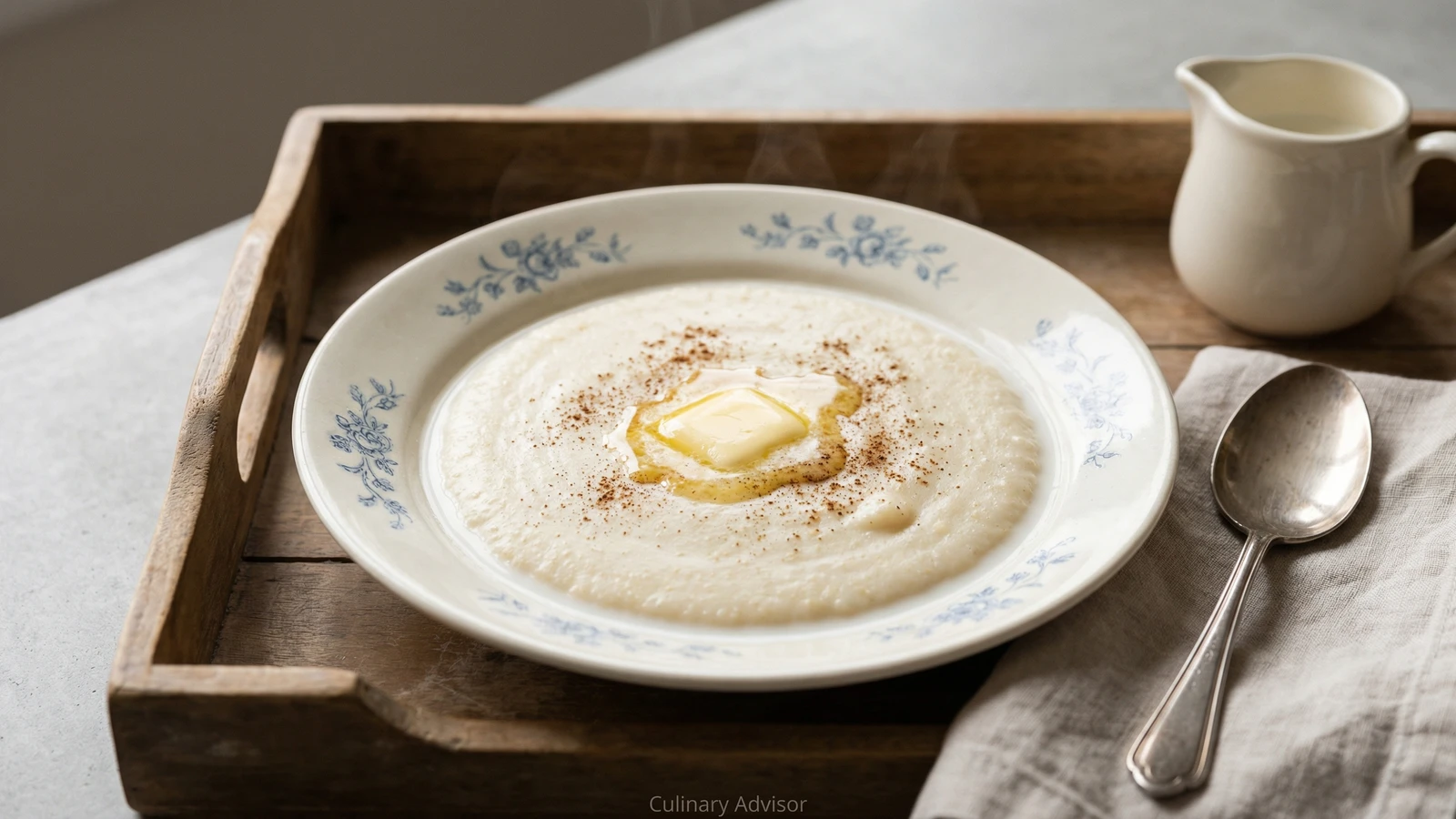
Silky farina porridge cooked slow in whole milk until impossibly smooth, sweetened gently, and crowned with melting butter. This is breakfast the way your grandmother made it, assuming she had the patience to do it right.
There is nothing fancy about Cream of Wheat. It is ground wheat, milk, and heat. Three ingredients that have sustained American families through depression winters and busy weekday mornings for over a century. The dish asks little of you except attention and rewards you with comfort that expensive things cannot buy.
The technique matters more than the recipe. I've watched cooks dump farina into cold milk and wonder why they're eating paste. I've seen others pour it too fast into scalding liquid and spend breakfast picking out lumps. Neither fate awaits you if you follow the method: warm liquid, slow pour, constant whisking. Master these three principles and you'll produce porridge so smooth it seems impossible that it came from your own kitchen.
My grandmother served this in shallow bowls, the porridge spreading to the edges, a pat of butter melting in the center, cold milk poured around like a moat. We'd drag our spoons from the cool perimeter toward the warm center, each bite a different temperature. It taught me that texture and temperature matter as much as flavor. That lesson has stayed with me through every dish I've ever made.
Quantity
2 1/2 cups
Quantity
1/2 cup
Quantity
1/4 teaspoon
Quantity
1/2 cup
Quantity
2 tablespoons, plus more to taste
Quantity
2 tablespoons
divided
Quantity
1/4 teaspoon
Quantity
for serving
Quantity
for serving
| Ingredient | Quantity |
|---|---|
| whole milk | 2 1/2 cups |
| water | 1/2 cup |
| fine sea salt | 1/4 teaspoon |
| regular Cream of Wheat (farina) | 1/2 cup |
| granulated sugar | 2 tablespoons, plus more to taste |
| unsalted butterdivided | 2 tablespoons |
| pure vanilla extract | 1/4 teaspoon |
| ground cinnamon (optional) | for serving |
| cold milk (optional) | for serving |
Combine the milk, water, and salt in a heavy-bottomed saucepan over medium heat. The water serves a purpose here, thinning the milk just enough to prevent scorching while the porridge cooks. Watch the edges of the pot. When you see small bubbles forming around the perimeter and steam rising steadily, you're ready. Do not let it boil.
Reduce heat to medium-low. Take the farina in one hand and a whisk in the other. Pour the farina in a slow, steady stream while whisking constantly in one direction. This is the only moment that matters. Rush it and you'll have lumps. The dry grains must hit moving liquid, each one surrounded by warmth before the next arrives. Twenty seconds of patience here saves you ten minutes of frustration later.
Continue whisking as the mixture begins to thicken. After two to three minutes, the porridge will start to bubble lazily, thick plops rising and falling like a gentle mud pot. Switch to a wooden spoon or silicone spatula and stir frequently, scraping the bottom and corners where the mixture likes to stick. Cook for another four to five minutes until the cereal pulls away from the sides of the pan and has the consistency of loose mashed potatoes.
Remove the pan from heat. Stir in the sugar, one tablespoon of butter, and the vanilla extract. The butter will melt into glossy streaks before disappearing entirely, enriching every spoonful. Taste and adjust sweetness. Some mornings call for more sugar than others.
Divide between two warmed bowls. Top each portion with a pat of the remaining butter, letting it begin to melt into a golden pool. Dust with cinnamon if you like, and pour a thin moat of cold milk around the edges. The contrast of hot porridge and cold milk is the whole point. Serve at once. Cream of Wheat waits for no one, and a skin will form if you let it sit.
1 serving (about 450g)
Culinary guides, cultural storytelling, and the editorial depth that makes cooking meaningful.
Discover Culinary ExplorerChef Dean
Tender buttermilk pancakes folded with butter-glazed apple pieces and warm cinnamon, stacked high and drowning in maple syrup. This is Sunday morning the way it ought to be.

Chef Dean
Individual breakfast packages of farm eggs nestled in smoky ham, blanketed with melted sharp cheddar, ready for Sunday morning or make-ahead weekday fuel that tastes like someone who loves you made it.

Chef Ally
Oats softened overnight in yogurt and orchard cider, then crowned with whatever fruit the morning and the season bring to your table. A breakfast that asks almost nothing of you and gives back everything.

Chef Dean
Golden, shatteringly crisp potatoes mingled with sweet roasted peppers and caramelized onions, crowned with eggs whose yolks run like liquid sunshine when you break them open.