
Chef Remy
Alligator Sauce Piquante
Chunks of tender gator swimming in a brick-red tomato sauce with enough heat to make you reach for your sweet tea, spooned over rice the way the old Cajun trappers ate it after a long day on the bayou.
A cooking platform built around craft, culture, and the stories behind what we eat.
Created by Chef Remy
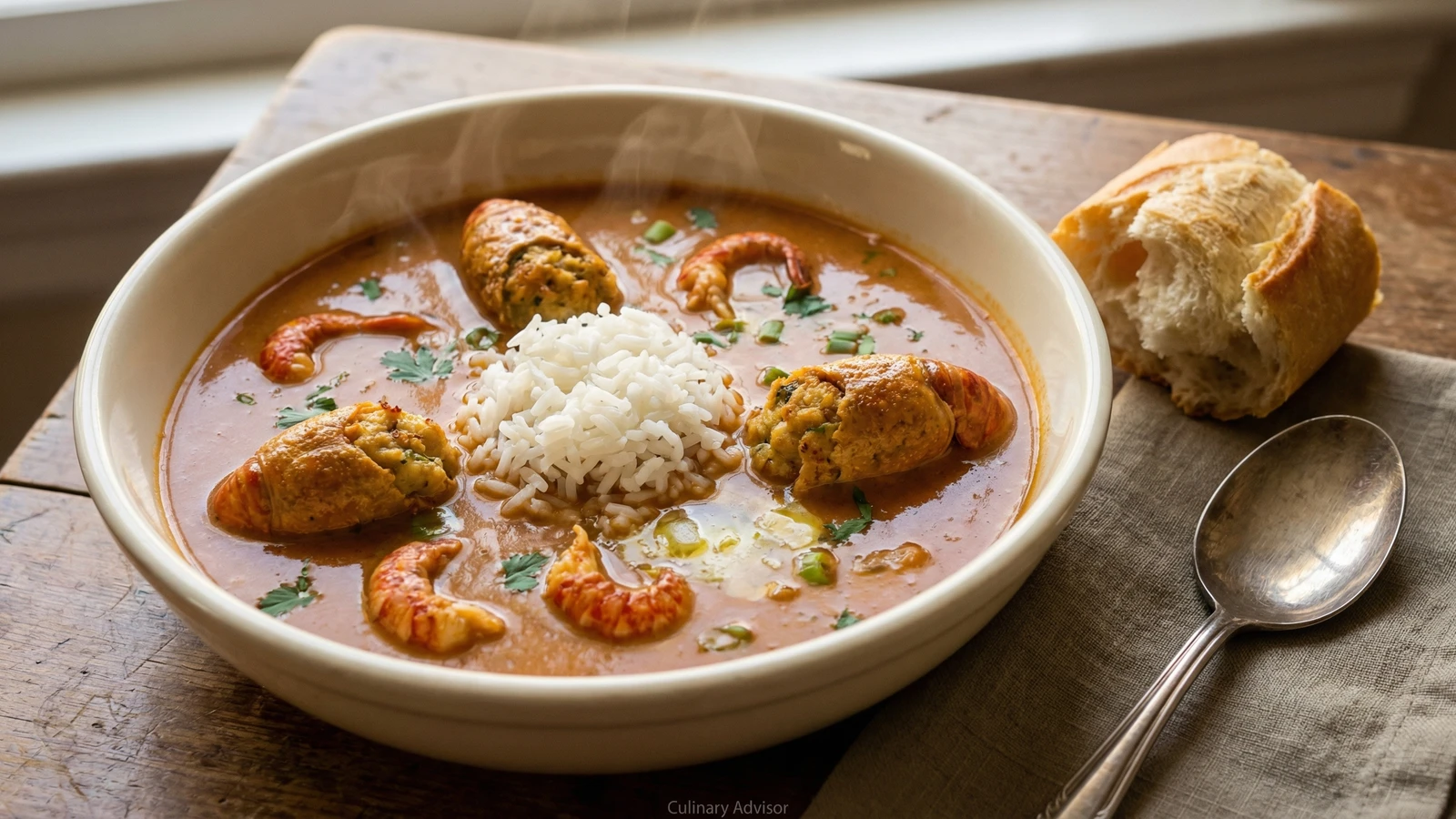
The crown jewel of Cajun cuisine: silky crawfish-enriched broth cradling hand-stuffed heads, each one a concentrated burst of bayou flavor, finished with butter stirred in off-heat for a glossy richness that coats your spoon.
This dish separates the cooks from the pretenders. Crawfish bisque is Louisiana's most demanding recipe, and that's exactly why it matters. When you set a bowl of this on the table, stuffed heads floating in that velvety broth, people understand you've given them something precious. Four generations of Boudreaux cooks made this for weddings, for funerals, for Sunday dinners when the whole family gathered.
My grandmother Evangeline would start her bisque at dawn. She'd clean crawfish heads at the kitchen table, her hands moving with the efficiency of fifty years' practice. The stuffing was her secret: crawfish tail meat ground fine, mixed with breadcrumbs soaked in the cooking liquid, seasoned until it tasted right. No measuring. Just taste, adjust, taste again. That's the bayou way.
The broth itself is where the magic lives. You're building flavor in layers: first the roux, dark as chocolate and smelling like roasted pecans. Then the trinity, sweating down until the onions turn sweet. Then your crawfish stock, made from the shells and fat, simmered until it carries every bit of essence those creatures can give. When you bring it all together, something transcendent happens.
At Lagniappe, we serve this bisque only during crawfish season, and only when we can get enough heads to do it properly. Some years we make it six times. Some years, twelve. It depends on what the bayou gives us. That's how it should be. Real food follows the seasons.
Quantity
5 pounds
yields about 1 pound tail meat and 24 cleanable heads
Quantity
1/2 cup
Quantity
1/2 cup
Quantity
2 cups
finely diced
Quantity
1 cup
finely diced
Quantity
1 cup
finely diced
Quantity
6 cloves
minced
Quantity
2 quarts
Quantity
1 cup
Quantity
4 tablespoons
cold and cubed
Quantity
1/4 cup
chopped
Quantity
4
thinly sliced
Quantity
to taste
Quantity
1 1/2 teaspoons, divided
Quantity
1 teaspoon
freshly ground
Quantity
1/2 teaspoon
Quantity
1 teaspoon
Quantity
2
Quantity
1/2 teaspoon
Quantity
1 cup
fine
Quantity
1
beaten
Quantity
for serving
| Ingredient | Quantity |
|---|---|
| whole live crawfishyields about 1 pound tail meat and 24 cleanable heads | 5 pounds |
| vegetable oil | 1/2 cup |
| all-purpose flour | 1/2 cup |
| yellow onionfinely diced | 2 cups |
| celeryfinely diced | 1 cup |
| green bell pepperfinely diced | 1 cup |
| garlicminced | 6 cloves |
| crawfish stock | 2 quarts |
| heavy cream | 1 cup |
| unsalted buttercold and cubed | 4 tablespoons |
| fresh parsleychopped | 1/4 cup |
| green onion topsthinly sliced | 4 |
| kosher salt | to taste |
| cayenne pepper | 1 1/2 teaspoons, divided |
| black pepperfreshly ground | 1 teaspoon |
| white pepper | 1/2 teaspoon |
| paprika | 1 teaspoon |
| bay leaves | 2 |
| dried thyme | 1/2 teaspoon |
| breadcrumbs (for stuffing)fine | 1 cup |
| egg (for stuffing)beaten | 1 |
| cooked white rice | for serving |
Rinse your live crawfish in several changes of cold water until the water runs clear. Bring a large pot of heavily salted water to a rolling boil. Add the crawfish and boil for three minutes only. You're not cooking them through here, just killing them and loosening the meat. Drain immediately and spread on sheet pans to cool enough to handle.
This is the tedious part, and there's no shortcut. Twist the tail from the head. Peel the tails and set the meat aside. For the heads you'll stuff, select the largest 24 with intact shells. Scrape out the innards and reserve any orange crawfish fat you find. Put the remaining shells, small heads, and scraps into a stockpot. The cleaned heads go into a bowl.
Cover the shells and scraps with three quarts of cold water. Add a quartered onion, two celery stalks broken in half, and a bay leaf. Bring to a simmer and cook for 45 minutes, skimming any foam that rises. The kitchen will smell like pure Louisiana. Strain through a fine-mesh sieve, pressing on the solids to extract every drop of flavor. You should have about two quarts of brick-red stock.
Take half your peeled crawfish tails (about half a pound) and chop them fine, almost to a paste. Melt two tablespoons butter in a skillet over medium heat. Add the minced onion, celery, and bell pepper for the stuffing. Cook until soft, about five minutes. Add two cloves minced garlic and cook one minute more. Add the chopped crawfish, season with half a teaspoon cayenne and salt to taste. Cook two minutes, then remove from heat.
Transfer the crawfish mixture to a bowl. Add the breadcrumbs, moisten with a quarter cup of your crawfish stock, and bind with the beaten egg. Mix thoroughly. The stuffing should hold together when squeezed but not be pasty. Taste it. Adjust seasoning now, because you can't fix it later. Pack the stuffing firmly into each cleaned head, mounding it slightly. Arrange stuffed heads on a baking sheet.
In your largest heavy-bottomed pot (cast iron is ideal), heat the oil over medium heat until it shimmers. Whisk in the flour all at once. Now you stir. Constantly. The roux will go from white to blond to peanut butter to milk chocolate. For bisque, you want that rich brown color, about 25 to 30 minutes. It should smell like roasted pecans, not burned toast. If you see black specks, you've gone too far and need to start over.
The moment your roux reaches that chocolate color, add the diced onion, celery, and bell pepper. The pot will sizzle and steam. Stir constantly for five minutes as the vegetables soften and the roux darkens slightly more. Add the garlic and cook one minute until fragrant. This is your flavor foundation.
Slowly ladle in the warm crawfish stock, stirring constantly to prevent lumps. Add the remaining teaspoon of cayenne, the black pepper, white pepper, paprika, thyme, and bay leaves. Stir in any reserved crawfish fat. Bring to a gentle simmer and cook uncovered for 30 minutes. The broth will deepen in color and the flavors will marry. Taste. Adjust salt and pepper. The bisque should have warmth that builds, not heat that attacks.
Stir in the heavy cream. Add the remaining whole crawfish tails. Simmer gently for ten minutes. The cream will give the bisque that characteristic velvety quality, and the tails will perfume the broth while staying tender. Remove the bay leaves.
Gently lower the stuffed heads into the simmering bisque. They'll sink at first, then float as they heat through. Poach for eight to ten minutes. Handle them carefully, they're delicate. The stuffing should be cooked through but still moist inside.
Remove the pot from heat. This is critical: the butter goes in off the heat. Add the cold cubed butter one piece at a time, swirling the pot until each piece melts and emulsifies into the bisque. This gives that restaurant gloss, that richness that makes people close their eyes. Stir in the parsley and most of the green onions, reserving some for garnish. Taste one final time. The last bite should be as good as the first.
Mound hot white rice in the center of each warmed bowl. Ladle the bisque around the rice, making sure each portion gets several stuffed heads and plenty of tail meat. Scatter reserved green onions over the top. Serve immediately with crusty French bread for sopping up every last drop. This is food that demands attention.
1 serving (about 400g)
Culinary guides, cultural storytelling, and the editorial depth that makes cooking meaningful.
Discover Culinary ExplorerChef Remy
Chunks of tender gator swimming in a brick-red tomato sauce with enough heat to make you reach for your sweet tea, spooned over rice the way the old Cajun trappers ate it after a long day on the bayou.

Chef Remy
Fork-tender beef chunks swimming in a dark roux gravy with potatoes and carrots, seasoned bold the way we do it in Louisiana, the kind of stew that makes you close your eyes and forget your troubles.

Chef Remy
Humble butter beans transformed by smoky tasso ham, the holy trinity, and patient simmering into a velvety stew that warms you from the inside out, the kind of bowl that makes you want seconds before you've finished firsts.

Chef Remy
Tender bone-in chicken simmered low and slow in a rich peanut-butter roux gravy with Yukon Gold potatoes and the holy trinity, the kind of simple Cajun supper that's been warming Louisiana families for generations.