
Chef Thomas
A Ploughman's Salad
The old pub ploughman's, shaken loose from its board and laid across butter lettuce with a sharp mustard dressing, for the kind of lunch that feels like you've given yourself the afternoon off.
A cooking platform built around craft, culture, and the stories behind what we eat.
Created by Chef Thomas
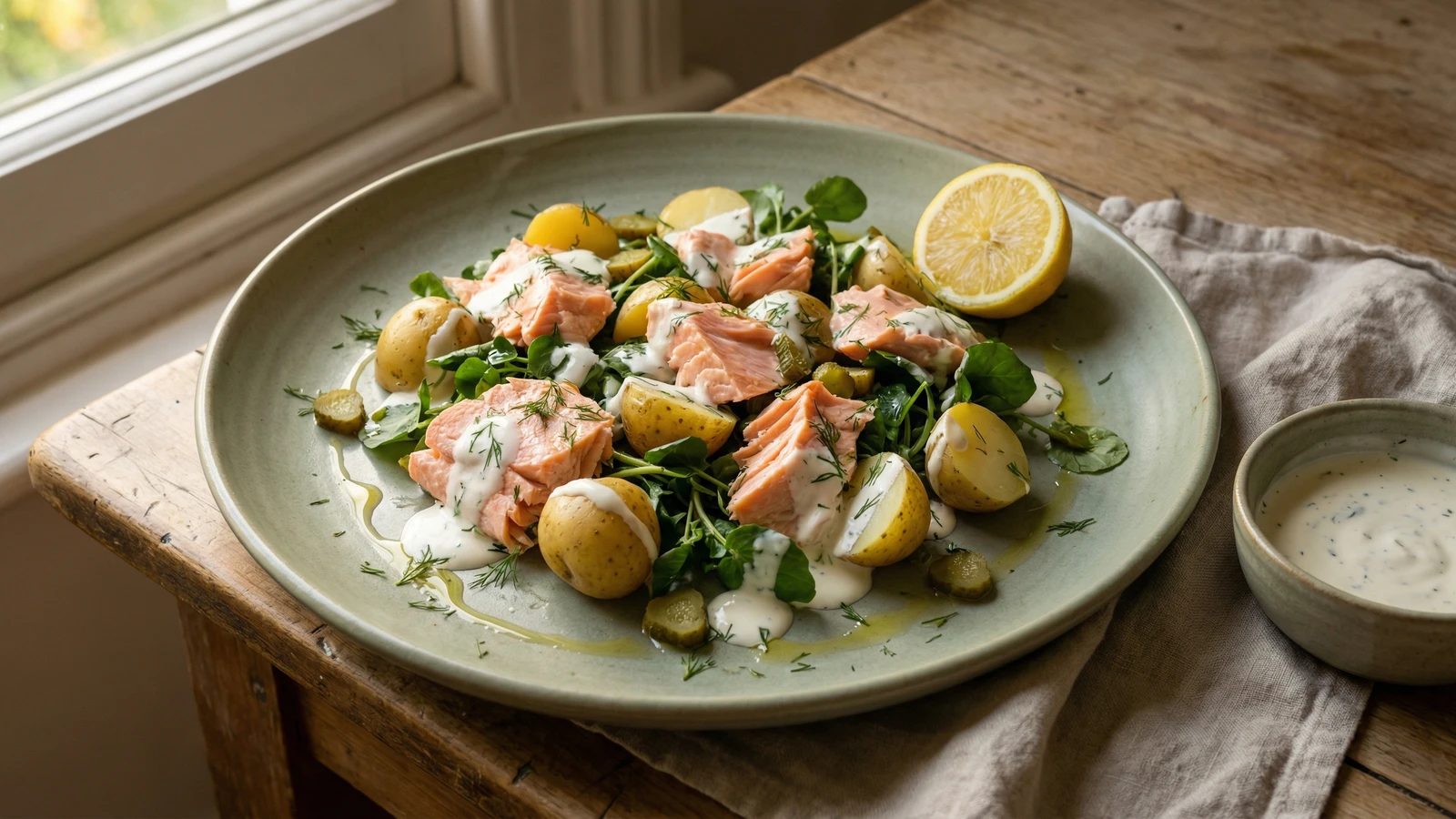
Salmon poached to a blush pink and served cold over peppery watercress and warm, waxy new potatoes with a dill and crème fraîche dressing. The kind of plate that says summer without raising its voice.
The first Jersey Royals appeared at the market last Saturday. Small, earthy, still flecked with soil. I bought a bag without thinking, because when the new potatoes arrive you don't make a plan. The plan makes itself.
This is a June plate. Maybe early July, if the summer is slow to settle. The salmon is poached gently, barely a simmer, then left to cool until it flakes into those soft, coral-pink pieces that fall apart at the press of a fork. The watercress is peppery and alive. The potatoes are warm, dressed while they can still absorb the lemon and oil, sitting underneath everything like a quiet foundation. A spoonful of crème fraîche sharpened with dill and lemon brings it all together. There are few better feelings than putting this plate in front of someone on a long, warm evening.
I don't know why this combination works as well as it does. Each thing is ordinary on its own. Together, on a wide plate, with the windows open and the light going gold, they become the meal you remember from the whole week. I wrote it down in the notebook years ago and the entry just says: salmon, watercress, new potatoes, that good Saturday. A recipe is a conversation, not a contract. This one has been running for a long time.
Quantity
4 (about 150g each)
skin on
Quantity
1
sliced into rounds
Quantity
a few
Quantity
2
Quantity
a small glass
Quantity
500g
Jersey Royals if available
Quantity
2 generous handfuls
thick stems removed
Quantity
1 small
very finely sliced
Quantity
200ml
Quantity
a small bunch
fronds picked and roughly chopped
Quantity
half a lemon
Quantity
a generous drizzle
Quantity
to taste
Quantity
to taste
Quantity
a few
sliced
| Ingredient | Quantity |
|---|---|
| salmon filletsskin on | 4 (about 150g each) |
| lemonsliced into rounds | 1 |
| black peppercorns | a few |
| bay leaves | 2 |
| white wine | a small glass |
| new potatoesJersey Royals if available | 500g |
| watercressthick stems removed | 2 generous handfuls |
| shallotvery finely sliced | 1 small |
| crème fraîche | 200ml |
| dillfronds picked and roughly chopped | a small bunch |
| lemon juice | half a lemon |
| good olive oil | a generous drizzle |
| fine sea salt | to taste |
| black pepper | to taste |
| cornichons (optional)sliced | a few |
Fill a wide, shallow pan with enough water to cover the salmon later. Add the lemon slices, peppercorns, bay leaves, and the wine. Bring it to a gentle simmer, not a boil, and let it tick away for five minutes. The kitchen will start to smell clean and citrussy and faintly botanical. That's the bay leaves doing their work. This is your court-bouillon, though you don't need to call it that. It's just good poaching water.
Lower the heat until the surface of the liquid barely trembles. Slide the salmon fillets in, skin side down. The water should just cover them. If it doesn't, add a little more. Let them poach for eight to ten minutes. You're not looking for a timer to tell you when they're done. Press the thickest part gently with your finger. When it gives slightly but springs back, like pressing a cushion, it's ready. The flesh should be opaque at the edges but still have a translucent blush at the centre. It will carry on cooking as it cools.
Lift the salmon out carefully with a fish slice and lay it on a plate. Peel away the skin while it's still warm. It should come off in one piece. Let the fish cool to room temperature, then cover loosely and refrigerate until properly cold. Don't rush this. Cold salmon that hasn't fully chilled is neither one thing nor the other.
Put the potatoes into cold salted water and bring to a steady simmer. Cook until a knife slides through without resistance, fifteen to twenty minutes depending on size. Drain and let them sit in the colander for a minute to steam dry. Cut the larger ones in half while still warm. You want them to absorb the dressing, and warm potatoes do that willingly where cold ones refuse.
Stir together the crème fraîche, most of the chopped dill (save a pinch for later), the lemon juice, and a good pinch of salt. Taste it. It should be cool and sharp and herby, bright enough to stand up to the richness of the salmon. If it needs more lemon, add more lemon. Your kitchen, your rules.
While the potatoes are still warm, toss them gently with a drizzle of olive oil, the finely sliced shallot, a squeeze of lemon, and a little salt. The shallot will soften slightly in the warmth of the potatoes, losing its raw bite and turning sweet. Let them sit for five minutes. They'll be better for it.
Scatter the watercress across a wide serving plate or divide it between four plates. Spoon the dressed potatoes over and among the leaves. Lay the cold salmon on top, breaking it into large, generous flakes rather than keeping the fillets whole. It looks more inviting this way, more like food and less like a presentation. Spoon the dill dressing over and around, scatter the reserved dill and the sliced cornichons if you're using them, and finish with a thread of olive oil and a grind of black pepper. Serve it at the table. Let people help themselves.
1 serving (about 350g)
Culinary guides, cultural storytelling, and the editorial depth that makes cooking meaningful.
Discover Culinary ExplorerChef Thomas
The old pub ploughman's, shaken loose from its board and laid across butter lettuce with a sharp mustard dressing, for the kind of lunch that feels like you've given yourself the afternoon off.

Chef Thomas
Double-podded broad beans and sweet peas, dressed simply with torn mint, lemon, and good olive oil. The kind of bowl that tastes the way a June garden smells.

Chef Thomas
Celeriac cut into pale matchsticks and dressed in sharp mustard and crème fraîche, the sort of thing you make on a Sunday and find yourself eating from the bowl with a fork on Tuesday.

Chef Thomas
Bitter chicory leaves carrying sharp apple, crumbled Stilton, and toasted walnuts, dressed with cider vinegar and honey. A winter salad that earns its place at the table when the garden has shut up shop.