Chef Lupita
Acúmara Tatemada al Comal
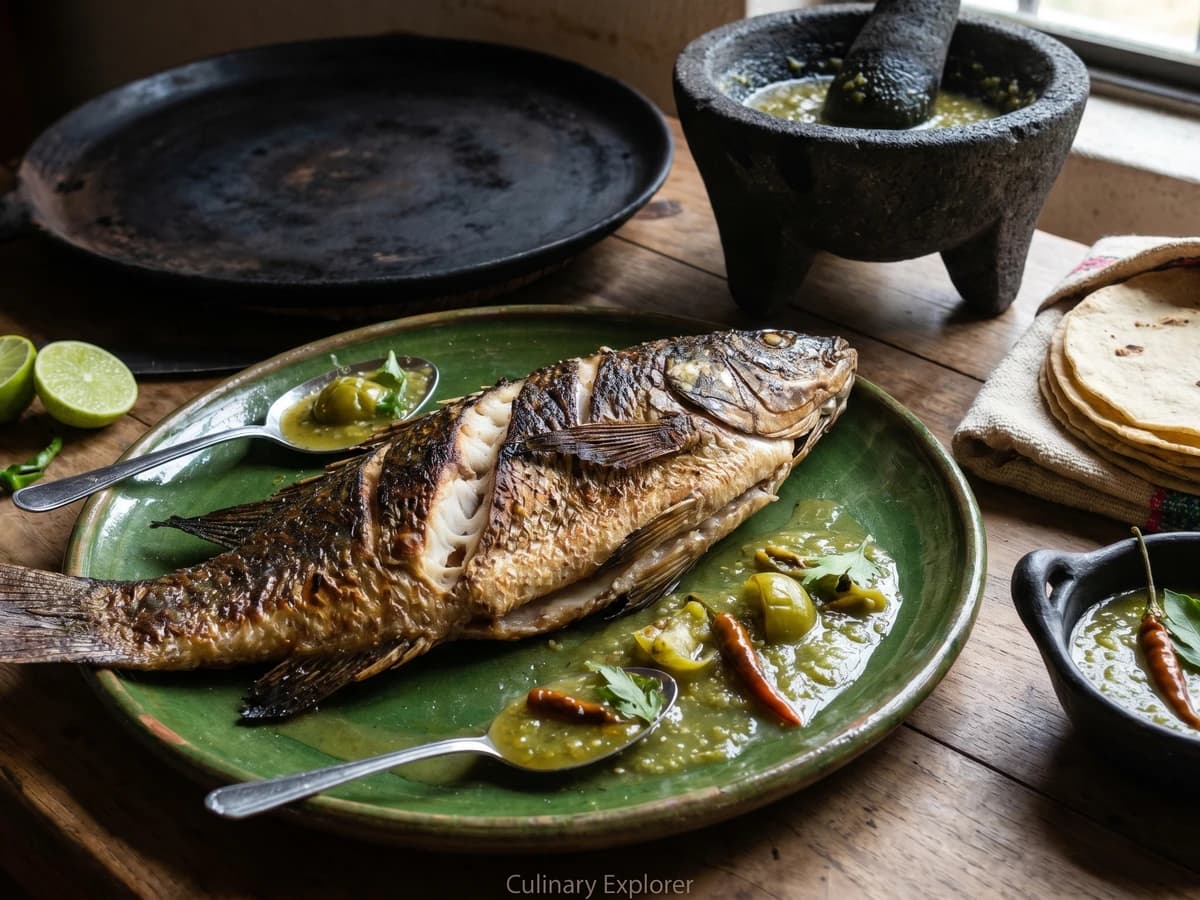
Michoacán's Lake Pátzcuaro acúmara, a whole kurucha from the lago tatemada on a comal de leña and served with chile perón atápakua, corn tortillas, and P'urhépecha discipline.
A cooking platform built around craft, culture, and the stories behind what we eat.

Created by
Sonora's calabacitas, a weeknight pot of diced Mexican squash, fresh corn, tomato, and fire-roasted chile Anaheim, finished with whole milk and crumbled queso fresco. The vegetable dish that anchors a northern table.
Colachi is from Sonora. Not from a generic 'Mexico' and not from the central highlands. This is northern food, from the same desert state that gave us flour tortillas the size of a steering wheel, carne asada cooked over mesquite, and the dairy tradition that runs through the entire northwest. The milk in this dish is not a mistake. It is the regional fingerprint. Cada estado, su propia cocina.
The vegetables are simple and the technique is honest. Calabacita, fresh corn, tomato, onion, garlic, and chile Anaheim roasted on the flame until the skin blisters. You peel the chile by hand and cut it into rajas. Then everything goes into a wide cazuela with lard, builds slowly, and finishes with milk and queso fresco crumbled over the top. The cheese should not melt. It should sit in soft white pieces against the green and yellow of the vegetables. That is how my comadre from Magdalena de Kino served it to me the first time, in a green-glazed bowl on a kitchen table covered with a plastic mantel.
This is what a Sonoran mother cooks on a Tuesday when the calabacitas at the mercado are firm and the elotes are sweet. It is budget food. It is weeknight food. It does not pretend to be anything else. But cook it right, with the chile properly roasted and the lard not skipped, and you will understand why this state guards its own version of calabacitas the way Oaxaca guards its moles. La cocina no es decoracion, es trabajo.
Colachi belongs to a wider family of pre-Columbian dishes built on the milpa trinity of squash, corn, and chile, plants that were cultivated together for thousands of years across Mesoamerica because they grow better as companions than as monocrops. The Sonoran version diverges from central and southern calabacitas through the addition of dairy, a legacy of the 17th-century Jesuit missions that brought European cattle, milk, and cheese-making techniques to the indigenous Yaqui, Mayo, and Opata peoples of the northwest. The chile Anaheim, despite its California name, descends from chiles cultivated in northern Mexico and the southwestern United States long before the border existed, and Sonoran cooks recognize it simply as chile verde del norte.
Quantity
4
Quantity
2 tablespoons
Quantity
1 medium
finely diced
Quantity
3
finely chopped
Quantity
2 pounds
cut into 1/2-inch dice
Quantity
3 ears (about 2 1/2 cups kernels)
kernels cut from the cob
Quantity
3 medium
cored and diced
Quantity
1 1/2 teaspoons, plus more to taste
Quantity
1/2 teaspoon
Quantity
3/4 cup
Quantity
1 cup, crumbled
Quantity
for serving
warmed
| Ingredient | Quantity |
|---|---|
| fresh chile Anaheim (or chile verde del norte) | 4 |
| manteca de cerdo (pork lard) | 2 tablespoons |
| white onionfinely diced | 1 medium |
| garlic clovesfinely chopped | 3 |
| calabacita (Mexican squash)cut into 1/2-inch dice | 2 pounds |
| fresh sweet cornkernels cut from the cob | 3 ears (about 2 1/2 cups kernels) |
| ripe tomatoescored and diced | 3 medium |
| kosher salt | 1 1/2 teaspoons, plus more to taste |
| freshly ground black pepper | 1/2 teaspoon |
| whole milk | 3/4 cup |
| queso fresco | 1 cup, crumbled |
| hand-pressed flour tortillas (optional)warmed | for serving |
Set the chile Anaheim directly over an open flame on a gas burner, or under a hot broiler. Turn them with tongs until the skin is blistered and blackened on every side, about six to eight minutes total. Drop them into a bowl and cover with a plate or a kitchen towel. Let them sweat for ten minutes. The trapped heat loosens the skin and finishes cooking the flesh.
Rub the blackened skin off the chiles with your fingers or a paper towel. Do not rinse them under water. The water washes the flavor down the drain. Pull off the stems, slit each chile open, and scrape out the seeds. Cut the flesh into thin strips, what we call rajas in the north.
Melt the lard in a wide heavy skillet or cazuela over medium heat. La manteca es el sabor, and in Sonora the cooks do not apologize for it. Add the diced onion and a pinch of salt. Cook, stirring, until soft and translucent, about five minutes. Add the garlic and cook one more minute, until you smell it but it has not browned.
Add the diced calabacita and the corn kernels. Stir to coat in the lard. Raise the heat to medium-high and cook for six to eight minutes, stirring every minute or two. The calabacita should start to turn translucent at the edges and the corn should pick up a little color in spots. Do not let it go to mush. The squash needs to keep its shape.
Stir in the diced tomatoes and the rajas of Anaheim. Add the salt and the black pepper. Cook for another five minutes, until the tomato breaks down and releases its juice and the chile perfume settles into the pot. Taste for salt now. Calabacita is mild and it needs the salt to wake up.
Pour in the whole milk. Lower the heat to medium-low and let it come to a bare simmer. Cook uncovered for four to five minutes, stirring gently, until the milk thickens slightly and binds the vegetables together. The pot will look creamy, not soupy. This is the Sonoran touch, the one that separates colachi from the calabacitas they make in Puebla or Veracruz. The dairy belongs to the north.
Pull the pan off the heat. Scatter the crumbled queso fresco over the top. Do not stir it in. Let the residual warmth soften the cheese without melting it. Bring the pan to the table with a stack of warm flour tortillas, the way it is served in any kitchen from Hermosillo to Ciudad Obregon. Asi se hace y punto.
1 serving (about 330g)
Culinary guides, cultural storytelling, and the editorial depth that makes cooking meaningful.
Discover Culinary ExplorerChef Lupita
Michoacán's Lake Pátzcuaro acúmara, a whole kurucha from the lago tatemada on a comal de leña and served with chile perón atápakua, corn tortillas, and P'urhépecha discipline.

Chef Lupita
Puebla's weekday adobo of pork shoulder braised in a thick guajillo and ancho sauce sharpened with vinegar, cumin, and clove. The deep red of a market spice stall, the dish a poblana cooks without thinking.

Chef Lupita
Loreto's pit-roasted clams, planted hinge-up in beach sand and tatemadas under a fast fire of dried romerillo brush, the resinous Baja desert shrub that gives this dish its smoke.

Chef Lupita
Oaxaca's eighth mole, the silky, almond-and-cinnamon almendrado, served over poached chicken. Mild, sweet, restrained, and a quiet rebuttal to anyone who thinks Mexican food has to be hot to be Mexican.