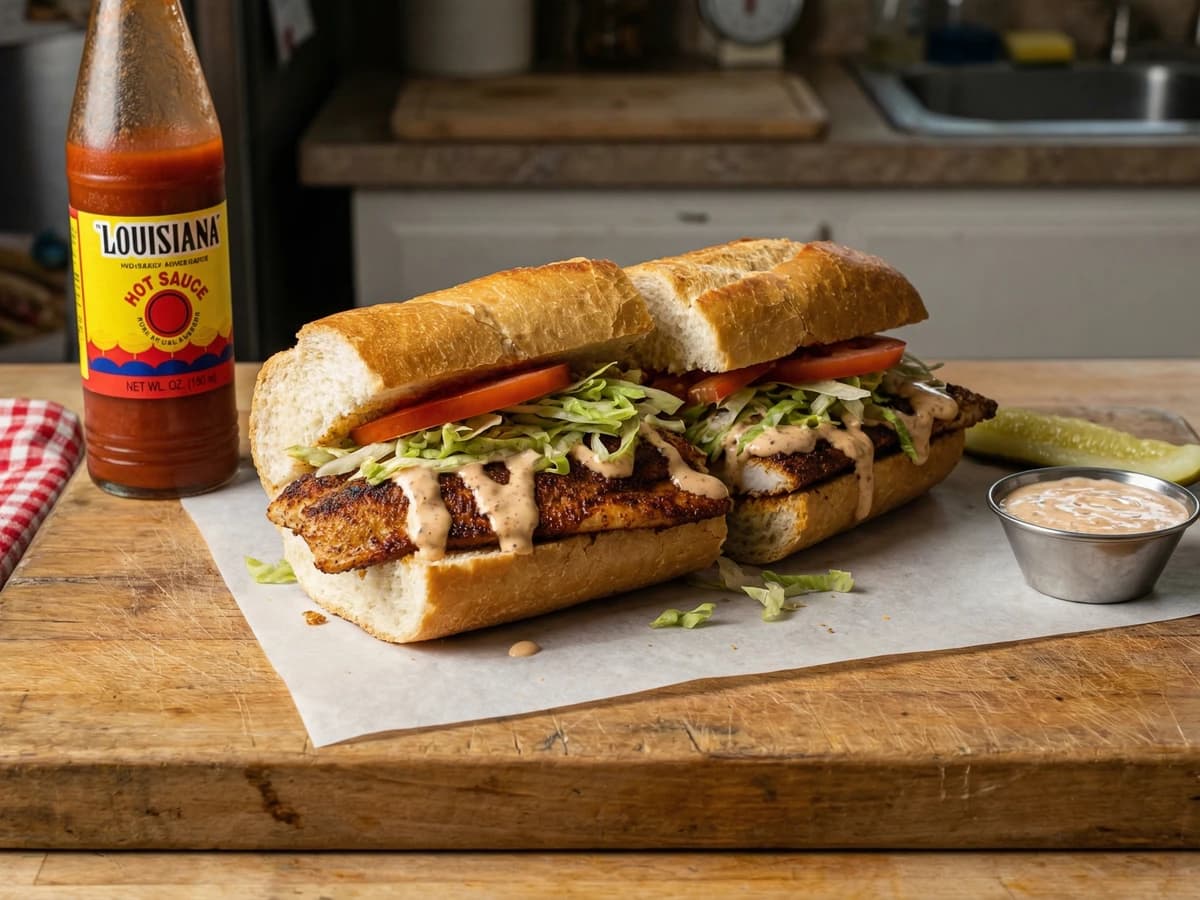
Butter-soft pulled pork roasted low and slow with Cajun spices, piled generously onto crispy French bread with cool, crunchy slaw and sharp Creole mustard, the kind of sandwich that makes you close your eyes and think of Jazz Fest.
Sandwiches & Wraps
Cajun
BBQ
Potluck
Celebration
45 min
Active Time
8 hr cook•8 hr 45 min total
Yield8 sandwiches
This sandwich is pure Louisiana celebration. Cochon de lait means milk-fed pig, and the tradition goes back generations: whole hogs roasted over open fires at family gatherings, meat so tender it falls apart at the touch. Every festival in Louisiana worth attending has a cochon de lait tent, and the line is always the longest. There's a reason for that.
Now, I'm not going to ask you to dig a pit in your backyard and roast a whole pig. That's a beautiful thing if you have the time and the crowd, but most folks don't. What I'm giving you here is the soul of cochon de lait adapted for your home oven: pork shoulder rubbed with my Cajun spice blend, roasted low and slow until it practically shreds itself. The technique is honest and forgiving, and the result is every bit as satisfying as what you'd find at the fairgrounds.
The bread matters more than you think. At Lagniappe, we get our loaves from a bakery that's been making French bread the same way for eighty years. You want that shatteringly crisp crust with a soft, pillowy interior that soaks up the pork juices without falling apart. The slaw brings brightness and crunch, cutting through all that rich meat. And the Creole mustard ties everything together with its sharp, grainy bite. This is a sandwich that rewards patience. Trust the process.
The technique, the tradition, and the story behind every dish.
Combine the salt, smoked paprika, cayenne, garlic powder, onion powder, black pepper, thyme, and oregano in a small bowl. Mix it thoroughly with your fingers. You're building layers of flavor here, and this rub is the foundation. Smell it. It should hit your nose with smoke and heat and herbs all at once. That's what you want on your pork.
Make a double batch of this rub and keep it in a jar. You'll reach for it constantly.
2
Prepare the pork
Pat the pork shoulder completely dry with paper towels. This matters because moisture is the enemy of a good crust. Score the fat cap in a crosshatch pattern, cutting about a quarter inch deep. This lets the spices penetrate and helps the fat render during the long cook. Now slather the entire shoulder with yellow mustard. Don't be shy. The mustard acts as glue for the spices and adds a tangy depth that mellows during roasting.
3
Apply the rub generously
Pack the spice rub onto every surface of the pork, pressing it into the scored fat and into all the crevices. Use every bit of it. My grandmother Evangeline always said you can't over-season a big piece of meat because most of it stays on the outside while the interior relies on what penetrates. Set the pork on a wire rack over a sheet pan, cover loosely, and refrigerate overnight or at least four hours. This dry brine pulls moisture to the surface, seasons deeply, and sets up that beautiful bark.
4
Set up for roasting
Pull the pork from the refrigerator one hour before cooking to take the chill off. Preheat your oven to 275 degrees. Pour the chicken stock, apple cider vinegar, and brown sugar into a deep roasting pan and whisk to combine. This liquid keeps the bottom of the pan from burning and creates a braising environment that keeps everything moist. Place a roasting rack in the pan and set the pork on top, fat side up.
5
Roast low and slow
Cover the pan tightly with aluminum foil and slide it into the oven. Now you wait. This is the bayou way: patience rewarded. After four hours, remove the foil and let the exterior start to develop a crust. Continue roasting uncovered until the internal temperature reaches 195 to 205 degrees and the meat pulls apart easily when you tug at it with a fork. Total time is usually seven to eight hours depending on your shoulder's size. The meat will look dark and crusty on the outside. That's exactly right.
Resist opening the oven constantly. Every time you peek, you add twenty minutes to your cook time.
6
Rest and pull the meat
Transfer the pork to a cutting board and tent loosely with foil. Let it rest for thirty minutes. I know it's hard to wait when your kitchen smells this good, but resting allows the juices to redistribute. Meanwhile, strain the pan drippings into a fat separator or measuring cup. Let the fat rise to the top and skim it off. You want those drippings. Pull the pork into chunks using two forks or your hands (use gloves, it's hot). Discard the bone and any large pockets of fat. Pour half the defatted pan juices over the pulled meat and toss to coat. Taste. Adjust seasoning if needed.
7
Make the slaw
While the pork rests, whisk together the mayonnaise, apple cider vinegar, Creole mustard, celery seed, salt, and cayenne in a large bowl. Add the shredded cabbage and grated carrots. Toss everything together until the vegetables are evenly coated. The slaw should be tangy and slightly spicy, a bright counterpoint to the rich pork. Let it sit for at least fifteen minutes before serving so the cabbage softens slightly and the flavors marry.
Make the slaw up to four hours ahead. It only gets better as it sits.
8
Toast the bread
Split your French bread lengths horizontally, leaving a hinge on one side. Open them like books and place them cut side up on a baking sheet. Toast under the broiler for one to two minutes until the interior is golden and crisp but the exterior stays tender enough to bite through without destroying the roof of your mouth. Watch carefully. Broilers are unforgiving. The bread should crackle when you squeeze it gently.
9
Build the po' boy
Spread a generous tablespoon of Creole mustard on both cut sides of each bread piece. Pile on the pulled pork, and I mean pile it. A proper po' boy is overstuffed. This isn't the time for restraint. Top with a generous mound of slaw and add pickle chips if you like them. Close the sandwich, press down gently to compact everything, and slice on the bias if you're feeling fancy. Serve immediately while the bread is still crisp. When the last bite is as good as the first, you've done it right.
Chef Tips
•Bone-in pork shoulder gives you better flavor and more forgiving texture than boneless. The bone conducts heat into the center and adds richness to those pan drippings. Ask your butcher for a Boston butt with the bone in.
•Real French bread is essential. Look for New Orleans-style po' boy bread if you can find it, or a good French baguette with a thin, crispy crust. Soft hoagie rolls won't give you the same experience. At Lagniappe, we order from Leidenheimer, but any bakery bread with that shatter and chew will work.
•The pork reheats beautifully. Store it in its juices in an airtight container for up to four days. Reheat gently in a covered pan with a splash of stock to keep it moist.
•Creole mustard is not the same as Dijon. It's coarser, spicier, and has more character. Zatarain's is the standard if you can find it. If you can't, mix whole grain mustard with a little horseradish and brown mustard.
Advance Preparation
•The spice-rubbed pork can be refrigerated overnight, which improves both flavor penetration and bark formation. This step is highly recommended.
•Pulled pork holds well in a low oven (200 degrees) for up to two hours if guests are running late. Keep it covered with its juices.
•The slaw can be made up to four hours ahead and refrigerated. It will soften slightly but remain crunchy.
•Leftover pulled pork freezes well for up to three months. Freeze it with the pan juices in a freezer bag, removing as much air as possible.
Frequently Asked Questions
Nutrition Information
1 serving (about 530g)
Calories
1095 calories
Total Fat
62 g
Saturated Fat
18 g
Trans Fat
0 g
Unsaturated Fat
40 g
Cholesterol
225 mg
Sodium
3480 mg
Total Carbohydrates
57 g
Dietary Fiber
4 g
Sugars
6 g
Protein
78 g
Where cooking meets culture.
Culinary guides, cultural storytelling, and the editorial depth that makes cooking meaningful.