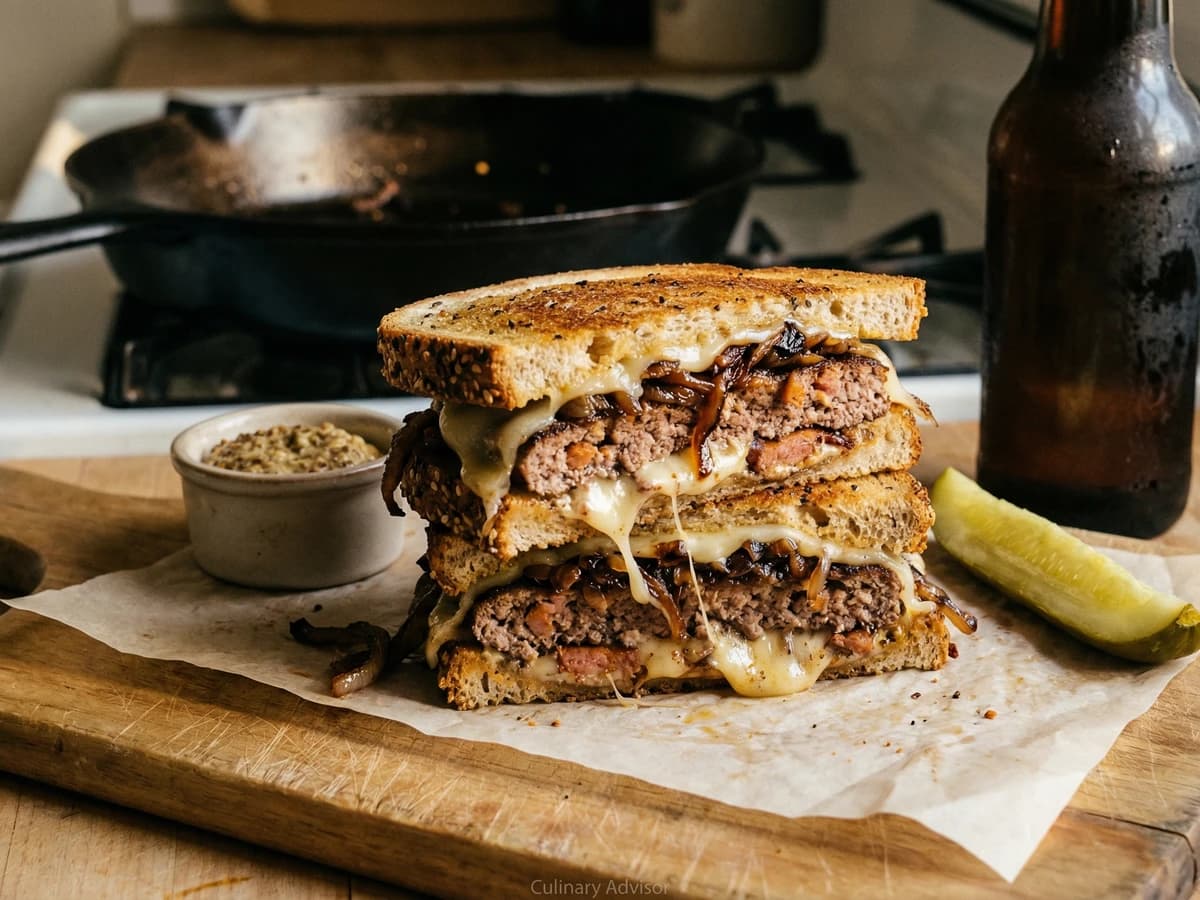
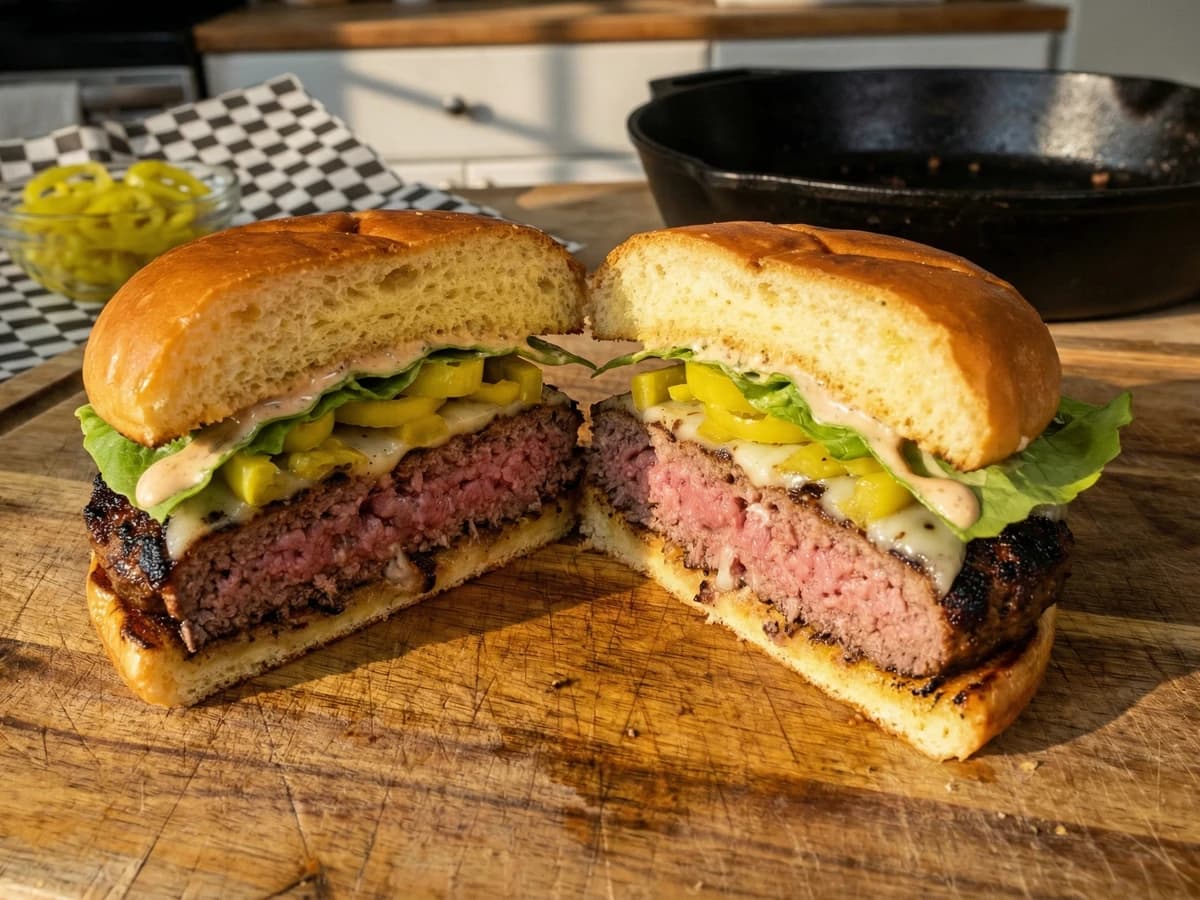
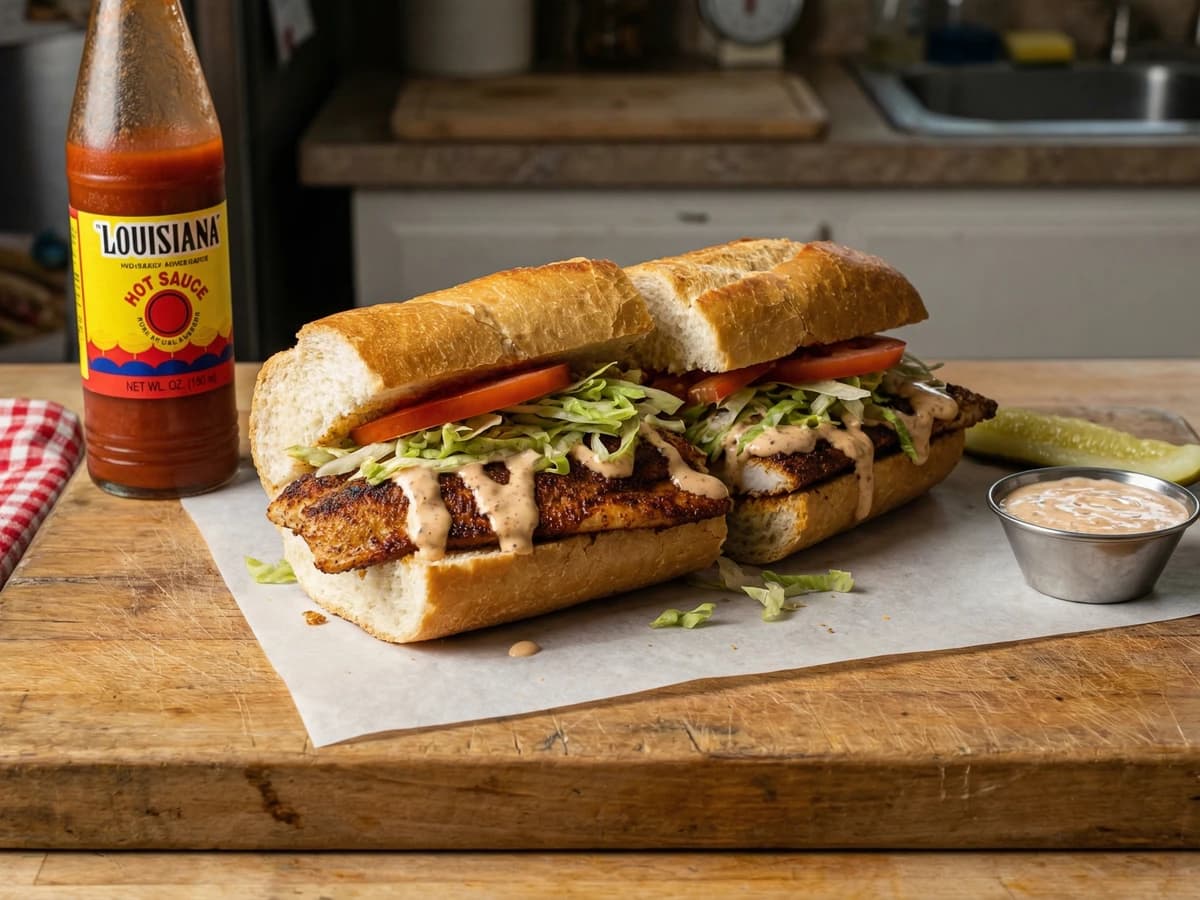
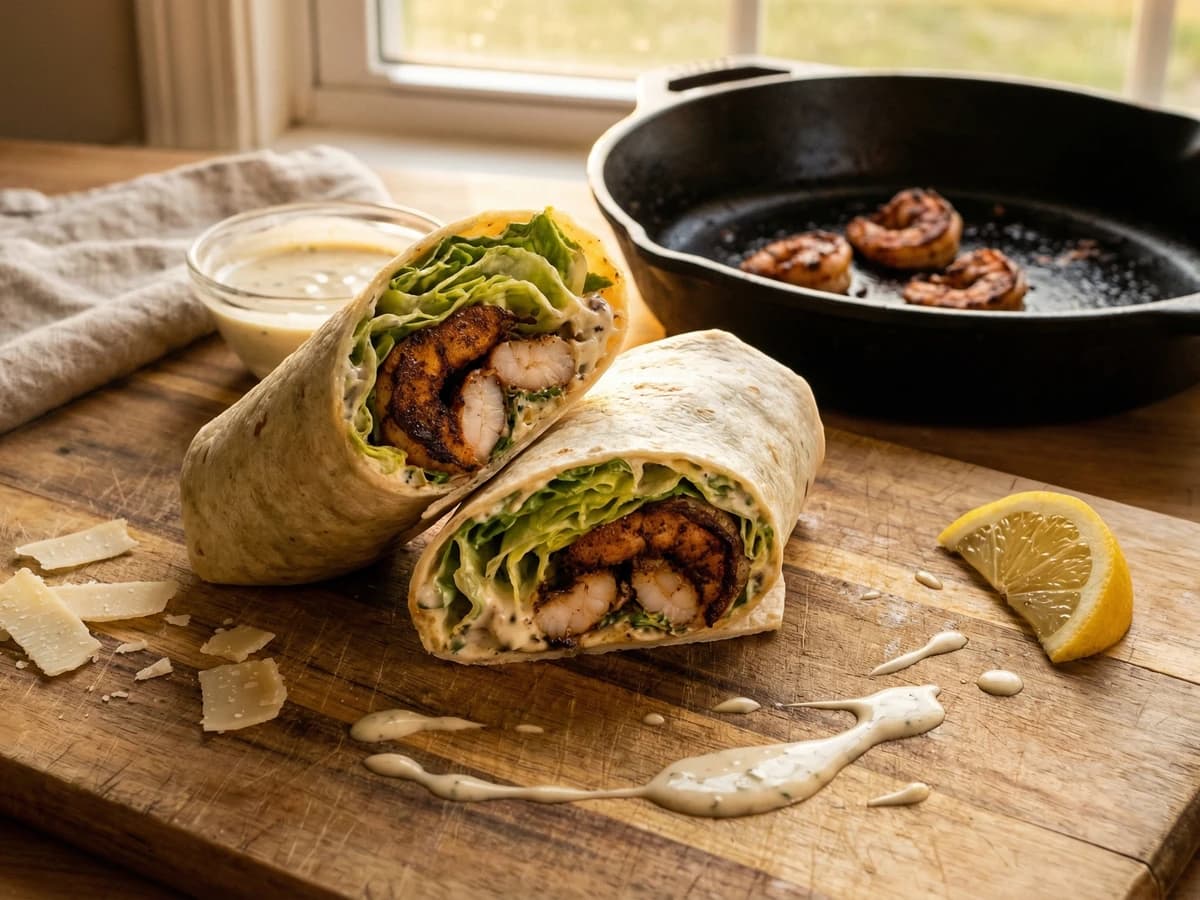
Tender chicken breast coated in smoky Cajun spices, seared in a screaming-hot cast iron until charred and juicy, nestled on a buttery toasted bun with cool, tangy remoulade and crisp pickle chips.
Sandwiches & Wraps
Cajun
Quick Meal
Weeknight
Meal Prep
25 min
Active Time
15 min cook•40 min total
Yield4 sandwiches
The blackening technique changed everything for Louisiana cooking. That char you get from spices blooming against butter in a scorching hot pan, the crust that forms while the meat stays juicy inside: that's pure Cajun magic. I've been making blackened chicken sandwiches at Lagniappe for over twenty years, and they still fly out of my kitchen faster than anything else on the lunch menu.
Here's what most folks get wrong: they think blackening means burning. It doesn't. You're caramelizing spices, building a crust that's complex and slightly bitter at the edges but sweet underneath. The butter is essential. It carries the spices, helps them bloom in the heat, and keeps everything from turning to ash. Your cast iron needs to be screaming hot before that chicken hits the surface. You'll know it's ready when a drop of water dances and disappears in less than a second.
The remoulade is just as important as the chicken. That cool, tangy sauce cuts through the heat and richness, bringing everything into balance. Make it ahead if you can. It gets better as it sits, the flavors marrying together like old friends at a crawfish boil. And don't skip the pickles. That crunch and acid wake up your palate between bites, keeping every mouthful as exciting as the first.
The technique, the tradition, and the story behind every dish.
Stir together the mayonnaise, Creole mustard, horseradish, pickle relish, hot sauce, lemon juice, minced garlic, and smoked paprika in a small bowl. Taste it. The sauce should have a kick that hits the back of your throat, balanced by the tang of mustard and the sweetness of relish. Adjust the hot sauce if you want more heat. Cover and refrigerate while you prepare everything else. The flavors will meld together and get even better.
Make the remoulade a day ahead if you have time. It transforms overnight into something magical.
2
Prepare the chicken
Place each chicken breast between two sheets of plastic wrap. Pound with a meat mallet or the bottom of a heavy skillet until uniformly thick, about half an inch throughout. Even thickness means even cooking, and thin breasts cook fast before the spices can burn. Pat the chicken completely dry with paper towels. Moisture is the enemy of a good sear.
3
Mix the blackening spices
Combine the paprika, garlic powder, onion powder, thyme, oregano, cayenne, black pepper, salt, and white pepper in a shallow bowl. Run your fingers through it and smell it. That's the aroma of Louisiana right there. The three peppers work together: black for sharpness, white for slow heat, cayenne for that front-of-mouth fire. Each one hits different and together they build something complex.
If you're sensitive to heat, start with half a teaspoon of cayenne. You can always add more to the blend, but you can't take it out.
4
Coat the chicken
Brush both sides of each chicken breast generously with melted butter, using about half your butter. The butter helps the spices stick and creates that characteristic blackened crust. Press each breast firmly into the spice mixture, coating both sides completely. You want a thick, even layer of spices. Don't be shy. The crust is the whole point.
5
Heat your cast iron
Set your largest cast iron skillet over high heat for at least five minutes. Open your windows and turn on the exhaust fan because things are about to get smoky. The pan needs to be almost glowing. Drop a bead of water on the surface. If it vaporizes instantly with an angry hiss, you're ready. This is not the time for a timid pan.
Do this outside on a propane burner if you have one. At Lagniappe, we have dedicated ventilation for blackening because the smoke is intense.
6
Blacken the chicken
Add a tablespoon of the remaining melted butter to the screaming-hot pan. It will smoke immediately. Place two chicken breasts in the pan, leaving space between them. Do not move them. Listen for the aggressive sizzle. Cook for three to four minutes until the bottom develops a dark, almost black crust with bits of char. The spices should smell toasty and aromatic, not acrid. Drizzle a bit more butter over the top of each breast, then flip.
The crust should look nearly burnt but smell incredible. That's the difference between blackened and burned. Trust your nose.
7
Finish cooking
Cook the second side for another three to four minutes until the internal temperature reaches 165 degrees and the crust is uniformly dark and crispy. Transfer to a cutting board and let rest for three minutes while you cook the remaining breasts. The resting is not optional. Cut into it too soon and all those juices run out onto the board instead of into your mouth.
8
Toast the buns
While the chicken rests, spread softened butter on the cut sides of each bun. Toast them in a clean skillet over medium heat, or on a griddle, until golden brown and slightly crispy, about two minutes. A toasted bun holds up to the juicy chicken and creamy sauce without turning to mush.
9
Assemble the sandwiches
Spread a generous spoonful of remoulade on both cut sides of each bun. That's right, both sides. Layer butter lettuce on the bottom bun, then tomato slices. Place the blackened chicken breast on top. Crown with a handful of pickle chips and close with the top bun. Press down gently so everything melds together. Serve immediately while the chicken is still warm against that cool, creamy sauce.
Chef Tips
•Butterfly thick chicken breasts before pounding if they're over an inch thick. You want thin, even pieces that cook through before the spices burn.
•Make double the spice blend and store the extra in a jar. It keeps for months and works beautifully on fish, shrimp, pork chops, and anything else that deserves the blackening treatment.
•If your smoke alarm is having a fit, you're probably doing it right. Real blackening creates serious smoke. That's the bayou way.
•The remoulade recipe makes more than you need for four sandwiches. Use the extra as a dip for fried pickles, spread on po' boys, or alongside boiled shrimp.
Advance Preparation
•Remoulade can be made up to five days ahead and refrigerated. The flavors improve significantly after 24 hours.
•Spice blend can be mixed weeks in advance and stored in an airtight container away from heat and light.
•Chicken can be pounded and stored refrigerated up to a day ahead. Season and coat with spices just before cooking.
Frequently Asked Questions
Nutrition Information
1 serving (about 350g)
Calories
1015 calories
Total Fat
62 g
Saturated Fat
25 g
Trans Fat
0 g
Unsaturated Fat
36 g
Cholesterol
250 mg
Sodium
1420 mg
Total Carbohydrates
43 g
Dietary Fiber
3 g
Sugars
9 g
Protein
70 g
Where cooking meets culture.
Culinary guides, cultural storytelling, and the editorial depth that makes cooking meaningful.