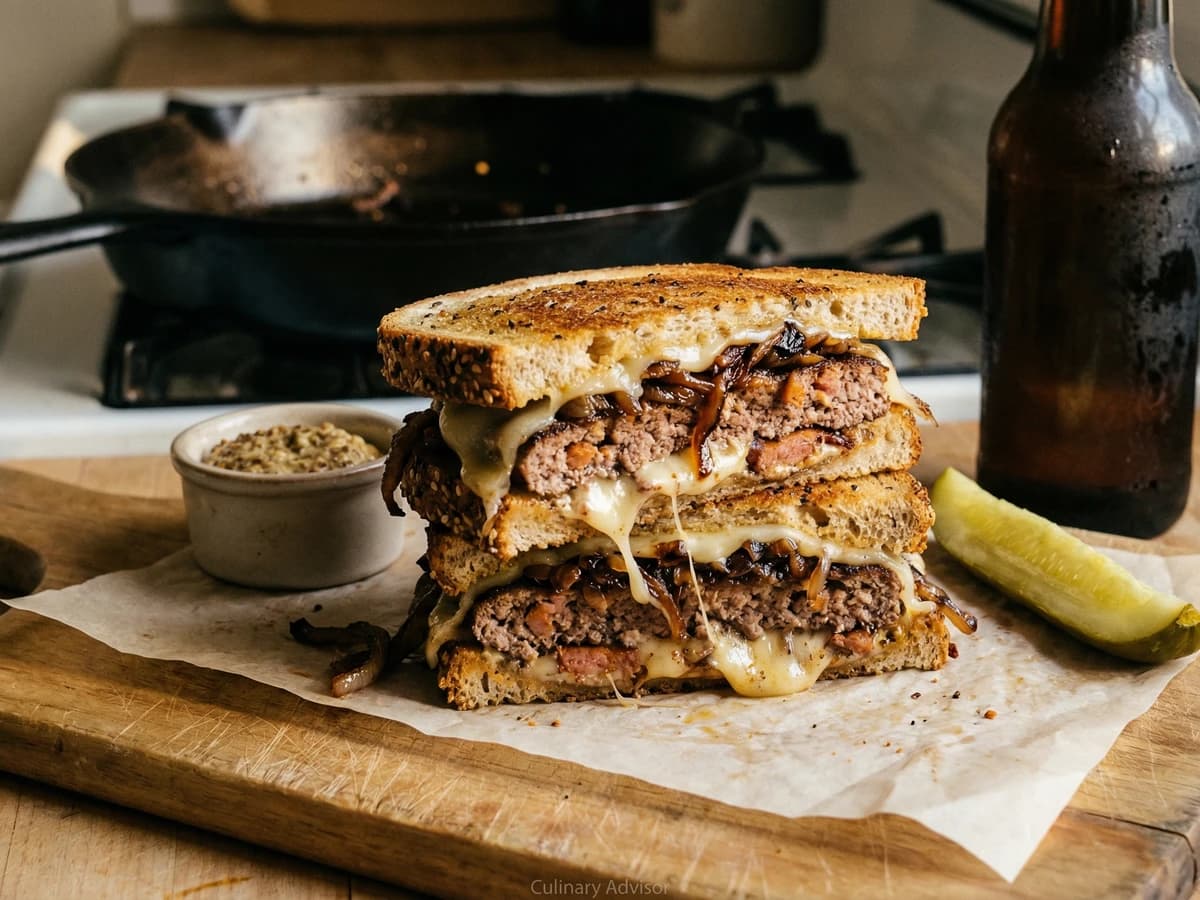
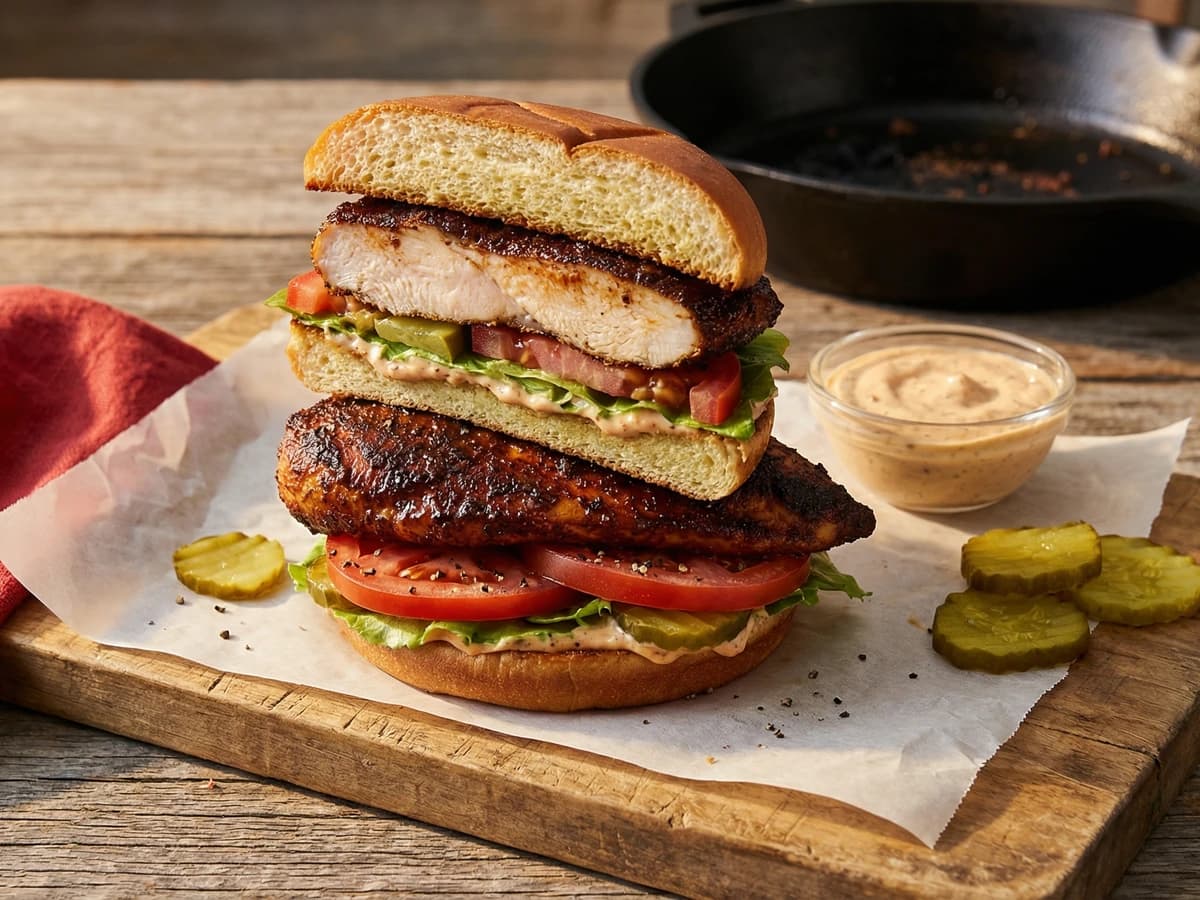
Gulf redfish seared in a cast iron skillet until the spice crust turns dark and complex, nestled in crispy-outside, pillowy-inside French bread with cool, tangy remoulade and crisp lettuce, the kind of sandwich that makes you close your eyes and taste Louisiana.
Sandwiches & Wraps
Cajun
Special Occasion
Date Night
Weeknight
25 min
Active Time
15 min cook•40 min total
Yield4 sandwiches
The blackening technique changed everything. When it hit New Orleans in the early 80s, folks lined up around the block for a taste. The char, the spice, the butter, the perfectly cooked fish underneath. Now I'm putting that magic between two pieces of proper French bread, and I promise you, it's something special.
Here's what most people get wrong about blackening: it's not about burning. The spices bloom in that ferocious heat, caramelizing against the butter, forming a crust that's almost bitter at the edges but sweet and complex underneath. The fish stays moist inside because that crust seals it. Fast and hot. You'll set off your smoke alarm. Open the windows, turn on the fan, and don't apologize. Good cooking makes noise and smoke sometimes.
The po' boy bread matters as much as the fish. You need that authentic New Orleans French bread: shatteringly crisp crust, cotton-soft interior. It soaks up the butter and remoulade without falling apart. At Lagniappe, we get ours delivered fresh every morning. If you can't find proper po' boy bread, a good crusty baguette will do, but seek out the real thing if you can.
The remoulade brings everything together. Cool, creamy, tangy, with a little heat from the horseradish and hot sauce. It tempers the intensity of the blackened fish while the crisp lettuce and ripe tomato add freshness. This is Louisiana handheld perfection.
The technique, the tradition, and the story behind every dish.
Combine the mayonnaise, Creole mustard, horseradish, hot sauce, capers, parsley, green onion, garlic, and lemon juice in a bowl. Whisk until smooth and taste it. Adjust the heat and tang to your liking. This sauce should have personality: creamy but with a kick, tangy but not sour. Cover and refrigerate while you prepare everything else. The flavors marry as it sits.
Make your remoulade the night before if you can. The flavors deepen overnight and the sauce thickens slightly.
2
Mix the blackening seasoning
Combine the paprika, garlic powder, onion powder, cayenne, thyme, oregano, black pepper, white pepper, and salt in a shallow dish. Mix thoroughly with your fingers, breaking up any clumps. You want an even blend so every bite of fish tastes the same. Smell it. It should hit you with warmth and earthiness. This is the soul of the dish.
If you're sensitive to heat, start with one teaspoon of cayenne. You can always add more heat to your remoulade to compensate. That's the bayou way: adjust to your taste.
3
Prepare the fish
Pat the redfish fillets completely dry with paper towels. Moisture is the enemy of a good sear. Brush both sides generously with melted butter, then press each fillet firmly into the seasoning blend, coating both sides evenly. The butter helps the spices adhere and creates that characteristic blackened crust. Let the coated fillets rest at room temperature for ten minutes while you heat your skillet.
4
Heat the cast iron
Place a large cast iron skillet over high heat for a full ten minutes. I mean screaming hot. The kind of hot where a drop of water vaporizes on contact instantly, not sizzles, vanishes. This is not negotiable. If your pan isn't hot enough, you're pan-frying, not blackening, and you'll end up with steamed fish wearing a sad coat of spices.
Do this outdoors on a propane burner if you can. At Lagniappe, we had to install industrial ventilation for this dish. Your kitchen will fill with smoke. That's how you know something real is happening.
5
Blacken the fish
Add a tablespoon of butter to the screaming-hot skillet. It will smoke immediately. Lay the fish fillets in the pan, presentation side down. Do not move them. You'll hear an aggressive sizzle and see smoke billowing. After two to three minutes, the underside will be dark and crusty. Drizzle another tablespoon of butter over the top of each fillet, then flip. Cook another two to three minutes until the fish is just cooked through and the crust is dark mahogany, almost black in spots. The interior should flake easily but still be moist.
6
Toast the bread
Split the French bread loaves lengthwise, leaving one edge attached like a hinge. Brush the cut sides with some of the remaining melted butter. Toast under a broiler or in a hot oven for two minutes until golden and slightly crisp. The bread should crackle when you press it but still have that pillowy interior. Watch it closely because it goes from perfect to burned in seconds.
7
Assemble the po' boys
Spread remoulade generously on both cut sides of each toasted loaf. Don't be shy. Layer shredded lettuce on the bottom, followed by tomato slices, then nestle a blackened fillet on top. Add pickle slices if you like them. The cool, crisp vegetables against the hot, spicy fish is what makes a po' boy sing. Close the sandwich gently, pressing just enough to hold everything together. Cut in half on the diagonal and serve immediately while the fish is still warm and the bread still has its crackle.
Chef Tips
•If you can't find redfish, drum, snapper, or catfish work beautifully. The fish needs to be firm enough to handle the intense heat without falling apart. Whatever you use, make sure it's fresh. Smell it. Good fish smells like the ocean, not like fish.
•Your cast iron needs to be well-seasoned. A sticky or reactive pan will ruin the crust. If your skillet isn't up to the task, this is your sign to season it properly.
•The spice blend makes more than you need for four fillets. Store the extra in an airtight jar. Use it on chicken, pork chops, shrimp, anything that wants bold flavor and high heat.
•Serve these with ice-cold beer or sweet tea. The cold drink against the spicy fish is pure Louisiana pleasure.
•At Lagniappe, we always offer extra remoulade on the side. Some folks want to drown their po' boy in it. I respect that.
Advance Preparation
•Remoulade can be made up to 5 days ahead and refrigerated. The flavor actually improves after a day or two.
•Blackening seasoning can be mixed weeks ahead and stored in an airtight container in a cool, dark place.
•The fish must be cooked fresh. There is no making this ahead. The magic happens in that moment between skillet and bread.
Frequently Asked Questions
Nutrition Information
1 serving (about 600g)
Calories
1260 calories
Total Fat
71 g
Saturated Fat
22 g
Trans Fat
0 g
Unsaturated Fat
45 g
Cholesterol
220 mg
Sodium
2720 mg
Total Carbohydrates
90 g
Dietary Fiber
5 g
Sugars
3 g
Protein
57 g
Where cooking meets culture.
Culinary guides, cultural storytelling, and the editorial depth that makes cooking meaningful.