Culinary Explorer

A cooking platform built around craft, culture, and the stories behind what we eat.
Discover Culinary Explorer
Classic Snickerdoodles

Classic Snickerdoodles

Created by

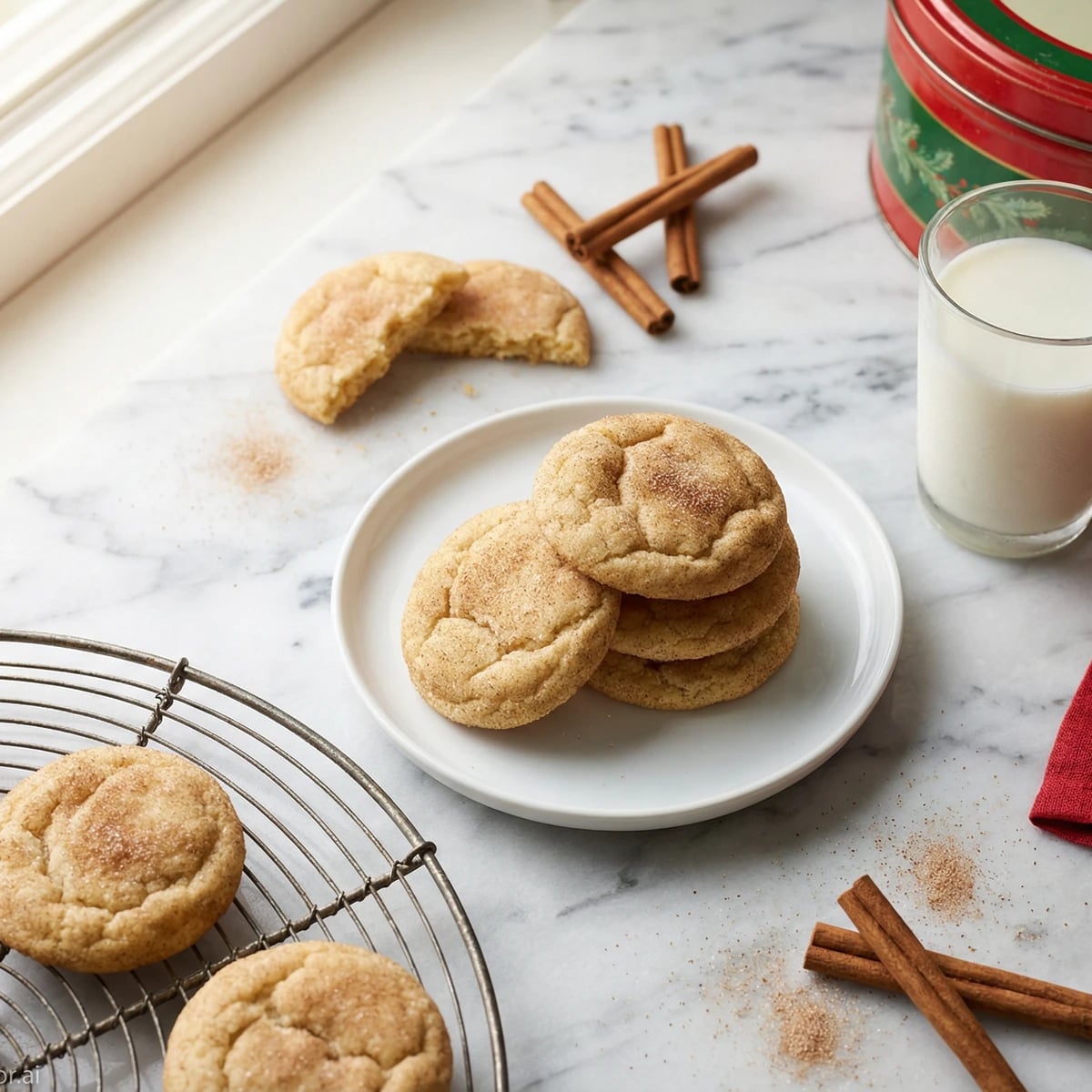
Soft, puffy cinnamon-sugar cookies with that unmistakable crackled top and subtle tang from cream of tartar. This is the snickerdoodle your grandmother made, and her grandmother before her.

Pastries & Cookies
American
Holiday
Christmas
Make Ahead
20 min
Active Time
10 min cook30 min total
Yield36 cookies

The snickerdoodle is proof that American baking has always had a sense of humor. That ridiculous name likely traces back to German immigrants and their Schneckennudeln, cinnamon-dusted pastries that got Americanized somewhere between Pennsylvania and the Midwest. By the 1800s, snickerdoodles had become a fixture of church bake sales, county fairs, and holiday cookie exchanges from coast to coast.

What separates a proper snickerdoodle from an ordinary sugar cookie rolled in cinnamon? Cream of tartar. That mysterious white powder in the back of your pantry is an acid, a byproduct of winemaking, and it does two things no other ingredient can replicate. First, it creates tenderness by interfering with gluten development. Second, it provides that distinctive tang, a subtle sourness that cuts through the sweetness and keeps you reaching for another cookie.

These are soft cookies. Not crispy, not chewy in the brownie sense, but pillowy and yielding with a slight resistance when you bite through the cinnamon-sugar crust. The crackled top happens naturally as the cookies puff in the oven's heat, then settle as they cool. Don't overbake them. They should look slightly underdone when you pull them out. Residual heat finishes the job.

I've watched generations of children roll these dough balls in cinnamon sugar, their small hands coated in sweetness, utterly delighted by the simple task. This is a recipe that invites participation. Let the little ones help. The cookies will taste better for it.

The technique, the tradition, and the story behind every dish.

Discover Culinary Explorer

Ingredients

all-purpose flour

Quantity

2 3/4 cups (345g)

cream of tartar

Quantity

2 teaspoons

baking soda

Quantity

1 teaspoon

fine sea salt

Quantity

1/2 teaspoon

unsalted butter

Quantity

1 cup (2 sticks / 227g)

softened

granulated sugar

Quantity

1 1/2 cups (300g)

large eggs

Quantity

2

room temperature

pure vanilla extract

Quantity

1 teaspoon

granulated sugar

Quantity

3 tablespoons

for rolling

ground cinnamon

Quantity

1 tablespoon

for rolling

Equipment Needed

  • Stand mixer or hand mixer
  • Large mixing bowl
  • Two rimmed baking sheets
  • Parchment paper or silicone baking mats
  • Wire cooling rack
  • Cookie scoop (optional, but helpful for consistency)

Instructions

  1. 1

    Whisk dry ingredients

    In a medium bowl, whisk together the flour, cream of tartar, baking soda, and salt until thoroughly combined. The cream of tartar tends to clump, so break up any lumps with your fingers or press them against the side of the bowl. Set aside.

  2. 2

    Cream butter and sugar

    In a large bowl or the bowl of a stand mixer fitted with the paddle attachment, beat the softened butter and sugar on medium speed for 3 to 4 minutes. You're looking for the mixture to turn pale and fluffy, nearly doubled in volume. This step incorporates air that helps the cookies puff. Don't shortchange it.

    Properly softened butter yields to gentle pressure but holds its shape. If your butter is too cold, the mixture will look grainy. Too warm, and it turns greasy and flat.
  3. 3

    Add eggs and vanilla

    Add the eggs one at a time, beating well after each addition until fully incorporated. Scrape down the sides of the bowl with a rubber spatula. Add the vanilla and mix briefly to combine. The mixture may look slightly curdled at this stage. That's normal.

  4. 4

    Incorporate dry ingredients

    Add the flour mixture to the butter mixture in two additions, mixing on low speed just until no dry streaks remain. The dough will be soft but should hold together when pressed. Resist the urge to overmix. Overworked dough produces tough cookies.

  5. 5

    Chill the dough

    Cover the bowl with plastic wrap and refrigerate for at least 30 minutes, or until the dough is firm enough to roll into balls without sticking to your hands. Cold dough spreads less in the oven, producing thicker, puffier cookies with better definition.

    Dough can be refrigerated for up to 3 days. If chilled overnight, let it sit at room temperature for 10 minutes before rolling.
  6. 6

    Prepare cinnamon sugar

    While the dough chills, whisk together the 3 tablespoons sugar and cinnamon in a shallow bowl. The cinnamon should be evenly distributed with no visible streaks. This coating creates the signature appearance and adds that warm spice fragrance the moment the cookies emerge from the oven.

  7. 7

    Preheat and prepare pans

    Position racks in the upper and lower thirds of your oven and preheat to 375°F (190°C). Line two baking sheets with parchment paper or silicone baking mats. Ungreased pans work fine, but parchment makes cleanup easier and promotes even browning.

  8. 8

    Shape and coat cookies

    Scoop tablespoon-sized portions of dough (about 25g each) and roll between your palms to form smooth balls. Drop each ball into the cinnamon sugar and roll to coat completely. Place coated dough balls on prepared baking sheets, spacing them 2 inches apart. They spread as they bake.

  9. 9

    Bake until just set

    Bake for 8 to 10 minutes, rotating the pans from top to bottom and front to back halfway through. The cookies are done when the edges are set and lightly golden but the centers still look slightly underdone and puffy. They will appear cracked on top. Pull them from the oven when you think they need another minute. They don't.

    Snickerdoodles firm up significantly as they cool. An overbaked snickerdoodle turns dry and crumbly. Trust the timing.
  10. 10

    Cool and serve

    Let the cookies rest on the baking sheets for 5 minutes. This allows them to set without crumbling when moved. Transfer to a wire rack to cool completely. They're wonderful warm, but the texture improves after 15 minutes. The exterior develops that slight crispness while the interior stays soft.

Chef Tips

  • Cream of tartar loses potency over time. If yours has been sitting in the pantry for years, replace it. Fresh cream of tartar produces noticeably puffier cookies with better tang.
  • For extra-thick cookies, chill the rolled and coated dough balls on the baking sheet for 15 minutes before baking. Cold dough spreads less, producing a taller, softer result.
  • Store snickerdoodles in an airtight container at room temperature for up to 5 days. They soften slightly over time but remain delicious. A slice of bread in the container helps maintain moisture.
  • These cookies freeze beautifully. Freeze baked cookies in a single layer until solid, then transfer to a zip-top bag for up to 3 months. Thaw at room temperature for an hour.

Advance Preparation

  • Dough can be made and refrigerated up to 3 days ahead. Let cold dough sit at room temperature for 10 minutes before scooping.
  • Shaped dough balls can be frozen on a baking sheet, then transferred to a freezer bag for up to 3 months. Bake from frozen, adding 1 to 2 minutes to the baking time.
  • Baked cookies store well in an airtight container at room temperature for 5 days, making them ideal for holiday cookie exchanges prepared in advance.

Frequently Asked Questions

Nutrition Information

1 serving (about 31g)

Calories
120 calories
Total Fat
5 g
Saturated Fat
3 g
Trans Fat
0 g
Unsaturated Fat
2 g
Cholesterol
15 mg
Sodium
45 mg
Total Carbohydrates
16 g
Dietary Fiber
0 g
Sugars
8 g
Protein
2 g

Note: Chef personas and recipes are created with AI assistance. Cook with care: follow safe food-handling practices, check doneness with a thermometer when needed, and adapt for allergies and your kitchen.

Where cooking meets culture.

Culinary guides, cultural storytelling, and the editorial depth that makes cooking meaningful.

Discover Culinary Explorer

More from The Ultimate Holiday Cookie Collection

Browse the full collection