Chef Juliette
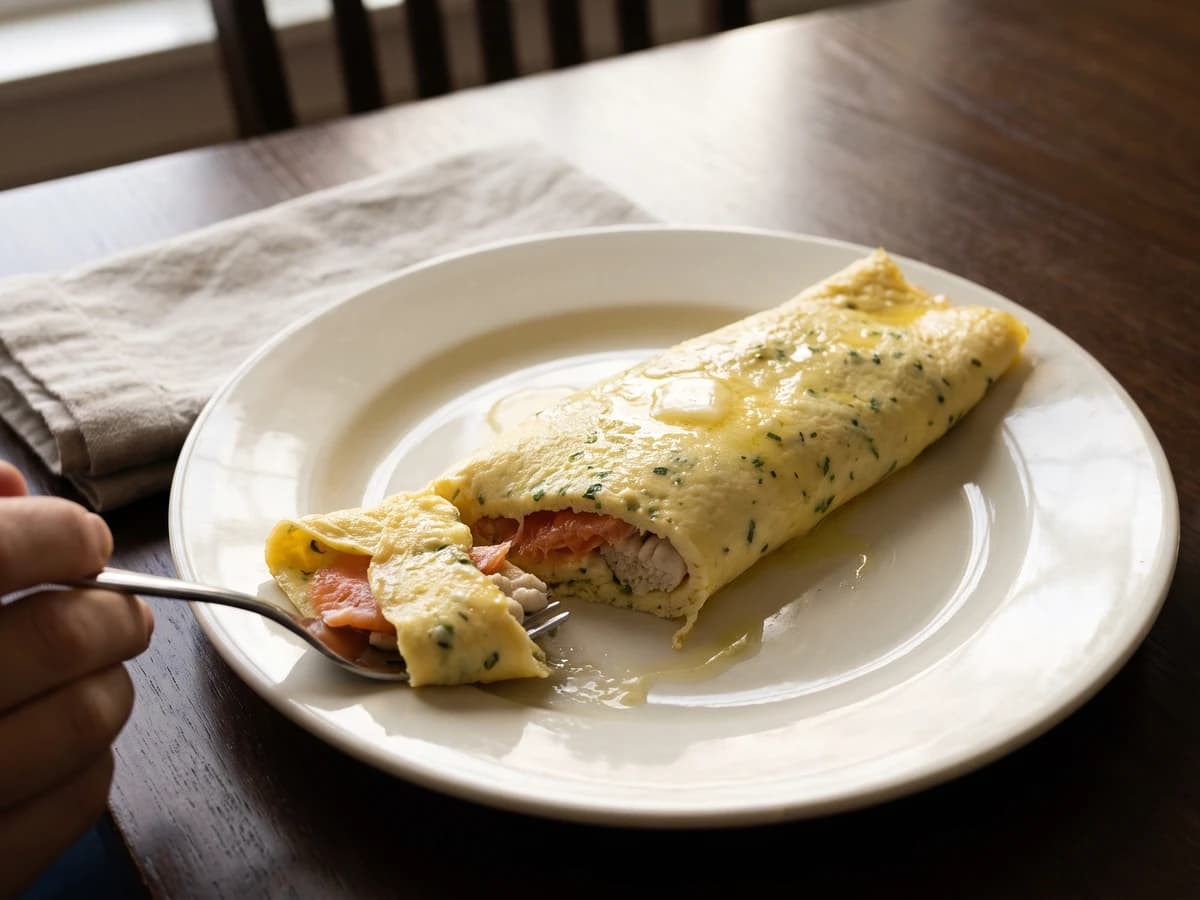
Omelette à l’Écossaise
A creamy omelette aux fines herbes closes around smoked-salmon-wrapped herring milts, gently poached in butter. Have the filling ready, then roll the eggs while they still shine.
A cooking platform built around craft, culture, and the stories behind what we eat.

Created by
Eggs nestled in a fragrant, cumin-spiced tomato sauce with sweet peppers and a hint of heat, served straight from the skillet with crusty bread for scooping every last drop.
Shakshuka arrived in Israel with North African immigrants and quickly became the nation's breakfast. It spread across the Mediterranean, each region adding its own accent. Tunisians favor more heat. Moroccans add preserved lemon. The Israelis made it famous. What unites every version is this: eggs cooked gently in a sauce bold enough to stand on its own, served in the same vessel that created it.
This is peasant food in the finest sense. Tomatoes, peppers, onions, garlic, and a fistful of spices transform into something far greater than their parts. The eggs are not scrambled or fried but poached directly in the simmering sauce, their whites setting while the yolks remain liquid gold. When you break that yolk with a piece of good bread, sauce and egg mingling together, you understand why this dish has conquered kitchens from Tel Aviv to Brooklyn.
I've served shakshuka to crowds of twenty and tables of two. It scales beautifully. The sauce improves with age, so you can make it days ahead and simply crack your eggs when guests arrive. The theater of bringing a bubbling skillet to the table, steam rising, never fails to impress. This is honest food that asks only for good ingredients and a little attention.
Quantity
3 tablespoons
Quantity
1 large
diced
Quantity
1
seeded and diced
Quantity
1
seeded and diced
Quantity
4 cloves
minced
Quantity
1 tablespoon
Quantity
1 teaspoon
Quantity
1 teaspoon
Quantity
1/2 teaspoon
Quantity
1/4 teaspoon
Quantity
1 can (28 oz)
crushed by hand
Quantity
1 teaspoon
Quantity
1 teaspoon
Quantity
1/2 teaspoon
Quantity
6
Quantity
1/2 cup
crumbled
Quantity
for garnish
roughly chopped
Quantity
for serving
| Ingredient | Quantity |
|---|---|
| extra-virgin olive oil | 3 tablespoons |
| yellow oniondiced | 1 large |
| red bell pepperseeded and diced | 1 |
| green bell pepperseeded and diced | 1 |
| garlicminced | 4 cloves |
| tomato paste | 1 tablespoon |
| ground cumin | 1 teaspoon |
| sweet paprika | 1 teaspoon |
| smoked paprika | 1/2 teaspoon |
| cayenne pepper | 1/4 teaspoon |
| whole peeled tomatoescrushed by hand | 1 can (28 oz) |
| sugar | 1 teaspoon |
| kosher salt | 1 teaspoon |
| freshly ground black pepper | 1/2 teaspoon |
| large eggs | 6 |
| feta cheese (optional)crumbled | 1/2 cup |
| fresh cilantro or parsleyroughly chopped | for garnish |
| crusty bread or warm pita | for serving |
Heat olive oil in a large, deep skillet (12-inch is ideal) over medium heat until it shimmers but doesn't smoke. Add the diced onion and both bell peppers with a pinch of salt. Cook, stirring occasionally, until softened and the onions turn translucent with golden edges at the tips. This takes 8 to 10 minutes. Don't rush it. The sweetness develops slowly.
Push the vegetables to the edges of the pan, creating a clearing in the center. Add the garlic and tomato paste to that clearing. Stir them together for 30 seconds until fragrant, then add the cumin, sweet paprika, smoked paprika, and cayenne. Toast the spices in the paste for another 30 seconds. You'll smell the cumin bloom, earthy and warm. Now stir everything together, coating the vegetables in that spiced paste.
Pour the crushed tomatoes into the skillet, using a wooden spoon to scrape up any fond from the bottom. Add the sugar, salt, and black pepper. Stir well and bring to a gentle simmer. Reduce heat to medium-low and let the sauce cook uncovered for 15 to 20 minutes, stirring occasionally. The sauce should thicken enough that a spoon dragged across the bottom leaves a trail that slowly fills in. Taste it. Adjust salt and cayenne as needed.
Using the back of a large spoon, make six evenly spaced wells in the sauce, pressing down gently to expose the bottom of the pan slightly. These depressions will cradle your eggs and help the whites set in contact with the hot surface.
Crack each egg into a small bowl first, then slide it carefully into a well. This prevents shell fragments and lets you control placement. Season the eggs with a small pinch of salt. Cover the skillet with a lid or sheet of foil and cook for 5 to 8 minutes, depending on how set you like your yolks. At 5 minutes, the whites will be just set and the yolks still runny. At 8 minutes, the yolks will be jammy throughout.
Remove the lid and scatter crumbled feta over the shakshuka. The residual heat will soften the cheese slightly. Shower with fresh cilantro or parsley. Bring the skillet directly to the table, set on a trivet or folded kitchen towel. Serve with plenty of crusty bread or warm pita alongside. The proper technique is to tear the bread, use it to scoop sauce and egg together, and eat immediately. No utensils required, though they're not forbidden.
1 serving (about 310g)
Culinary guides, cultural storytelling, and the editorial depth that makes cooking meaningful.
Discover Culinary ExplorerChef Juliette
A creamy omelette aux fines herbes closes around smoked-salmon-wrapped herring milts, gently poached in butter. Have the filling ready, then roll the eggs while they still shine.
Chef Juliette
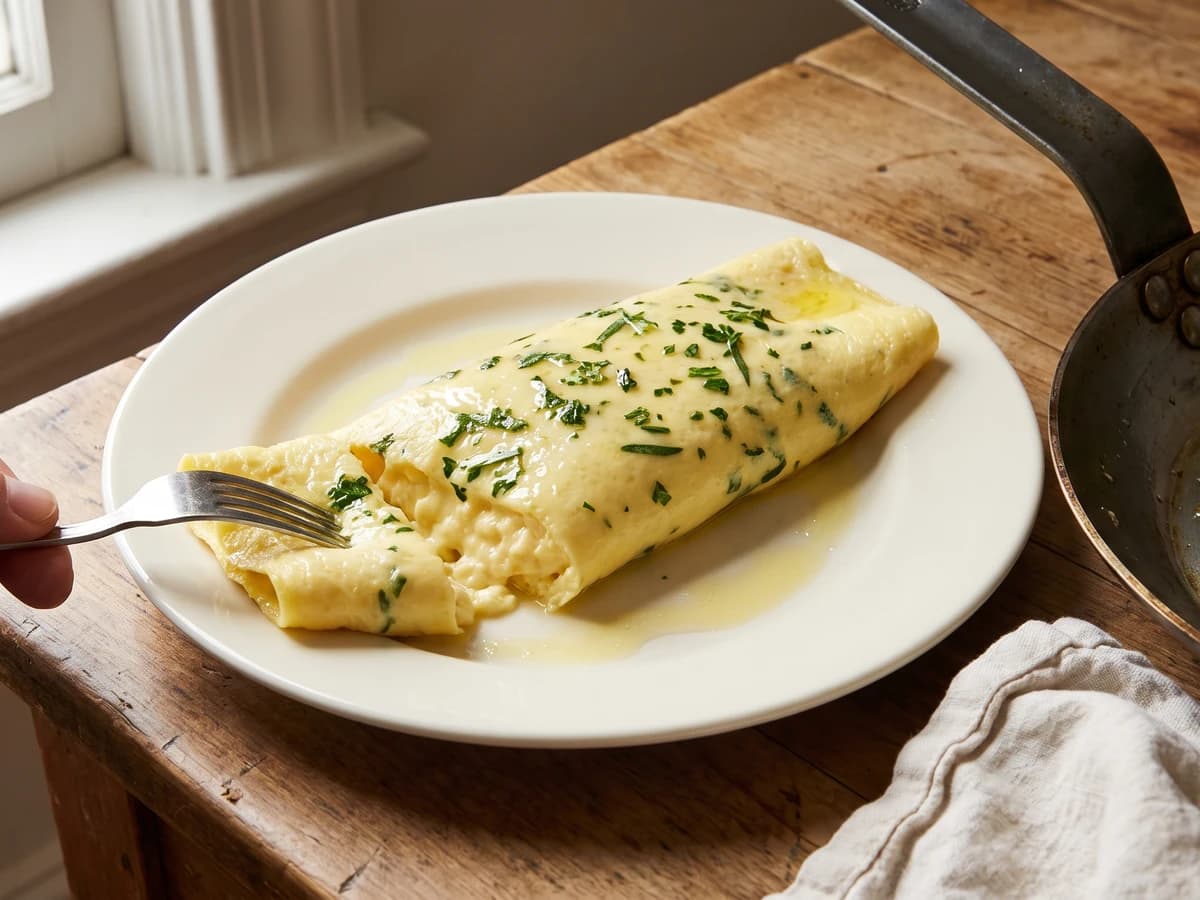
Four tender herbs, hot butter, and two eggs per pan: this rolled omelette teaches the quick hand and good judgment that keep the outside pale and the center creamy.
Chef Juliette
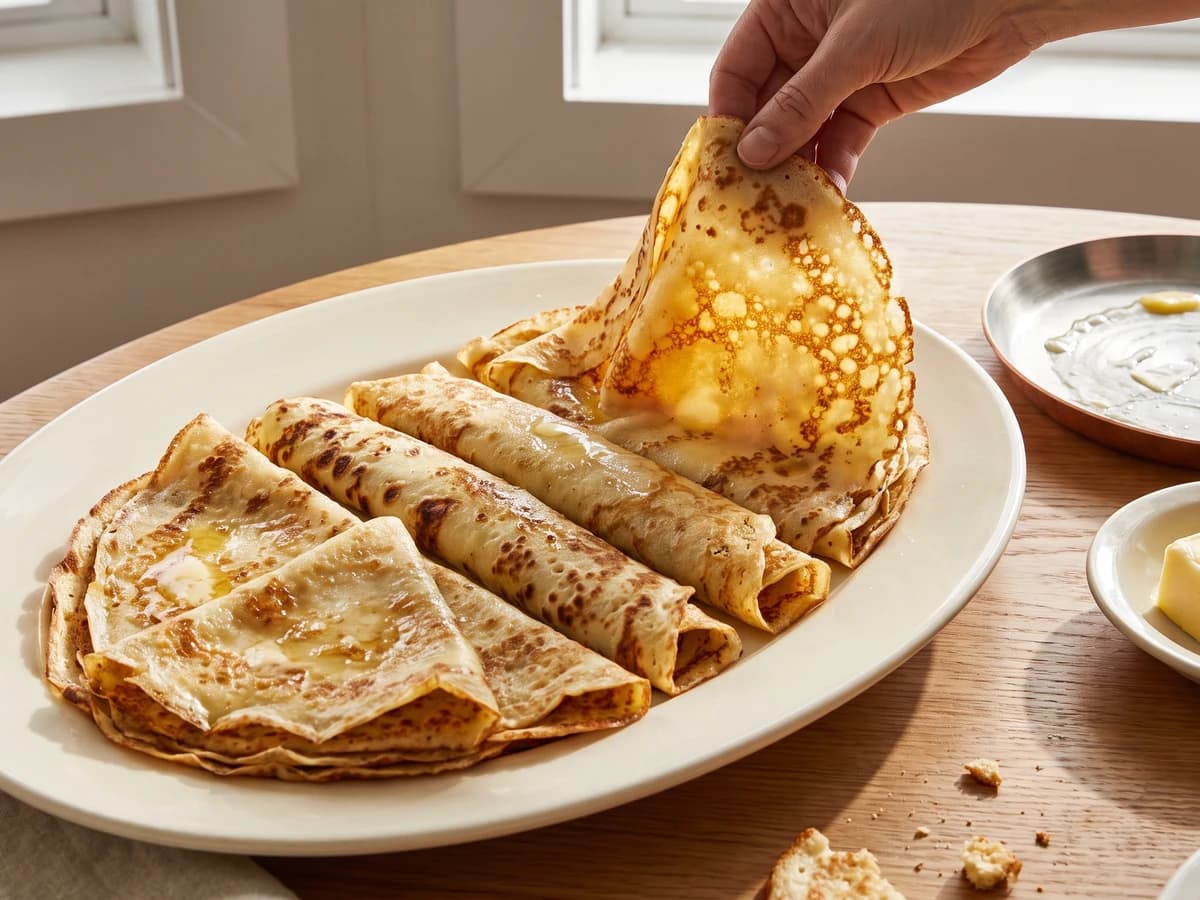
Four batters, one lesson: let the flour drink deeply before cooking, then spread the batter thinly in butter for crêpes and pannequets that bend without becoming tough.
Chef Juliette
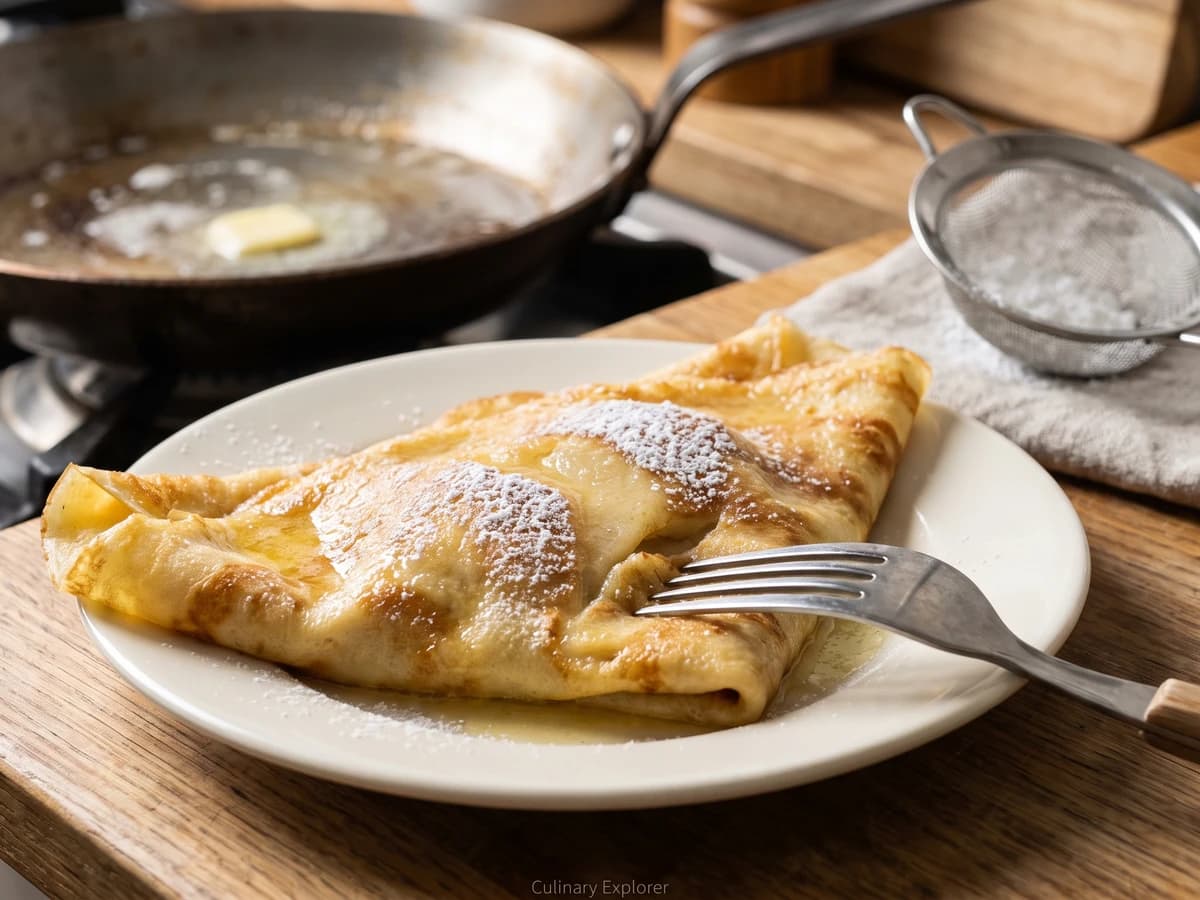
Crêpes au Couvent trap ripe Williams pear dice between two thin pours of sweet batter, then turn in one clean toss and reach the table butter-gold, powdered, and burning hot.