
Chef Thomas
A Proper Ploughman's Board
A board of good cheddar, thick ham, proper pickle, hard-boiled eggs, and crusty bread. Not cooking so much as assembling with conviction, and one of the finest lunches the English kitchen has ever produced.
A cooking platform built around craft, culture, and the stories behind what we eat.
Created by Chef Thomas
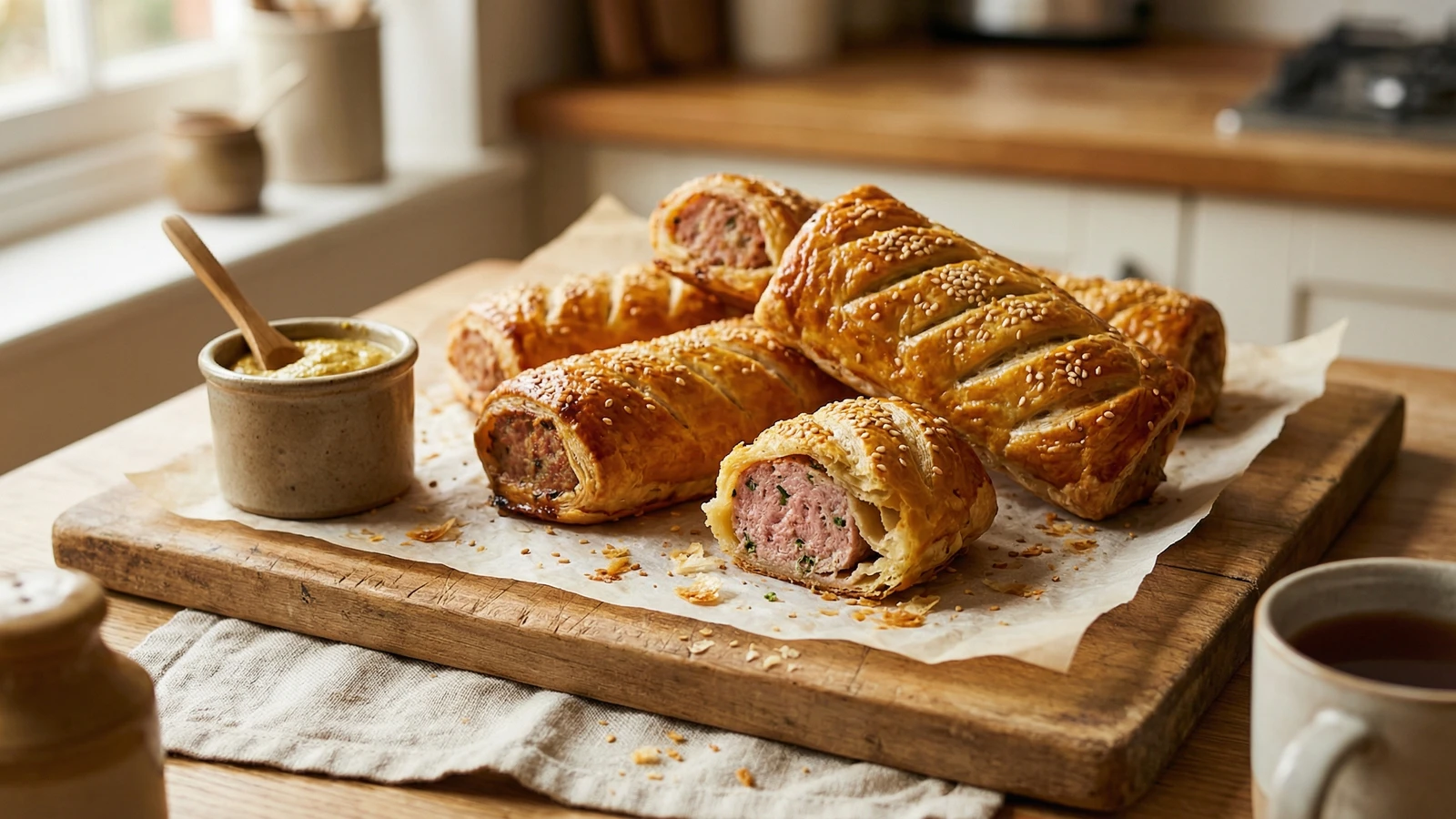
Pork and sage wrapped in shattering, golden puff pastry, scored and glazed, the kind that vanishes from the tray before you've had a chance to count how many you made.
The smell arrives before the sausage rolls do. Butter and sage and something deeply savoury drifting through the kitchen, and whoever is in the house will appear at the oven door within minutes, asking when they'll be ready. This is perhaps the most reliable fact in British baking.
A sausage roll is not a complicated thing. Good pork, a few herbs, a sheet of pastry, and an egg to make it shine. The craft is in the seasoning of the meat and the quality of the pastry, and in knowing that the oven needs to be properly hot so the pastry puffs and the fat renders and everything comes out golden and crackled and impossible to eat just one of. I've never managed fewer than three, standing at the counter, burning the roof of my mouth because I couldn't wait.
They belong at Christmas, obviously. On picnic blankets in summer. At any gathering where people are standing around with a drink in one hand and nothing in the other. But they also belong on a Tuesday, warm from the oven, with a smear of mustard and a cup of tea. I wrote it down in the notebook years ago: sausage rolls, Tuesday, no occasion, didn't matter. The best food rarely needs a reason.
A recipe is a conversation, not a contract. If you want more sage, add more sage. If you like a hit of chilli, a pinch of flake won't hurt. The mustard in the filling is my addition, not traditional, but it lifts the pork without announcing itself. Trust your hands and your nose. Season and taste. Then taste again.
Quantity
500g
or good sausages with skins removed
Quantity
1 tablespoon
finely chopped
Quantity
1 teaspoon
Quantity
generous grating
Quantity
1 teaspoon
Quantity
1 small
very finely grated
Quantity
to taste
Quantity
to taste
Quantity
500g
cold from the fridge
Quantity
1
beaten with a splash of milk
Quantity
a scattering
| Ingredient | Quantity |
|---|---|
| pork sausage meator good sausages with skins removed | 500g |
| fresh sage leavesfinely chopped | 1 tablespoon |
| fresh thyme leaves | 1 teaspoon |
| nutmeg | generous grating |
| English mustard | 1 teaspoon |
| onionvery finely grated | 1 small |
| fine sea salt | to taste |
| black pepper | to taste |
| all-butter puff pastrycold from the fridge | 500g |
| eggbeaten with a splash of milk | 1 |
| sesame seeds or poppy seeds (optional) | a scattering |
Put the sausage meat in a bowl with the sage, thyme, nutmeg, mustard, and grated onion. Season with salt and a good few grinds of black pepper. Mix it together with your hands until everything is evenly distributed. Don't overwork it. You're not making a mousse. Take a small pinch, flatten it, and fry it in a dry pan for a minute. Taste it. This is your chance to adjust the seasoning. More salt, more pepper, more nutmeg. You won't get another opportunity once it's wrapped in pastry.
Set the oven to 200C/180C fan. Line a large baking tray with parchment. Roll the pastry out on a lightly floured surface into a large rectangle, roughly 40cm by 30cm, about the thickness of a pound coin. Cut it in half lengthways so you have two long strips. Divide the sausage meat in half and shape each portion into a long sausage down the centre of each pastry strip. Your hands will need to be slightly wet. The meat should sit in a neat log, leaving a border of pastry on each side.
Brush the exposed pastry edge with beaten egg. Fold the pastry over the filling, pressing the seam together firmly with the back of a fork. The seal matters. If it opens in the oven, the juices run out and you lose the best part. Turn the rolls seam-side down and cut each long roll into six pieces. Some people like them cocktail-sized, some prefer a proper handful. Your kitchen, your rules.
Place the rolls seam-side down on the lined tray, leaving a little space between each. Brush the tops generously with the beaten egg. Use the back of a knife to score two or three diagonal slashes across the top of each roll, just through the pastry, not into the meat. Scatter sesame seeds over the top if you're using them. The egg wash is not optional. It's the difference between golden, lacquered pastry that crackles when you bite through it and something that looks like it gave up halfway.
Bake for twenty-five to thirty minutes, until the pastry is a deep, confident gold and the kitchen smells of butter and sage and something undeniably good. Not pale gold. Deeper than that. The colour of a conker. Pull them out and let them rest on the tray for five minutes. They'll be too hot to eat, and the filling needs a moment to set. Then put them on a board, stand back, and watch them disappear.
1 serving (about 85g)
Culinary guides, cultural storytelling, and the editorial depth that makes cooking meaningful.
Discover Culinary ExplorerChef Thomas
A board of good cheddar, thick ham, proper pickle, hard-boiled eggs, and crusty bread. Not cooking so much as assembling with conviction, and one of the finest lunches the English kitchen has ever produced.

Chef Thomas
Puff pastry twisted with anchovy and Parmesan, baked until golden and shattering and salty, the kind of thing you put out with drinks that disappears before anyone sits down.

Chef Thomas
Fresh oysters wrapped in crisp streaky bacon and grilled until the salt of the sea meets the smoke of the cure, served on hot buttered toast the way the Victorians intended, only simpler and at home.

Chef Thomas
Boiled eggs wrapped in a dark, spiced coat of sausage meat and crumbled black pudding, fried to a deep gold. The kind of thing you eat standing up in the kitchen, still warm, with mustard on your thumb.