
Chef Dean
Broccoli Cheddar Soup
A bowlful of pure American comfort: velvety soup loaded with tender broccoli and an almost indecent amount of sharp cheddar, the kind of honest cooking that warms you from the inside out.
A cooking platform built around craft, culture, and the stories behind what we eat.
Created by
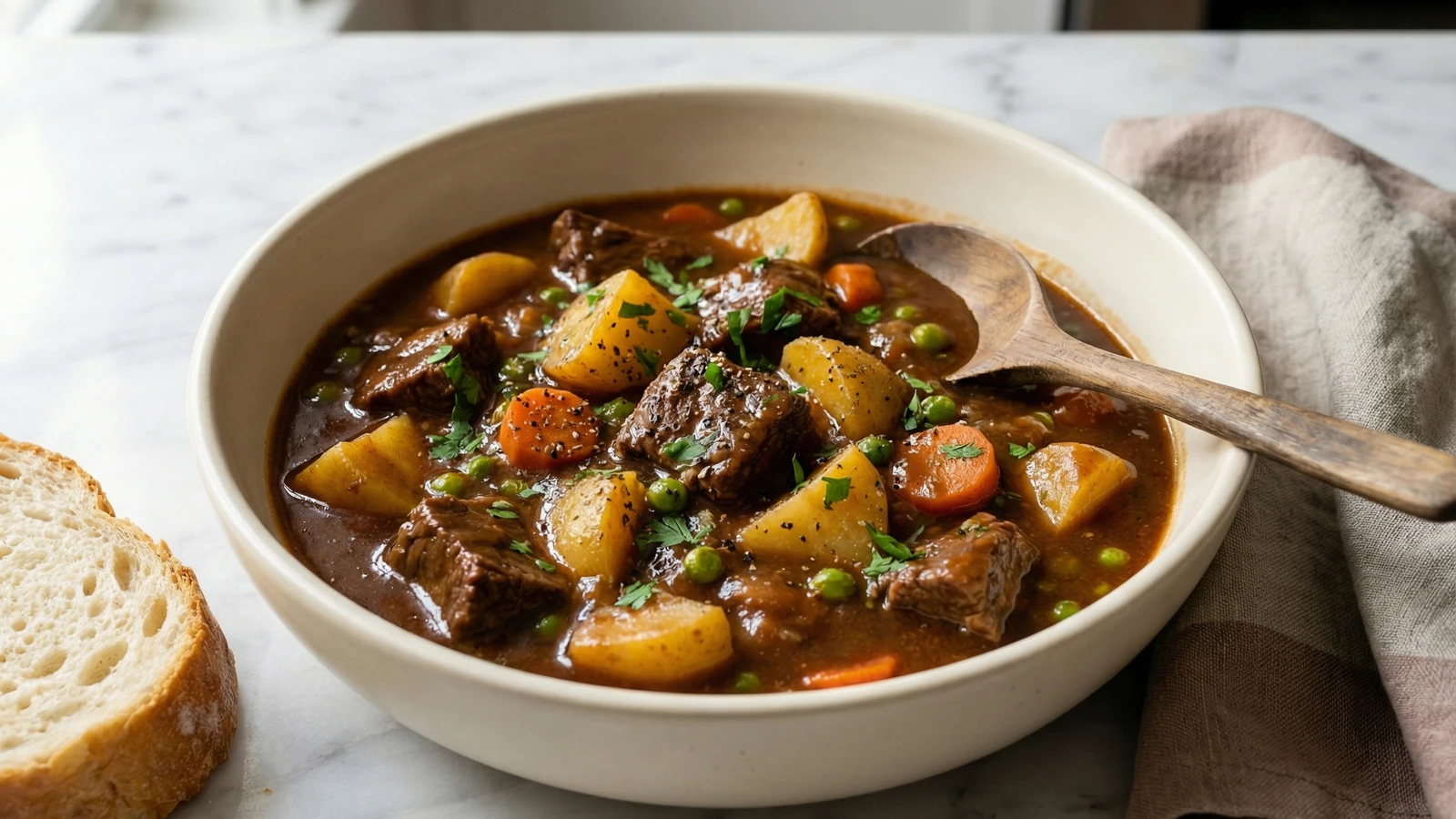
Fork-tender beef and hearty vegetables swimming in a deep, mahogany gravy that tastes like it simmered all day. This is the stew that defines American home cooking at its honest best.
Every great food culture has a stew. The French have their boeuf bourguignon, the Irish their lamb stew, the Hungarians their goulash. American beef stew borrows from all of them and apologizes to none. It arrived with immigrants who understood that tough cuts of meat, slow heat, and root vegetables could transform poverty into plenty. This is food that sustained westward expansion, warmed farmhouse kitchens during February blizzards, and still appears on Sunday tables from Maine to California.
The technique is simple but not mindless. You must brown your beef properly. This is not optional. That deep sear creates the fond that becomes your gravy's backbone. Rushing this step produces gray, steamed meat floating in thin, forgettable liquid. Take your time. Let each piece develop a proper crust before it touches its neighbor.
I've made this stew hundreds of times over the decades, adjusting and refining until I arrived at something I consider definitive. The tomato paste adds depth without making it taste Italian. The Worcestershire builds umami without announcing itself. A splash of red wine honors the French tradition while remaining entirely American. This is a stew that improves overnight, feeds a crowd without complaint, and reminds everyone at your table that simple food, prepared with attention, is never ordinary.
Quantity
3 pounds
cut into 2-inch cubes
Quantity
1/4 cup
Quantity
1 teaspoon
plus more to taste
Quantity
1/2 teaspoon
plus more to taste
Quantity
4 tablespoons
divided
Quantity
1 large
diced
Quantity
4 cloves
minced
Quantity
2 tablespoons
Quantity
1 cup
Quantity
4 cups
Quantity
2 tablespoons
Quantity
2
Quantity
1 teaspoon
Quantity
1 1/2 pounds
cut into 1 1/2-inch chunks
Quantity
4 large
peeled and cut into 1-inch pieces
Quantity
3 stalks
cut into 1-inch pieces
Quantity
1 cup
Quantity
2 tablespoons
chopped
| Ingredient | Quantity |
|---|---|
| beef chuck roastcut into 2-inch cubes | 3 pounds |
| all-purpose flour | 1/4 cup |
| kosher saltplus more to taste | 1 teaspoon |
| freshly ground black pepperplus more to taste | 1/2 teaspoon |
| vegetable oildivided | 4 tablespoons |
| yellow oniondiced | 1 large |
| garlicminced | 4 cloves |
| tomato paste | 2 tablespoons |
| dry red wine | 1 cup |
| beef broth | 4 cups |
| Worcestershire sauce | 2 tablespoons |
| bay leaves | 2 |
| dried thyme | 1 teaspoon |
| Yukon Gold potatoescut into 1 1/2-inch chunks | 1 1/2 pounds |
| carrotspeeled and cut into 1-inch pieces | 4 large |
| celerycut into 1-inch pieces | 3 stalks |
| frozen peas | 1 cup |
| fresh parsleychopped | 2 tablespoons |
Pat the beef cubes thoroughly dry with paper towels. Moisture is the enemy of a good sear. In a large bowl, toss the meat with flour, salt, and pepper until every piece is evenly coated. The flour serves double duty: it helps build that gorgeous brown crust and thickens your gravy as it cooks. Shake off any excess flour before browning.
Heat 2 tablespoons of oil in a large Dutch oven over medium-high heat until it shimmers and just begins to smoke. Add the beef in a single layer, leaving space between each piece. Do not crowd the pot. Work in batches if necessary, adding more oil between rounds. Let each piece sit undisturbed for 3 to 4 minutes until a dark brown crust forms on the bottom. Flip and repeat on all sides. The fond building on the pot's bottom is liquid gold. Transfer browned beef to a plate and continue until all meat is seared.
Reduce heat to medium. Add the remaining oil to the pot along with the diced onion. Cook, stirring occasionally and scraping up the browned bits from the bottom, until the onion softens and turns golden at the edges, about 5 minutes. Add the garlic and cook until fragrant, about 30 seconds. Stir in the tomato paste and cook for another minute, allowing it to caramelize slightly and deepen in color. This step builds layers of flavor that no shortcut can replicate.
Pour in the red wine, scraping the bottom of the pot vigorously with a wooden spoon to release every bit of fond. Let the wine simmer for 2 minutes to cook off the raw alcohol. Add the beef broth, Worcestershire sauce, bay leaves, and thyme. Stir to combine. Return the browned beef and any accumulated juices to the pot. The liquid should come about three-quarters of the way up the meat. If it doesn't, add a splash more broth.
Bring the liquid to a gentle simmer. Cover the pot and reduce heat to low. The surface should show lazy bubbles, not a rolling boil. Aggressive heat toughens meat. Patience rewards you. Simmer for 1 hour and 15 minutes, checking occasionally to ensure the liquid maintains that gentle bubble.
After the initial braise, add the potatoes, carrots, and celery to the pot. Stir gently to submerge them in the liquid. Return the cover and continue simmering for another hour to hour and fifteen minutes, until the beef is fork-tender and the vegetables yield easily when pierced. The gravy should have thickened to coat the back of a spoon.
Remove the bay leaves. Stir in the frozen peas and let them warm through, about 3 minutes. Taste the gravy and adjust seasoning with salt and pepper as needed. The stew should taste robust and well-seasoned, not timid. If the gravy seems thin, remove the lid and simmer uncovered for 10 minutes to reduce.
Let the stew rest off heat for 10 minutes before serving. This allows the flavors to settle and the temperature to become comfortable for eating. Ladle generous portions into warmed bowls and scatter fresh parsley over each serving. Serve with crusty bread for soaking up every drop of that hard-earned gravy.
1 serving (about 440g)
Culinary guides, cultural storytelling, and the editorial depth that makes cooking meaningful.
Discover Culinary ExplorerChef Dean
A bowlful of pure American comfort: velvety soup loaded with tender broccoli and an almost indecent amount of sharp cheddar, the kind of honest cooking that warms you from the inside out.

Chef Ally
Golden broth simmered from a whole chicken, ladled over tender handmade egg noodles with honest vegetables and fresh herbs. The soup that teaches why stock matters more than technique ever could.

Chef Dean
A velvet-smooth celebration of peak-season corn, chilled until refreshing and crowned with sweet lump crab and emerald chive oil. This is the soup that makes August worth the wait.

Chef Dean
A robust, deeply seasoned pot of ground beef, beans, and tomatoes simmered until the spices bloom, the meat surrenders, and the whole becomes something far greater than its humble parts.