
Chef Dean
Amish White Bread
Pillowy soft sandwich bread from Pennsylvania Dutch kitchens, where generations of home bakers perfected the art of tender, slightly sweet loaves that slice clean and toast golden.
A cooking platform built around craft, culture, and the stories behind what we eat.
Created by
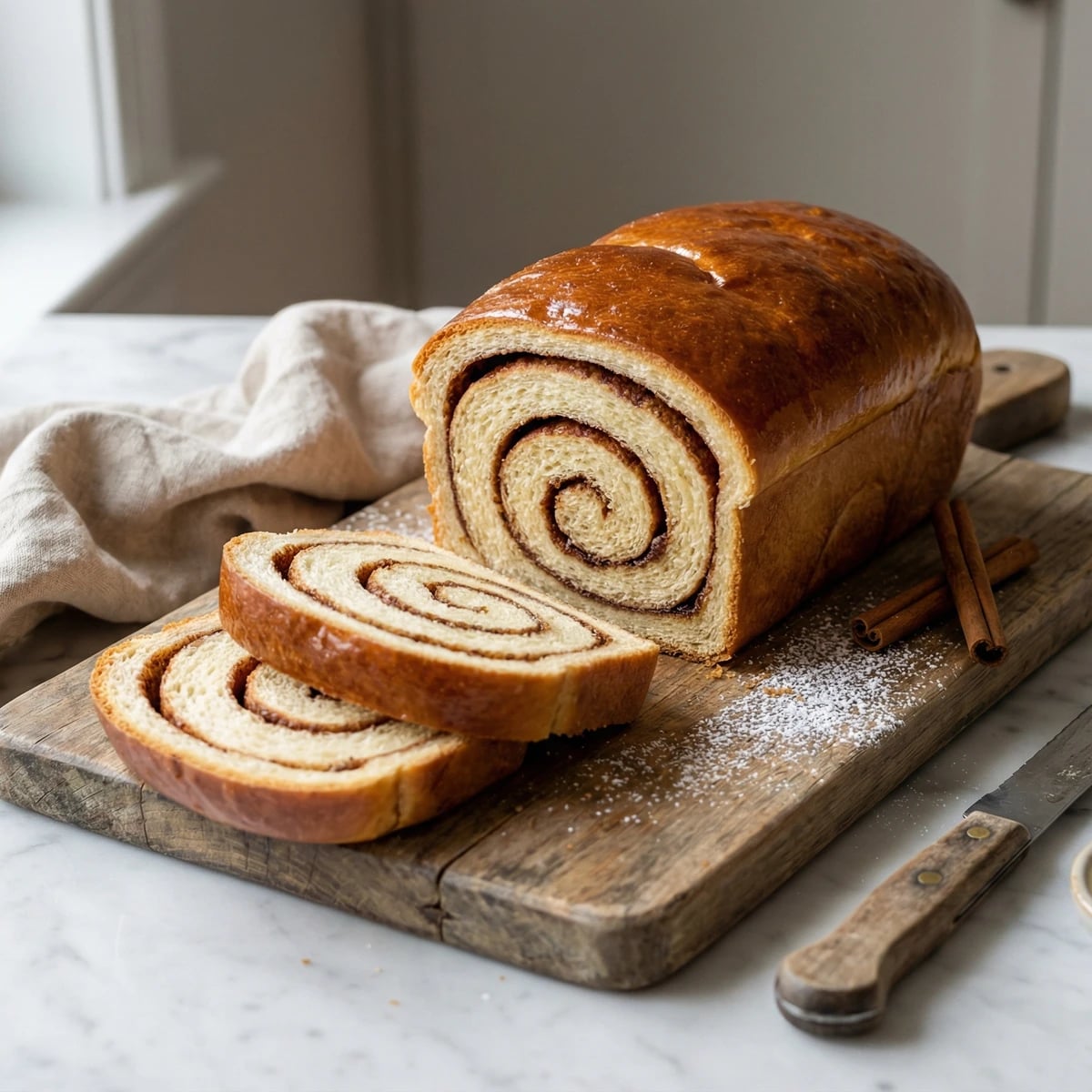
A tender, golden loaf hiding rivers of cinnamon sugar within its soft crumb. Each slice reveals the spiral you created with your own hands, toasting to caramelized perfection.
This bread belongs to a proud American tradition of enriched loaves meant for breakfast tables and afternoon snacks. It arrived with German and Dutch immigrants who understood that a little sugar and butter could transform simple bread into something that made children appear in the kitchen before being called.
The technique here rewards patience over skill. You'll roll the dough thin, spread it with soft butter and cinnamon sugar, then roll it tight as a scroll. That rolling determines your spiral. Too loose and the swirl gaps. Too tight and the dough tears. Somewhere in the middle lives the loaf you've seen in bakery windows.
I've watched students overthink this bread for decades. Don't. The dough forgives more than you'd expect. If your first spiral isn't magazine-worthy, slice it anyway. Toast it. Spread it with butter. You'll find it tastes exactly like it should: honest, sweet, warm from your own oven.
Quantity
360g (3 cups)
plus more for dusting
Quantity
50g (1/4 cup)
Quantity
7g (2 1/4 teaspoons)
Quantity
6g (1 teaspoon)
Quantity
180ml (3/4 cup)
warmed to 110°F
Quantity
1
room temperature
Quantity
57g (4 tablespoons)
softened, plus more for pan
Quantity
1 teaspoon
Quantity
100g (1/2 cup)
packed
Quantity
2 tablespoons
Quantity
28g (2 tablespoons)
very soft
Quantity
1
Quantity
1 tablespoon
| Ingredient | Quantity |
|---|---|
| all-purpose flourplus more for dusting | 360g (3 cups) |
| granulated sugar | 50g (1/4 cup) |
| instant yeast | 7g (2 1/4 teaspoons) |
| fine sea salt | 6g (1 teaspoon) |
| whole milkwarmed to 110°F | 180ml (3/4 cup) |
| large eggroom temperature | 1 |
| unsalted buttersoftened, plus more for pan | 57g (4 tablespoons) |
| pure vanilla extract | 1 teaspoon |
| light brown sugarpacked | 100g (1/2 cup) |
| ground cinnamon | 2 tablespoons |
| unsalted butter for fillingvery soft | 28g (2 tablespoons) |
| large egg yolk | 1 |
| heavy cream | 1 tablespoon |
Whisk together the flour, granulated sugar, yeast, and salt in a large bowl. Make a well in the center. Pour in the warm milk, egg, softened butter, and vanilla. Stir with a wooden spoon until a shaggy mass forms. The dough will look rough and uneven. This is correct.
Turn the dough onto a lightly floured surface. Knead for 8 to 10 minutes, adding flour only when the dough sticks aggressively to your hands. Push with the heel of your palm, fold, rotate, repeat. The dough transforms from sticky and ragged to smooth and elastic. When ready, it springs back slowly when poked and feels like a baby's cheek. Soft, supple, alive.
Shape the dough into a ball and place it in a lightly greased bowl. Cover with plastic wrap or a damp kitchen towel. Set in a warm spot, around 75°F to 80°F. Let rise until doubled in size, about 1 to 1 1/2 hours. The dough is ready when you press two fingers into it and the indentation remains rather than springing back.
While the dough rises, combine the brown sugar and cinnamon in a small bowl. Pinch and stir until no lumps remain. The mixture should smell intensely of cinnamon, almost aggressive. That's what you want. It mellows during baking.
Punch down the risen dough with your fist. A satisfying whoosh of air escapes. Turn it onto a lightly floured surface and roll into a rectangle roughly 16 inches long and 8 inches wide. Work from the center outward, rotating the dough occasionally to prevent sticking. The thickness should be about 1/4 inch throughout. Uneven thickness creates uneven swirls.
Spread the very soft butter over the entire surface of the dough, leaving a 1/2-inch border along one long edge. Use your fingers if the butter resists spreading. Sprinkle the cinnamon sugar mixture evenly over the butter, pressing gently so it adheres. That bare edge will seal your roll.
Starting from the long edge opposite the bare border, roll the dough into a tight cylinder. Use both hands, keeping even pressure along the entire length. Roll slowly. When you reach the bare edge, pinch it firmly against the roll to seal. Pinch the ends closed and tuck them underneath. You should have a log roughly 9 inches long.
Butter a 9x5-inch loaf pan generously. Place the rolled dough seam-side down in the pan. Cover loosely with plastic wrap or a towel. Let rise in a warm spot until the dough crowns about 1 inch above the rim of the pan, 45 minutes to 1 hour. Don't rush this. Underproofed bread tears at the seams. Overproofed bread collapses in the oven.
Position a rack in the center of your oven and preheat to 350°F. Whisk together the egg yolk and cream to make an egg wash. When the dough has risen properly, brush the top gently with the wash. This creates the golden, glossy crust that signals proper bread.
Bake for 40 to 45 minutes, rotating the pan halfway through for even browning. The bread is done when the top is deep golden brown and an instant-read thermometer inserted into the center reads 190°F to 195°F. The crust should sound hollow when tapped. If the top browns too quickly, tent loosely with foil for the final 15 minutes.
Let the bread rest in the pan for 10 minutes. Run a knife around the edges, then turn the loaf onto a wire rack. Cool completely before slicing, at least 1 hour. I know the wait is difficult. Cutting hot bread compresses the crumb and releases moisture that should stay inside. Patience creates the loaf you deserve.
1 serving (about 68g)
Culinary guides, cultural storytelling, and the editorial depth that makes cooking meaningful.
Discover Culinary Explorer
Chef Dean
Pillowy soft sandwich bread from Pennsylvania Dutch kitchens, where generations of home bakers perfected the art of tender, slightly sweet loaves that slice clean and toast golden.

Chef Dean
A colonial New England loaf with golden cornmeal crumb and dark molasses sweetness, crusty on the outside and tender within. The kind of bread that built fishing villages.

Chef Dean
Ancient Armenian flatbread rolled impossibly thin and baked until blistered, yielding sheets of pliable bread perfect for wrapping, tearing, and gathering around with people you love.

Chef Dean
Vienna's iconic breakfast rolls with shattering golden crusts, pillowy interiors, and that unmistakable five-pointed crown that marks them as proper Kaisersemmel worthy of an emperor's table.