Chef Thomas
Anchovy Sauce
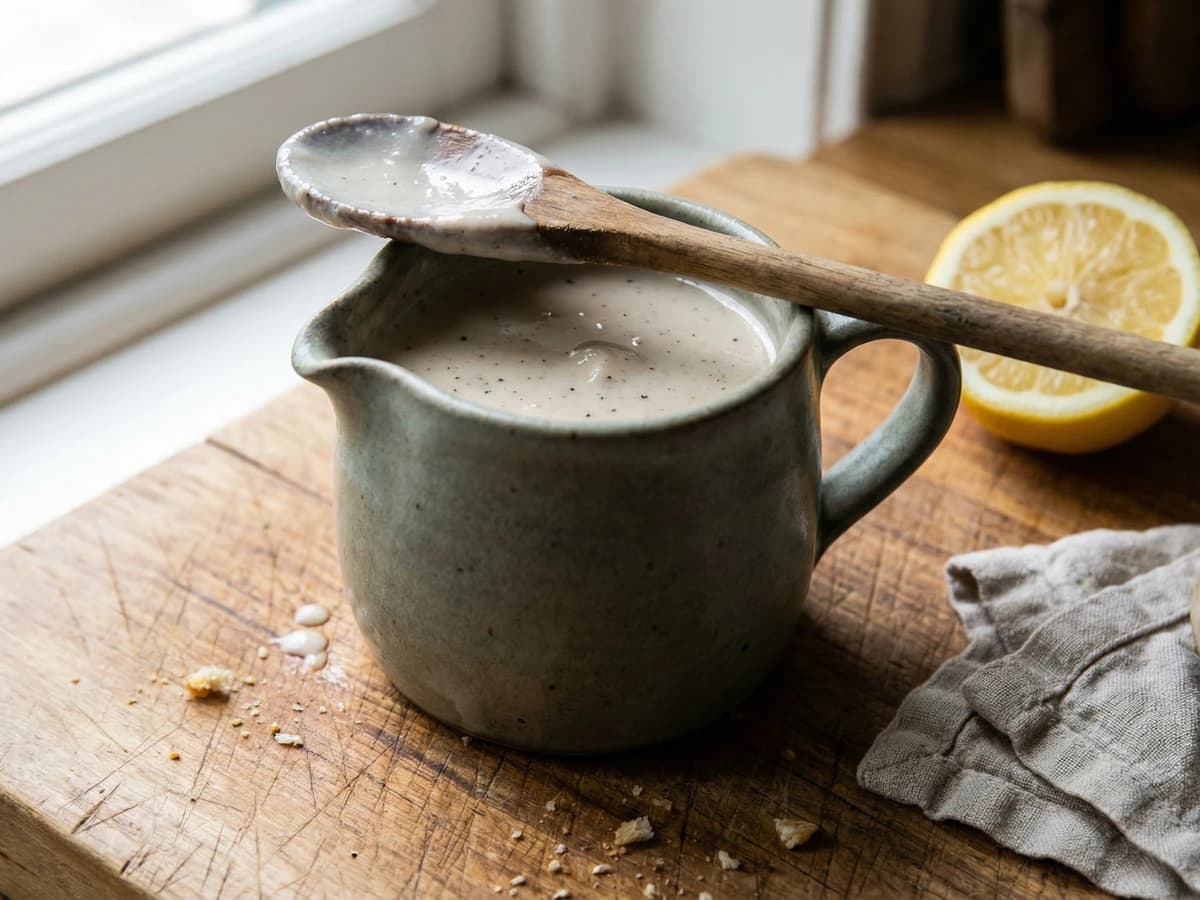
A proper white sauce sharpened with pounded anchovy, the old Georgian trick for waking up a piece of poached fish or a slice of roast lamb on a Sunday in spring.
A cooking platform built around craft, culture, and the stories behind what we eat.
Created by Chef Thomas
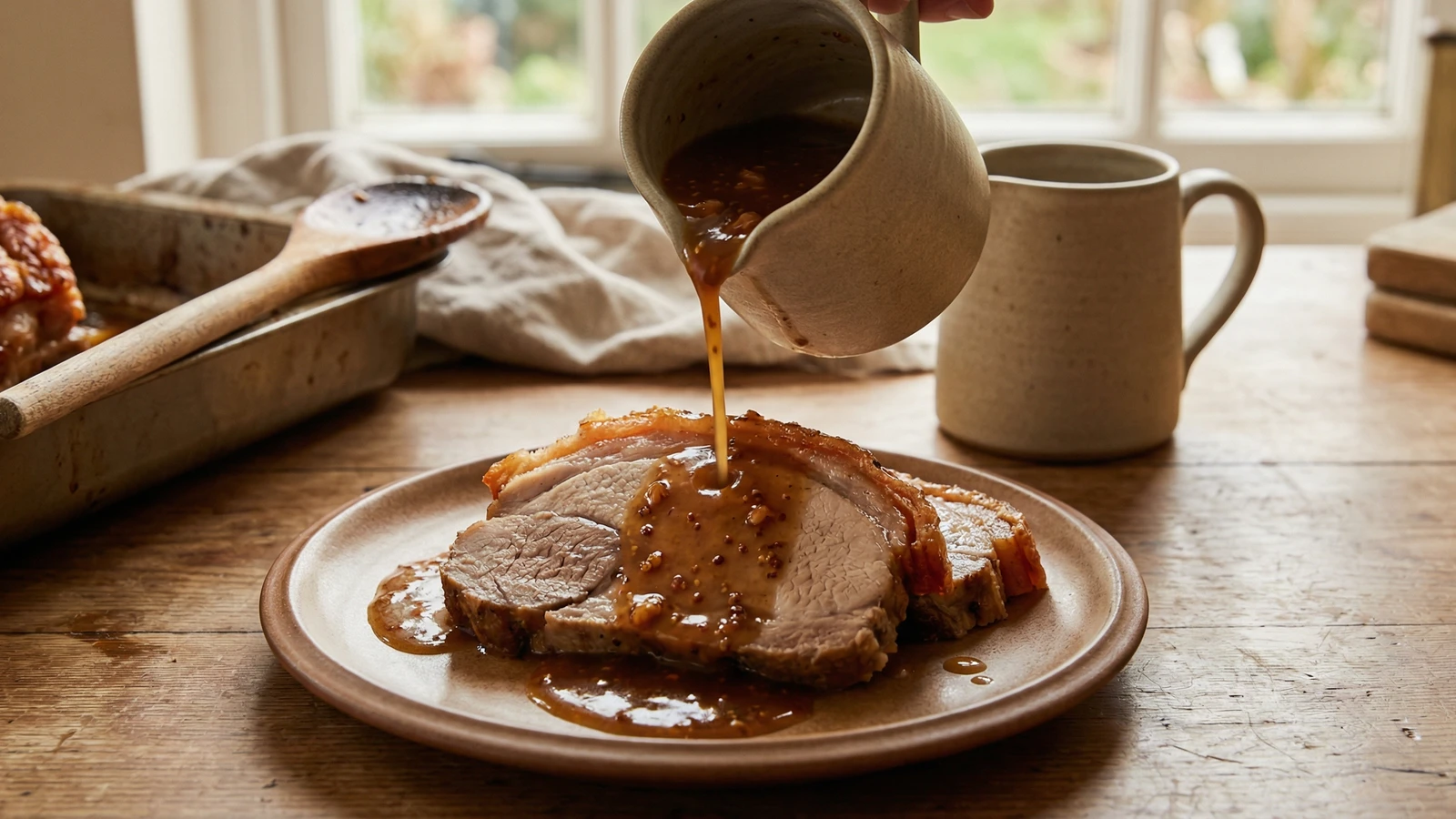
A West Country gravy made in the roasting tin with dry cider, good mustard, and the sticky juices the pork has left behind, ready in the time it takes a joint to rest.
The first proper cold of October, when the apples are in and the kitchen smells of a roast. That's when this gravy makes sense.
Cider gravy is a West Country thing. Somerset mostly, though Herefordshire will argue, and both would be right. The principle is simple and perfect: the orchard and the pig belong together, and a sauce that brings them to the same plate is the kind of thrift that tastes like genius. Dry cider into the roasting tin, a spoonful of mustard, whatever dark sticky juices the pork has given up, and a few minutes of attention while the joint rests under foil. No stock cube, no gravy browning, no cornflour slurry thickened in a mug. Just the tin, the hob, and your nose.
Use a proper dry cider. Not sweet, not anything that calls itself an apple drink. Something from a farm if you can get it, flat and unfussy, the kind that tastes of real apples and not much else. Sweet cider will turn the gravy syrupy, which isn't what you want. You're after sharpness to cut through the richness of the pork. The mustard does the rest.
I wrote it in the notebook once: cider, mustard, Sunday, rain. That's about the whole of it.
Quantity
all of them
with the browned bits left in the tin
Quantity
1 tablespoon
Quantity
300ml
West Country if possible, never sweet
Quantity
300ml
homemade if you have it
Quantity
1 to 2 teaspoons
wholegrain also works
Quantity
15g
cold, cubed
Quantity
to taste
Quantity
to taste
| Ingredient | Quantity |
|---|---|
| pan juices from a roasted pork jointwith the browned bits left in the tin | all of them |
| plain flour | 1 tablespoon |
| dry ciderWest Country if possible, never sweet | 300ml |
| chicken or pork stockhomemade if you have it | 300ml |
| English mustardwholegrain also works | 1 to 2 teaspoons |
| unsalted buttercold, cubed | 15g |
| sea salt | to taste |
| black pepper | to taste |
Lift the pork out of its roasting tin and onto a warm plate. Cover loosely with foil and leave it to rest. The meat needs twenty minutes or so, which is exactly how long the gravy takes to come together. Convenient, that.
Tilt the tin. Most of the clear fat will pool at one end. Spoon or pour off all but a tablespoon or two, leaving behind the dark, sticky juices and the browned bits stuck to the bottom of the tin. That's where the flavour lives. Don't scrub anything away.
Set the tin over a medium heat on the hob, across two burners if it helps. Sprinkle the flour over the fat and juices and stir it in with a wooden spoon until you have a loose, muddy paste. Let it cook for a minute, no more, until it smells nutty rather than raw. Keep stirring. Flour that sits on heat without moving will catch, and burnt flour is bitter beyond saving.
Pour in the cider. It'll hiss and throw up a wonderful, sharp-sweet smell of apples hitting hot fat. Scrape the bottom of the tin with the wooden spoon, loosening every dark sticky bit. They're the whole reason you're doing this. Let the cider bubble for two or three minutes to cook off the rawness of the alcohol.
Pour in the stock. Bring it to a steady simmer and let it reduce for eight to ten minutes, stirring now and then. You want it to thicken enough to coat the back of a spoon without clinging to it. If it looks too thin, keep going. If it looks too thick, a splash more stock will loosen it. A gravy is a conversation, not a contract.
Take the tin off the heat. Stir in the mustard, starting with a teaspoon and tasting. Add more if you want more bite. Drop in the cold butter and swirl the tin until it melts and the gravy turns glossy and rich. Any juices the pork has released while resting go in now. Season with salt and a lot of pepper. Taste it. Then taste it again. Strain into a warm jug if you want a smooth finish, or leave it as it is if you like seeing the sticky bits.
1 serving (about 130g)
Culinary guides, cultural storytelling, and the editorial depth that makes cooking meaningful.
Discover Culinary ExplorerChef Thomas
A proper white sauce sharpened with pounded anchovy, the old Georgian trick for waking up a piece of poached fish or a slice of roast lamb on a Sunday in spring.

Chef Thomas
A spiced autumn chutney made from a glut of apples and a quiet afternoon, simmered down until the kitchen smells of October and the jars line up on the counter like a small, useful insurance policy.
Chef Thomas
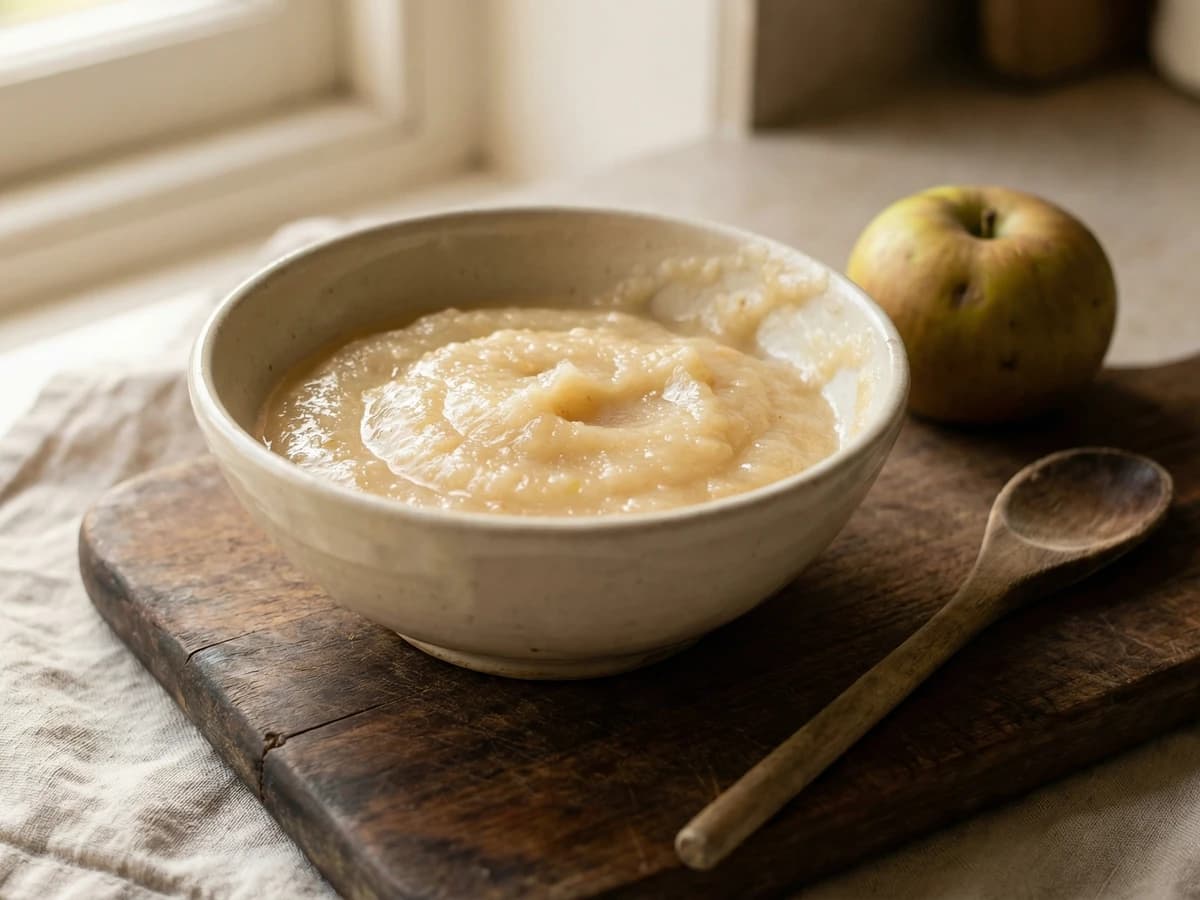
A bowl of sharp, fluffy Bramley apple sauce, made in the time it takes to carve the pork, the kind of small condiment that quietly makes the whole meal make sense.
Chef Thomas
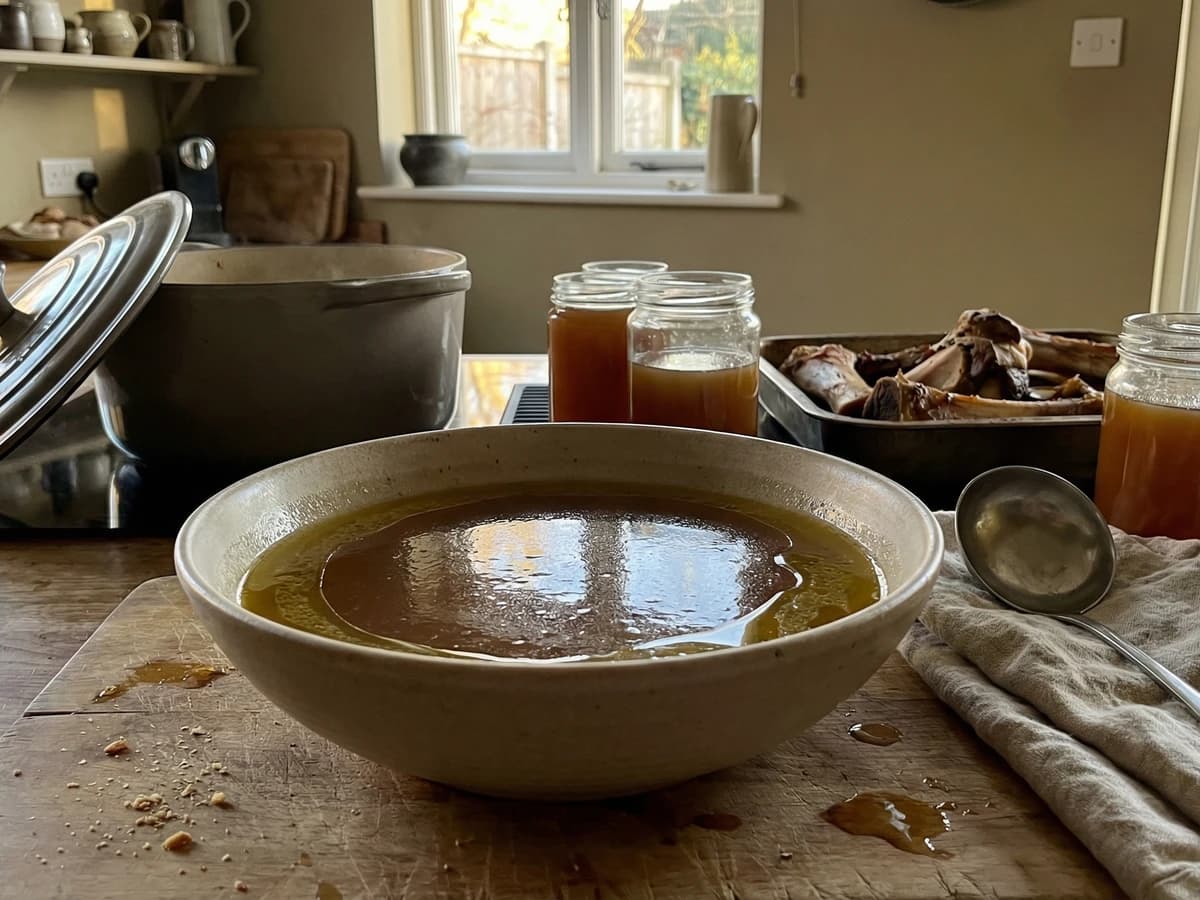
Beef bones roasted until dark, then coaxed for a long afternoon into a deep amber stock, the foundation of every good gravy, every braise, every bowl of winter soup worth the trouble.