Chef Lupita
Acúmara Tatemada al Comal
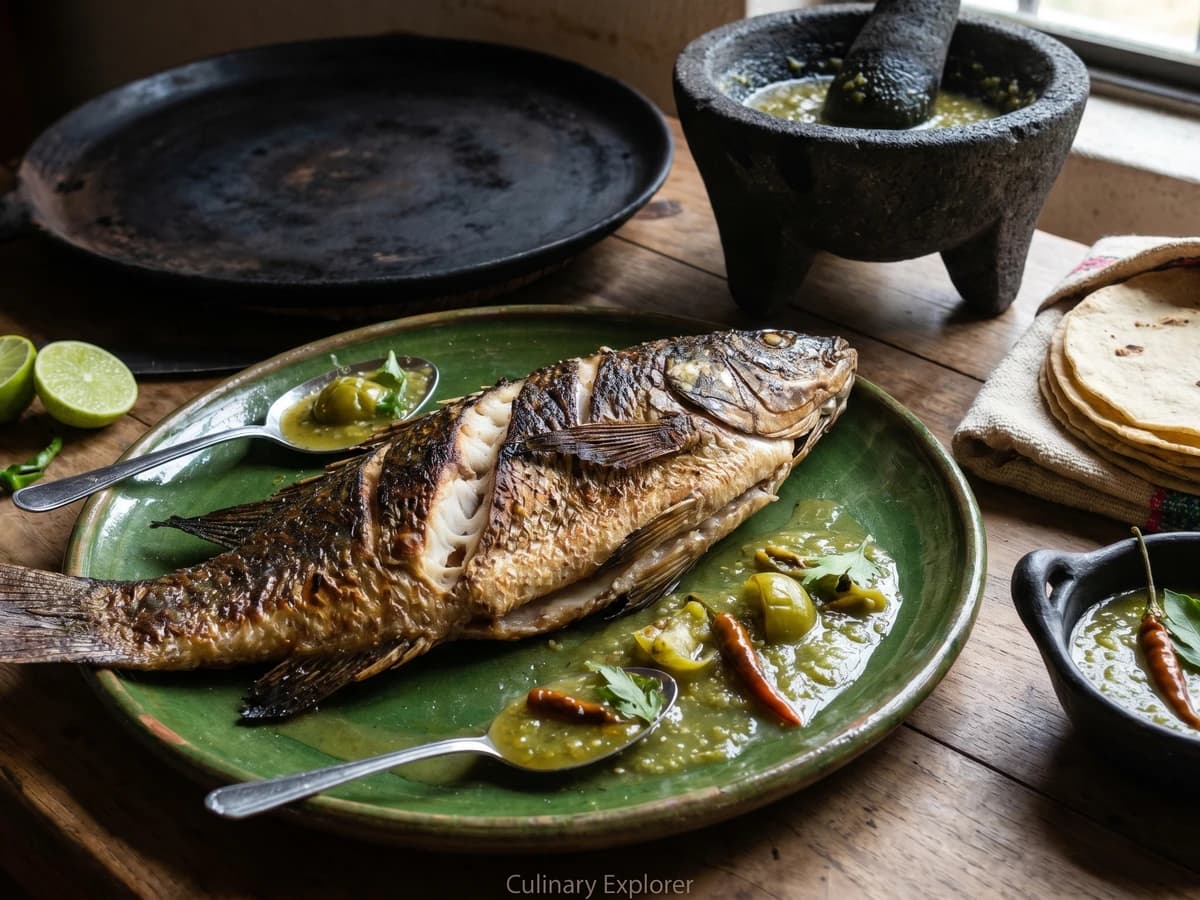
Michoacán's Lake Pátzcuaro acúmara, a whole kurucha from the lago tatemada on a comal de leña and served with chile perón atápakua, corn tortillas, and P'urhépecha discipline.
A cooking platform built around craft, culture, and the stories behind what we eat.

Created by
Mexicali's Cantonese-Mexican chow mein, wheat noodles toasted hard on one side and piled with cabbage, finished at the table with chiles toreados and a hard squeeze of lime.
This is from Mexicali. Baja California, the border city across from Calexico, the dusty capital of the Valle de Mexicali where the canals run straight and the summer hits 115 degrees. Mexicali has the largest historical Chinese community in Mexico, families who arrived in the late 1800s to work the cotton fields and the railroad and who stayed to build a neighborhood the locals call La Chinesca. There are more chinescos, Cantonese-Mexican restaurants, in Mexicali than there are taquerias. That is not an exaggeration. It is the shape of the city.
Chow mein mexicalense is what those families made when Cantonese cooking met the Sonoran Desert. Wheat noodles, because the Valle de Mexicali grows wheat. Cabbage piled in heavy, because cabbage is cheap and stores well in the heat. Chicken or beef, soy and oyster sauce, garlic and ginger, all of it stir-fried hard in a wok pulled from a hot fire. Then, at the table, the Mexican signature: chiles toreados blistered black on a comal, lime cut into thick wedges, and a small bottle of soy sauce that nobody calls salsa de soya because in Mexicali everyone just calls it salsa china.
The noodle technique is what separates this from a tired weeknight stir-fry. You boil the noodles, shock them cold, then press them into a screaming hot wok and let one side toast into a golden crust before you toss them. Crisp on one face, soft on the other. That texture is the dish. La cocina no es decoracion, es trabajo. I learned this in a chinesco off Avenida Reforma where the cook was a woman in her seventies whose grandmother had come from Guangzhou in 1908. She told me: do not stir until you smell it. When I asked her if she considered the dish Chinese or Mexican, she looked at me like the question was stupid. Mexicalense, she said. Asi se hace y punto.
Chinese migration to Mexicali began in the 1880s when laborers were recruited to dig the irrigation canals of the Colorado River Land Company, and by 1920 Mexicali's Chinese population outnumbered its Mexican population, making it the largest Chinatown in Mexico and one of the largest in the Americas. The 1937 expropriation of Chinese-owned agricultural lands and waves of anti-Chinese violence in Sonora pushed many families further into Baja California, where Mexicali's relative tolerance preserved the community and its culinary traditions. The hybrid Cantonese-Mexican cuisine that emerged, including chow mein with chiles toreados, fried rice with carne asada, and wonton soup served with lime, was codified in the chinescos of La Chinesca neighborhood beginning in the 1940s and is now formally recognized by the Baja California state government as part of the region's gastronomic heritage.
Quantity
12 ounces
Quantity
1 pound
sliced thin against the grain
Quantity
2 tablespoons, divided
Quantity
1 tablespoon
Quantity
1 teaspoon
Quantity
1/2 teaspoon
Quantity
3 tablespoons, divided
Quantity
2 teaspoons
Quantity
4
finely minced
Quantity
1 tablespoon
finely minced
Quantity
4 cups
shredded into ribbons
Quantity
1 cup
shredded
Quantity
1 medium
sliced thin
Quantity
2
sliced on the bias
Quantity
1 medium
julienned
Quantity
4
cut into 2-inch pieces, whites and greens separated
Quantity
1 cup
Quantity
2 tablespoons
Quantity
1 tablespoon
Quantity
1 teaspoon
Quantity
1/2 cup
Quantity
8
whole, for chiles toreados
Quantity
1 tablespoon
Quantity
to taste
Quantity
for serving
Quantity
for serving
Quantity
for serving
| Ingredient | Quantity |
|---|---|
| fresh thin Cantonese wheat noodles (chow mein noodles) | 12 ounces |
| boneless skinless chicken thighssliced thin against the grain | 1 pound |
| soy sauce | 2 tablespoons, divided |
| Shaoxing wine or dry sherry | 1 tablespoon |
| cornstarch | 1 teaspoon |
| white pepper | 1/2 teaspoon |
| neutral oil (peanut or canola) | 3 tablespoons, divided |
| toasted sesame oil | 2 teaspoons |
| garlic clovesfinely minced | 4 |
| fresh gingerfinely minced | 1 tablespoon |
| napa cabbageshredded into ribbons | 4 cups |
| green cabbageshredded | 1 cup |
| white onionsliced thin | 1 medium |
| celery stalkssliced on the bias | 2 |
| carrotjulienned | 1 medium |
| scallionscut into 2-inch pieces, whites and greens separated | 4 |
| mung bean sprouts | 1 cup |
| oyster sauce | 2 tablespoons |
| dark soy sauce | 1 tablespoon |
| sugar | 1 teaspoon |
| chicken broth | 1/2 cup |
| fresh chile guero or chile serranowhole, for chiles toreados | 8 |
| neutral oil for the chiles | 1 tablespoon |
| salt | to taste |
| lime wedges (optional) | for serving |
| soy sauce for the table (optional) | for serving |
| salsa de soya con limon (optional) | for serving |
Toss the sliced chicken with one tablespoon of the soy sauce, the Shaoxing wine, the cornstarch, and the white pepper. Let it sit while you prepare everything else, at least 15 minutes. The cornstarch is what gives the chicken that velvet texture they pull off in the chinescos of Mexicali. Skip it and the meat goes dry on a hot wok.
Bring a large pot of water to a rolling boil. Drop in the fresh chow mein noodles and cook for 90 seconds, no longer. They should be barely tender. Drain and rinse under cold water until completely cool, then toss with one teaspoon of the sesame oil to keep them from sticking. The cold rinse stops the cooking and sets the starch on the outside, which is what lets you toast that one crisp side later. No me vengas con atajos. This is the step everyone wants to skip and it is the step that makes the dish.
In a small bowl, combine the remaining tablespoon of soy sauce, the oyster sauce, the dark soy sauce, the sugar, the chicken broth, and the remaining teaspoon of sesame oil. Stir to dissolve the sugar. Set it next to the stove. Once the wok is hot, you will not have time to measure.
Heat a 14-inch wok or your largest skillet over high heat until it smokes. Add two tablespoons of neutral oil and swirl. Spread the cooked noodles across the surface in an even layer and press them down with the back of a spatula. Do not stir. Let them sit for two to three minutes until the bottom turns deep golden and crusts. Flip the whole mass in sections and crisp the second side for another minute. You want one side crackling and the other side soft. That contrast is the dish. Move the toasted noodles to a plate.
Wipe the wok and return it to high heat. Add the remaining tablespoon of oil. When it shimmers, add the chicken in a single layer. Let it sear for 60 seconds without moving, then stir-fry until just opaque, about another minute. Remove to the plate with the noodles. The chicken finishes cooking when it goes back into the pan, do not overcook it now.
Without wiping the wok, add the garlic, ginger, and the white parts of the scallions. They should sizzle on contact. Stir for 15 seconds. Add the onion, celery, and carrot. Stir-fry for 90 seconds. The vegetables go in by hardness: hard first, soft last. Add both cabbages and toss for two minutes more. The cabbage should wilt but still hold a bite. Mexicali home cooks pile cabbage in heavy. That is the local signature.
Return the noodles and chicken to the wok. Pour the sauce around the rim of the pan so it hits hot metal before it hits the food. Toss everything together for one minute, lifting from the bottom so the toasted noodles get coated but do not lose their crisp side completely. Add the bean sprouts and the green parts of the scallions. Toss twice. Pull off the heat. Taste for salt. The oyster sauce and soy carry most of the salt, but if it tastes flat, a pinch goes in now.
Heat a small skillet over high heat with one tablespoon of oil. Add the whole guero chiles and let them blister, rolling them every minute or so until the skin is brown-black in patches and the flesh has softened, about four minutes. Splash in a teaspoon of soy sauce and a squeeze of lime off the heat. The chiles will sputter. Pile them on a small plate and bring them to the table.
Pile the chow mein onto a wide platter. Set the chiles toreados, lime wedges, and a small bottle of soy sauce on the table. Each person dresses their own plate. The lime is not optional. That squeeze of citrus over a Cantonese stir-fry is what makes this Mexicali and not Guangzhou. Cada estado, su propia cocina.
1 serving (about 475g)
Culinary guides, cultural storytelling, and the editorial depth that makes cooking meaningful.
Discover Culinary ExplorerChef Lupita
Michoacán's Lake Pátzcuaro acúmara, a whole kurucha from the lago tatemada on a comal de leña and served with chile perón atápakua, corn tortillas, and P'urhépecha discipline.

Chef Lupita
Puebla's weekday adobo of pork shoulder braised in a thick guajillo and ancho sauce sharpened with vinegar, cumin, and clove. The deep red of a market spice stall, the dish a poblana cooks without thinking.

Chef Lupita
Loreto's pit-roasted clams, planted hinge-up in beach sand and tatemadas under a fast fire of dried romerillo brush, the resinous Baja desert shrub that gives this dish its smoke.

Chef Lupita
Oaxaca's eighth mole, the silky, almond-and-cinnamon almendrado, served over poached chicken. Mild, sweet, restrained, and a quiet rebuttal to anyone who thinks Mexican food has to be hot to be Mexican.