
Chef Ally
Braided Challah
A golden, egg-enriched loaf braided by hand, its burnished crust giving way to a crumb so tender it pulls apart in soft, sweet strands. The bread of Friday nights, holidays, and ordinary weeks made sacred.
A cooking platform built around craft, culture, and the stories behind what we eat.
Created by
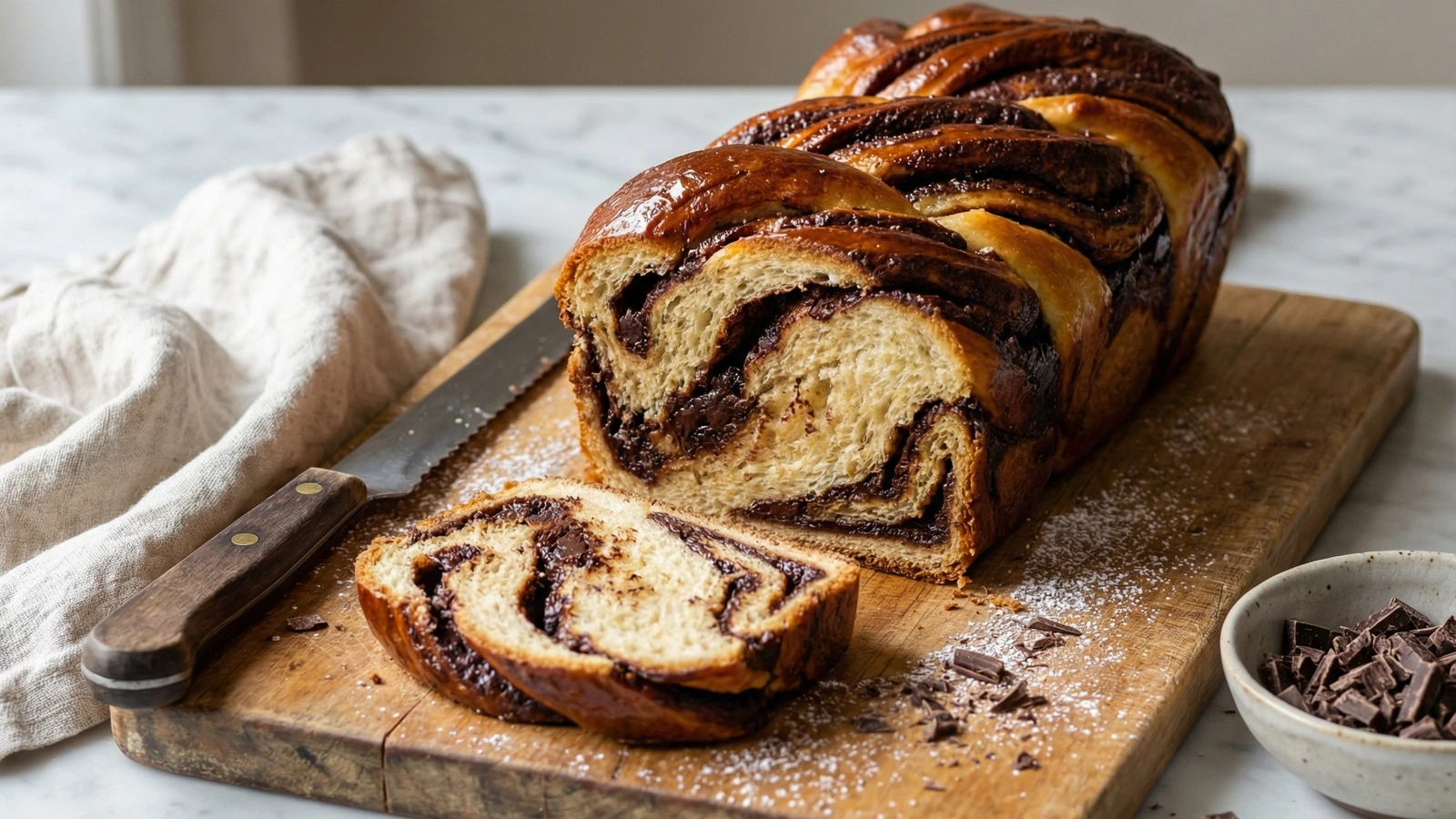
A magnificent swirl of buttery brioche dough and bittersweet chocolate, twisted into dramatic layers that tear apart in soft, cocoa-ribboned sheets. Eastern European tradition meets American abundance.
Babka arrived in America tucked into the memories of Eastern European Jewish immigrants who settled in Brooklyn and the Lower East Side. They brought with them a bread that was both humble and magnificent: enriched dough wrapped around whatever sweet filling was available, twisted into loaves that emerged from the oven looking like edible art. The chocolate version became the definitive American interpretation, richer and more indulgent than its Old World ancestors.
This is not a difficult bread, but it demands your attention. The dough is enriched with eggs and butter, which means it will feel sticky and uncertain before it comes together into something silky. Trust the process. The filling must be spreadable but not liquid, firm enough to create distinct layers when you twist the loaf. Get this right and you'll produce babka with those dramatic chocolate ribbons that make people gasp when you slice it.
I've taught this bread to students who arrived convinced enriched doughs were beyond their abilities. They left with golden loaves and the knowledge that patience beats talent in bread baking. The overnight refrigerator rise isn't optional. Cold dough handles beautifully. Warm dough fights you. Plan ahead and let time do the work.
Quantity
500g (4 cups)
Quantity
75g (6 tablespoons)
Quantity
7g (2¼ teaspoons)
Quantity
6g (1 teaspoon)
Quantity
4
Quantity
80ml (⅓ cup)
Quantity
1 teaspoon
Quantity
170g (12 tablespoons)
cut into pieces
Quantity
200g (7 oz)
finely chopped
Quantity
115g (8 tablespoons)
Quantity
50g (½ cup)
Quantity
100g (½ cup)
Quantity
¼ teaspoon
Quantity
150g (¾ cup)
Quantity
120ml (½ cup)
Quantity
1 egg beaten with 1 tablespoon water
| Ingredient | Quantity |
|---|---|
| all-purpose flour | 500g (4 cups) |
| granulated sugar | 75g (6 tablespoons) |
| instant yeast | 7g (2¼ teaspoons) |
| fine sea salt | 6g (1 teaspoon) |
| large eggs, room temperature | 4 |
| whole milk, warmed to 100°F | 80ml (⅓ cup) |
| pure vanilla extract | 1 teaspoon |
| unsalted butter, softenedcut into pieces | 170g (12 tablespoons) |
| bittersweet chocolatefinely chopped | 200g (7 oz) |
| unsalted butter (for filling) | 115g (8 tablespoons) |
| Dutch-process cocoa powder | 50g (½ cup) |
| granulated sugar (for filling) | 100g (½ cup) |
| fine sea salt (for filling) | ¼ teaspoon |
| granulated sugar (for syrup) | 150g (¾ cup) |
| water (for syrup) | 120ml (½ cup) |
| egg wash | 1 egg beaten with 1 tablespoon water |
In the bowl of a stand mixer fitted with the dough hook, combine the flour, sugar, yeast, and salt. Whisk the eggs with the warm milk and vanilla in a separate bowl. Add the wet ingredients to the dry and mix on low speed until a shaggy mass forms. This takes about 2 minutes. The dough will look rough and unpromising. It should.
Increase mixer speed to medium and add the softened butter one piece at a time, waiting until each piece disappears before adding the next. This takes 8 to 10 minutes. The dough will look like a disaster, then suddenly transform into a smooth, elastic, slightly tacky ball that pulls cleanly from the sides of the bowl. Keep mixing until it passes the windowpane test: stretch a small piece thin enough to see light through without tearing.
Transfer the dough to a large, lightly oiled bowl. Cover tightly with plastic wrap. Let rise at room temperature until doubled in size, about 1½ to 2 hours. The dough should feel pillowy and spring back slowly when poked. Punch it down gently, re-cover, and refrigerate for at least 8 hours or overnight. Cold dough is essential for handling.
Melt the butter for the filling in a medium saucepan over low heat. Remove from heat and add the chopped chocolate, stirring until completely smooth. Whisk in the cocoa powder, sugar, and salt. The mixture should be glossy and spreadable, like thick frosting. If it seizes or looks grainy, add a tablespoon of warm water and stir vigorously. Let cool to room temperature before using.
Butter two 9x5-inch loaf pans thoroughly, getting into every corner. Line the bottom and two long sides with a single strip of parchment paper, leaving 2-inch overhangs on each side. These handles will save you when unmolding. Butter the parchment as well.
Remove the dough from the refrigerator and divide it in half. Working with one piece at a time (keep the other refrigerated), roll the dough on a lightly floured surface into a rectangle approximately 12 by 16 inches. The dough should be about ¼ inch thick. Spread half the chocolate filling evenly over the surface, leaving a ½-inch border along one long edge. Roll the dough into a tight log starting from the filled long edge, ending with the seam on the bottom.
Using a sharp knife, slice the log in half lengthwise, exposing all those beautiful chocolate layers. You now have two long strands with their cut sides facing up. Cross one strand over the other to form an X at the center. Twist the strands together, keeping the cut sides facing up as much as possible so the layers remain visible. Gently transfer the twisted loaf into the prepared pan, tucking the ends under if needed. Repeat with the remaining dough and filling.
Cover the pans loosely with plastic wrap and let rise at room temperature until the dough crowns about 1 inch above the rim of the pan. This takes 45 minutes to 1 hour depending on your kitchen temperature. The loaves should look puffy and jiggle slightly when the pan is nudged. Meanwhile, preheat your oven to 350°F with a rack in the lower third.
Brush the tops of each loaf gently with egg wash, taking care not to deflate the risen dough. Bake for 40 to 45 minutes, rotating the pans halfway through, until the tops are deeply golden brown and an instant-read thermometer inserted into the center reads 185°F. The chocolate makes judging doneness by color difficult, so trust your thermometer. If the tops are browning too quickly, tent loosely with foil for the final 15 minutes.
While the babka bakes, combine the sugar and water for the syrup in a small saucepan. Bring to a boil over medium-high heat, stirring until the sugar dissolves. Remove from heat and let cool slightly. The syrup should be warm but not hot when youuse it.
As soon as the babka emerges from the oven, brush the tops generously with the warm simple syrup. Use all of it. The loaves will absorb more than you expect, and this syrup keeps the crumb moist for days. Let the babka cool in their pans for 20 minutes, then use the parchment handles to lift them onto a wire rack. Cool completely before slicing, at least 1 hour. I know this is difficult. The wait is worth it.
1 serving (about 105g)
Culinary guides, cultural storytelling, and the editorial depth that makes cooking meaningful.
Discover Culinary ExplorerChef Ally
A golden, egg-enriched loaf braided by hand, its burnished crust giving way to a crumb so tender it pulls apart in soft, sweet strands. The bread of Friday nights, holidays, and ordinary weeks made sacred.

Chef Dean
The real thing: a chewy, caraway-flecked loaf with honest tang and a crackly crust that shatters under the knife. This is the bread that built the great delis of New York.
Chef Dean
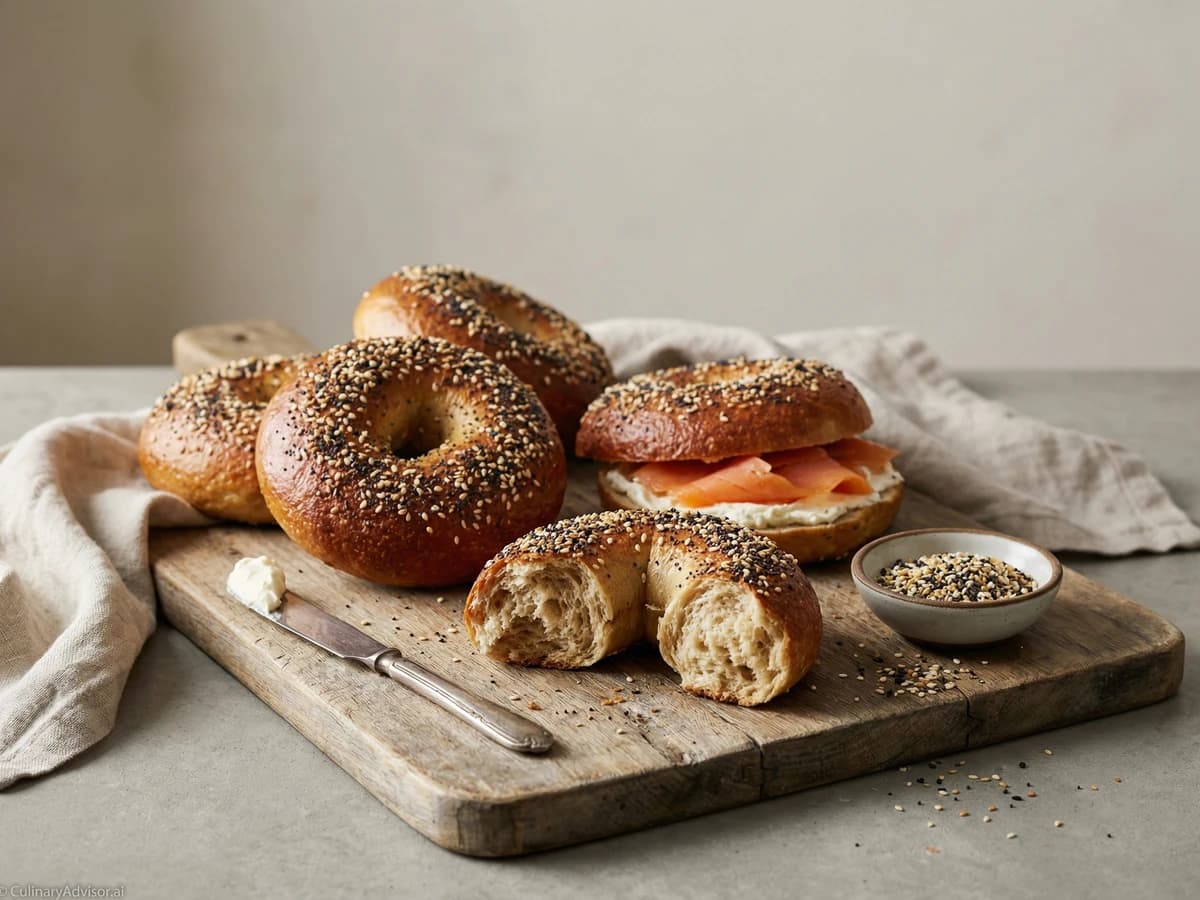
Dense, chewy bagels with that distinctive sourdough tang and shatteringly thin crust, made the way they were before commercial yeast arrived in America. Worth every minute of the wait.
Chef Dean
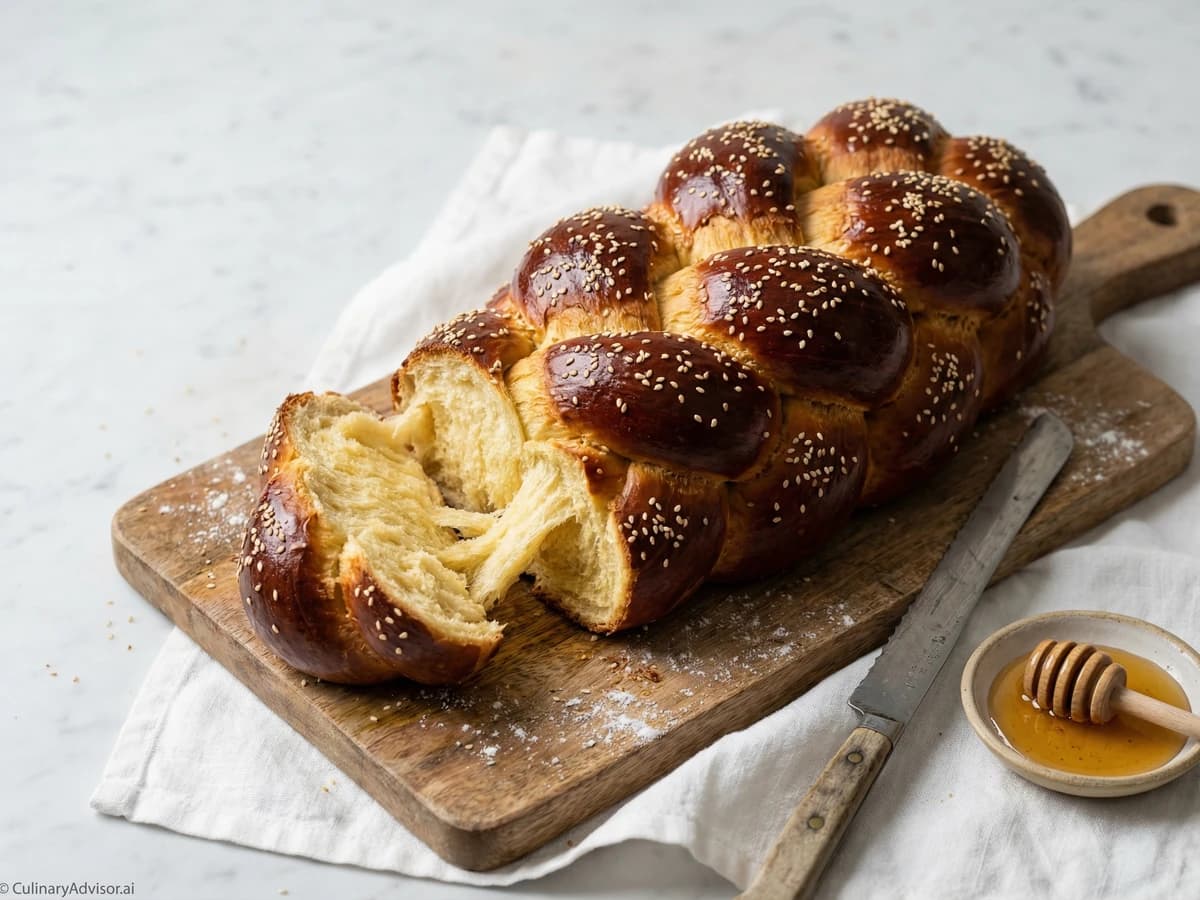
A magnificent braided loaf with burnished mahogany crust, tender golden crumb, and the satisfying heft of bread made with purpose. This is the bread that transforms Friday evening into something sacred.