Chef Lupita
Acúmara Tatemada al Comal
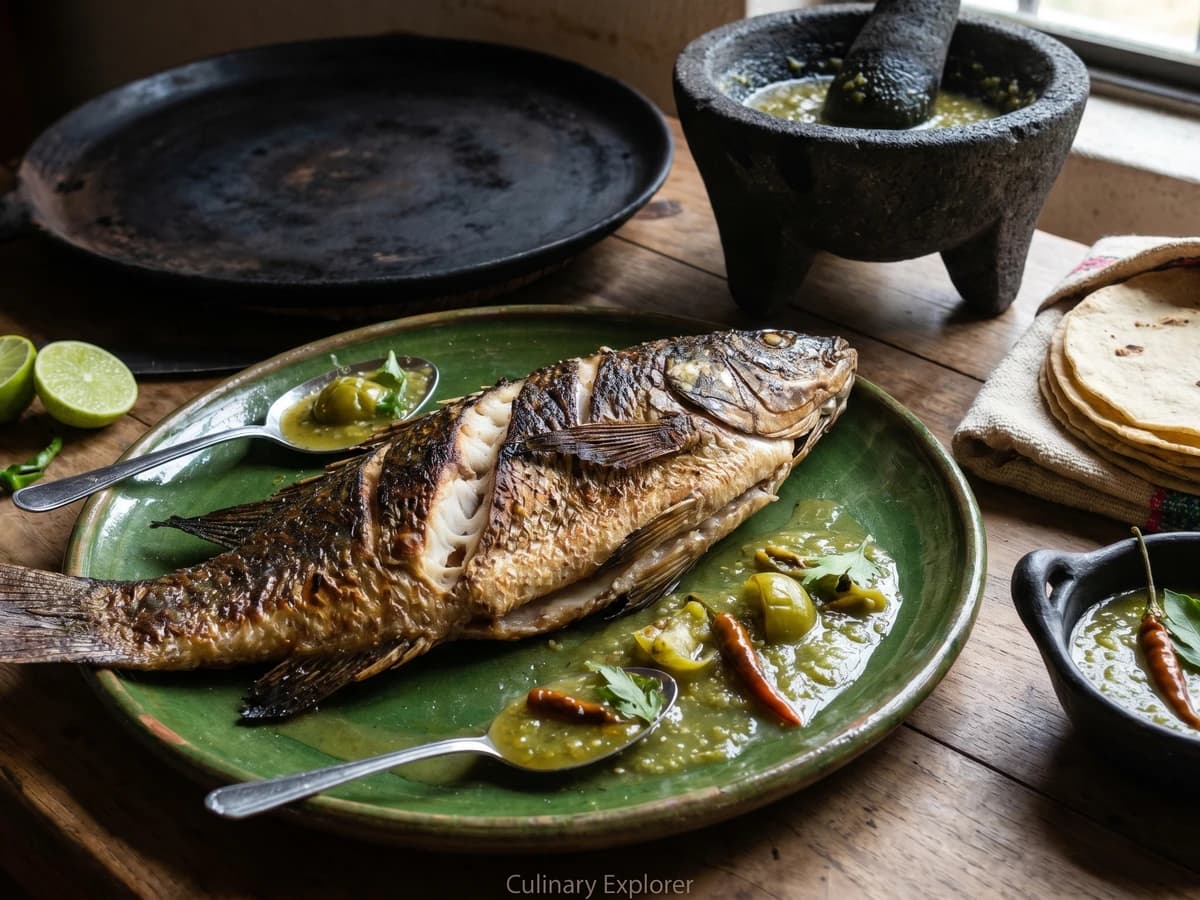
Michoacán's Lake Pátzcuaro acúmara, a whole kurucha from the lago tatemada on a comal de leña and served with chile perón atápakua, corn tortillas, and P'urhépecha discipline.
A cooking platform built around craft, culture, and the stories behind what we eat.

Created by
The northern Mexican chile relleno, made with the long green Anaheim instead of the poblano, stuffed with queso Chihuahua, battered light, fried golden, and bathed in a thin tomato caldillo.
This is a norteño dish. Chihuahua, Sonora, Coahuila, the long border country where the chile Anaheim, called chile verde del norte by the senoras who grow it in their backyards, takes the place of the poblano. South of Mexico City, the chile relleno is poblano. North of Zacatecas, it is Anaheim. Cada estado, su propia cocina.
The Anaheim is longer, narrower, thinner-skinned, and milder than the poblano. It demands a different hand. You cannot roast it as long. You cannot stuff it as densely. The capeado has to be lighter because the chile itself is lighter. And the cheese is queso Chihuahua, a melting cheese with deep northern roots in the Mennonite communities of the Cuauhtemoc valley, not the salty queso fresco the south uses for picadillo-stuffed rellenos. Use what belongs.
The caldillo is the other norteño signature. In Puebla and Mexico City you eat the relleno in a thick tomato sauce. In Chihuahua and Sonora the relleno sits in a thin, brothy caldillo barely thickened with a tablespoon of fried tomato puree. Lighter food for hotter country. The flour tortilla on the side, soft and warm, is also northern: cada estado, su propia cocina, and this one belongs to the kitchens of the desert north.
My mother was jalisciense and made her rellenos with poblano. The version in this recipe came from a senora in Delicias, Chihuahua, who watched me roast a poblano in her kitchen and quietly handed me a basket of Anaheims. She said: este es el chile de aqui. That is how I learned. Saber cocinar es saber vivir.
The chile Anaheim is a domesticated descendant of the New Mexican chile, itself a 17th-century selection from chiles brought north by Spanish colonists from central Mexico into the territory that became Nuevo Mexico, Chihuahua, and Sonora. Its modern commercial form was stabilized in California in the early 20th century by Emilio Ortega, who relocated seed from New Mexico to Anaheim, but the chile's working culinary identity remained anchored in the Mexican north, where it is sold simply as chile verde. Queso Chihuahua, the dish's defining cheese, traces to the Mennonite communities who settled the Cuauhtemoc valley in the 1920s after fleeing Canada, and their dairy tradition produced the buttery, mild melting cheese now considered indispensable to norteño cooking.
Quantity
8
long and firm
Quantity
12 ounces
cut into thick batons
Quantity
5
separated, at room temperature
Quantity
1/2 cup, plus more for dredging
Quantity
1/2 teaspoon
Quantity
1 cup
Quantity
2 pounds
halved
Quantity
1/4 medium
Quantity
2
peeled
Quantity
1
stemmed
Quantity
1 tablespoon
Quantity
2 cups
Quantity
1 sprig
Quantity
1/2 teaspoon
Quantity
to taste
Quantity
for serving
Quantity
for serving
| Ingredient | Quantity |
|---|---|
| fresh chile Anaheim (chile verde del norte)long and firm | 8 |
| queso Chihuahuacut into thick batons | 12 ounces |
| large eggsseparated, at room temperature | 5 |
| all-purpose flour | 1/2 cup, plus more for dredging |
| kosher salt (for the batter) | 1/2 teaspoon |
| vegetable oil or manteca de cerdo (for frying) | 1 cup |
| Roma tomatoeshalved | 2 pounds |
| white onion | 1/4 medium |
| garlic clovespeeled | 2 |
| fresh chile serrano (optional)stemmed | 1 |
| manteca de cerdo | 1 tablespoon |
| chicken broth or water | 2 cups |
| fresh cilantro | 1 sprig |
| dried Mexican oregano | 1/2 teaspoon |
| kosher salt | to taste |
| warm flour tortillas (optional) | for serving |
| frijoles de la olla (optional) | for serving |
Set the Anaheim chiles directly on a hot comal, a gas burner flame, or under a broiler. Turn them with tongs until the skins blister and char in patches, about six to eight minutes total. You want them blistered, not collapsed. The flesh underneath needs to stay firm enough to hold the cheese. The chile Anaheim is thinner-skinned than the poblano, so it moves faster. Watch it.
Transfer the roasted chiles to a bowl and cover with a kitchen towel. Let them sweat for ten minutes. The skins will loosen on their own. Peel them with your fingers under a thin trickle of water if you must, but a dry peel keeps more of the chile flavor. Make a single vertical slit down the side of each chile and carefully remove the seeds and veins through the slit. Leave the stem attached. The stem is the handle and the visual signature.
While the chiles sweat, blend the tomatoes, onion, garlic, and serrano if using with a splash of water until smooth. In a wide saucepan, melt the manteca over medium heat. Pour in the tomato puree. It will sputter. Cook for five minutes, stirring, until the color deepens from pink to brick red. Add the chicken broth, the cilantro sprig, the oregano, and salt. Simmer uncovered for fifteen minutes until the caldillo is thin but flavorful. This is not a thick salsa. It is a brothy bath the chile sits in. La cocina del norte tends light, not heavy.
Slide a baton of queso Chihuahua into each chile through the slit. Fill them generously, but leave a small margin so the slit can close around the cheese. If a chile tore during peeling, secure it with a wooden toothpick. Set them on a plate and dust each one lightly with flour. The flour gives the egg batter something to grip. Skip this and the batter will slide off in the oil.
In a clean, dry bowl, beat the egg whites with a pinch of salt until they hold stiff peaks. Add the yolks one at a time and beat just enough to combine. Sift in the half cup of flour and the half teaspoon of salt and fold gently with a spatula. You want a pale yellow, airy batter that holds its shape on a spoon. The flour in the batter is a norteño detail. It gives the capeado a sturdier set than the pure egg version from the south.
Heat the oil or manteca in a wide heavy skillet over medium-high until it shimmers, around 350F. Hold each chile by the stem, lower it into the batter, and turn to coat. Lift it out, letting excess batter drip off, and lay it gently in the hot oil seam side up. Fry two or three at a time so the oil temperature does not crash. Spoon hot oil over the top to set the upper batter. Turn once, after about two minutes, when the underside is deep golden. Cook another minute on the second side. Drain on a wire rack, never on paper towels, which will steam the bottom soft.
Ladle a generous shallow pool of warm caldillo into each plate. Place one or two chiles rellenos in the pool, seam side up so the cheese stays where it belongs. Spoon a little more caldillo over the chiles if you like, but do not drown them. The capeado should still show. Serve immediately with warm flour tortillas and frijoles de la olla on the side. Asi se hace y punto.
1 serving (about 400g)
Culinary guides, cultural storytelling, and the editorial depth that makes cooking meaningful.
Discover Culinary ExplorerChef Lupita
Michoacán's Lake Pátzcuaro acúmara, a whole kurucha from the lago tatemada on a comal de leña and served with chile perón atápakua, corn tortillas, and P'urhépecha discipline.

Chef Lupita
Puebla's weekday adobo of pork shoulder braised in a thick guajillo and ancho sauce sharpened with vinegar, cumin, and clove. The deep red of a market spice stall, the dish a poblana cooks without thinking.

Chef Lupita
Loreto's pit-roasted clams, planted hinge-up in beach sand and tatemadas under a fast fire of dried romerillo brush, the resinous Baja desert shrub that gives this dish its smoke.

Chef Lupita
Oaxaca's eighth mole, the silky, almond-and-cinnamon almendrado, served over poached chicken. Mild, sweet, restrained, and a quiet rebuttal to anyone who thinks Mexican food has to be hot to be Mexican.