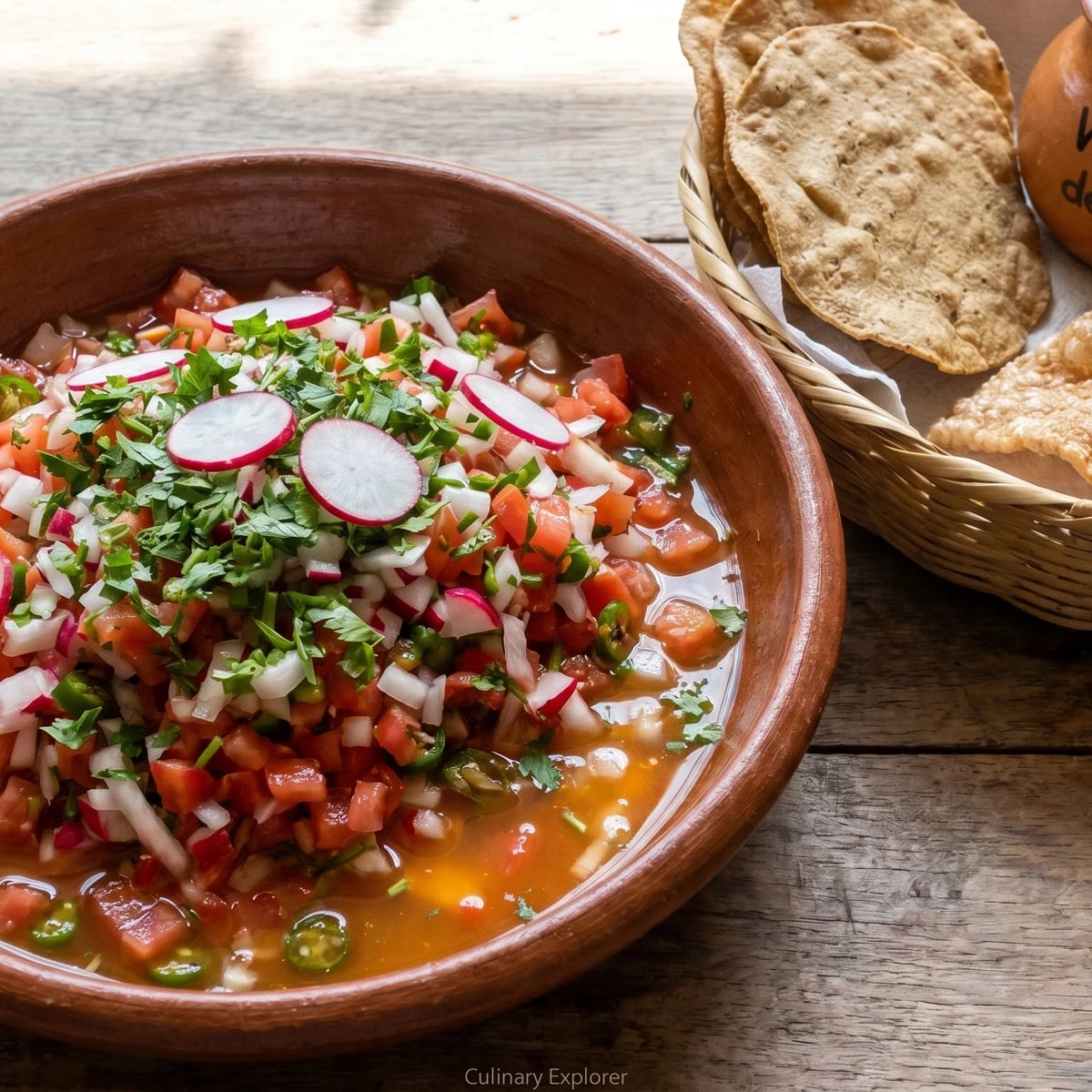
Colima's chile de uña is a cold botanero bowl of hand-chopped jitomate, radish, onion, serrano and cilantro, sharpened with orange juice and vinegar, made to be scooped with chicharrón and tostadas.
Appetizers & Snacks
Mexican
Potluck
Outdoor Dining
Budget Friendly
25 min
Active Time
0 min cook•55 min total
YieldAbout 5 cups, 6 to 8 botana servings
Colima, the small Pacific state between Jalisco and Michoacán, is where this chile de uña belongs on the botanero table. You see the logic of it in the heat: chopped jitomate, radish, onion, chile serrano, cilantro, orange juice, vinegar, and salt. Cold, sharp, cheap, generous. A bowl in barro, chicharrón on the side, tostadas stacked in a basket. Eso es Colima.
People outside Occidente see chopped tomato and want to call everything pico de gallo. No. This is chile de uña, also called salsa de uña, and the cut matters. The vegetables are chopped so small they measure against the fingernail. The women in Colima's cenadurías and botaneros perfected this because they understood what a hot afternoon needs: acid, crunch, chile, and something crisp to scoop it with.
The chile is fresh serrano, not jalapeño if you can help it. Serrano gives a cleaner, sharper bite. The radish is not decoration. It gives the snap that tells a Colima cook you did not just make tomato salad. The orange juice softens the vinegar, the lime remembers Tecomán, and the salt from the coast does what salt always does when the cook knows how to use it: it wakes everything up.
I learned a south Jalisco version with tomatillo and queso seco de Cotija, but Colima's table version stays leaner and brighter. Cada estado, su propia cocina. If a señora from Colima is watching your knife, she is not checking whether you smiled while cooking. She is checking the size of the chop. Saber cocinar es saber vivir.
Chile de uña, also recorded as salsa de uña, is documented in Mexican gastronomic dictionaries as a Colima table salsa made from chopped tomato, radish, onion, chile serrano, cilantro, and salt, with time for maceration before serving. The name is usually explained by the tiny hand cut, pieces small enough to measure against a fingernail, while neighboring south Jalisco has a related version built around tomatillo, sour orange, and queso seco de Cotija. That borderland variation is the lesson: Occidente shares ingredients and habits, but Colima's botanero table gives the dish its own sharp, fresh identity.
The technique, the tradition, and the story behind every dish.
tostadas raspadas de maíz or sturdy corn tostadas (optional)
Quantity
12
Ingredient
Quantity
firm ripe jitomate saladetcored, seeded, and chopped into 1/8-inch dice
1 1/2 pounds
medium radishestrimmed and chopped into 1/8-inch dice
8
white onionfinely chopped
1/2 medium
fresh chile serranostemmed and finely chopped with seeds
6
fresh cilantro leaves and tender stemsfinely chopped
1/2 cup
fresh orange juicestrained
3/4 cup
fresh lime juice, preferably limón de Tecomán
2 tablespoons
white vinegar or vinagre de tuba
2 tablespoons
coarse sea salt from Cuyutlán or kosher salt
1 1/2 teaspoons, plus more to taste
fresh chicharrón de puerco (optional)broken into large pieces
1/2 pound
tostadas raspadas de maíz or sturdy corn tostadas (optional)
12
Equipment Needed
•Sharp chef's knife or serrated tomato knife
•Large nonreactive glass or clay bowl
•Wooden spoon
•Barro rojo serving bowl or small clay cazuelita
Instructions
1
Choose the produce
Use firm ripe jitomates, crisp radishes, shiny chile serrano, and cilantro that smells green when you pinch the stems. If the tomatoes are soft and watery, they will collapse into soup. This is a chopped botana, not a blender salsa. Start at the market, not at the cutting board.
2
Chop by hand
Chop the jitomate, radish, onion, and chile serrano by hand into very small dice, about the size of a fingernail. That cut is why the dish has its name. Do not use a food processor. It bruises the tomato, crushes the onion, and gives you wet pulp instead of clean little pieces that keep their bite.
Keep the serrano seeds. Colima's version should have a clear chile bite. If you remove every seed because you are afraid of heat, you are changing the dish.
3
Make the citrus bath
In a nonreactive bowl, stir together the orange juice, lime juice, vinegar, and salt until the salt dissolves. Add the chopped onion and serrano first. Let them sit for 10 minutes. The acid takes the raw edge off the onion and pulls the chile flavor into the liquid. This is where the botana starts to taste like itself.
4
Fold in the vegetables
Add the chopped jitomate, radish, and cilantro to the bowl. Fold gently with a spoon, lifting from the bottom so the citrus bath coats everything without smashing the tomato. You should see red jitomate, white onion, green chile and cilantro, and little red-edged bits of radish in every spoonful.
5
Macerate and taste
Cover and refrigerate for 30 minutes. The salt will draw out just enough juice to make a sharp, orange-scented dressing at the bottom of the bowl. Taste it after resting. It should be bright, salty, crunchy, and direct. If it tastes flat, add a pinch more salt. If it tastes sweet, add a splash more vinegar. Así se hace y punto.
6
Serve as botana
Spoon the chile de uña into a barro bowl and set it on the table with fresh chicharrón and tostadas raspadas de maíz. Do not drown the tostadas ahead of time. Each person scoops as they eat, so the chicharrón stays crisp and the tostada does not soften before it reaches the mouth. This is botana de Occidente, made for sharing without ceremony.
Chef Tips
•Buy chile serrano that is firm, glossy, and deep green. Wrinkled chiles taste tired. Jalapeño is a compromise, not an upgrade, because it is fleshier and duller in this raw preparation.
•Use fresh orange juice. Bottled juice tastes cooked and sweet. If your mercado has naranja agria, use 1/2 cup naranja agria and reduce the vinegar to 1 tablespoon.
•The radish belongs here. Leave it out and you lose the Colima snap. The dish should bite back with chile and crunch, not sit there like a polite tomato salad.
•Fresh chicharrón matters. Buy it the same day if you can. Bagged supermarket chicharrón will scoop the salsa, yes, but it will not give you the same clean crack under the teeth.
•Do not make this a day ahead. The vegetables will give up too much water and the cilantro will darken. This is a 30-minute rest dish, not a refrigerator project. No me vengas con atajos.
Advance Preparation
•The onion, serrano, radish, citrus juice, vinegar, and salt can be combined up to 4 hours ahead and kept cold. Add the jitomate and cilantro 30 minutes before serving.
•Finished chile de uña keeps its best texture for about 2 hours when chilled. For a potluck or outdoor table, carry it in a cooler and keep the chicharrón and tostadas dry until serving.
•If the finished salsa throws off too much liquid, do not drain it dry. Spoon from the bottom and let a little of the orange-vinegar bath ride onto each tostada.
Frequently Asked Questions
Nutrition Information
1 serving (about 190g)
Calories
280 calories
Total Fat
13 g
Saturated Fat
4 g
Trans Fat
0 g
Unsaturated Fat
9 g
Cholesterol
27 mg
Sodium
1060 mg
Total Carbohydrates
20 g
Dietary Fiber
3 g
Sugars
5 g
Protein
20 g
Where cooking meets culture.
Culinary guides, cultural storytelling, and the editorial depth that makes cooking meaningful.