Culinary Explorer

A cooking platform built around craft, culture, and the stories behind what we eat.
Discover Culinary Explorer
Chilaquiles Horneados con Huevo en Cazuela

Chilaquiles Horneados con Huevo en Cazuela

Created by

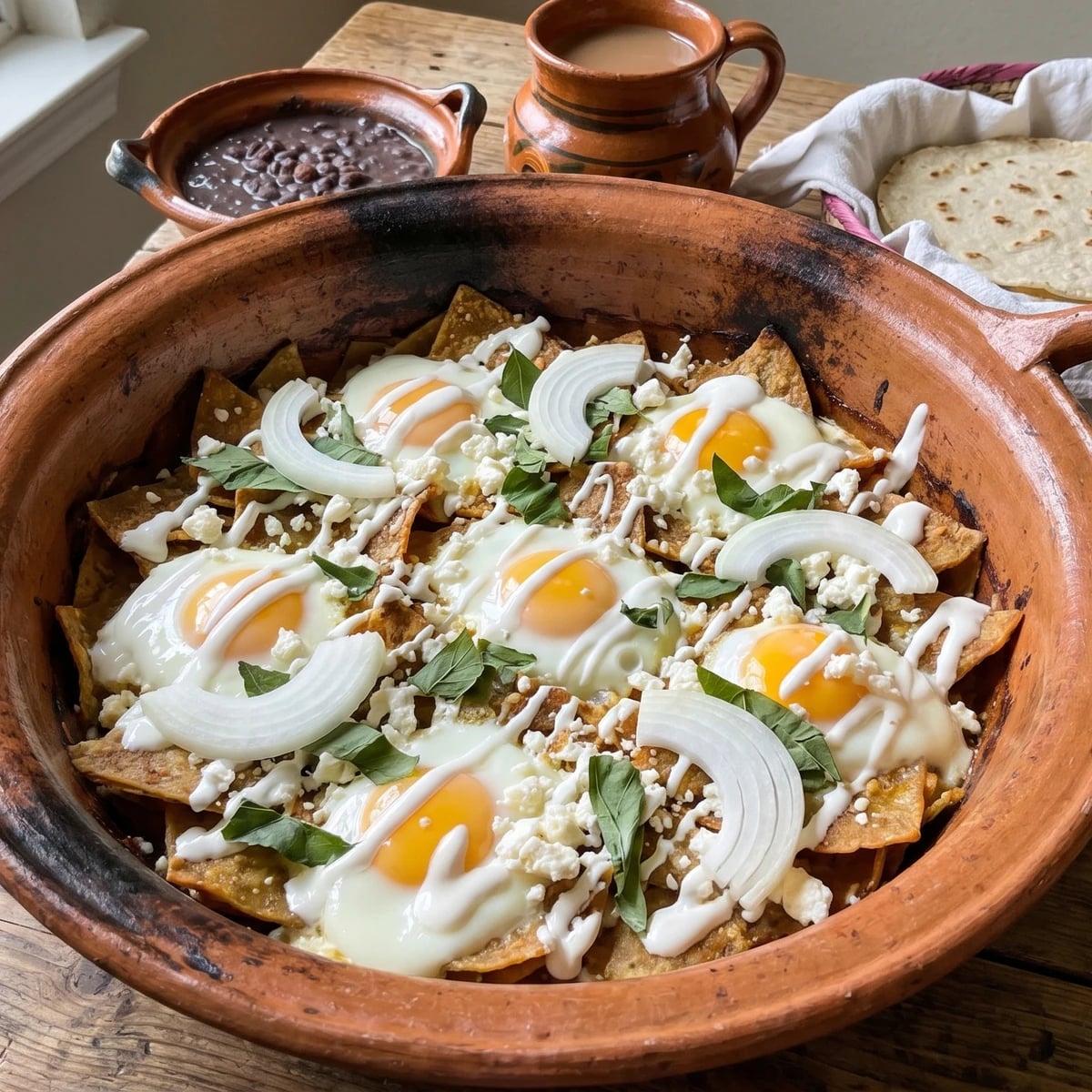
Ciudad de México's baked chilaquiles: day-old totopos tossed in fried salsa roja, layered with queso Oaxaca and epazote in a clay cazuela, eggs cracked into wells, baked until the whites just set and the yolks stay loose.

Breakfast & Brunch
Mexican
Make Ahead
Dinner Party
Comfort Food
30 min
Active Time
25 min cook55 min total
Yield4 to 6 servings

Chilaquiles are from the Valle de México. The word comes from Nahuatl, chilaquilitl, meaning chiles and greens, and the dish itself is older than the Spanish. This is breakfast food. Not nachos. Not a snack. Breakfast. The fondas in Colonia Roma and Colonia Doctores have been serving chilaquiles since before my mother moved to Ciudad de México, and they will be serving them long after we are gone.

The dish solves a practical problem: what do you do with yesterday's tortillas? You dry them out, you toss them in a salsa you built that morning, you melt good cheese into them, you crack eggs on top. Day-old tortillas are not a flaw in the recipe. They are the recipe. Fresh tortillas turn to paste the moment they touch the salsa, and you end up with a sad mush instead of chilaquiles that hold a bite at the center.

This version is horneados, baked in a clay cazuela. It is how my tia Carmen made them on Sundays when the family came over and she did not want to stand at the stove flipping individual portions. You build the salsa, you toast the totopos, you toss them quickly, you layer them with queso Oaxaca and epazote, you crack the eggs into shallow wells, and the oven does the rest. The cazuela holds the heat at the table and lets the dish keep cooking gently while people serve themselves.

The queso is Oaxaca, pulled into strands, not shredded mozzarella, not yellow cheese, and never anything that comes pre-shredded in a bag. The crema is Mexican crema, thinner and tangier than American sour cream. The epazote tucked between the layers is not optional. It is the herb that smells like the central highlands and it belongs with corn and salsa roja the way oregano belongs with tomato. My mother used to say: si no tiene epazote, no es de aquí. If it doesn't have epazote, it isn't from here. Saber cocinar es saber vivir.

Chilaquiles predate the conquest and appear in colonial-era documents as a staple of indigenous and mestizo home cooking in the Valle de México, where the practice of refrying stale tortillas in chile sauce was a daily exercise in household economy. The Diccionario de Mejicanismos compiled by Feliz Ramos i Duarte in 1895 already records the dish as a fixture of Mexico City breakfast culture, and 20th-century fonda culture cemented chilaquiles as the city's signature morning meal alongside huevos rancheros and enfrijoladas. The red-versus-green debate, salsa roja against salsa verde, has no winner; each cook defends her own, and the Ciudad de México style typically appears with both salsas available on the menu and the choice left to the diner.

The technique, the tradition, and the story behind every dish.

Discover Culinary Explorer

Ingredients

day-old corn tortillas

Quantity

20 (about 1 pound)

cut into quarters

manteca de cerdo (pork lard)

Quantity

1/4 cup, plus more for the cazuela

dried chile guajillo

Quantity

6

stemmed and seeded

dried chile ancho

Quantity

2

stemmed and seeded

dried chile de arbol

Quantity

2

stemmed (use 1 for less heat)

Roma tomatoes

Quantity

4

white onion

Quantity

1/2 medium, plus more diced for serving

garlic cloves

Quantity

3

unpeeled

chicken broth or chile soaking water

Quantity

1 cup, plus more as needed

dried Mexican oregano

Quantity

1 teaspoon

kosher salt

Quantity

1 1/2 teaspoons, plus more to taste

queso Oaxaca

Quantity

8 ounces

pulled into thin strands

large eggs

Quantity

6

Mexican crema

Quantity

1/2 cup

queso fresco

Quantity

4 ounces

crumbled

white onion for topping

Quantity

1/2 small

sliced into thin half-moons

fresh epazote

Quantity

1 large sprig

leaves picked

pickled jalapeños (optional)

Quantity

for serving

refried black beans (optional)

Quantity

for serving

lime wedges (optional)

Quantity

for serving

Equipment Needed

  • 12-inch clay cazuela or heavy oven-safe skillet
  • Cast iron comal or heavy skillet for toasting chiles and charring vegetables
  • Two rimmed sheet pans for the totopos
  • High-powered blender
  • Wooden spoon for folding the totopos

Instructions

  1. 1

    Dry the tortillas into totopos

    Heat the oven to 375F. Cut the tortillas into quarters and spread them in a single layer on two sheet pans. Drizzle each pan with about a tablespoon of melted lard and toss with your hands until every piece is lightly coated. Bake for 12 to 14 minutes, stirring once halfway through, until the totopos are golden and rigid but not deep brown. They should snap when you bend one. Day-old tortillas are not a suggestion. Fresh tortillas turn to mush the second the salsa touches them.

    If your tortillas are too fresh, leave them spread on a counter overnight uncovered. The point is to dry them out before they meet the fat.
  2. 2

    Toast the chiles

    Heat a dry comal or heavy skillet over medium. Toast the guajillo, ancho, and arbol chiles separately, pressing them flat with a spatula for about 20 seconds per side. They should puff and turn fragrant, never blacken. Burned chile turns the salsa bitter and there is no fixing it later. Pull them off the comal and drop them into a bowl of hot tap water, not boiling, to soften for 15 minutes.

  3. 3

    Char the tomatoes, onion, and garlic

    On the same comal, char the tomatoes, the half onion, and the unpeeled garlic cloves until blackened in patches and softened, about 8 minutes for the garlic and 10 to 12 for the tomatoes and onion. This is the dry-roast method the women at La Merced use to build a salsa roja with depth. No oil, no water, just the comal and patience. Peel the garlic once it cools.

  4. 4

    Blend and fry the salsa

    Drain the chiles, reserving the soaking water. Transfer the chiles, charred tomatoes, onion, peeled garlic, oregano, salt, and 1 cup of broth (or the chile water) to the blender. Blend until completely smooth, about 90 seconds. Heat the 1/4 cup of lard in a wide heavy pot or deep skillet over medium-high until it shimmers. Pour the salsa in. It will sputter, that is the point. Cook for 8 minutes, stirring, until the salsa darkens, thickens, and the fat starts to bead on the surface. La manteca es el sabor. A salsa that has not been fried is a salsa that tastes raw.

    The salsa should coat the back of a spoon but still be loose enough to soak the totopos. If it is too thick, thin with a splash of broth. If it is thin, cook it another two minutes.
  5. 5

    Toss the totopos in the salsa

    Lower the heat to medium. Add the warm totopos to the salsa in two batches, folding gently with a wooden spoon so every piece is coated but nothing breaks. You want the totopos saturated at the corners but still holding shape in the center. This is the moment that separates chilaquiles from soggy nachos. Move quickly. Once the totopos are coated, they are ready for the cazuela.

  6. 6

    Layer in the cazuela

    Rub the inside of a 12-inch clay cazuela or heavy oven-safe skillet with a little lard. Spread half the chilaquiles in the cazuela. Scatter half the queso Oaxaca over them. Layer the rest of the chilaquiles on top and finish with the remaining queso Oaxaca. Tear the epazote leaves and tuck them between the layers. Epazote belongs here. It is not a garnish, it is part of the flavor of the central highlands.

  7. 7

    Crack the eggs into wells

    Use the back of a wooden spoon to press six shallow wells into the surface of the chilaquiles. Crack one egg into each well. Season the eggs with a pinch of salt. Slide the cazuela into the 375F oven and bake for 10 to 14 minutes, until the whites are just set and the yolks are still loose. Check at 10 minutes. The eggs will keep cooking once you pull the cazuela out, so err on the side of underdone.

  8. 8

    Finish and serve at the table

    Pull the cazuela from the oven. Drizzle the crema across the top in thick ribbons, scatter the crumbled queso fresco over the whole surface, and finish with the sliced raw onion. Bring the cazuela straight to the table with the pickled jalapeños, the refried beans, and the lime wedges on the side. Chilaquiles are breakfast. They are eaten the moment they leave the oven, while the totopos still hold a bite at the center and the yolks are loose enough to break with a tortilla. No me vengas con atajos. Así se hace y punto.

Chef Tips

  • Use tortillas that are at least one day old. If you only have fresh tortillas, cut them and leave them on a counter uncovered overnight. The dryness is what lets them absorb the salsa without disintegrating.
  • Queso Oaxaca is the cheese for this dish. Pull it into thin strands by hand, do not shred it on a box grater. The strands melt into ribbons inside the chilaquiles. If you cannot find queso Oaxaca, fresh Monterey Jack pulled into strands is a compromise, not an upgrade.
  • If you want salsa verde instead of salsa roja, swap the dried chiles and tomatoes for one pound of tomatillos and two or three chile serrano, charred on the same comal and blended the same way. The technique does not change. The state does not change. Both belong to CDMX.
  • The eggs should come out of the oven with the whites set and the yolks loose. They will keep cooking in the hot cazuela. Pull them earlier than you think.

Advance Preparation

  • The salsa roja can be made up to three days ahead and refrigerated. The flavor only deepens. Reheat gently before tossing the totopos.
  • The totopos can be baked one day ahead and held in an airtight container at room temperature. Re-crisp in a 350F oven for five minutes before saucing if they have softened.
  • Do not assemble the full cazuela in advance. Once the totopos meet the salsa, the clock is running, and chilaquiles that sit before baking turn to mush.

Frequently Asked Questions

Nutrition Information

1 serving (about 325g)

Calories
710 calories
Total Fat
43 g
Saturated Fat
20 g
Trans Fat
0 g
Unsaturated Fat
23 g
Cholesterol
300 mg
Sodium
1130 mg
Total Carbohydrates
55 g
Dietary Fiber
10 g
Sugars
8 g
Protein
30 g

Note: Chef personas and recipes are created with AI assistance. Cook with care: follow safe food-handling practices, check doneness with a thermometer when needed, and adapt for allergies and your kitchen.

Where cooking meets culture.

Culinary guides, cultural storytelling, and the editorial depth that makes cooking meaningful.

Discover Culinary Explorer

More from Central Mexican Breakfast & Almuerzo

Browse the full collection