Chef Thomas
Anchovy Sauce
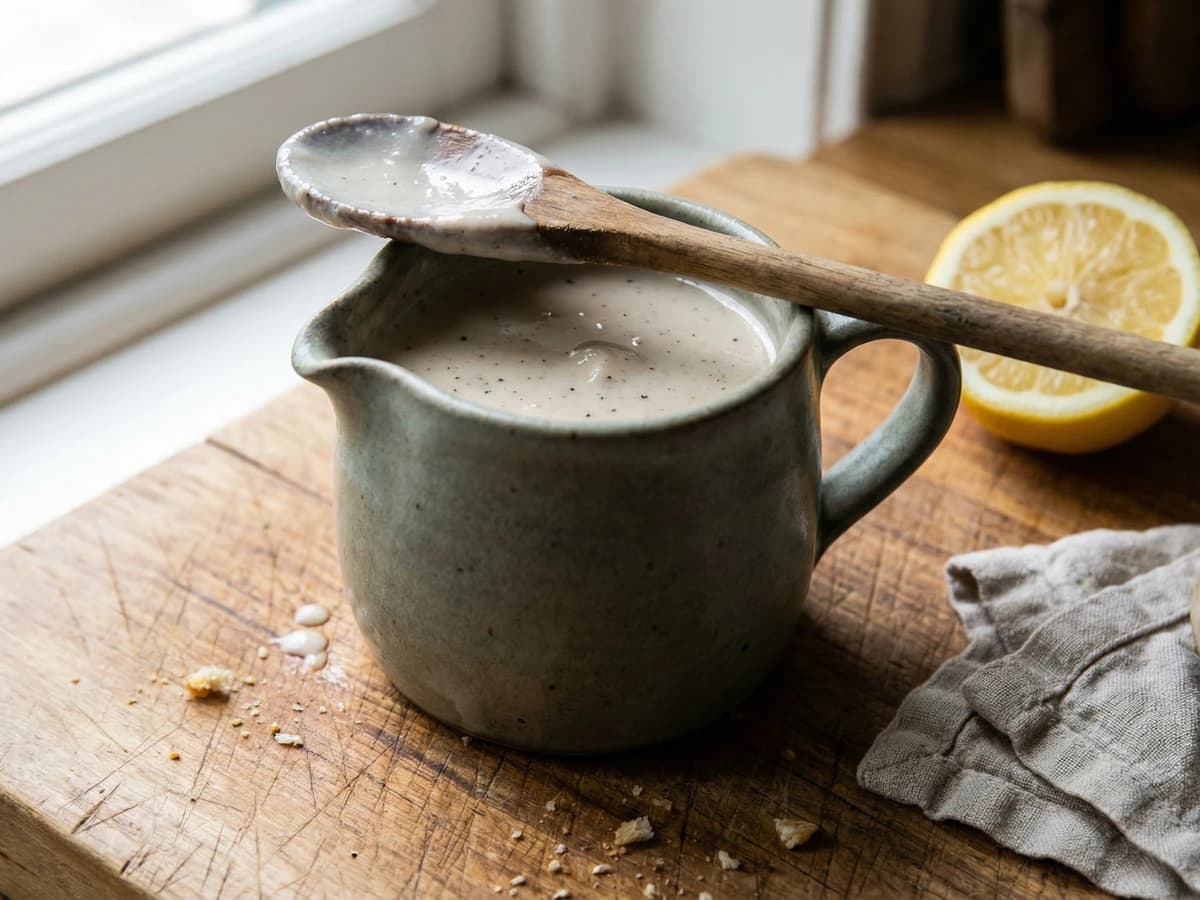
A proper white sauce sharpened with pounded anchovy, the old Georgian trick for waking up a piece of poached fish or a slice of roast lamb on a Sunday in spring.
A cooking platform built around craft, culture, and the stories behind what we eat.
Created by Chef Thomas
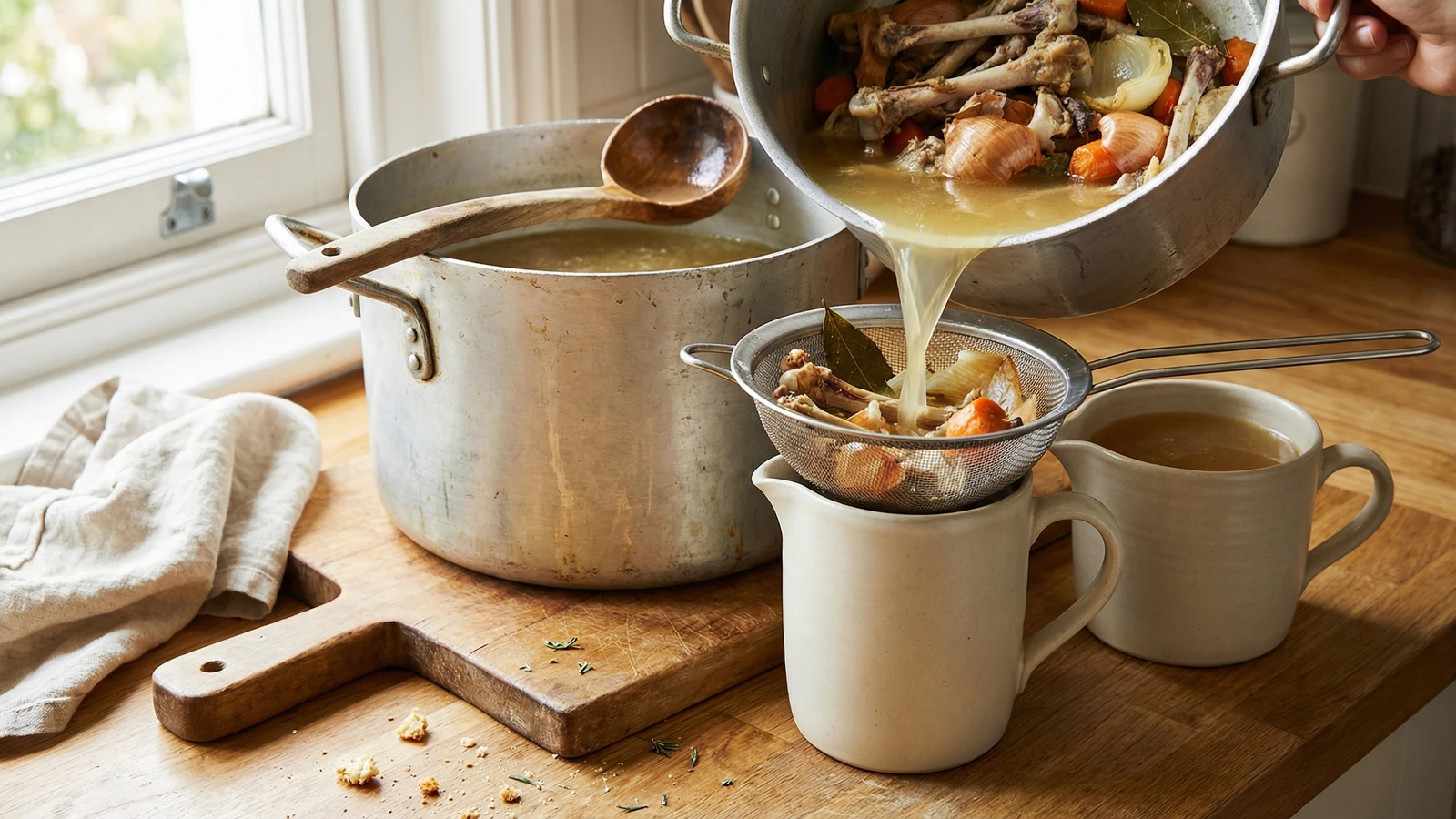
Yesterday's roast chicken, quietly transformed into a pot of pale golden stock, the kind of Monday morning ritual that turns leftovers into the foundation of a whole week's cooking.
There's a moment on a Monday morning, the roast from Sunday still picked-over on the side, the kitchen quiet, the kettle on, when you either bin the carcass or you don't. I don't. I never have. A roast chicken has one more gift to give and it would feel rude to throw it away before asking for it.
This is barely a recipe. It's a pot, some water, whatever vegetables are rattling around the bottom of the drawer, a bay leaf or two, and time. You put the carcass in, cover it with cold water, and let the morning do the rest. By lunchtime the kitchen smells of something gentle and old-fashioned, and by the end of the afternoon you've got a litre and a half of pale golden stock that will carry you through risottos, soups, a Wednesday braise, a Thursday grain bowl. The week's cooking, quietly underwritten.
I wrote it down in the notebook years ago and I've never bothered to revise it. "Monday. Carcass. Onion, carrot, celery, bay. Three hours. Jellied when cold." That was enough then and it's enough now. A recipe is a conversation, not a contract. Use what you've got. Skip what you haven't. The stock doesn't mind.
What you get from this isn't the clarified consomme of a restaurant kitchen. It's better than that, because it belongs to your house. It tastes of your Sunday roast, the herbs you rubbed on the bird, the way the skin went crisp in your oven. It's the afterlife of a good dinner, and it makes the next three dinners better.
Quantity
1
with skin, wing tips and any pan juices
Quantity
1 large
unpeeled, roughly quartered
Quantity
2 medium
scrubbed and roughly chopped
Quantity
2 sticks
roughly chopped
Quantity
1
washed and roughly chopped
Quantity
1 head
halved across the middle
Quantity
2
Quantity
small handful
Quantity
6
Quantity
1 teaspoon
Quantity
around 2.5 litres
enough to cover
| Ingredient | Quantity |
|---|---|
| roast chicken carcasswith skin, wing tips and any pan juices | 1 |
| onionunpeeled, roughly quartered | 1 large |
| carrotsscrubbed and roughly chopped | 2 medium |
| celeryroughly chopped | 2 sticks |
| leek top (optional)washed and roughly chopped | 1 |
| garlichalved across the middle | 1 head |
| bay leaves | 2 |
| parsley stalks | small handful |
| black peppercorns | 6 |
| sea salt | 1 teaspoon |
| cold waterenough to cover | around 2.5 litres |
Pull the carcass apart with your hands. Don't be precious about it. Crack the ribcage, snap the backbone, tear the legs from the body if they're still attached. You want everything broken down enough to fit into the pot and sit below the waterline. Any scraps of skin, the wing tips, the bits of meat nobody bothered with at dinner, all of it goes in. Scrape the roasting tin too. Those sticky brown bits at the bottom are the whole reason this stock will taste of something.
Put the broken carcass in a large stockpot with the onion, carrots, celery, leek top if you have one, the halved garlic, bay leaves, parsley stalks, peppercorns and salt. No need to peel the onion. The skin adds colour and it's all getting strained out anyway. Cover everything with cold water by a couple of inches. Cold, not hot. You want the flavour to draw out slowly, not seize up.
Set the pot over a medium heat and bring it to a bare simmer. This shouldn't be a rolling boil, ever. A boiled stock goes cloudy and tastes thin. You want the surface barely trembling, the occasional lazy bubble breaking through. When the first scum rises, skim it off with a spoon and discard. After that, leave it alone.
Three hours, give or take. Lid slightly ajar. Check on it now and again, skim if you need to, top up with a little hot water if the level drops below the bones. Otherwise, leave it alone and get on with your morning. Read the paper. Write a letter. The stock doesn't need supervising, it needs patience.
Set a large sieve over a clean bowl or pot. Ladle the stock through, then tip the rest through in stages, pressing very gently on the solids with the back of the ladle. Don't mash. You want the liquid, not the pulp. Discard the bones and vegetables. They've done their job. What you're left with should be a pale, clear, golden liquid that smells like the kind of thing you want to drink straight from the ladle. Taste it. If it's underseasoned, that's fine, you'll season it again when you use it. Stock is a starting point, not a finished thing.
Let the stock cool down on the side until it's no longer steaming, then move it to the fridge. Once it's properly cold, a layer of fat will have set on top like a pale cap. Lift it off with a spoon, or leave it there as a seal if you're freezing the stock in tubs. Underneath, if your chicken was a good one, the stock will have set to a soft jelly. That's exactly what you want. Jellied stock is the sign of a job done properly.
1 serving (about 250g)
Culinary guides, cultural storytelling, and the editorial depth that makes cooking meaningful.
Discover Culinary ExplorerChef Thomas
A proper white sauce sharpened with pounded anchovy, the old Georgian trick for waking up a piece of poached fish or a slice of roast lamb on a Sunday in spring.

Chef Thomas
A spiced autumn chutney made from a glut of apples and a quiet afternoon, simmered down until the kitchen smells of October and the jars line up on the counter like a small, useful insurance policy.
Chef Thomas
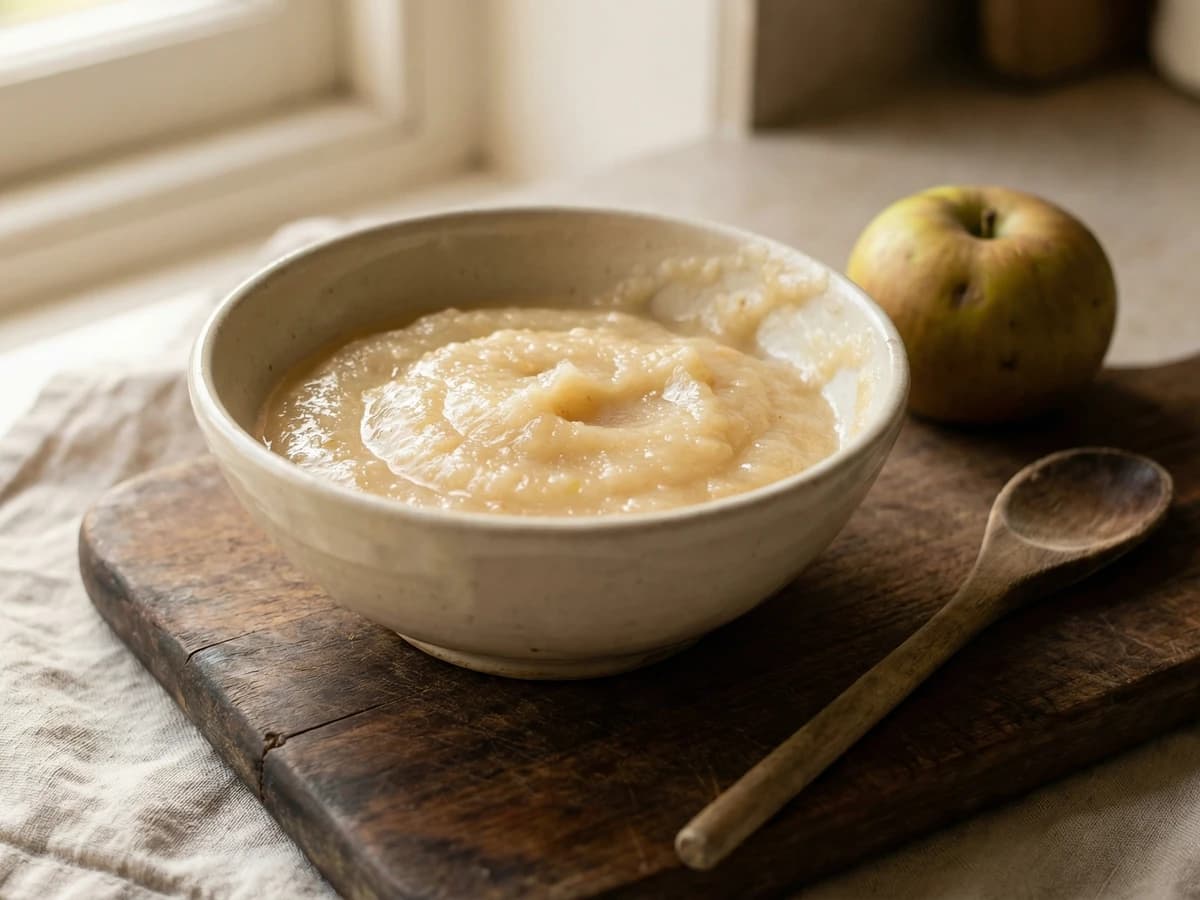
A bowl of sharp, fluffy Bramley apple sauce, made in the time it takes to carve the pork, the kind of small condiment that quietly makes the whole meal make sense.
Chef Thomas
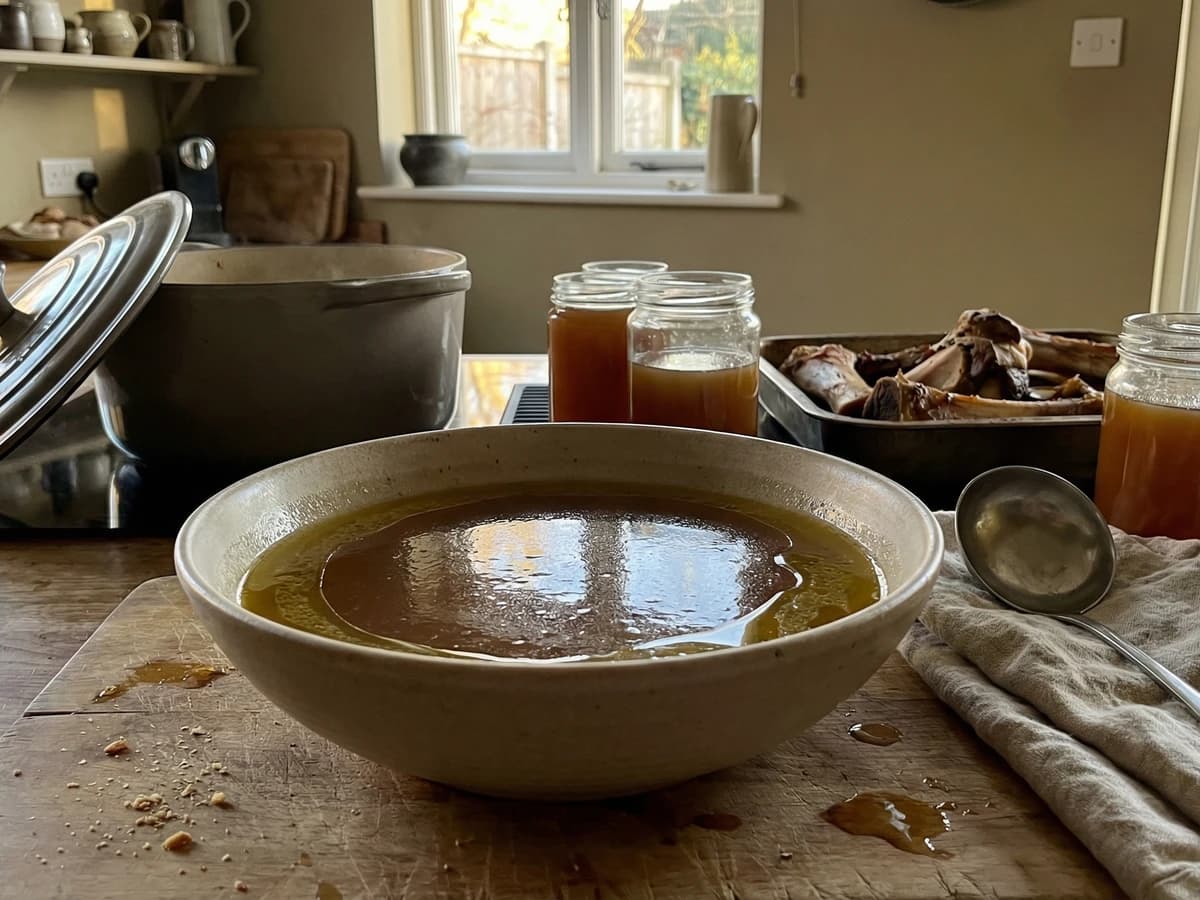
Beef bones roasted until dark, then coaxed for a long afternoon into a deep amber stock, the foundation of every good gravy, every braise, every bowl of winter soup worth the trouble.