Chef Thomas
Anchovy Sauce
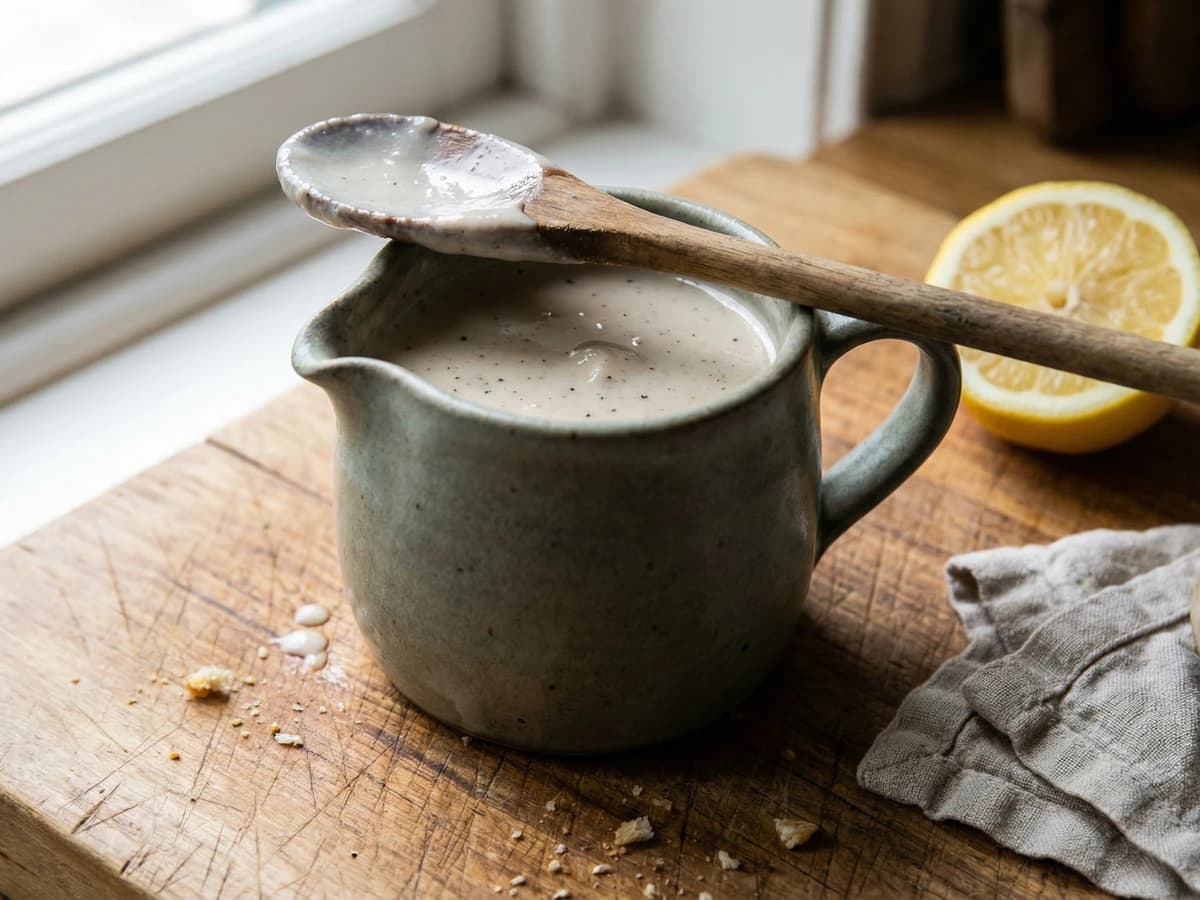
A proper white sauce sharpened with pounded anchovy, the old Georgian trick for waking up a piece of poached fish or a slice of roast lamb on a Sunday in spring.
A cooking platform built around craft, culture, and the stories behind what we eat.

Created by Chef Thomas
A pale golden gravy made straight from the roasting tin, the bird's own juices loosened with stock and a little flour, the whole thing ready in the time it takes the chicken to rest.
Aroast chicken without gravy is a fine thing, but a roast chicken with gravy is the whole story. The one makes the other feel finished. Sunday lunch, a Wednesday in January, a cold plate of leftovers on a quiet night, all of them improved by a small jug of something warm poured over the top.
This is the kind of gravy you make without thinking, while the chicken rests on its board and the potatoes finish crisping. Ten minutes, mostly with a wooden spoon in your hand, scraping the dark bits from the bottom of the tin. Those dark bits are the whole point. They're what the oven has been quietly making for you the last hour and a half. Don't waste them.
Chicken gravy is paler than beef gravy, and it should be. It's meant to taste of the bird, not of itself. A good one is golden and glossy, with enough body to coat a roast potato but not so much that it sits on the plate like paste. Lighter. Cleaner. The kind of sauce you want to mop up with the last corner of bread.
I wrote it down in the notebook years ago, on the back of a page about a November roast: "Pan, flour, stock, patience. That's all it needs." I've never had reason to change it.
Quantity
from 1 whole roasted bird
with the browned bits stuck to the tin
Quantity
1 tablespoon
Quantity
400ml
warm, homemade if you have it
Quantity
a small splash
Quantity
1
Quantity
a few
Quantity
to taste
Quantity
to taste
Quantity
a small knob
| Ingredient | Quantity |
|---|---|
| pan juices from a roast chickenwith the browned bits stuck to the tin | from 1 whole roasted bird |
| plain flour | 1 tablespoon |
| chicken stockwarm, homemade if you have it | 400ml |
| dry white wine (optional) | a small splash |
| bay leaf (optional) | 1 |
| thyme sprigs (optional) | a few |
| fine sea salt | to taste |
| black pepper | to taste |
| cold unsalted butter (optional) | a small knob |
Lift the chicken out of the roasting tin and onto a warm plate or board to rest. Cover it loosely with foil. Don't wash the tin. Everything you need is in there: the dark fond stuck to the bottom, the golden fat pooled in the corners, the scraps of crisp skin and thyme. This is the whole gravy. The chicken has already done the work.
Tilt the tin and spoon off most of the fat from the top, leaving behind a tablespoon or so and all the darker juices underneath. Don't be precious about it. A little fat in the gravy is a good thing. Too much and it pools on the surface like regret.
Set the tin over a low flame across one or two burners. Scatter the flour over the fat and juices and stir with a wooden spoon. It'll go pasty and beige and look briefly unpromising. Keep it moving for a minute or two, until it smells toasty rather than raw, like biscuit dough that's just started to bake. Raw flour tastes of nothing but regret. Cook it properly.
If you're using wine, splash it in now and let it hiss and bubble. Scrape the bottom of the tin with the spoon as it fizzes, lifting all those dark, sticky bits into the sauce. This is where the flavour lives. If you skip the wine, go straight to the stock, a splash at a time, scraping just the same. Either way, the tin should come clean underneath your spoon.
Pour in the warm stock in stages, stirring as you go. A ladle at a time, letting each addition come together before the next. Rushing it makes lumps. Patience makes silk. Add the bay and thyme if you've got them. Bring to a gentle simmer and let it cook for five minutes or so, until it coats the back of the spoon and a finger drawn through leaves a clean trail.
Fish out the bay and thyme. Pour any juices that have pooled under the resting chicken back into the gravy. This is the best part: dark, salty, concentrated, all the things the bird has been quietly giving up while it rested. Swirl in the cold butter if you like, which softens the edges and gives it a bit of gloss. Season with salt and pepper. Taste it. Then taste it again. Pour into a warm jug and carry it to the table while the chicken is still waiting.
1 serving (about 100g)
Culinary guides, cultural storytelling, and the editorial depth that makes cooking meaningful.
Discover Culinary ExplorerChef Thomas
A proper white sauce sharpened with pounded anchovy, the old Georgian trick for waking up a piece of poached fish or a slice of roast lamb on a Sunday in spring.

Chef Thomas
A spiced autumn chutney made from a glut of apples and a quiet afternoon, simmered down until the kitchen smells of October and the jars line up on the counter like a small, useful insurance policy.
Chef Thomas
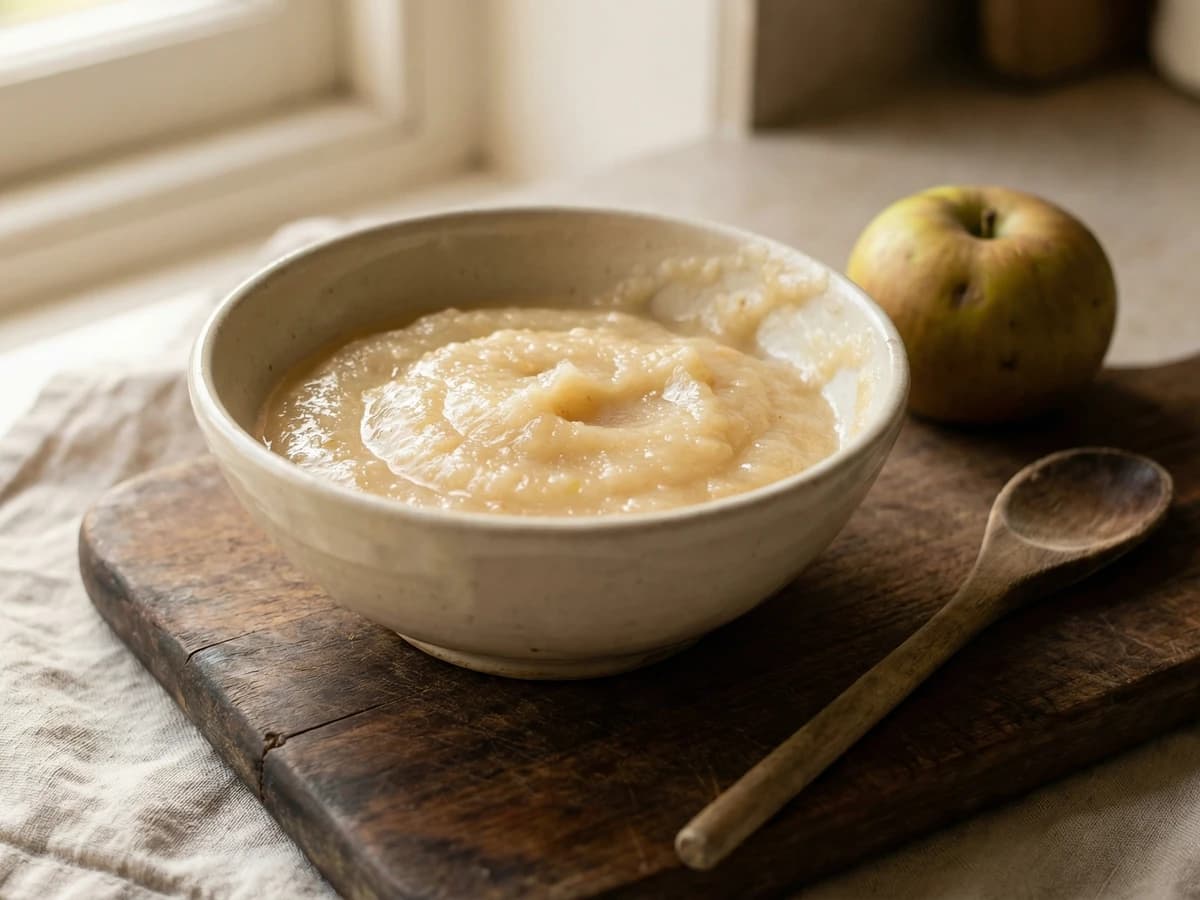
A bowl of sharp, fluffy Bramley apple sauce, made in the time it takes to carve the pork, the kind of small condiment that quietly makes the whole meal make sense.
Chef Thomas
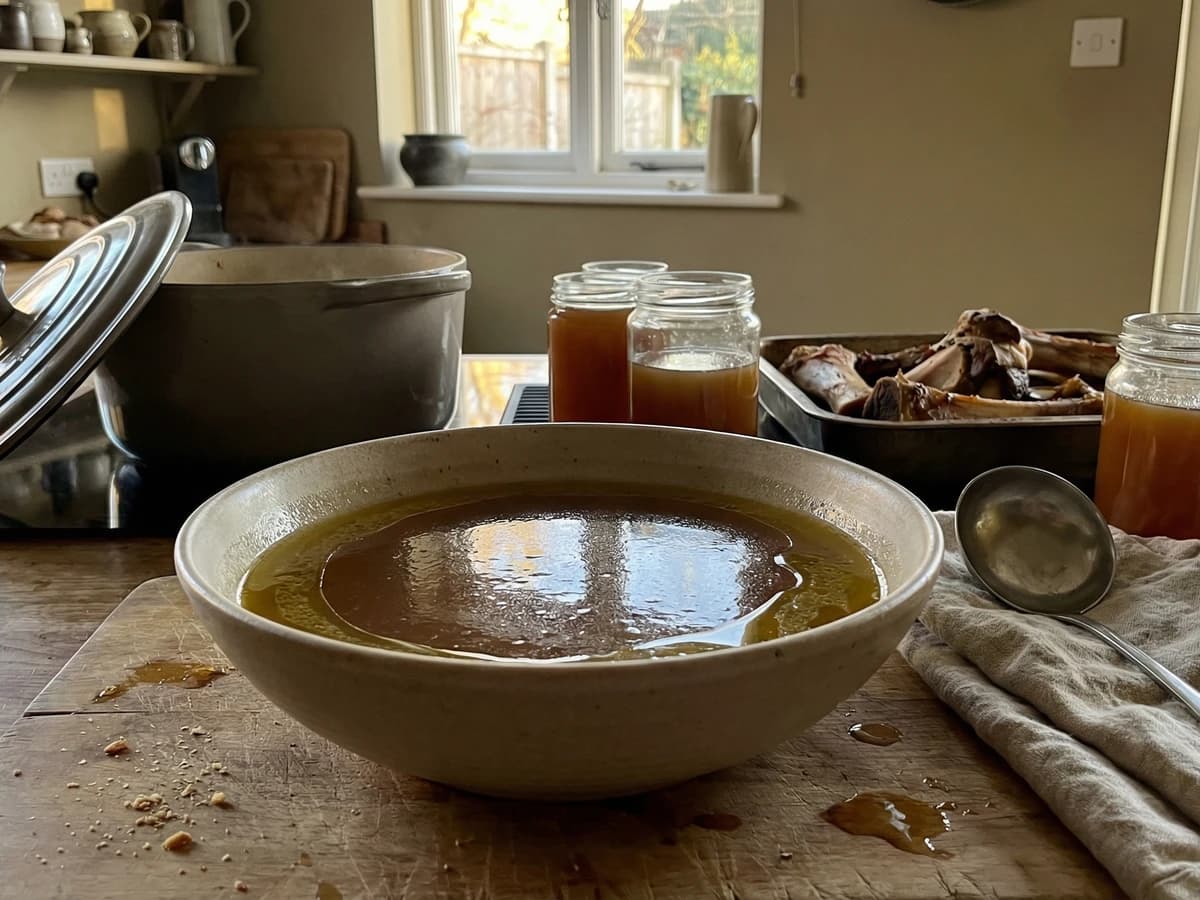
Beef bones roasted until dark, then coaxed for a long afternoon into a deep amber stock, the foundation of every good gravy, every braise, every bowl of winter soup worth the trouble.