
Chef Dean
American Goulash
A Midwestern one-pot supper of seasoned ground beef, tender elbow macaroni, and tomatoes simmered into a thick, soul-satisfying stew. This is the dish that fed factory workers and farm families alike.
A cooking platform built around craft, culture, and the stories behind what we eat.
Created by
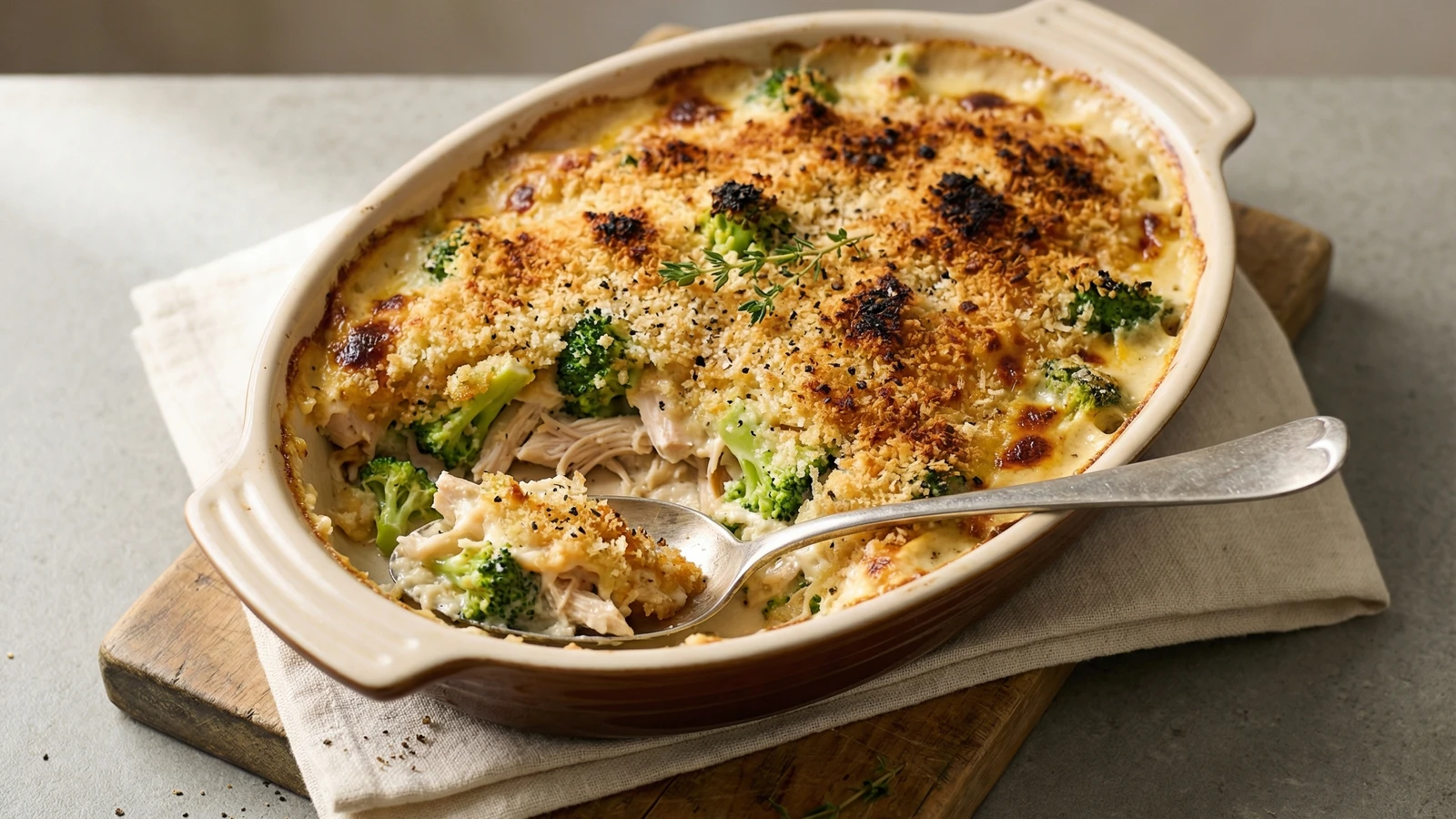
Tender chicken and bright broccoli blanketed in a rich sherry-spiked cream sauce, crowned with golden breadcrumbs and bubbling cheese. This is the casserole that made American entertaining elegant.
Chicken Divan was born in the 1930s at the Divan Parisien restaurant in Manhattan's Chatham Hotel. The chef, likely inspired by French gratins, layered poached chicken over broccoli and blanketed both in a sherry-laced cream sauce enriched with Parmesan. It became the dish sophisticated hostesses served when they wanted to impress without spending all day in the kitchen. By the 1950s, it had conquered American dinner parties from coast to coast.
The original deserves better than its reputation. Somewhere along the way, canned soup and frozen vegetables crept into the recipe, turning elegance into convenience. We're going back to the source. Fresh broccoli, properly blanched so it stays green and slightly crisp. A real cream sauce built from butter, flour, and good stock, sharpened with dry sherry and finished with aged Parmesan. Chicken that's been gently poached in aromatics, not boiled into submission.
This is a casserole that rewards the extra effort. The sauce should coat a spoon but still flow. The breadcrumb topping should shatter when you break through it. And the whole thing should come to the table bubbling at the edges, filling your dining room with that unmistakable aroma of browned butter and melted cheese that makes people lean in before they've even seen what you've made.
Make it ahead if you like. Assemble everything, cover it tightly, and refrigerate overnight. The flavors deepen. The sauce settles into every crevice. Add fifteen minutes to your baking time and you'll have a dinner party centerpiece that looks like you spent the afternoon cooking when you actually spent it with your guests.
Quantity
2 pounds
Quantity
1
quartered
Quantity
2
roughly chopped
Quantity
1
Quantity
6
Quantity
1 1/2 pounds
cut into florets
Quantity
6 tablespoons
divided
Quantity
1/4 cup
Quantity
2 cups
Quantity
1 cup
Quantity
1/3 cup
Quantity
1 cup
freshly grated, divided
Quantity
1/2 teaspoon
freshly grated
Quantity
1 teaspoon, plus more to taste
Quantity
1/2 teaspoon
freshly ground
Quantity
1 cup
Quantity
1 cup
grated
| Ingredient | Quantity |
|---|---|
| boneless, skinless chicken breasts | 2 pounds |
| medium onionquartered | 1 |
| celery stalksroughly chopped | 2 |
| bay leaf | 1 |
| whole black peppercorns | 6 |
| broccoli crownscut into florets | 1 1/2 pounds |
| unsalted butterdivided | 6 tablespoons |
| all-purpose flour | 1/4 cup |
| chicken poaching liquid or low-sodium stock | 2 cups |
| heavy cream | 1 cup |
| dry sherry | 1/3 cup |
| Parmesan cheesefreshly grated, divided | 1 cup |
| nutmegfreshly grated | 1/2 teaspoon |
| kosher salt | 1 teaspoon, plus more to taste |
| white pepperfreshly ground | 1/2 teaspoon |
| fresh breadcrumbs | 1 cup |
| Gruyère cheesegrated | 1 cup |
Place chicken breasts in a large saucepan and cover with cold water by two inches. Add the quartered onion, celery, bay leaf, and peppercorns. Set over medium-high heat and bring just to a simmer. You'll see small bubbles breaking the surface, not a rolling boil. Reduce heat to maintain this gentle simmer and cook for 18 to 22 minutes, until an instant-read thermometer inserted into the thickest part reads 165°F. The chicken should feel firm but spring back when pressed.
Transfer chicken to a cutting board and let rest for ten minutes. Strain the poaching liquid through a fine-mesh sieve, discarding the aromatics, and reserve two cups for the sauce. Once cool enough to handle, shred the chicken into generous bite-sized pieces using two forks or your fingers. The pieces should be irregular, with some larger chunks and some that will melt into the sauce. Season lightly with salt.
Bring a large pot of generously salted water to a rolling boil. Prepare an ice bath in a large bowl. Add broccoli florets to the boiling water and cook for exactly two minutes. The broccoli should be bright green and still have resistance when pierced with a knife. Drain immediately and plunge into the ice bath to stop the cooking. Once completely cool, drain thoroughly and pat dry with kitchen towels. Wet broccoli will make your sauce watery.
Melt four tablespoons of butter in a medium saucepan over medium heat. When the foaming subsides, add the flour and cook, stirring constantly with a wooden spoon, for two minutes. The roux should smell faintly nutty and turn a pale blonde color. Slowly whisk in the reserved poaching liquid, adding it in a steady stream while whisking vigorously to prevent lumps. Whisk in the heavy cream. Bring to a simmer and cook for eight to ten minutes, stirring frequently, until the sauce coats the back of a spoon and a finger drawn through it leaves a clean trail.
Remove the saucepan from heat. Stir in the sherry, three-quarters cup of the Parmesan, the nutmeg, salt, and white pepper. Taste and adjust seasoning. The sauce should be assertively flavored since the chicken and broccoli will absorb much of it. It should taste of good cheese and have a gentle warmth from the sherry and nutmeg. If it seems too thick, thin with a splash more cream or stock.
Melt the remaining two tablespoons butter and toss with the breadcrumbs in a small bowl until evenly coated. The crumbs should feel damp but not wet. Mix in the Gruyère and remaining quarter cup of Parmesan. This combination gives you both the nutty sharpness of Parmesan and the stretchy, golden melt of Gruyère.
Preheat your oven to 375°F. Butter a 9x13-inch baking dish or a three-quart gratin dish. Arrange the blanched broccoli florets in a single layer across the bottom, stems pointing inward. Scatter the shredded chicken evenly over the broccoli. Pour the cream sauce over everything, using a spatula to spread it into the corners and ensure the chicken and broccoli are completely covered. The sauce should come nearly to the top of the ingredients.
Scatter the breadcrumb and cheese mixture evenly over the surface of the casserole. Don't press it down. You want it loose so it can crisp properly. Bake uncovered for 30 to 35 minutes, until the sauce is bubbling vigorously around the edges and the topping is deep golden brown with darker spots here and there. The center should jiggle slightly when you move the dish.
Remove from the oven and let rest for ten minutes before serving. This isn't optional. The sauce needs time to settle and thicken slightly, and the temperature needs to drop enough that you won't scorch anyone's mouth. Serve directly from the baking dish, scooping deep to get all the layers in each portion. The broccoli should still have a bit of bite, the chicken should be silky from the sauce, and that topping should crackle when you break through it.
1 serving (about 330g)
Culinary guides, cultural storytelling, and the editorial depth that makes cooking meaningful.
Discover Culinary ExplorerChef Dean
A Midwestern one-pot supper of seasoned ground beef, tender elbow macaroni, and tomatoes simmered into a thick, soul-satisfying stew. This is the dish that fed factory workers and farm families alike.

Chef Dean
A golden-crusted casserole of tender elbow macaroni swaddled in velvety cheese sauce, this is the macaroni and cheese that defines American comfort cooking. No boxed shortcuts. No apologies.

Chef Dean
Silky strips of seared beef and earthy mushrooms draped in a tangy sour cream sauce, ladled generously over buttery egg noodles. This is the dish that warmed a thousand American kitchens.

Chef Dean
A magnificent whole-roasted tenderloin crowned with a glossy red wine reduction, the kind of centerpiece that makes guests fall silent when it arrives at the table. This is holiday cooking at its honest best.