
Chef Thomas
A Proper Ploughman's Board
A board of good cheddar, thick ham, proper pickle, hard-boiled eggs, and crusty bread. Not cooking so much as assembling with conviction, and one of the finest lunches the English kitchen has ever produced.
A cooking platform built around craft, culture, and the stories behind what we eat.
Created by Chef Thomas
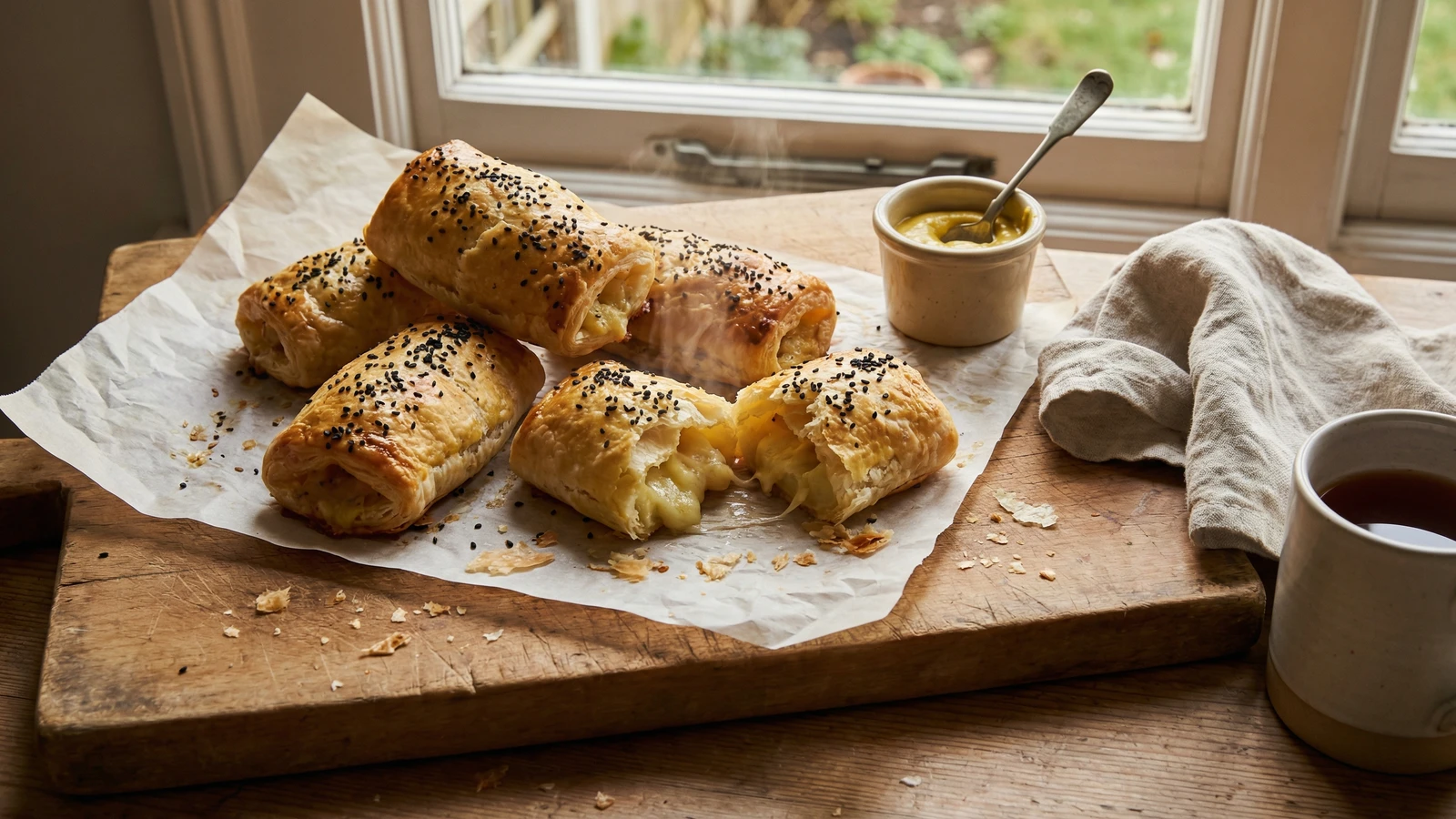
Mashed potato, mature cheddar, and slowly cooked onions wrapped in crisp, golden puff pastry. The kind of thing you make a batch of and watch disappear before they've cooled.
The kitchen smells of onions and butter. It has for twenty minutes, which is exactly how long good onions take when you leave them alone over a low heat. This is the kind of smell that brings people into the room without being asked.
Cheese and onion rolls. Not complicated. Not clever. Mashed potato with a serious amount of mature cheddar, slow-cooked onions that have gone sweet and golden, a scrape of English mustard for bite, all of it wrapped in puff pastry and baked until the whole thing turns the colour of a good conker. They're the vegetarian answer to the sausage roll, and on the right day, with the right filling, they're the better one.
I make these when something is needed but I'm not sure what. A picnic that wants filling out. A Saturday when friends are coming and I want something on the table that people can pick at with their hands. A Tuesday evening when the potatoes need using and I can't face another jacket. The filling takes care of itself while the onions cook, and the assembly is ten minutes at most. A recipe is a conversation, not a contract, and this one is a short, friendly exchange.
I wrote it down in the notebook last autumn: cheese, onion, pastry, gone in an hour. That tells you everything you need to know.
Quantity
1 sheet (about 320g)
Quantity
400g
peeled and cut into chunks
Quantity
2 large
halved and thinly sliced
Quantity
30g
Quantity
1 tablespoon
Quantity
200g
coarsely grated
Quantity
1 teaspoon
Quantity
small bunch
finely snipped
Quantity
to taste
Quantity
to taste
Quantity
pinch
freshly grated
Quantity
1
beaten, for glazing
Quantity
for the top
| Ingredient | Quantity |
|---|---|
| all-butter puff pastry | 1 sheet (about 320g) |
| floury potatoespeeled and cut into chunks | 400g |
| onionshalved and thinly sliced | 2 large |
| unsalted butter | 30g |
| olive oil | 1 tablespoon |
| mature cheddarcoarsely grated | 200g |
| English mustard | 1 teaspoon |
| chivesfinely snipped | small bunch |
| fine sea salt | to taste |
| black pepper | to taste |
| nutmegfreshly grated | pinch |
| eggbeaten, for glazing | 1 |
| sesame seeds or nigella seeds (optional) | for the top |
Melt the butter with the oil in a wide pan over a low, steady heat. Add the sliced onions and a good pinch of salt. Stir them through the fat, then turn the heat down as far as it will go. Cook for twenty to twenty-five minutes, stirring now and then, until they've gone from sharp and white to soft, golden, and sweet enough that you'd eat them straight from the pan. If they start to catch or colour too fast, add a splash of water and keep going. This is the part that makes the rolls worth eating, so don't rush it.
While the onions are softening, put the potatoes in a pan of well-salted cold water. Bring to a simmer and cook until they break apart easily when pressed with a fork. Drain thoroughly, let the steam escape for a minute, then mash until smooth. You want a dry, fluffy mash here, not a loose one. No butter, no cream, no milk. The pastry and the cheese will bring all the richness you need.
Tip the cooked onions into the mash. Add the grated cheddar, the mustard, the chives, a generous grind of black pepper, and a grating of nutmeg. Mix everything together until well combined. Taste it. The filling should be well seasoned and savoury, a little punchy, because the pastry will mute the flavours slightly once baked. Adjust the salt. Let the filling cool completely before you go near the pastry.
Set the oven to 200C/180C fan. Line a baking tray with parchment. Unroll the pastry on a lightly floured surface. Cut it lengthways into two long strips. Spoon the filling in a generous line down the centre of each strip, shaping it into a rough sausage with your hands. It should feel like a lot. It is. Don't be timid. Brush one long edge of the pastry with beaten egg, then fold the other edge over the filling to meet it, pressing firmly to seal. Turn each roll seam-side down.
Cut each long roll into six pieces, roughly the length of your hand. Place them on the lined tray, leaving a little space between each. Brush the tops generously with beaten egg and scatter over a few seeds if you have them. Score two or three small slashes across the top of each roll with a sharp knife. This lets the steam out and gives the pastry somewhere to puff and crisp.
Bake for twenty to twenty-five minutes, until the pastry has risen and turned a deep, burnished gold. Not pale. Not blonde. Properly golden, the colour of a good biscuit, with the edges slightly darker where the filling has met the heat. Let them cool on a wire rack for ten minutes before eating. They're good warm. They're good cold. They're good the next day, straight from the tin, standing at the kitchen counter at eleven in the morning. I won't judge.
1 serving (about 90g)
Culinary guides, cultural storytelling, and the editorial depth that makes cooking meaningful.
Discover Culinary ExplorerChef Thomas
A board of good cheddar, thick ham, proper pickle, hard-boiled eggs, and crusty bread. Not cooking so much as assembling with conviction, and one of the finest lunches the English kitchen has ever produced.

Chef Thomas
Puff pastry twisted with anchovy and Parmesan, baked until golden and shattering and salty, the kind of thing you put out with drinks that disappears before anyone sits down.

Chef Thomas
Fresh oysters wrapped in crisp streaky bacon and grilled until the salt of the sea meets the smoke of the cure, served on hot buttered toast the way the Victorians intended, only simpler and at home.

Chef Thomas
Boiled eggs wrapped in a dark, spiced coat of sausage meat and crumbled black pudding, fried to a deep gold. The kind of thing you eat standing up in the kitchen, still warm, with mustard on your thumb.