
Chef Lupita
Arroz a la Oaxaqueña
Oaxaca's red rice, stained with tomato and fried in lard, steamed with carrots, ejotes, black beans, and epazote. The side that anchors a Oaxacan family meal and earns its place beside the main.
A cooking platform built around craft, culture, and the stories behind what we eat.

Created by
Yucatán's everyday Maya green, boiled to neutralize its alkaloids, then sautéed in lard with white onion, garlic, tomato, and a whole pricked habanero for perfume.
Chaya is from Yucatán. From the Maya, specifically, who have grown it in their solares, the family gardens behind the house, for over a thousand years. The Spanish brought spinach. The Maya already had chaya. The Peninsula chose chaya and never looked back.
The leaf is not optional botany on the Yucatán table. It is on the comal in the morning with eggs, in the broth at midday with pork, in the tamales at the saint's day fiesta, in the agua verde the abuelas drink to keep their blood moving. But it has one rule and the rule is absolute. You boil it before you eat it. Raw chaya carries hydrocyanic compounds and the heat breaks them down. Five minutes in salted water and the leaf becomes the medicine the Maya have always known it to be. No me vengas con atajos. This step is the recipe.
My mother never cooked with chaya. She was from Jalisco and chaya does not grow there. The first time I made this dish I was in Mérida in the second year of my 32-state project, sitting in the kitchen of a señora named Doña Elvia who had been cooking chaya frita every Tuesday for fifty-three years. She handed me the gloves before she said hello. She made me strip the leaves before she gave me coffee. Then she showed me how the lard goes in first, how the habanero gets one pierce and not two, how the chaya should glisten and not swim. I wrote it in the notebook. I have been making it her way ever since. Cada estado, su propia cocina, and this one belongs to the Peninsula.
Chaya (Cnidoscolus aconitifolius), known in Yucatec Maya as 'chay' or 'chaay,' was domesticated by the Maya in the lowlands of the Yucatán Peninsula at least 1,500 years ago and was a staple green in pre-Columbian Maya household agriculture, valued for its drought tolerance and exceptional nutritional density. The Maya called it the 'tree spinach' and integrated it into daily cooking, ceremonial dishes, and traditional medicine; colonial-era Spanish chroniclers noted its widespread cultivation but largely ignored it in their own kitchens, which is why chaya remained a regional ingredient rather than spreading nationally like other Mesoamerican crops. Modern nutritional analysis has confirmed what Maya cooks always knew: chaya contains more protein, calcium, iron, and vitamin A by weight than spinach, kale, or amaranth, making it one of the most nutrient-dense leafy greens ever cultivated.
Quantity
1 pound
stems removed
Quantity
8 cups
Quantity
1 tablespoon
Quantity
3 tablespoons
Quantity
1 medium
finely diced
Quantity
4
finely chopped
Quantity
2 medium
finely diced
Quantity
1
whole and pricked once with a knife
Quantity
1 teaspoon, plus more to taste
Quantity
for serving
warmed
Quantity
for serving
| Ingredient | Quantity |
|---|---|
| fresh chaya leavesstems removed | 1 pound |
| water for blanching | 8 cups |
| kosher salt for the blanching water | 1 tablespoon |
| manteca de cerdo (pork lard) | 3 tablespoons |
| white onionfinely diced | 1 medium |
| garlic clovesfinely chopped | 4 |
| Roma tomatoesfinely diced | 2 medium |
| fresh chile habanero (optional)whole and pricked once with a knife | 1 |
| kosher salt | 1 teaspoon, plus more to taste |
| hand-pressed corn tortillas (optional)warmed | for serving |
| lime wedges (optional) | for serving |
Wear gloves when you strip the chaya leaves from their stems. The fine hairs on the underside can irritate the skin and the raw sap is mildly toxic until cooked. This is not a warning to scare you. It is the first thing every Yucateca cook teaches her daughter. Chaya raw is medicine in the wrong direction. Chaya cooked is medicine in the right one. Discard the tough stems. Keep only the leaves.
Bring the water to a hard boil in a large pot. Never aluminum. Chaya reacts with aluminum and the leaves will turn bitter and the pot will pit. Use stainless steel or enameled cast iron. Add the tablespoon of salt. Drop in the chaya leaves all at once and push them under with a wooden spoon. Boil hard for five minutes. The leaves will turn from bright green to a deeper, settled green, and the cooking water will tint slightly. That color leaving the leaf is the alkaloids leaving with it.
Drain the chaya in a colander. Do not rinse it. Let it cool for a few minutes until you can handle it. Squeeze gently to remove the excess water, then pile the leaves on a cutting board and chop them coarsely. You want pieces about the size of a thumbnail, not minced and not whole. The chaya should still have presence on the plate.
In a wide skillet or shallow cazuela, melt the lard over medium heat until it shimmers. La manteca es el sabor. Olive oil here is wrong. The chaya is Maya and so is the pork. They have been on the Peninsula together for four centuries and they know each other.
Add the diced white onion. Cook for three to four minutes, stirring, until it turns translucent and the edges start to soften. Add the chopped garlic and cook for one minute more. Do not let the garlic brown. Burned garlic in this dish is unforgivable. It is a quiet sauté, not an aggressive one.
Stir in the diced Roma tomato and the teaspoon of salt. Cook for four to five minutes, until the tomato breaks down and releases its juice and the mixture looks like a loose sofrito. The Yucatán cooks call this the recado base, the foundation that every guisado is built on. When the tomato pulls away from the bottom of the pan and the lard turns slightly red, the base is ready.
Add the chopped chaya to the pan and stir it through the sofrito until every leaf is coated in the lard and the tomato. If you are using the habanero, drop the whole pricked chile into the pan now. The single pierce releases its perfume without releasing its heat. This is the Yucateca way: habanero as fragrance, not as fire. Cook for five to seven minutes over medium heat, stirring often, until the chaya has fully absorbed the flavor of the sofrito and the pan looks unified, not watery.
Fish out the habanero before serving unless you want someone to bite it by accident. Taste for salt. Chaya can take a heavier hand than spinach. Adjust. Serve the chaya frita warm in a shallow clay dish next to warm corn tortillas and lime wedges. In Yucatán this is a side, a taco filling, a topping for huevos motuleños, the green that anchors the table. Recetas probadas y garantizadas.
1 serving (about 80g)
Culinary guides, cultural storytelling, and the editorial depth that makes cooking meaningful.
Discover Culinary ExplorerChef Lupita
Oaxaca's red rice, stained with tomato and fried in lard, steamed with carrots, ejotes, black beans, and epazote. The side that anchors a Oaxacan family meal and earns its place beside the main.
Chef Lupita
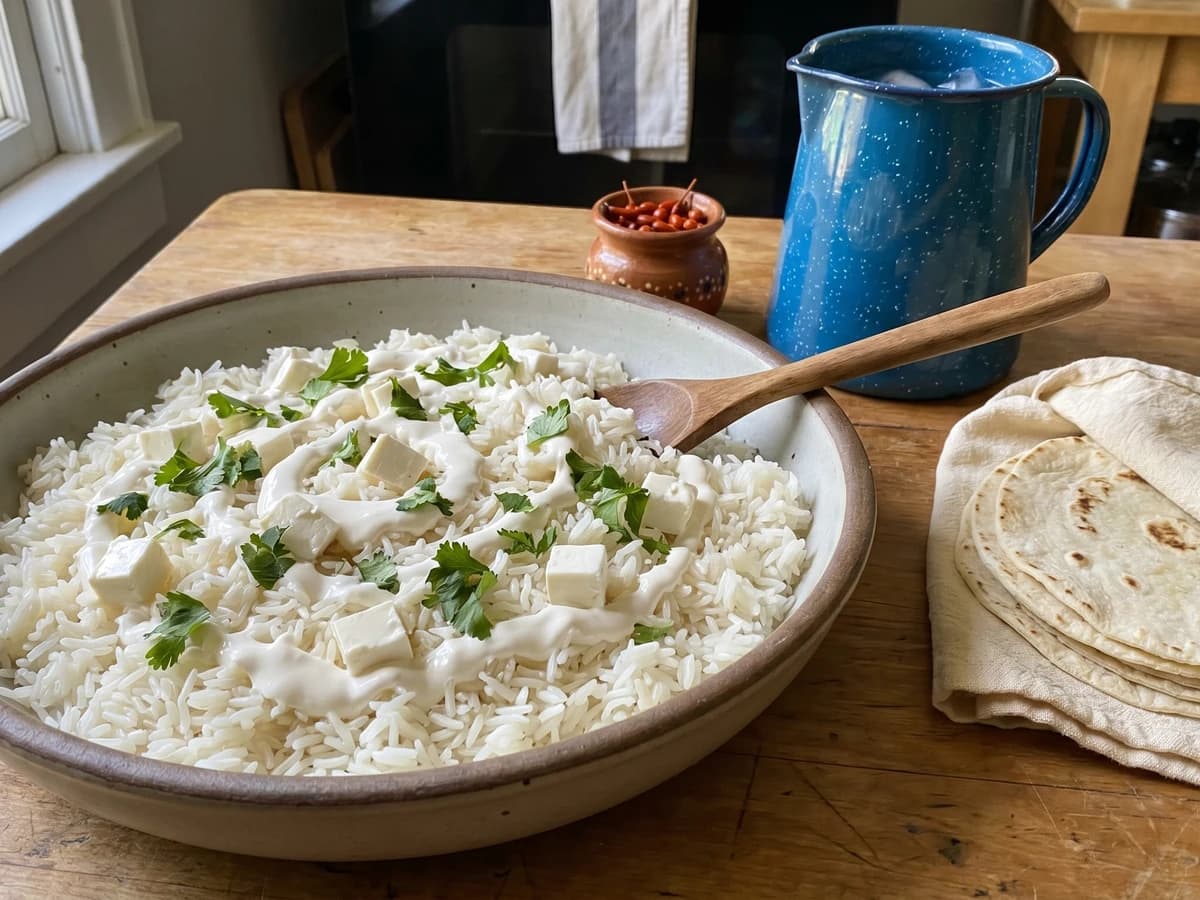
Sinaloa's home-cook white rice topped with cold cubes of cream cheese that soften into the warm grain, finished with crema and a sprinkle of chiltepin at the table. The trick that makes a side dish feel like a small luxury.
Chef Lupita
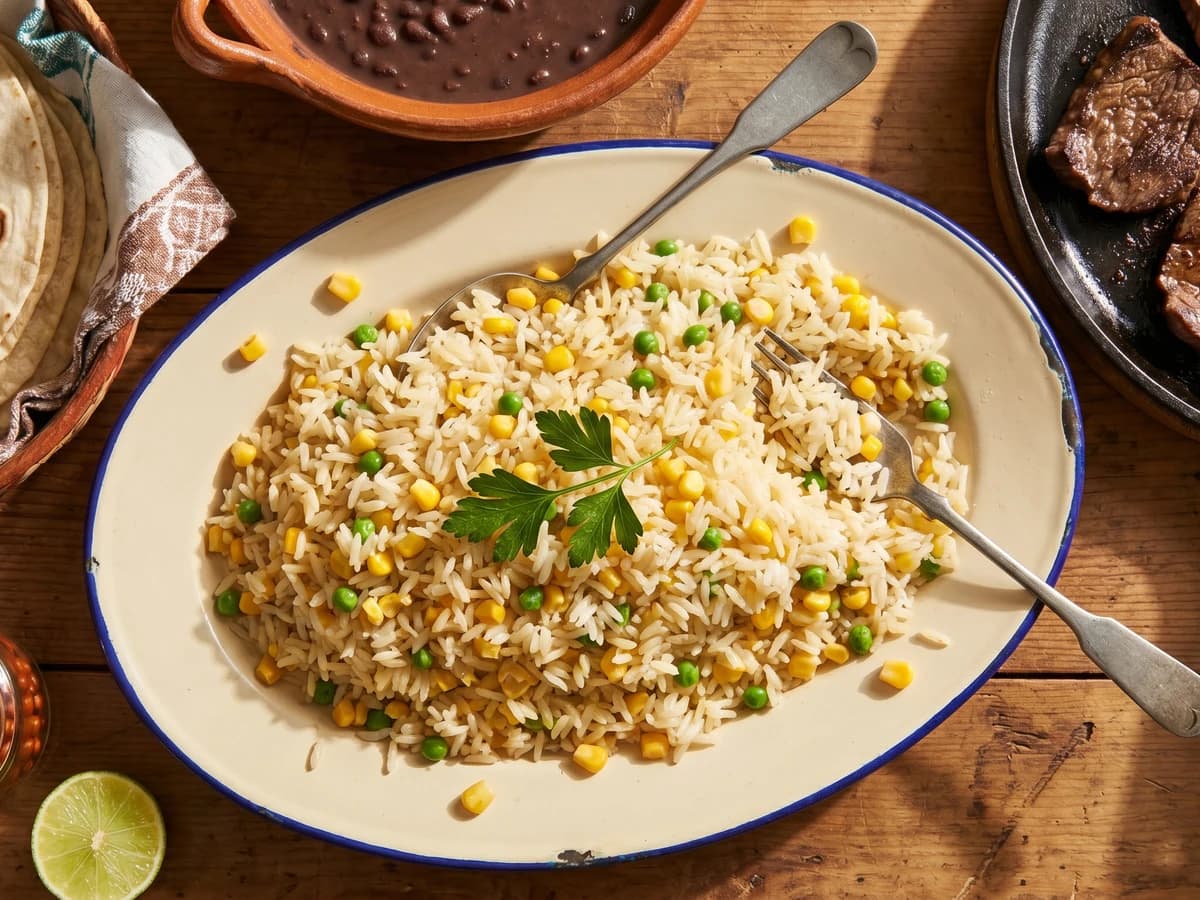
Sonora's white rice, toasted in butter and steamed with sweet corn and tender peas. The clean, quiet partner to a plate of carne asada, not the red rice of central Mexico.

Chef Lupita
Yucatán's white rice with sweet corn kernels, toasted in lard with garlic and onion. The quiet base that holds up against the peninsula's bold achiote-stained stews.