
Chef Lupita
Agua de Alfalfa
Ciudad de México's highland market agua fresca, fresh alfalfa blended with pineapple and lime until bright green, strained clean, and poured cold from the vitrolero.
A cooking platform built around craft, culture, and the stories behind what we eat.
Created by
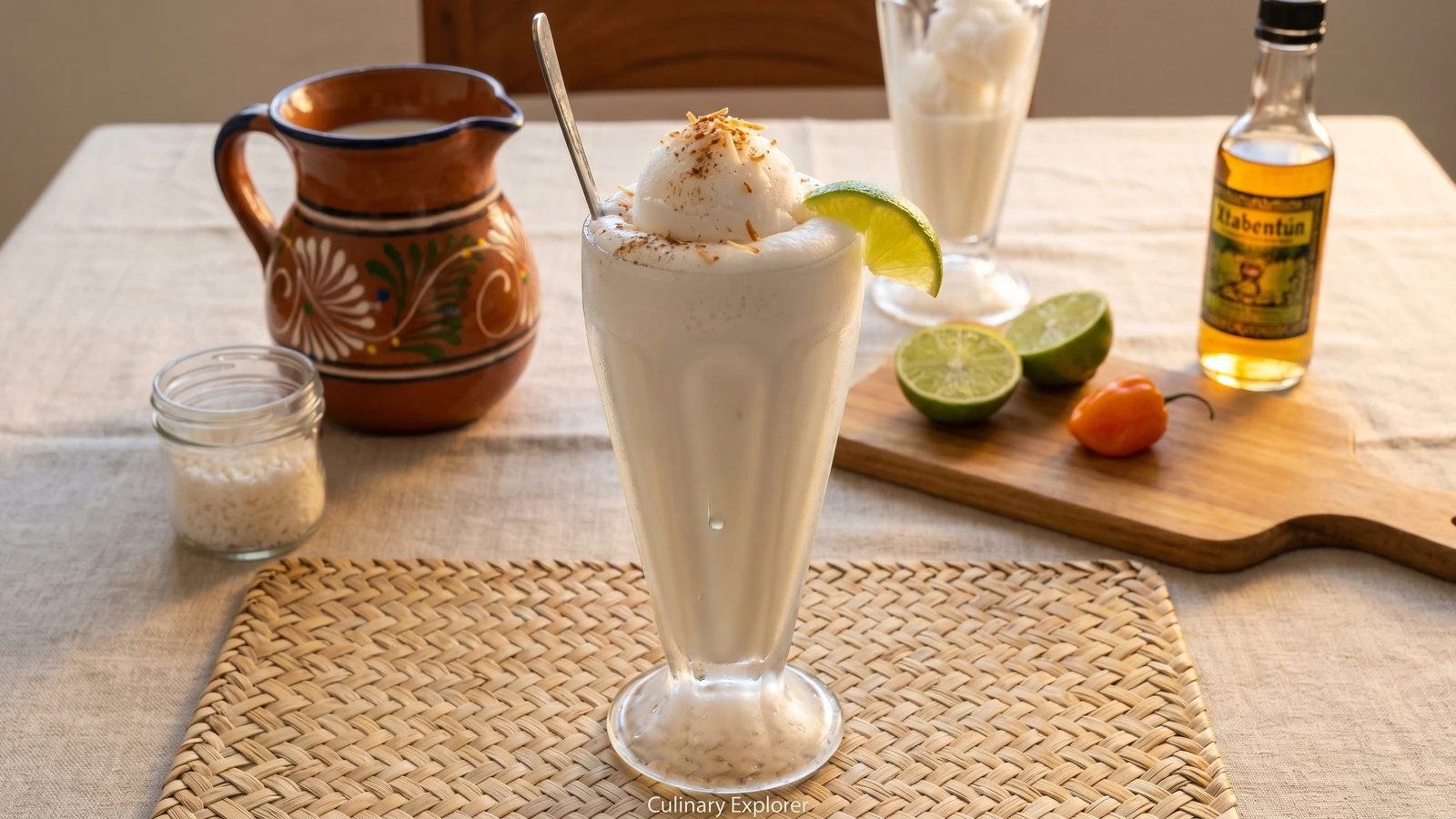
Yucatán's coconut champola, a generous scoop of fresh coconut sorbete in a tall glass of cold whole milk. The drink the sorbeterias of Mérida have been ladling out to overheated children since before the electric freezer existed.
Champola is from Yucatán. Specifically from Mérida, where the heat sits on the city like a wet blanket from March through October and the sorbeterias along Calle 59 have been selling this drink to families since the early 1900s. A champola is a scoop of sorbete dropped into a tall glass of cold milk. That is the whole thing. Coconut is the version Mérida is most known for, but you will also find champola de guanábana, de mamey, de chico zapote. Whatever fruit the península is throwing off that week.
The sorbete is the work. It has to be made from real coconut meat, grated by hand or pulsed in a food processor, blended with the coconut water, strained, and frozen. Canned coconut milk will get you something that tastes like a tropical-flavored shake from a chain. It will not taste like Mérida. The lima agria, that small sour lime from the Yucatecan dooryard tree, gives the sorbete its lift. If you cannot find it, use a teaspoon of regular lime. A teaspoon. No more. The point is to wake the coconut up, not to make limeade.
My mother never made champola. She was from Jalisco and she made tepache and agua de jamaica. The first one I drank was in 1998 in a sorbetería called Colón in Mérida, the kind of place with marble counters and ceiling fans and señoras who have been scooping sorbete since the 1970s. The owner told me the trick was the foam, the way the cold milk hits the sorbete and pulls a soft white foam to the top of the glass. That foam is the dish. Saber cocinar es saber vivir, and in the peninsular heat, knowing how to cool a child after school is knowing how to live too.
The word champola comes from the Cuban-Caribbean term for a fruit-and-milk drink, and the format traveled to the Yucatán Peninsula during the 19th-century sugar and henequen trade that linked Mérida, Havana, and New Orleans through constant Gulf shipping. Yucatán adopted and transformed the drink, swapping Cuban guanábana and mamey for whatever the peninsular orchards yielded and developing the granita-style sorbete in artisan sorbeterias that predate refrigeration; Sorbetería Colón in Mérida, founded in 1907, is among the oldest still operating and helped codify the champola format as a midday cooling ritual. The coconut version is tied specifically to the Gulf coast communities of Celestún, Sisal, and Progreso, where coconut palms have grown abundantly since the colonial period.
Quantity
1 (about 1 1/2 pounds)
or 2 cups fresh-grated coconut meat
Quantity
1 1/2 cups
from the coconut plus filtered water to make up the difference
Quantity
1/2 cup, plus more to taste
Quantity
1/4 teaspoon
Quantity
1 tablespoon
or 1 teaspoon fresh lime juice
Quantity
4 cups
very cold
Quantity
a pinch for serving
Quantity
for serving
| Ingredient | Quantity |
|---|---|
| fresh mature coconutor 2 cups fresh-grated coconut meat | 1 (about 1 1/2 pounds) |
| waterfrom the coconut plus filtered water to make up the difference | 1 1/2 cups |
| granulated sugar | 1/2 cup, plus more to taste |
| kosher salt | 1/4 teaspoon |
| fresh lima agria juiceor 1 teaspoon fresh lime juice | 1 tablespoon |
| whole milkvery cold | 4 cups |
| ground canela (Mexican cinnamon) (optional) | a pinch for serving |
| toasted coconut shavings (optional) | for serving |
Find the three eyes on the top of the coconut and pierce the softest one with a sturdy screwdriver or the point of a heavy knife. Drain the water into a measuring cup and reserve it. Crack the shell with the back of a heavy cleaver, turning the coconut as you strike along its equator. Pry the meat away from the shell with a butter knife and peel off the brown skin with a vegetable peeler. The white meat is what you want, clean and bright. Buying pre-grated coconut from a Mexican market is a compromise, not an upgrade, but it works when fresh whole coconuts are not available.
Cut the meat into rough chunks and pulse in a food processor until finely shredded, or grate it by hand on the coarse side of a box grater the way the senoras in Mérida still do. You should have about 2 cups of grated coconut. Transfer to a blender. Add the reserved coconut water topped up with filtered water to reach 1 1/2 cups total, plus the sugar and salt. Blend on high for two full minutes, until the mixture looks creamy and the coconut has broken down into a smooth, milky pulp.
Pour the blended mixture through a fine-mesh strainer set over a bowl, pressing hard on the pulp with the back of a spoon to extract every drop. For a silkier sorbete, line the strainer with a clean square of muslin or a flour-sack towel and wring the pulp out by hand. You want about 2 cups of fresh coconut milk. Stir in the lima agria juice. The acid brightens the coconut and keeps the sorbete from tasting flat after freezing.
Pour the strained coconut milk into a shallow metal pan or a loaf pan and place uncovered in the coldest part of the freezer. After 45 minutes, the edges will start to set. Drag a fork through the mixture, pulling the frozen edges toward the center. Repeat every 30 minutes for about 3 hours, until you have a firm, flaky, snow-white sorbete with the texture of shaved ice. This is the granita method, the one the old sorbeterias in Mérida used before electric machines. If you have an ice cream maker, churn the mixture according to the manufacturer's instructions and freeze for one hour to firm up.
Chill four tall fountain glasses in the freezer for ten minutes. Pour one cup of very cold whole milk into each glass, leaving the top third empty. Scoop a generous mound of coconut sorbete into each glass. The sorbete will float, the milk will foam around it, and the cold will fog the glass on contact. Dust the top with a pinch of canela and a few toasted coconut shavings if you want. Serve immediately with a long spoon. Champola is meant to be eaten and drunk at the same time, half spoonfuls of half-melted sorbete, half sips of coconut-sweetened milk. Así se hace y punto.
1 serving (about 405g)
Culinary guides, cultural storytelling, and the editorial depth that makes cooking meaningful.
Discover Culinary ExplorerChef Lupita
Ciudad de México's highland market agua fresca, fresh alfalfa blended with pineapple and lime until bright green, strained clean, and poured cold from the vitrolero.

Chef Lupita
Aguascalientes' Lenten agua fresca, jewel-red from cooked beet and full of apple, banana, orange, lettuce, and ground peanuts, served cold when Holy Week meets the Feria de San Marcos.

Chef Lupita
Sonora and Sinaloa's creamy malted barley water, built on toasted cebada perla, Mexican canela, vanilla from Papantla, and evaporated milk. Pink-beige, rich, and served cold over heavy ice in a heavy glass tumbler. Liquid cookie comfort the northwest way.

Chef Lupita
Yucatán's everyday tonic of boiled chaya leaves blended with lima agria, sugar, and ice. The bright green jarra that sits on every Peninsula table from Mérida to Valladolid.