Chef Lupita
Acúmara Tatemada al Comal
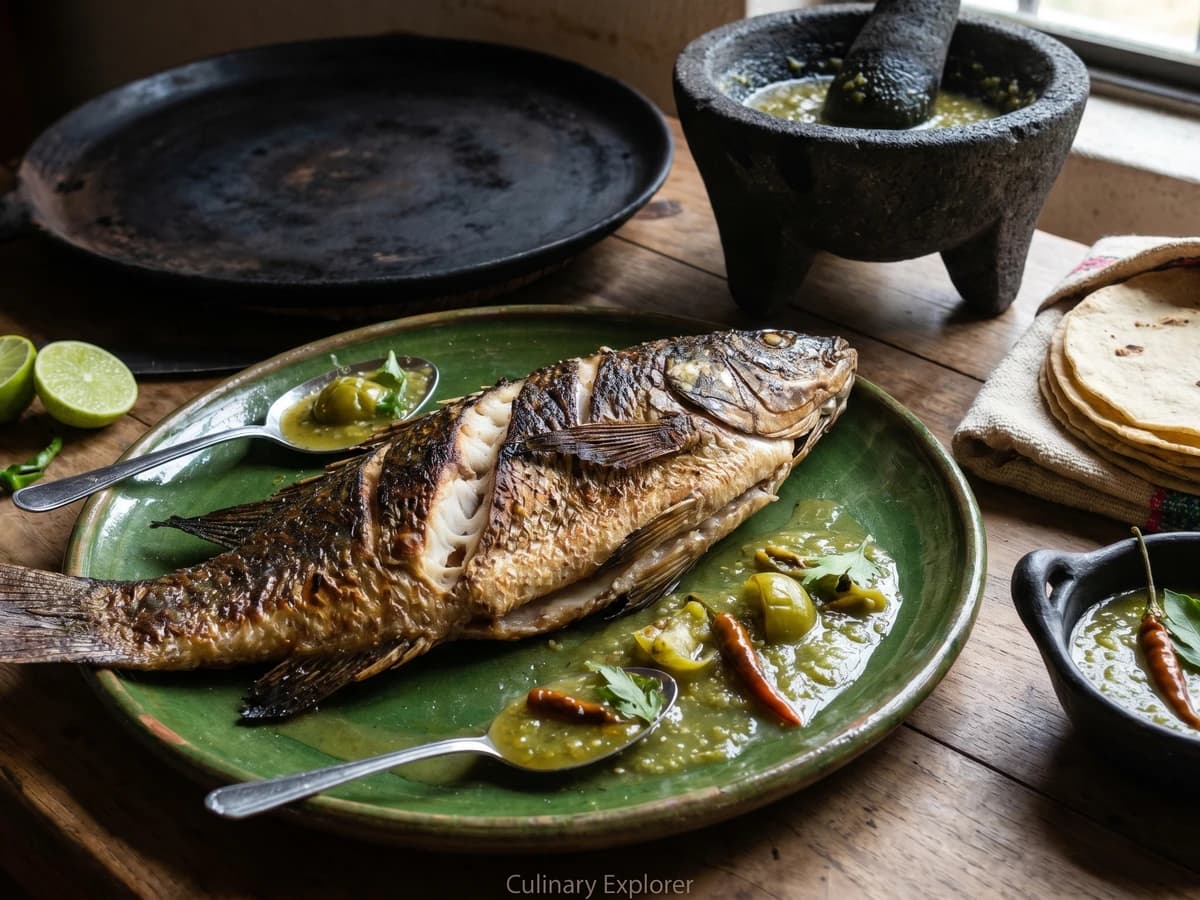
Michoacán's Lake Pátzcuaro acúmara, a whole kurucha from the lago tatemada on a comal de leña and served with chile perón atápakua, corn tortillas, and P'urhépecha discipline.
A cooking platform built around craft, culture, and the stories behind what we eat.
Created by
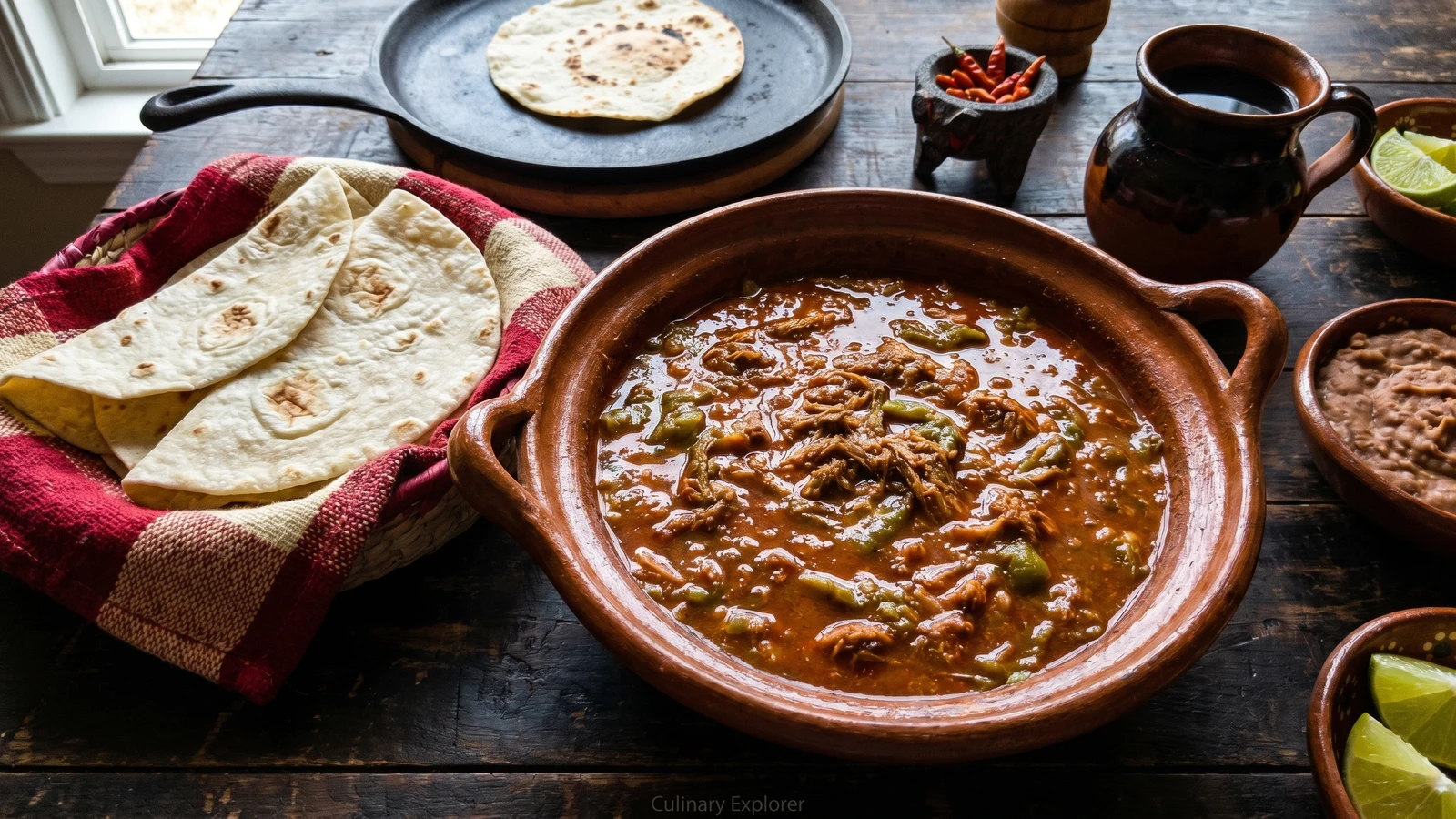
Sonora's ranchero cazuela of pounded dried beef simmered with roasted Anaheim chile, potatoes, tomato, and onion. Drought-era ingenuity, now the everyday plate of the north.
This is a Sonoran dish. Not a Tex-Mex dish, not a generic northern Mexican dish, a Sonoran one, born on the cattle ranches of a state where summers run dry and refrigeration arrived late. Machaca is the answer the rancheros gave to the desert: take the beef, salt it, dry it in the sun and the wind, pound it on a stone until the fibers fall apart, and store it for months in a clay jar. When the cook needs a meal, she rehydrates the machaca in lard and tomato and chile and feeds the family.
The chile here is chile verde del norte, what most people outside Mexico call Anaheim. Mild, grassy, sweet when roasted. Not all Mexican food is spicy, and the north proves it. Sonoran cooking leans on beef and wheat, lard and chile verde, and on the flour tortilla, which is a northern tradition, not a national one. If you serve this with corn tortillas you are eating it wrong. The flour tortilla, large and thin and pliable, is the spoon and the plate.
The potatoes and the tomatoes stretch the meat. Drought-era cooks did not waste an ounce of beef when an ounce could feed three more mouths with the right pot of stew around it. That logic is still in the dish. La cocina no es decoracion, es trabajo.
My mother was from Jalisco, not Sonora, but I have a page in her notebook from a friend in Hermosillo who sent her the recipe in 1991, written on lined paper with the words 'no le pongas sal hasta el final, la machaca ya viene salada' underlined twice. She was right. Cada estado, su propia cocina.
Machaca descends from carne seca, the air-dried beef tradition that developed across northern Mexico in the 17th and 18th centuries on the ranches of Sonora, Chihuahua, and Coahuila, where Spanish cattle ranching met a hot, dry climate ideal for preservation without salt-cure brining. The word 'machaca' comes from the Spanish 'machacar,' to pound, referring to the stone-and-mallet technique that breaks the dried beef into the fluffy strands characteristic of Sonoran versions. While Chihuahua and Nuevo Leon developed their own machaca traditions, the Sonoran style, served in a cazuela with chile verde and folded into flour tortillas, became identified with the state's ranchero identity through the 20th century, codified in the home cookbooks of Hermosillo and Ciudad Obregon.
Quantity
8 ounces
from northern Sonora if you can find it
Quantity
3 tablespoons
Quantity
1 large
diced
Quantity
4
finely minced
Quantity
4
roasted, peeled, seeded, and cut into strips
Quantity
2
stemmed and sliced thin
Quantity
3 medium
diced
Quantity
2 medium
peeled and cut into 1/2-inch cubes
Quantity
1 1/2 cups
Quantity
1 teaspoon
oregano del monte if you can find it
Quantity
1/2 teaspoon
Quantity
to taste
use sparingly, the machaca is already salted
Quantity
for serving
warmed on a comal
Quantity
for serving
Quantity
for serving
| Ingredient | Quantity |
|---|---|
| machaca (dried, pounded beef)from northern Sonora if you can find it | 8 ounces |
| manteca de cerdo (pork lard) | 3 tablespoons |
| white oniondiced | 1 large |
| garlic clovesfinely minced | 4 |
| fresh Anaheim chiles (chile verde del norte)roasted, peeled, seeded, and cut into strips | 4 |
| fresh chile guero (optional)stemmed and sliced thin | 2 |
| Roma tomatoesdiced | 3 medium |
| yellow potatoespeeled and cut into 1/2-inch cubes | 2 medium |
| beef broth or water | 1 1/2 cups |
| dried Mexican oreganooregano del monte if you can find it | 1 teaspoon |
| ground black pepper | 1/2 teaspoon |
| kosher saltuse sparingly, the machaca is already salted | to taste |
| flour tortillas de harina (optional)warmed on a comal | for serving |
| lime wedges (optional) | for serving |
| refried pinto beans (frijoles maneados or frijoles puercos) (optional) | for serving |
Place the machaca in a wide bowl. With your fingers, pull it apart into fine, fluffy shreds. If it came in dense bricks, you may need to pound it with a molcajete pestle or the bottom of a heavy glass to loosen the fibers. The strands should look like coarse wool. This is the texture you want before any heat touches it. Machaca that goes into the pan in clumps will stay in clumps.
Char the Anaheim chiles directly over a gas flame or under a hot broiler, turning until the skin is blistered and blackened on all sides. Place them in a bowl and cover with a kitchen towel for 10 minutes. The trapped warmth loosens the skin. Peel the chiles, pull off the stems, scrape out the seeds, and slice the flesh into strips about the width of your finger. This is the chile verde del norte. It is mild, grassy, and sweet, not the burning chile that outsiders expect from the north.
Heat 1 tablespoon of the lard in a 12-inch clay cazuela or heavy skillet over medium. Add the diced potatoes in a single layer. Let them sit without stirring for three minutes so they take on color, then stir and cook for another five to seven minutes, until the edges are golden and a knife slides through easily. Lift the potatoes out with a slotted spoon and set aside. Cooking them first means they hold their shape in the cazuela instead of dissolving.
Add the remaining 2 tablespoons of lard to the same cazuela. La manteca es el sabor, and in the north this is not negotiable. When the lard shimmers, add the diced white onion and cook for four minutes, stirring, until it turns translucent and the edges start to color. Add the garlic and cook for 30 seconds more. The kitchen will smell sweet and toasty.
Stir the loosened machaca into the onion and garlic. Cook for three to four minutes, stirring constantly, so the meat soaks up the lard and the aromatics. The strands will plump and shine. Do not skip this step. Dry beef thrown into wet ingredients tastes like dry beef thrown into wet ingredients. The fat is what carries the flavor back into the meat.
Add the diced tomatoes and the strips of roasted Anaheim chile to the cazuela. Stir well. Cook for five minutes, breaking the tomatoes down with the back of your spoon, until they release their juice and the bottom of the pan starts to thicken. The mixture should look red and green, with the chile strips still holding their shape.
Return the potatoes to the cazuela. Add the chile guero if you want a little more heat. Pour in the beef broth, sprinkle the oregano between your palms to release its oils, and add the black pepper. Stir gently so the potatoes do not break. Bring to a low simmer, cover partially, and cook for 15 to 20 minutes. The liquid should reduce until it is no longer soupy but still glossy and clinging to the meat. Taste only now for salt. Machaca brings its own salt with it. Many cooks add none.
Bring the cazuela to the table on a folded towel. Set a stack of warm flour tortillas alongside, with lime wedges and a pot of refried pinto beans. In Sonora the tortilla is the spoon. You tear off a piece, scoop the machaca and the chile and the potato together, and eat it standing up if the cazuela is still hot. Asi se hace y punto.
1 serving (about 310g)
Culinary guides, cultural storytelling, and the editorial depth that makes cooking meaningful.
Discover Culinary ExplorerChef Lupita
Michoacán's Lake Pátzcuaro acúmara, a whole kurucha from the lago tatemada on a comal de leña and served with chile perón atápakua, corn tortillas, and P'urhépecha discipline.

Chef Lupita
Puebla's weekday adobo of pork shoulder braised in a thick guajillo and ancho sauce sharpened with vinegar, cumin, and clove. The deep red of a market spice stall, the dish a poblana cooks without thinking.

Chef Lupita
Loreto's pit-roasted clams, planted hinge-up in beach sand and tatemadas under a fast fire of dried romerillo brush, the resinous Baja desert shrub that gives this dish its smoke.

Chef Lupita
Oaxaca's eighth mole, the silky, almond-and-cinnamon almendrado, served over poached chicken. Mild, sweet, restrained, and a quiet rebuttal to anyone who thinks Mexican food has to be hot to be Mexican.