
Chef Remy
Chicken and Dumplings
Fork-tender chicken swimming in a rich, golden broth crowned with pillowy dumplings that puff and steam until they're light as clouds, the kind of dish that makes everyone at the table go quiet on the first bite.
A cooking platform built around craft, culture, and the stories behind what we eat.

Created by
Tender, smoke-kissed pork shoulder pulled into rough shreds and dressed in South Carolina's signature mustard sauce—tangy, sweet, with a vinegar bite that cuts through the richness. Piled onto soft buns with cool, creamy slaw.
The mustard-based barbecue sauce of South Carolina's Midlands represents one of the most distinctive regional traditions in American cooking. German immigrants settled there in the eighteenth century, bringing their affinity for mustard-forward flavors. They encountered the Southern pig culture and created something entirely new. This golden sauce, sometimes called Carolina Gold, has no equivalent anywhere else on earth.
I've eaten pulled pork at roadside stands from Columbia to Orangeburg, places where the pits have been smoking for decades and the sauce recipes are guarded like family secrets. What I've learned is this: the sauce matters, but the meat matters more. You need a bone-in pork shoulder with its fat cap intact. You need low heat and patience measured in hours, not minutes. Rush the process and you'll get something edible. Honor the process and you'll get something that makes people put down their phones and pay attention.
This recipe works beautifully on a smoker if you have one, but I've also included instructions for the oven. Don't let anyone tell you oven-cooked pulled pork is inferior. It's different, yes. But the same transformation occurs: tough collagen becomes silky gelatin, marbled fat renders and bastes the meat from within, and what started as a stubborn cut becomes something you can pull apart with two forks.
The slaw isn't optional. That cool, creamy crunch against hot, tangy pork creates the contrast that makes a great sandwich. Build it high. Let it get messy. This is summer food meant to be eaten outside with good people and cold drinks.
Quantity
8-10 pounds
Quantity
3 tablespoons
Quantity
2 tablespoons
Quantity
1 tablespoon
Quantity
1 tablespoon
Quantity
1 tablespoon
Quantity
2 teaspoons
Quantity
1 tablespoon
Quantity
1 cup
Quantity
1/2 cup
Quantity
1/3 cup
Quantity
2 tablespoons
Quantity
1 tablespoon
Quantity
1/2 teaspoon
Quantity
1/2 small head, about 1 pound
finely shredded
Quantity
2 medium
grated
Quantity
3/4 cup
Quantity
2 tablespoons
Quantity
1 tablespoon
Quantity
1/2 teaspoon
Quantity
to taste
Quantity
12
Quantity
for serving
| Ingredient | Quantity |
|---|---|
| bone-in pork shoulder (Boston butt), fat cap intact | 8-10 pounds |
| kosher salt | 3 tablespoons |
| smoked paprika | 2 tablespoons |
| freshly ground black pepper | 1 tablespoon |
| garlic powder | 1 tablespoon |
| onion powder | 1 tablespoon |
| cayenne pepper | 2 teaspoons |
| brown sugar | 1 tablespoon |
| yellow mustard | 1 cup |
| apple cider vinegar | 1/2 cup |
| honey | 1/3 cup |
| Worcestershire sauce | 2 tablespoons |
| hot sauce | 1 tablespoon |
| ground black pepper | 1/2 teaspoon |
| green cabbagefinely shredded | 1/2 small head, about 1 pound |
| carrotsgrated | 2 medium |
| mayonnaise | 3/4 cup |
| apple cider vinegar | 2 tablespoons |
| sugar | 1 tablespoon |
| celery seed | 1/2 teaspoon |
| salt and pepper | to taste |
| soft hamburger buns or brioche rolls | 12 |
| dill pickle slices (optional) | for serving |
Combine the kosher salt, smoked paprika, black pepper, garlic powder, onion powder, cayenne, and brown sugar in a bowl. Mix thoroughly with your fingers, breaking up any clumps. Pat the pork shoulder completely dry with paper towels. This matters. Wet meat won't develop bark properly. Apply the rub generously over the entire surface, working it into every crevice and fold. Don't be timid. That fat cap can handle aggressive seasoning. Place the shoulder on a wire rack set over a sheet pan, cover loosely, and refrigerate for at least 8 hours or overnight. The salt will penetrate the meat while the surface dries, setting you up for better smoke absorption.
For a smoker: Prepare your smoker for indirect cooking at 250°F. Use hickory, oak, or a combination for authentic Carolina flavor. Pecan works beautifully too. For the oven: Position a rack in the lower third and preheat to 250°F. Either method works. The smoker gives you more pronounced smoke flavor; the oven gives you nearly identical texture and tenderness. Remove the pork from the refrigerator 1 hour before cooking to take the chill off.
Place the pork shoulder fat-side up in your smoker or in a roasting pan in the oven. Insert a probe thermometer into the thickest part of the meat, avoiding the bone. Close the lid or oven door and resist the urge to peek for at least 3 hours. The bark forms during this uninterrupted period. You're looking for a dark, mahogany exterior that feels firm when pressed. The internal temperature will climb steadily, then stall somewhere around 160°F. This is normal. The meat is sweating, and evaporative cooling slows the temperature rise. Push through. Don't increase the heat.
Continue cooking until the internal temperature reaches 195-203°F and, more importantly, the probe slides into the meat like it's going through warm butter. Temperature is a guide, but texture tells the truth. The bone should wiggle freely when you grasp it. The fat cap will have rendered significantly, leaving behind crispy, intensely flavored bits. Total cooking time runs 10-12 hours for an 8-pound shoulder, but every piece of meat is different. Trust your thermometer and your instincts.
While the pork cooks, whisk together the yellow mustard, apple cider vinegar, honey, Worcestershire sauce, hot sauce, and black pepper in a medium saucepan. Bring to a gentle simmer over medium heat, stirring frequently. Cook for 5 minutes to let the flavors marry and the sauce thicken slightly. Taste it. The balance should hit tangy first, then sweet, with heat bringing up the rear. Adjust the honey or vinegar to your preference. Let the sauce cool to room temperature. It will thicken further as it sits.
Shred the cabbage as finely as you can manage. A sharp knife and patience work, but a mandoline makes quick work of it. Grate the carrots on the large holes of a box grater. Combine the vegetables in a large bowl. In a separate bowl, whisk together the mayonnaise, cider vinegar, sugar, and celery seed until smooth. Pour the dressing over the vegetables and toss thoroughly to coat every strand. Season with salt and pepper. Refrigerate for at least 30 minutes before serving. The cabbage will soften slightly and absorb the dressing.
Transfer the finished pork to a large cutting board or clean sheet pan. Tent loosely with foil and let it rest for at least 30 minutes, up to an hour. Resting isn't optional. The juices redistribute throughout the meat during this time. Skip it and those juices end up on your cutting board instead of in your sandwich. The temperature will drop slowly while the connective tissue continues to relax.
Remove the bone. It should slide out clean with almost no resistance. Pull the meat apart using two forks or your hands (wear clean gloves). Work with the grain, separating the muscle fibers into rough shreds of varying sizes. Don't overwork it into uniform strands. The variety of textures is part of the pleasure. Chop or tear any large pieces of bark and distribute them throughout. That bark is concentrated flavor. Discard any large pockets of fat that didn't render, but don't be obsessive about it. A little fat is a good thing.
Transfer the pulled pork to a large serving bowl. Add about half the mustard sauce and toss to coat the meat evenly. The pork should glisten but not swim. You can always add more; you can't take it away. Taste and adjust seasoning if needed. Toast the buns lightly if you like a bit of structure. Pile the dressed pork generously onto the bottom bun, mounding it high. Crown with a heap of coleslaw and a few pickle slices. Cap with the top bun and press down gently. Serve immediately with extra sauce on the side for those who want more.
1 serving (about 380g)
Culinary guides, cultural storytelling, and the editorial depth that makes cooking meaningful.
Discover Culinary ExplorerChef Remy
Fork-tender chicken swimming in a rich, golden broth crowned with pillowy dumplings that puff and steam until they're light as clouds, the kind of dish that makes everyone at the table go quiet on the first bite.

Chef Remy
Tender cube steak hidden under a shattering golden crust, draped in peppery sawmill gravy so good you'll forget this dish ever needed a vegetable on the plate.

Chef Remy
Smoky ham hocks simmered until the meat surrenders from the bone, tangled with pot liquor-braised collard greens and brightened with a splash of cider vinegar, the kind of honest cooking that feeds both belly and spirit.
Chef Dean
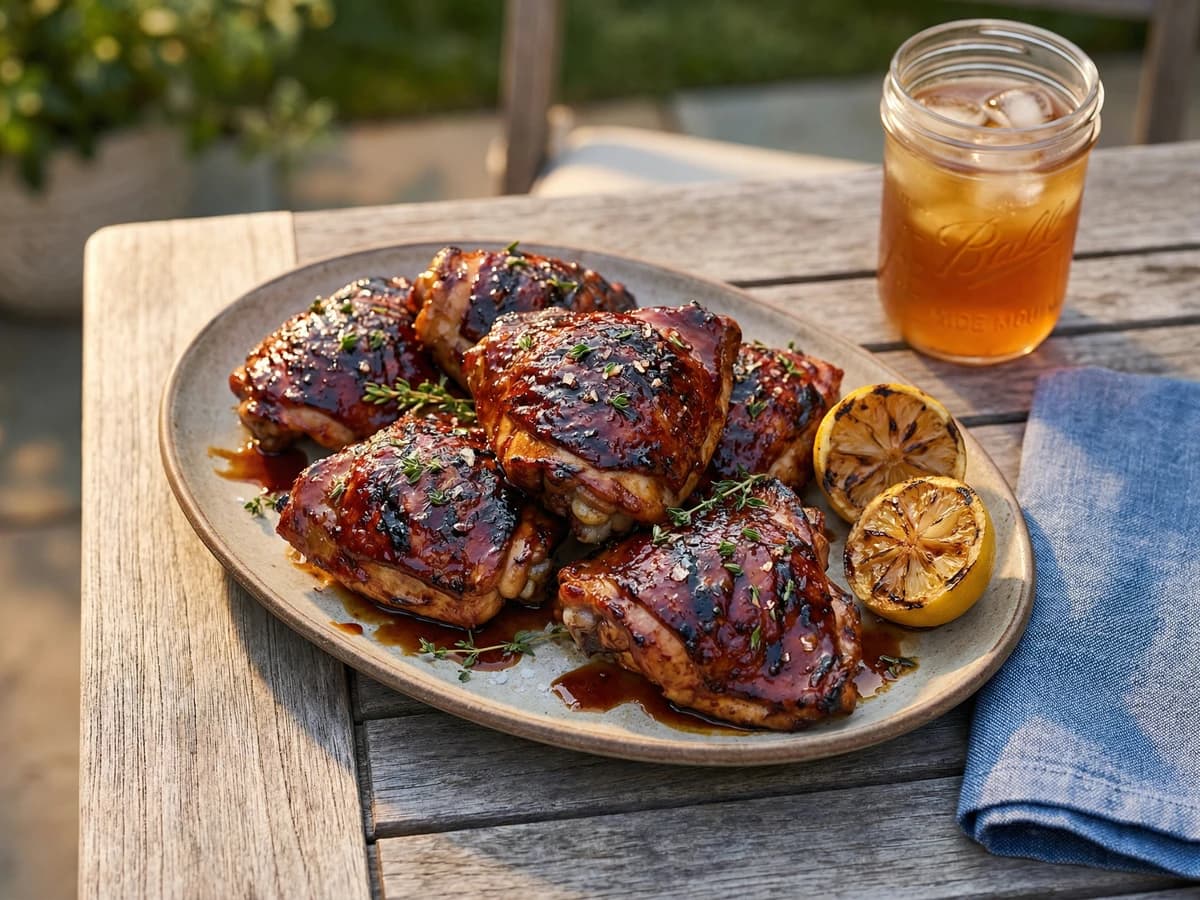
Bone-in thighs kissed by charcoal smoke, lacquered with a bourbon-honey glaze that caramelizes into sticky, mahogany bark. This is summer on a plate, the kind of cooking that makes neighbors lean over fences.