
Chef Lupita
Aguascalientes Beef Tongue Pozole (Pozole de Lengua)
Aguascalientes' Bajio pozole de lengua, built with cacahuazintle hominy, tender beef tongue, chile ancho and guajillo, with xoconostle brightness and table garnishes.
A cooking platform built around craft, culture, and the stories behind what we eat.
Created by
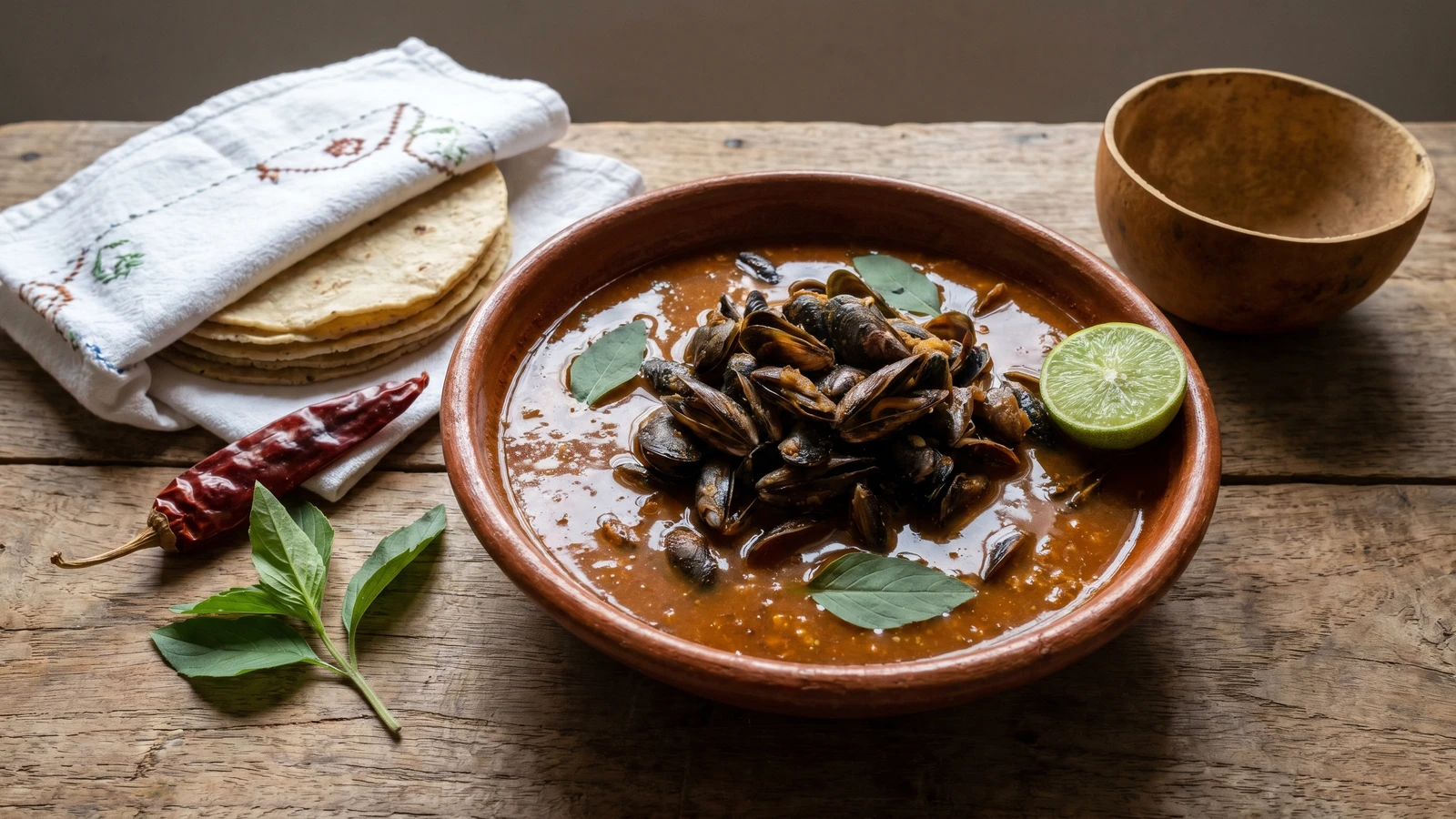
A thick, masa-bodied chowder of tiny mangrove mussels, chile costeño, and pitiona herb from the Afro-Mexican lagoon communities of Chacahua on Oaxaca's Costa Chica, cooked the way the women who harvest the tichindas have always cooked it.
This is Oaxacan food, but it is not the Oaxaca most people know. Forget the Valles Centrales, forget the seven moles. This dish comes from the Costa Chica, the stretch of Pacific coast between Huatulco and the Guerrero border, where the mangrove lagoons of Chacahua open into the sea and the communities that line them are Afro-Mexican. The women of these communities, Chacahua, El Azufre, Charco Redondo, Corralero, have been harvesting tichindas from the mangrove roots for as long as anyone can remember. They wade into the lagoon at low tide, pry the tiny dark mussels off the roots by hand, carry them back in buckets, and cook them the same afternoon.
The tichinda is a small mussel, no bigger than a thumbnail. Black shell, briny meat, and a flavor that tastes like the lagoon itself: mineral, saline, a little wild. You cannot buy them in Mexico City. You cannot order them online. You eat this caldo where the tichindas live, or you find the closest thing your coast can offer and you accept the compromise. I first had this in a cook's home outside the Lagunas de Chacahua park, a woman named Doña Cira who served it in a gourd jicara with a stack of tortillas and nothing else. The broth was thick from the masa, red-brown from the chile costeño, and perfumed with pitiona, an herb that grows wild in the Costa Chica and smells like nothing else in the Mexican kitchen. She watched me eat the whole bowl and said: "Ya ves, no necesita mas." She was right.
Chile costeño is the chile of this coast. Small, thin, and hot. It comes in red and yellow, and for this caldo you want the red one, dried, toasted until it puffs. The masa goes in dissolved in broth, thickening the liquid into something between a soup and a stew. The pitiona goes in at the end, just long enough to release its perfume, not long enough to turn bitter. Cada estado, su propia cocina, and within Oaxaca, every coast, every valley, every mountain range has its own kitchen too. This one belongs to the lagoons.
The Afro-Mexican communities of Oaxaca's Costa Chica descend from enslaved Africans brought to New Spain during the colonial period to work in sugar plantations and cattle ranches along the Pacific coast. Their culinary traditions, including the harvest and preparation of tichindas (Mytella strigata), represent a fusion of West African shellfish cooking practices with Mesoamerican ingredients like masa, chile, and native herbs. Mexico's 2015 intercensal survey was the first to count the Afro-Mexican population, and the 2019 constitutional amendment formally recognized them as a distinct ethnic group. The caldo de tichinda is prepared with particular significance during Dia de Muertos in Costa Chica communities, where the dish appears on ofrendas and at cemetery gatherings as food that ties the living to the ancestors who first learned the lagoons. The Lagunas de Chacahua were designated a national park in 1937, but the fishing and harvesting rights of the surrounding communities, including the tichinda harvest, predate the park by centuries.
Quantity
2 pounds
scrubbed clean and purged (or substitute the smallest fresh mussels available)
Quantity
6 cups
Quantity
6
stemmed
Quantity
2
peeled
Quantity
1/4 medium
roughly chopped
Quantity
2 medium
roughly chopped
Quantity
4 ounces
(or 1/3 cup masa harina dissolved in 1 cup water)
Quantity
3 to 4
or substitute 2 sprigs fresh lemon verbena
Quantity
1 sprig
Quantity
1 tablespoon
Quantity
to taste
Quantity
for serving
Quantity
for serving
| Ingredient | Quantity |
|---|---|
| fresh tichinda musselsscrubbed clean and purged (or substitute the smallest fresh mussels available) | 2 pounds |
| water | 6 cups |
| dried chile costeño rojostemmed | 6 |
| garlic clovespeeled | 2 |
| white onionroughly chopped | 1/4 medium |
| ripe tomatoesroughly chopped | 2 medium |
| fresh corn masa(or 1/3 cup masa harina dissolved in 1 cup water) | 4 ounces |
| fresh pitiona sprigs (Lippia alba)or substitute 2 sprigs fresh lemon verbena | 3 to 4 |
| fresh epazote | 1 sprig |
| manteca de cerdo (pork lard) | 1 tablespoon |
| kosher salt | to taste |
| lime halves (optional) | for serving |
| hand-pressed corn tortillas (optional) | for serving |
Tichindas come from mangrove mud. They need serious cleaning. Scrub the shells under cold running water with a stiff brush, knocking off any barnacles or debris. Discard any with cracked shells or shells that stay open when tapped. Soak the cleaned mussels in a bowl of cold salted water for twenty minutes, then drain and rinse again. The soaking draws out sand and grit. Do not skip this. One gritty mussel will ruin the whole pot.
Place the cleaned tichindas in a large pot with the six cups of water. Bring to a medium simmer. The shells will begin to open within five to eight minutes. As they open, the mussels release their liquor into the water, and this is your broth. It should taste like the lagoon: saline, mineral, alive. Once the shells are open, remove the pot from the heat. Lift the mussels out with a slotted spoon and set them aside in a bowl. Strain the broth through a fine-mesh sieve lined with a clean cloth or paper towel to catch any sand. Reserve every drop of this broth. It is the foundation of the caldo.
Heat a dry comal or cast iron skillet over medium. Toast the chile costeño about 20 seconds per side, pressing each one flat against the comal with a spatula. They are thin and small and they burn fast. You want them to puff, darken slightly, and turn fragrant. The kitchen should smell sharp and warm, with a hit of smoke. The second they start to blacken, pull them off. Burned chile costeño is bitter and there is no coming back from it. Place the toasted chiles in a small bowl, cover with hot tap water, and let them soften for fifteen minutes.
Drain the soaked chiles and transfer them to a blender with the garlic, chopped onion, chopped tomatoes, and half a cup of the strained tichinda broth. Blend until smooth. Do not strain this. The body of the chile skin is part of the texture of the caldo. You want a red-brown paste that smells sharp and bright.
In a separate bowl, break the fresh masa into small pieces and dissolve it into one cup of the strained tichinda broth, working it with your fingers until there are no lumps. If you are using masa harina, whisk the powder into one cup of broth until smooth. This slurry will thicken the caldo into something with real body, closer to a chowder than a thin soup. The masa is what makes this a meal, not a starter.
In a large clay pot or heavy enamel pot, heat the tablespoon of manteca over medium. When the lard shimmers, pour in the blended chile paste. It will sputter. Fry it for three to four minutes, stirring constantly, until the paste darkens a shade and the fat begins to separate at the edges. This step concentrates the chile flavor. Pour in the remaining strained tichinda broth and bring it to a gentle simmer. Then slowly pour in the dissolved masa, stirring as you go to prevent lumps. The broth will begin to thicken within a few minutes. Let it simmer for ten minutes, stirring occasionally, until the caldo has the consistency of a thick soup that coats the back of a spoon.
Add the cooked tichindas back to the pot, shells and all. They warm through in two minutes. Add the epazote sprig and the pitiona sprigs. Let them steep in the simmering caldo for no more than three minutes. Pitiona releases its perfume fast. It smells like a cross between oregano and citrus, and it is unmistakable. Leave the herbs in too long and they turn the broth bitter. Pull them out after three minutes. Taste the caldo for salt. The mussel broth brings its own salinity, so add salt carefully, a half teaspoon at a time.
Ladle the caldo into deep clay bowls or gourd jicaras, making sure each serving gets a generous pile of tichindas with their shells. Set lime halves alongside. The lime goes in at the table, squeezed by the person eating. Serve with a stack of warm corn tortillas. You eat the mussels with your hands, pulling them from the shells, and you use the tortilla to soak up the masa-thickened broth. Recetas probadas y garantizadas.
1 serving (about 370g)
Culinary guides, cultural storytelling, and the editorial depth that makes cooking meaningful.
Discover Culinary ExplorerChef Lupita
Aguascalientes' Bajio pozole de lengua, built with cacahuazintle hominy, tender beef tongue, chile ancho and guajillo, with xoconostle brightness and table garnishes.

Chef Lupita
Veracruz's Gulf coast rice from Alvarado, built with seafood stock, tomato, chile chipotle, epazote, shrimp, fish, jaiba, and pulpo, served loose and brothy in a clay cazuela.

Chef Lupita
Costa Chica's wet salt-beef stew, built from chile costeño, guajillo, tomato, manteca, yuca, plantain, and masa dumplings, the ranching pot of Cuajinicuilapa and Pinotepa.

Chef Lupita
Michoacán's P'urhépecha atápakua is a masa-thickened sauce and stew at once, built with pork, chile guajillo, and hierbabuena added only at the end.