
Chef Thomas
A Proper Chicken Broth
Sunday's roast chicken, simmered slowly on Monday with carrots, celery, leeks, and thyme into a bowl of clear, golden broth that smells like the kitchen is paying attention.
A cooking platform built around craft, culture, and the stories behind what we eat.

Created by Chef Thomas
Squash roasted until its edges catch and caramelise, then blended into a deep-orange soup that tastes the way an autumn evening feels when the clocks have gone back and the lamps are on early.
There's a Saturday in October, every year, when the squash arrive at the market in force. Great heavy butternuts, the colour of old terracotta, stacked in crates that smell of cold soil and dry leaves. I buy one without thinking. It sits on the counter for a day or two, solid and patient, until an evening comes along that's cold enough to deserve it.
Butternut squash soup is a newcomer to the British kitchen, if you think about it. Our grandmothers wouldn't have recognised a butternut. But it's settled in now, and rightly so. The flesh roasts into something almost impossibly sweet, with caramelised edges that taste of toffee and bonfire smoke, and when you blend it with good stock and a little butter, it becomes a soup so smooth and deep-coloured it looks like something poured from a jug.
I roast the squash rather than boiling it. The oven does the hard work: concentrating the sugars, browning the edges, turning something raw and starchy into something rich and giving. The onion and garlic go in alongside, softening and sweetening in the same heat. By the time everything reaches the pan, the flavour is already built. The stock and the blender just bring it together.
I wrote it down in the notebook last year: squash, roasted. Cumin. Orange as anything. Tuesday, rain. That's all it needed.
Quantity
1 large (about 1.2kg)
halved lengthways, seeds scooped out
Quantity
1 medium
peeled and quartered
Quantity
3 cloves
unpeeled
Quantity
2 tablespoons
Quantity
30g
Quantity
750ml
Quantity
1 teaspoon
Quantity
pinch
freshly grated
Quantity
to taste
Quantity
to taste
Quantity
a generous swirl
Quantity
to serve
| Ingredient | Quantity |
|---|---|
| butternut squashhalved lengthways, seeds scooped out | 1 large (about 1.2kg) |
| onionpeeled and quartered | 1 medium |
| garlicunpeeled | 3 cloves |
| olive oil | 2 tablespoons |
| unsalted butter | 30g |
| vegetable or chicken stock | 750ml |
| ground cumin | 1 teaspoon |
| nutmegfreshly grated | pinch |
| fine sea salt | to taste |
| black pepper | to taste |
| double cream (optional) | a generous swirl |
| crusty bread | to serve |
Set the oven to 200C/180C fan. Lay the squash halves cut-side up on a baking tray and tuck the onion quarters and unpeeled garlic cloves around them. Drizzle everything with olive oil, season with salt, and put the tray in the oven. Forget about it for forty minutes or so. You'll know it's ready when the squash flesh has gone soft enough to yield completely to a spoon and the edges have caught and caramelised to a deep, sticky amber. The onion will have collapsed. The garlic will be sweet and squeezable. The kitchen will smell like October.
Scoop the roasted squash flesh out of its skin and into a heavy-bottomed pan. Squeeze the garlic from its papery skins and add it along with the soft onion. Drop in the butter and let it melt into the warm vegetables. Add the cumin and stir everything together over a gentle heat for a minute or two, just long enough for the cumin to bloom and the whole thing to start smelling deeply, warmly sweet.
Pour in the stock. It should cover everything comfortably. Bring it to a gentle simmer and let it bubble quietly for ten minutes. This isn't about further cooking so much as letting the flavours get to know each other. The soup will darken slightly and the kitchen will settle into that particular warmth that only a pot of soup on the hob can give a room.
Take the pan off the heat. Blend until completely smooth. A stick blender in the pan is simplest. You're after something that pours like cream and catches the light: a deep, vivid orange that looks like autumn in a bowl. If it's too thick, add a splash more stock. If too thin, let it simmer uncovered for another few minutes. Grate in the nutmeg now, just a whisper of it.
Return the pan to a low heat. Season with salt and pepper. Taste it. Then taste it again. The sweetness of the squash should be balanced by the salt, with the cumin and nutmeg sitting somewhere in the background. Ladle into warm bowls. A swirl of cream across the surface. Good bread on the side, torn, not sliced. That's dinner.
1 serving (about 380g)
Culinary guides, cultural storytelling, and the editorial depth that makes cooking meaningful.
Discover Culinary ExplorerChef Thomas
Sunday's roast chicken, simmered slowly on Monday with carrots, celery, leeks, and thyme into a bowl of clear, golden broth that smells like the kitchen is paying attention.
Chef Thomas
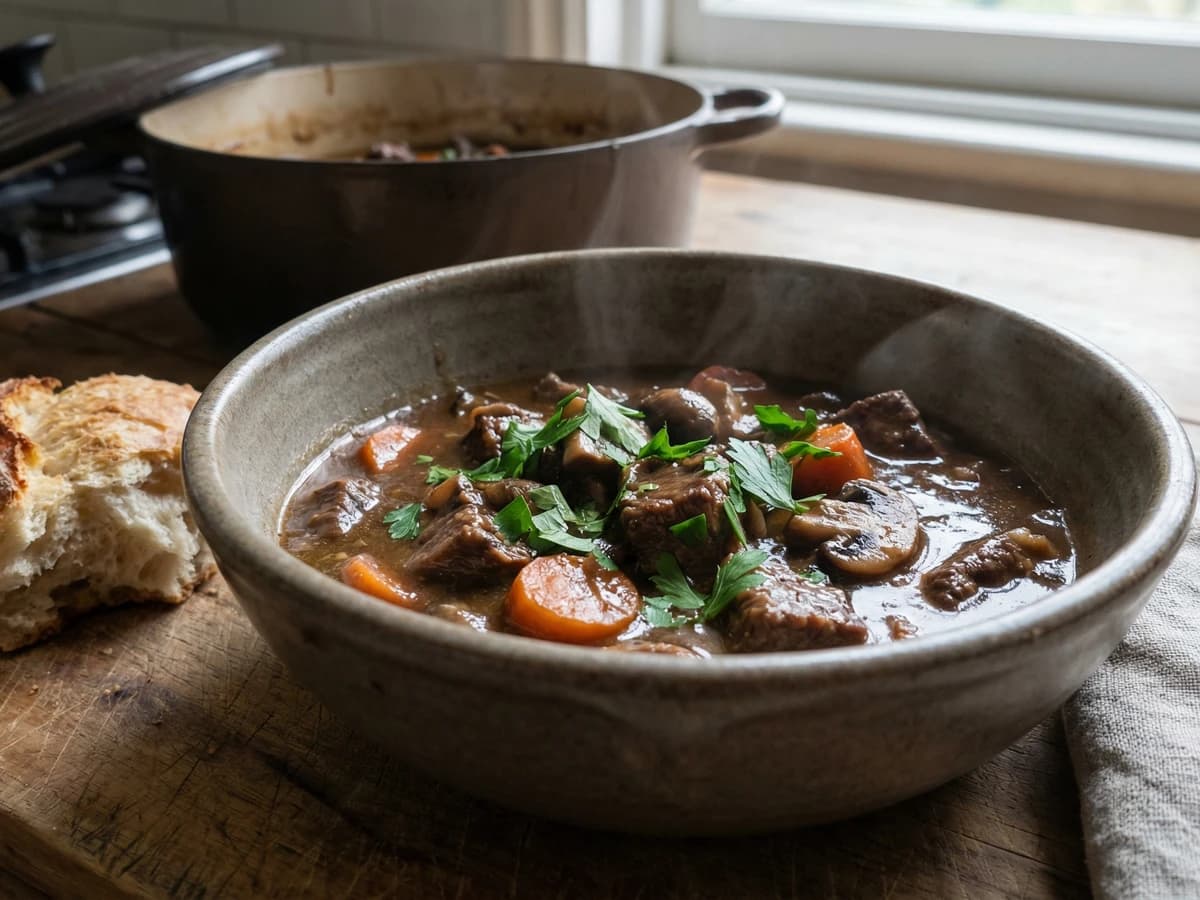
Braising steak surrendered to dark ale and slow time, with onions and mushrooms, until the gravy turns thick and malty and the kitchen smells like the kind of evening you want to stay in for.

Chef Thomas
Beef shin and pearl barley simmered low and slow with root vegetables until the meat gives way and the broth thickens into something between a soup and a stew, the kind of bowl that steadies you on a cold night.
Chef Thomas
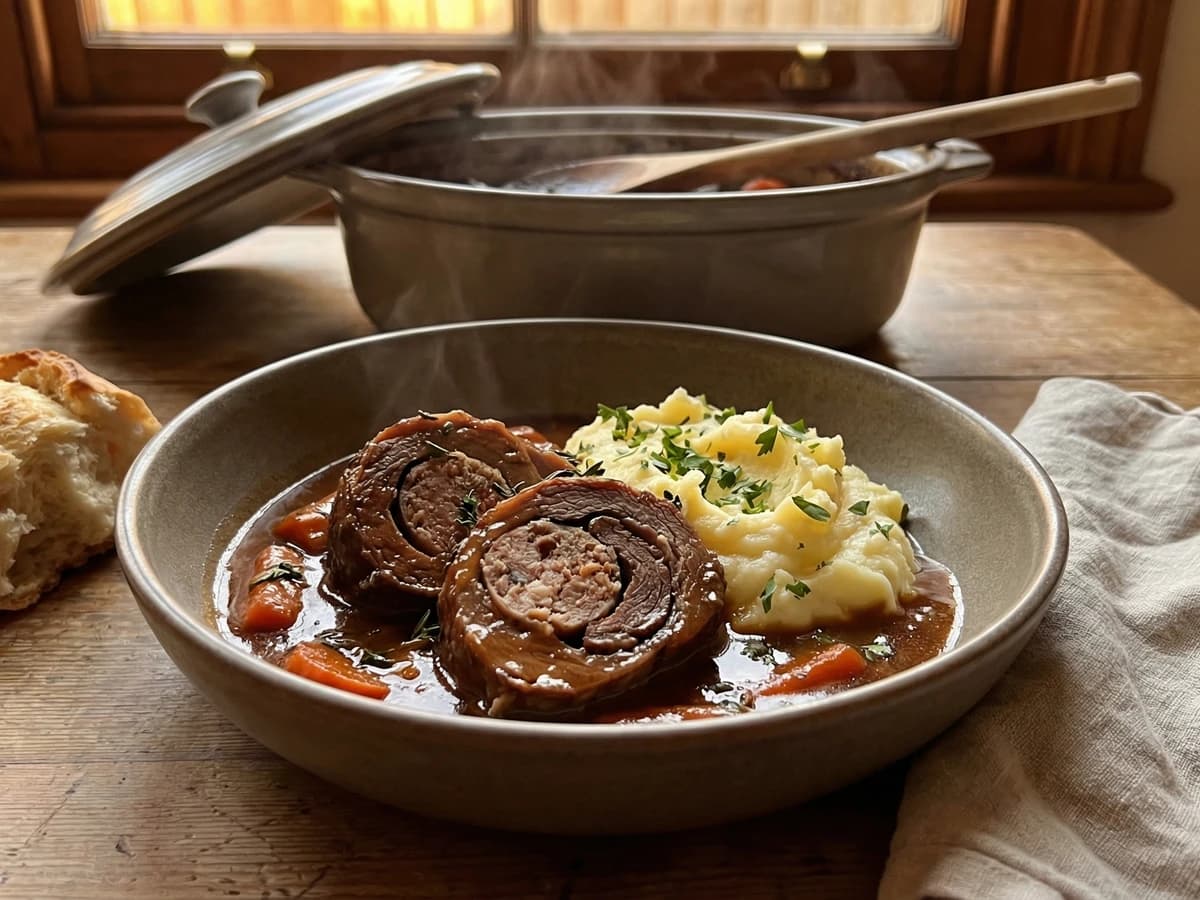
Thin slices of beef rolled around a stuffing of sausage meat and herbs, browned in butter, and braised for two patient hours until the meat yields and the gravy turns dark and rich and worth mopping up with bread.