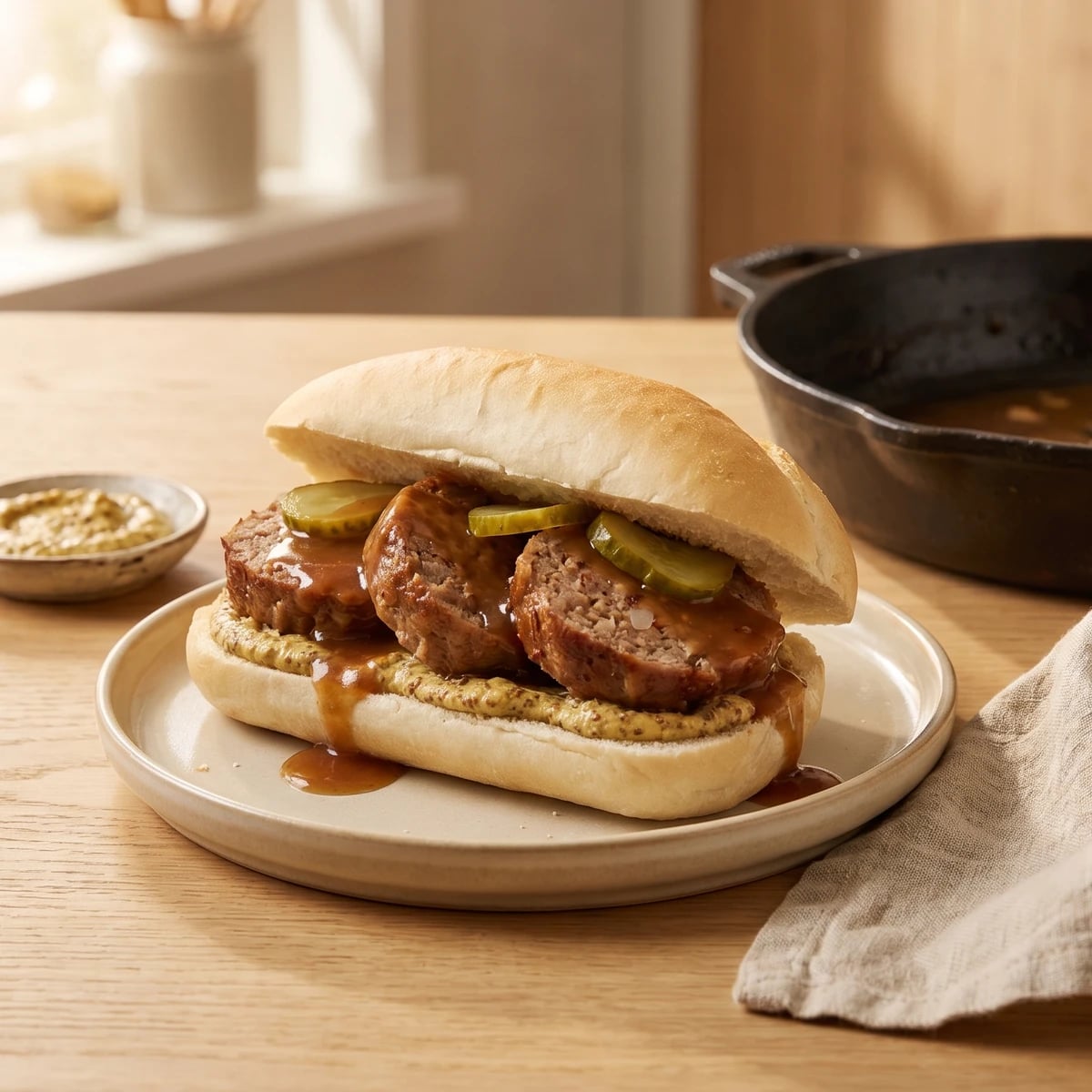
A fist-sized gehaktbal in a soft roll, cut thick, glossed with its own jus: the honest Dutch lunch counter meal that asks only for good mince, nutmeg, and no apology.
Sandwiches & Wraps
Dutch
Quick Meal
Budget Friendly
15 min
Active Time
35 min cook•50 min total
Yield4 sandwiches
Abroodje bal is not shy food. It sits in the hand with the confidence of a dockworker, a driver, a man in a brown cafe who has twenty minutes, five euros, and no interest in being improved by lunch. The name already tells you almost everything: broodje, little bread, and bal, ball. No Latin ghost, no Sephardic boat, no monastery manuscript hiding behind the curtain. For obvious reasons, this is a sandwich that explains itself.
But let me tell you a secret. What looks blunt is carrying a very Dutch argument about thrift and spice. The gehaktbal, the minced-meat ball, belongs to the same family as bitterballen and the meatballs served beside stamppot: cheap cuts made generous with breadcrumbs, milk, onion, mustard, and that old VOC whisper of nutmeg. A country accused of plain cooking has been warming its minced meat with island spices for centuries, then serving it on bread as if nothing interesting happened. Typical.
The method matters because the whole sandwich is only as good as the pan you leave behind. Brown the ball properly, braise it gently, and let the jus, the gravy, collect all the browned bits from the bottom. Then slice the meatball into the roll so the bread catches the juices rather than losing them down your wrist. Hou het altijd simpel, always keep it simple: soft bread, warm meatball, mustard if you have sense, and enough gravy to make lunch feel like it has been looked after.
Broodje bal grew from the Dutch lunchroom, butcher, canteen, and roadside cafe culture of the twentieth century, when a warm gehaktbal in a roll became reliable fuel for workers and drivers. The Hague has a particular claim through its old butchers and lunch counters, especially around the city centre, where the sandwich became a local point of pride rather than merely a snack. Its seasoning reflects a longer Dutch habit: nutmeg, mace, and clove entered everyday meat cookery through seventeenth-century spice trade and stayed there in humble dishes long after the cargo ships were gone.
The technique, the tradition, and the story behind every dish.
Stir the breadcrumbs and milk together in a large bowl and leave them for five minutes. This little paste is the reason the gehaktbal stays tender instead of turning into a clenched fist. The bread holds moisture, which is good kitchen sense and not a trick.
2
Mix the meat
Add the minced meat, onion, egg, mustard, salt, pepper, and nutmeg to the bowl. Mix with your hands just until everything is evenly combined. Stop there. Overworked mince becomes rubbery, and a broodje bal should have bite, not bounce.
Freshly grate the nutmeg if you can. The pre-ground jar is useful in emergencies, but the whole nut gives the warm, sweet edge that makes Dutch meat cookery taste like itself.
3
Shape the balls
Divide the mixture into four large balls and roll them with damp hands so the surface is smooth. Press each one lightly between your palms; not flat, just settled. A perfect sphere rolls around the pan like it has appointments elsewhere.
4
Brown them well
Heat the butter and oil in a heavy pan over medium heat. Add the meatballs and brown them slowly on all sides, ten to twelve minutes in total, turning with patience. You want a dark savoury crust, because the gravy is going to borrow its whole character from that browned pan.
5
Braise in jus
Pour in the beef stock and Worcestershire sauce, if using, scraping the bottom of the pan with a wooden spoon. Cover loosely and let the meatballs simmer gently for about twenty minutes, turning once. The liquid should reduce to a glossy jus, not disappear completely. If it gets too low, add a splash of water and carry on.
6
Build the sandwich
Split the rolls and spread the cut sides with mustard. Slice each meatball thickly, lay it into a roll, and spoon over enough pan gravy to soak the bread without drowning it. Add a few slices of augurk, pickle, if you like the sharp bite. Eat with both hands and no ceremony.
Chef Tips
•Use mixed beef and pork mince if you eat pork. Beef alone makes a firmer ball; pork brings fat and tenderness, which is why Dutch butchers often use a blend.
•A soft white roll is correct here. Crusty bread fights the meatball and sends gravy down your sleeve, which is not history, only poor planning.
•Mustard is not decoration. Dutch mustard cuts the richness of the meat and gravy, the way a good pickle cuts through a fatty herring.
•For a proper canteen version, make the meatballs ahead and hold them in their jus. The sandwich improves when the ball has sat in its own gravy long enough to remember where it belongs.
Advance Preparation
•The meatballs can be shaped up to 24 hours ahead and kept covered in the refrigerator.
•Cooked meatballs keep three days refrigerated in their jus; reheat gently in the pan with a splash of water before building the sandwiches.
•The mixture also freezes well raw or cooked, but thaw fully before browning so the centre cooks evenly.
Frequently Asked Questions
Nutrition Information
1 serving (about 280g)
Calories
645 calories
Total Fat
40 g
Saturated Fat
15 g
Trans Fat
1 g
Unsaturated Fat
22 g
Cholesterol
155 mg
Sodium
1500 mg
Total Carbohydrates
39 g
Dietary Fiber
3 g
Sugars
6 g
Protein
31 g
Where cooking meets culture.
Culinary guides, cultural storytelling, and the editorial depth that makes cooking meaningful.