
Chef Joost
Boterham met Kaas
The Dutch lunch that looks like almost nothing and explains almost everything: bread, butter, cheese, and the quiet discipline of doing the ordinary thing properly.
A cooking platform built around craft, culture, and the stories behind what we eat.
Created by
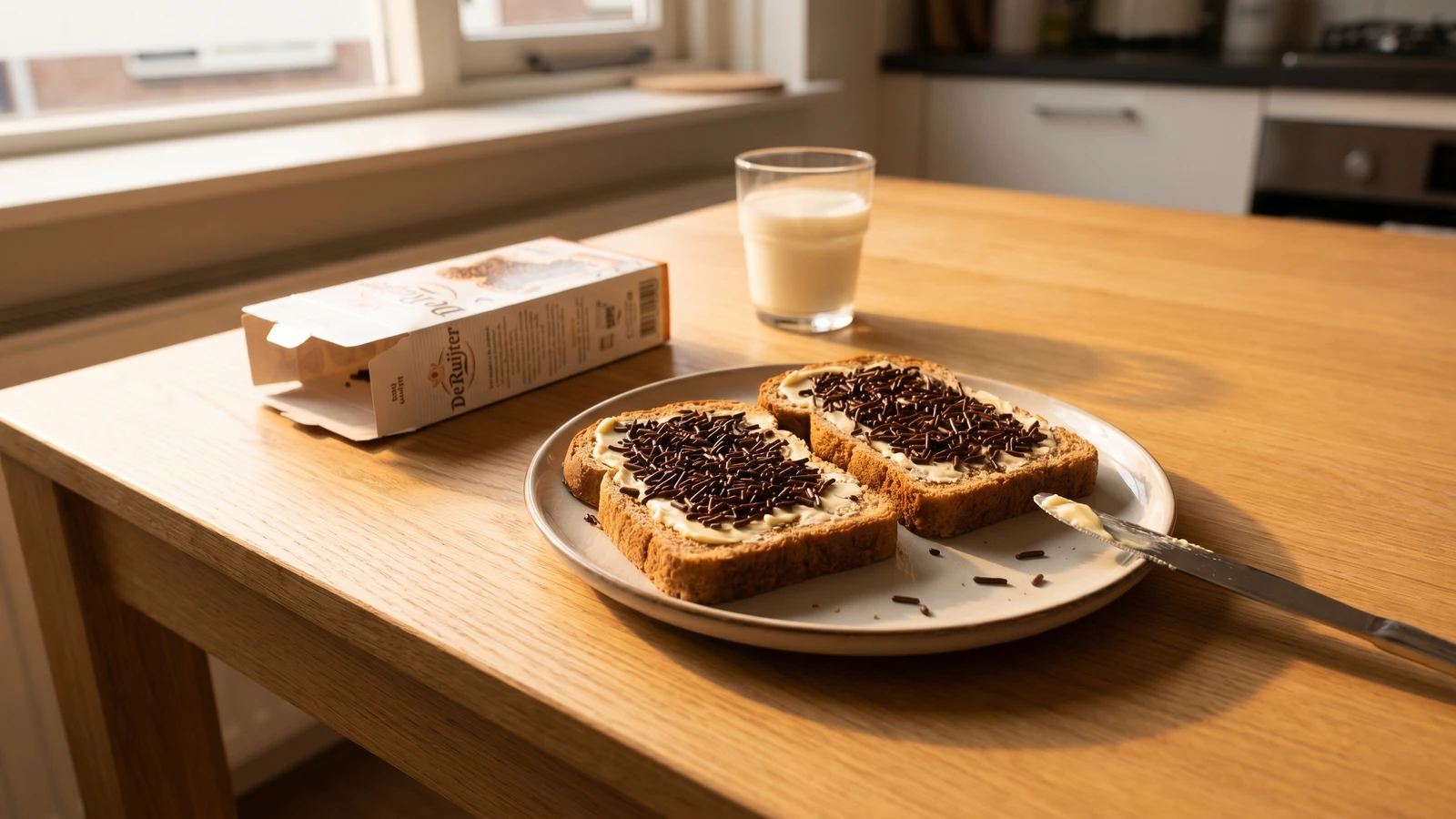
A buttered slice of Dutch bread under chocolate hail, eaten by children, students, and grown adults without irony, because frugality sometimes knows exactly where to spend its sweetness.
The Netherlands has a national dish so modest it refuses to call itself one: a slice of bread, buttered properly, then rained with chocolate. Foreign visitors look at boterham met hagelslag as if a nursery escaped onto the breakfast table. Dutch adults keep eating. For obvious reasons, we don't correct the visitors too quickly.
The name already tells you why the joke survives. Hagel is hail, and hagelslag is a hail shower; those little dark rods fall over the bread the way weather falls over a polder, only kinder. Boterham is the everyday Dutch word for a slice of bread or sandwich, so ordinary that it sits in lunch boxes, office drawers, and railway-station bags without asking to be admired. But let me tell you a secret: this is not dessert pretending to be breakfast. It is the Dutch bread meal showing its one theatrical streak.
In my grandmother's second notebook there was no recipe for it, because nobody writes down how to make a boterham, any more than they write down how to close a door. And that is exactly why we must write it down. Use soft fresh bread, butter it all the way to the corners, and choose real chocoladehagelslag, not waxy cake decoration. The butter is not decoration; it is glue, salt, and good sense. Hou het altijd simpel, always keep it simple, but do not skip the thing holding the hail to the roof.
Hagelslag began as a weather joke made edible: in 1919 the Venco director B. E. Dieperink introduced brittle white anise granules after the image of a hailstorm, and De Ruijter later popularized fruit versions. Chocolate hagelslag appeared in the 1930s, helped by the Netherlands' industrial familiarity with cocoa after Coenraad Johannes van Houten's 1828 cocoa press made cocoa easier to separate and mix. Dutch labelling still matters at the breakfast table: plain chocoladehagelslag must contain at least 32 percent cocoa solids, which is why the good boxes taste like chocolate rather than sweet wax.
Quantity
2 slices
Quantity
20g
softened to room temperature
Quantity
30g
| Ingredient | Quantity |
|---|---|
| fresh Dutch bruin brood or soft white bread | 2 slices |
| salted buttersoftened to room temperature | 20g |
| Dutch chocoladehagelslag | 30g |
Lay the bread on a small plate or board. Do not toast it; the proper contrast is soft crumb below and tiny firm chocolate rods above. If the bread is stale, choose another slice. A boterham is too simple to hide poor bread.
Spread the softened butter evenly from crust to crust, a real thin layer rather than a polite suggestion. The butter is not decoration. It is glue, salt, and good sense, holding the chocolate hail where it belongs.
Sprinkle the chocoladehagelslag generously over the buttered bread until the surface is well covered but not buried. Tilt the slice gently over the plate; loose pieces can fall away, and what remains should be held by butter, not pressed down by force.
Eat at once, open-faced, with the plate close beneath it. Cut each slice in half if you like. The few pieces that escape are part of the contract, and often the cook's tax.
1 serving (about 120g)
Culinary guides, cultural storytelling, and the editorial depth that makes cooking meaningful.
Discover Culinary ExplorerChef Joost
The Dutch lunch that looks like almost nothing and explains almost everything: bread, butter, cheese, and the quiet discipline of doing the ordinary thing properly.

Chef Joost
One plain Dutch slice carries a colonial peanut, a postwar lunchbox, and the national habit of naming things sideways: peanut butter called cheese, sometimes with chocolate rain on top.

Chef Joost
A fist-sized gehaktbal in a soft roll, cut thick, glossed with its own jus: the honest Dutch lunch counter meal that asks only for good mince, nutmeg, and no apology.

Chef Joost
A warm Dutch roll from the butcher's counter: carved beenham, crisp lettuce, and honey-mustard sauce, quick enough for Tuesday but carrying the smell of Sunday roast.