Culinary Explorer

A cooking platform built around craft, culture, and the stories behind what we eat.
Discover Culinary Explorer
Brochetas de Camarón al Chiltepín

Brochetas de Camarón al Chiltepín

Created by

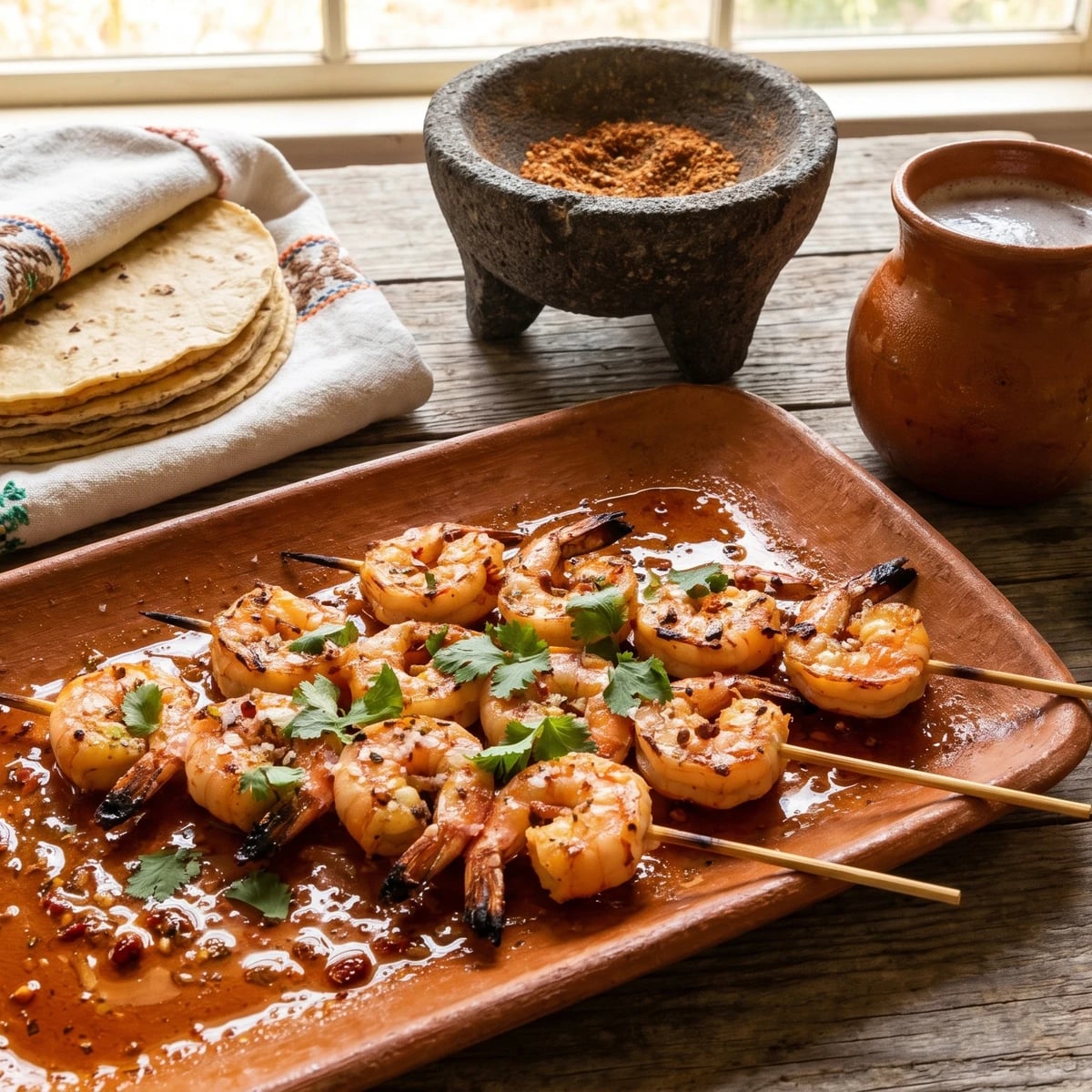
Sinaloa's beach-stand skewers of Pacific shrimp, brushed with chiltepin butter and seared hard over mesquite. Five ingredients, one fire, no shortcuts.

Appetizers & Snacks
Mexican
BBQ
Outdoor Dining
Quick Meal
25 min
Active Time
8 min cook33 min total
Yield4 servings (8 skewers)

These brochetas come from the Sinaloa coast, the stretch of Pacific beach between Mazatlan and Altata where the shrimp boats unload at dawn and the palapa cooks have a fire going by ten in the morning. This is beach food, but do not confuse beach food with simple food. Five ingredients done right is harder than thirty done badly.

The chile is what makes this dish what it is. Chiltepin is the wild ancestor of every cultivated chile in the Americas. It grows untamed on the slopes of the Sierra Madre Occidental in Sonora and northern Sinaloa, picked by hand, sold by the gram. It is small, round, and ferocious. Sinaloan cooks use it the way other cooks use black pepper, except chiltepin bites and then disappears. The heat is sharp and quick. It does not linger like a habanero. That is the chile this dish demands. No me vengas con atajos sustituting cayenne or chile de arbol. Find the chiltepin or wait until you can.

The fire matters too. Mesquite is what they burn on that coast because mesquite grows in the dry country behind the beach and because it puts a smoke into the shrimp that gas grills cannot fake. The shells take the char. The flesh stays sweet. The chiltepin butter melts down through the seams and pools on the platter. Three minutes a side, lime at the table, tortillas warm. That is the whole dish. Cada estado, su propia cocina, and this one belongs to Sinaloa.

Chiltepin (Capsicum annuum var. glabriusculum) is the only chile species native to what is now northern Mexico and the southwestern United States, and it is widely accepted by ethnobotanists as the wild progenitor of all domesticated Capsicum annuum varieties, including the bell pepper, jalapeno, and serrano. The Tarahumara and Yaqui peoples of Sonora gathered wild chiltepin for thousands of years before the Spanish arrived, and the chile remains uncultivated commercially in Mexico, harvested from wild stands in a brief autumn window that drives its price to among the highest of any chile in the country. Sinaloa's modern marisco grilling tradition, including the brochetas served at Mazatlan and Altata beach palapas, took shape in the second half of the 20th century alongside the state's industrial shrimp fleet, which made fresh Pacific shrimp the affordable centerpiece of coastal home cooking and beach-stand menus.

The technique, the tradition, and the story behind every dish.

Discover Culinary Explorer

Ingredients

large Pacific white shrimp (16/20 count)

Quantity

1 1/2 pounds

peeled and deveined, tails left on

kosher salt

Quantity

1 tablespoon

divided

fresh lime juice

Quantity

2 tablespoons

unsalted butter

Quantity

8 tablespoons

pork lard (manteca de cerdo)

Quantity

2 tablespoons

dried chiltepin chiles

Quantity

2 tablespoons, plus more for the table

garlic cloves

Quantity

4

finely minced

Mexican oregano

Quantity

1/2 teaspoon

crumbled between your palms

lime halves (optional)

Quantity

for serving

hand-pressed corn tortillas (optional)

Quantity

for serving

warmed

flaky sea salt (optional)

Quantity

for finishing

Equipment Needed

  • Eight bamboo or metal skewers
  • Charcoal grill with mesquite or hardwood lump charcoal
  • Volcanic stone molcajete for crushing the chiltepin
  • Cast iron comal for toasting the chiles
  • Small heavy saucepan for the chiltepin butter

Instructions

  1. 1

    Soak the skewers and prepare the shrimp

    If you are using bamboo skewers, soak eight of them in cold water for at least 20 minutes so they do not burn. Pat the shrimp completely dry with paper towels. Wet shrimp will steam on the grill instead of taking a sear. Toss the shrimp with two teaspoons of the kosher salt and the lime juice. Let them sit for ten minutes while you build the chiltepin butter.

    Do not skip the drying step. The water clinging to the shrimp is the difference between a charred edge and a gray boiled exterior.
  2. 2

    Toast and crush the chiltepines

    Heat a dry comal over medium-low. Add the chiltepines and toast for about 30 seconds, shaking the pan, until they smell sharp and slightly smoky. Chiltepin is small but it is the hottest chile native to Mexico, gathered wild in Sonora and northern Sinaloa. Treat it with respect. Tip the toasted chiles into a molcajete and crush to a coarse powder. Some pieces should stay visible. This is a chile that announces itself.

    Do not breathe in over the molcajete while you crush. The dust will catch your throat. Keep your face back and the kitchen window open.
  3. 3

    Build the chiltepin butter

    In a small saucepan over low heat, melt the butter together with the lard. La manteca es el sabor, even here. The butter alone will burn on the grill. The lard raises the smoke point and carries the heat into the shrimp. Once the fat is melted, stir in the crushed chiltepin, the minced garlic, the Mexican oregano, and the remaining teaspoon of salt. Take the pan off the heat. Let the butter steep for ten minutes so the chile and garlic give up their flavor. The fat will turn a warm amber red.

  4. 4

    Build the fire

    Light a chimney of mesquite charcoal or hardwood lump charcoal. Mesquite is what they use on the Sinaloa coast and it is what gives these brochetas their identity. The fire is ready when the coals glow orange under a thin gray ash and you can hold your hand five inches above the grate for two seconds, no more. This is direct, hard heat. Shrimp cook in minutes and a low fire will only dry them out.

  5. 5

    Thread the skewers

    Pat the shrimp dry one more time. Thread four shrimp onto each skewer, piercing through the tail end and again through the thick part of the body so each shrimp curls into a tight C and lies flat. Pack them close together so they shield each other from the fire and stay juicy. Brush both sides generously with the chiltepin butter. Reserve the rest of the butter for finishing.

  6. 6

    Grill hard and fast

    Lay the skewers directly over the coals. Listen for the sizzle. If you do not hear it, your fire is not hot enough and you should walk away for two more minutes. Grill for two to three minutes per side, no more. The shells should turn a deep coral pink with charred edges and the flesh should just turn opaque. Brush with more chiltepin butter as you flip them. Pull them off the moment they curl into a tight C. Overcooked shrimp is rubber. Asi se hace y punto.

    If a shrimp curls into a closed circle, it is overcooked. The C-shape is what you want. The O-shape is a warning.
  7. 7

    Finish and serve at the table

    Lay the skewers on a warm platter. Spoon the remaining chiltepin butter over the top so the fat soaks into the shrimp as they rest. Scatter flaky salt and a pinch more crushed chiltepin across the platter. Serve with lime halves and warm corn tortillas. The right way to eat these is to slide a shrimp off the skewer into a tortilla, squeeze lime over it, and eat it standing up with sand under your feet. If that is not available, the kitchen counter will do.

Chef Tips

  • Buy Pacific shrimp if you can. Sinaloa, Sonora, and Nayarit shrimp have a sweetness that Atlantic and Gulf shrimp do not match. If you must use frozen, thaw in the refrigerator overnight, never under running water. The texture suffers if you rush it.
  • Chiltepin is sold whole and dried at Mexican markets, especially those with a Sonoran or Sinaloan customer base, and online from spice importers who source from Sonora. A small jar lasts a long time because you only need a pinch. If you cannot find chiltepin, this is not the dish to make today. Make aguachile instead and wait for the chiltepin to arrive. Substituting another chile does not give you brochetas al chiltepin. It gives you something else.
  • Mesquite charcoal is non-negotiable for the real version. Lump hardwood is the second choice. Briquettes will give you heat but no smoke and the shrimp will taste flat. A gas grill is the last resort and you will know the difference.

Advance Preparation

  • The chiltepin butter can be made up to three days ahead and refrigerated. Warm it gently before brushing onto the shrimp so it spreads evenly.
  • The shrimp can be peeled and deveined the morning of and held on ice in the refrigerator. Do not salt them until ten minutes before grilling.
  • Do not skewer the shrimp ahead of time. They tighten and dry out. Thread them onto the skewers right before they go over the fire.

Frequently Asked Questions

Nutrition Information

1 serving (about 185g)

Calories
415 calories
Total Fat
31 g
Saturated Fat
18 g
Trans Fat
0 g
Unsaturated Fat
11 g
Cholesterol
390 mg
Sodium
1400 mg
Total Carbohydrates
2 g
Dietary Fiber
1 g
Sugars
1 g
Protein
35 g

Note: Chef personas and recipes are created with AI assistance. Cook with care: follow safe food-handling practices, check doneness with a thermometer when needed, and adapt for allergies and your kitchen.

Where cooking meets culture.

Culinary guides, cultural storytelling, and the editorial depth that makes cooking meaningful.

Discover Culinary Explorer

More from Noroeste Appetizers & Snacks

Browse the full collection