
Chef Juliana
Ambrosia Baiana
You think curdled milk means you ruined dessert. Good. Tonight you'll do it on purpose, with lemon, yolks, cravo, and sugar, until the pot turns into golden gruminhos.
A cooking platform built around craft, culture, and the stories behind what we eat.
Created by
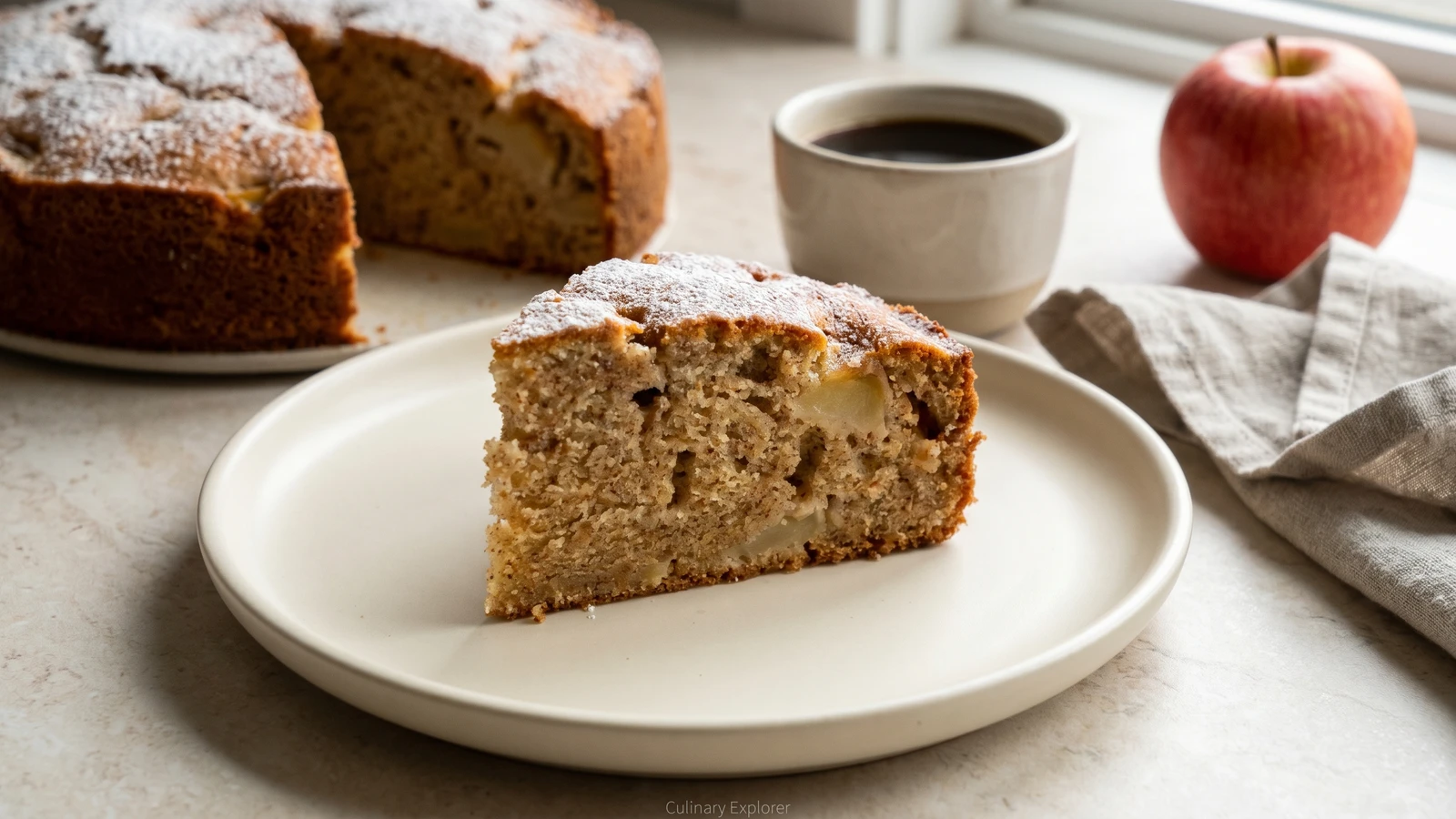
Those apples getting soft in the bowl are not trash. They're cake. Cinnamon, a simple batter, and a little patience turn them into coffee-table comida de verdade.
You look at the fruit bowl, see two apples going wrinkly, and think: isso não é pra mim. Cake belongs to people with special pans, quiet afternoons, and some secret hand for baking. Wrong. Cozinhar não é dom, é um aprendizado, and cake is no exception. Anota aí: if you can measure, stir, and wait until a toothpick comes out clean, you can make this.
This is the kind of sweet that belongs in a Brazilian house because it doesn't pretend to be a spectacle. A gente eats the everyday plate, rice and beans, an egg or a piece of meat, something green, and later there is coffee. Sometimes there is cake with that coffee. Not a powdered mix, not a plastic package pretending to be a snack, but a real bolo made from fruit that had one good day left in it.
The method is plain on purpose. The chopped apple goes into the batter so it softens and keeps the crumb tender. A little cinnamon warms the flavor without turning the cake into perfume. The oil keeps it moist for tomorrow, which matters because a good home cake should solve more than one coffee break.
Don't overmix it, don't open the oven every five minutes, and don't panic when the batter looks thick around the apples. Thick is right. By the end, you get a soft, honest cake, golden at the edges, smelling like someone learned something useful today.
Apple cake in Brazil sits inside the broad home-baking tradition of bolos simples, the unfrosted cakes served with afternoon coffee rather than saved for parties. Apples are not native tropical fruit, but they became common in everyday Brazilian kitchens through southern production, especially in Santa Catarina and Rio Grande do Sul, where cooler climates made commercial orchards possible in the twentieth century. Cinnamon came through Portuguese colonial trade routes and stayed because it does exactly what home cooks need: it makes simple fruit smell like a full house.
Quantity
2
peeled and chopped, peels reserved
Quantity
1 tablespoon
Quantity
3 large
Quantity
1 cup
Quantity
1/2 cup
Quantity
1/2 cup
Quantity
2 cups
Quantity
1 tablespoon
divided
Quantity
1 tablespoon
Quantity
1/2 teaspoon
Quantity
1 tablespoon
for topping
| Ingredient | Quantity |
|---|---|
| medium applespeeled and chopped, peels reserved | 2 |
| lemon juice | 1 tablespoon |
| eggs | 3 large |
| sugar | 1 cup |
| neutral oil | 1/2 cup |
| milk | 1/2 cup |
| all-purpose flour | 2 cups |
| ground cinnamondivided | 1 tablespoon |
| baking powder | 1 tablespoon |
| salt | 1/2 teaspoon |
| sugarfor topping | 1 tablespoon |
Heat the oven to 180°C (350°F). Grease and flour a 23 cm round cake pan, or a 22 x 12 cm loaf pan. Get the pan ready before you mix because baking powder starts working once it gets wet, and cake batter should not sit around waiting for you to find the pan.
Peel the apples, save the peels, and chop the fruit into small cubes, about 1 cm. Toss the cubes with the lemon juice and 1 teaspoon of the cinnamon. The lemon keeps the apple from browning too fast, and the cinnamon clings better now than if you throw it in at the end.
In a blender, beat the eggs, sugar, oil, milk, and reserved apple peels for about 1 minute, until smooth and pale beige. The peels bring apple flavor and a little color back into the batter instead of going to waste. That's home cooking, not fuss.
In a large bowl, whisk the flour, salt, and the remaining cinnamon. Pour in the blended mixture and stir with a spoon just until you don't see dry flour. Stop there. If you beat the batter like it owes you money, the cake gets tough, and then you'll blame the recipe instead of the overmixing.
Add the chopped apples and the baking powder. Fold gently until the fruit is spread through the batter and the powder disappears. The batter will look thick and full of apple pieces. Good. The apples release moisture as they bake, which keeps the crumb tender instead of dry.
Scrape the batter into the prepared pan and level the top. Mix the topping sugar with a pinch of cinnamon if you like, then sprinkle it over the batter. Bake for 35 to 45 minutes, until the top is golden, the edges pull slightly from the pan, and a toothpick poked into the center comes out clean or with a few moist crumbs, not wet batter.
Let the cake cool in the pan for 15 minutes, then turn it out or slice it right there if it's a simple pan day. Warm cake is tender and fragile, so give it those minutes to set. Slice when the crumb holds together and the apple pieces look soft and glossy.
1 serving (about 105g)
Culinary guides, cultural storytelling, and the editorial depth that makes cooking meaningful.
Discover Culinary ExplorerChef Juliana
You think curdled milk means you ruined dessert. Good. Tonight you'll do it on purpose, with lemon, yolks, cravo, and sugar, until the pot turns into golden gruminhos.

Chef Juliana
You are not ruining the milk. You're curdling it on purpose, slowly, until sugar, eggs, cinnamon, and patience turn cheap ingredients into dessert.

Chef Juliana
You think curdled milk means failure. Not here. Milk, yolks, sugar, and lemon cook into golden curds in amber whey, a Minas sweet where the ponto teaches the whole recipe.

Chef Juliana
You already trust rice for dinner. Trust it for dessert: cook it gently with milk, coconut, and canela until each grain turns soft, creamy, and impossible to blame on lack of talent.