
Chef Juliana
Ambrosia Baiana
You think curdled milk means you ruined dessert. Good. Tonight you'll do it on purpose, with lemon, yolks, cravo, and sugar, until the pot turns into golden gruminhos.
A cooking platform built around craft, culture, and the stories behind what we eat.
Created by
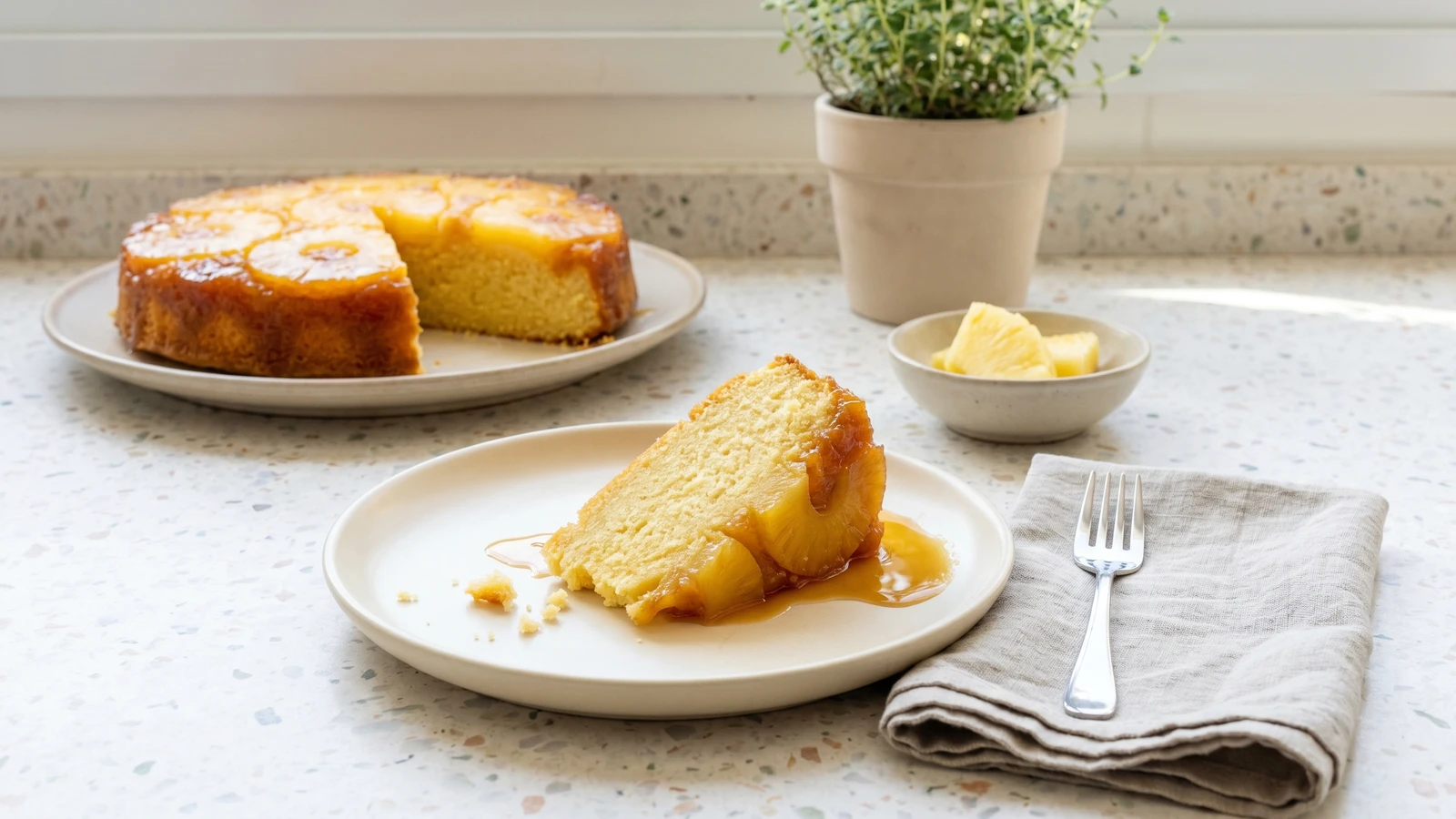
You can flip a cake. Anota aí: caramel in the pan, pineapple on top of that, batter over everything, and a warm turn-out. Courage helps, but method does the real work.
You may be looking at the words "invertido" and already hearing that little voice: isso não é pra mim. Good. Bring the voice here. We'll sit it at the counter and prove it wrong with butter, sugar, pineapple, and a cake pan. Cozinhar não é dom, é um aprendizado, and flipping a cake is not bravery. It's timing.
I learned plenty of kitchen confidence the embarrassing way, with sticky pans, pale caramel, and one cake that landed half on the plate and half on my pride. So this recipe is written for the person who wants receitas que funcionam, not applause for suffering. You melt the sugar until it turns amber because that color is flavor. You arrange the pineapple neatly because the bottom becomes the top. You turn the cake out while it's warm because cold caramel grabs the pan and refuses to negotiate.
This is dessert, yes, but it belongs to the same home table as the pê-efe. Rice, beans, something savory from the pan, something green, and then a slice of cake made with real ingredients, not a packet pretending to be celebration. A gente doesn't need to make food mysterious to make it special.
Use ripe pineapple when it's sweet and fragrant, usually when it's cheap and hasn't traveled forever to reach you. Canned pineapple is the honest Tuesday shortcut. It works, but it won't give you the same bright acidity as fresh fruit. Either way, do not fear the flip. Put the plate on top, breathe once, turn with conviction.
Upside-down fruit cakes became popular in the early twentieth century, when canned pineapple made neat rings available far from the tropics and home bakers loved the drama of turning out a glossy top. In Brazil, bolo de abacaxi invertido settled naturally into birthday tables, afternoon coffee, and holiday spreads because pineapple was already familiar, festive, and sharp enough to balance caramel. The Brazilian version is usually less about decoration and more about that practical home-kitchen trick: the fruit and syrup bake in the same pan that becomes the serving top.
Quantity
1 small
peeled, cored, and cut into 1/2-inch rings or half-moons
Quantity
1 1/2 cups
divided
Quantity
1/4 cup
Quantity
3 tablespoons
softened, for the caramel layer
Quantity
2 cups
Quantity
1 tablespoon
Quantity
1/2 teaspoon
Quantity
3/4 cup
softened, for the batter
Quantity
3 large
at room temperature
Quantity
1 teaspoon
Quantity
3/4 cup
at room temperature
Quantity
1 tablespoon
for greasing the pan
| Ingredient | Quantity |
|---|---|
| ripe pineapplepeeled, cored, and cut into 1/2-inch rings or half-moons | 1 small |
| granulated sugardivided | 1 1/2 cups |
| water | 1/4 cup |
| unsalted buttersoftened, for the caramel layer | 3 tablespoons |
| all-purpose flour | 2 cups |
| baking powder | 1 tablespoon |
| fine salt | 1/2 teaspoon |
| unsalted buttersoftened, for the batter | 3/4 cup |
| eggsat room temperature | 3 large |
| vanilla extract | 1 teaspoon |
| whole milkat room temperature | 3/4 cup |
| unsalted butterfor greasing the pan | 1 tablespoon |
Heat the oven to 180°C (350°F). Grease a 9-inch round cake pan well with 1 tablespoon butter, especially the sides. Caramel likes to cling where you forgot the butter, and then the cake tears while you stand there pretending you meant to serve it rustic.
Put 1 cup sugar and 1/4 cup water in a small saucepan over medium heat. Stir only until the sugar is wet, then leave it alone and swirl the pan gently when the edges start coloring. Cook until the syrup turns deep amber, like guaraná in the glass, about 8 to 10 minutes. Pale caramel tastes only sweet. Amber caramel tastes like someone paid attention.
Pour the hot caramel into the prepared pan and tilt carefully so it covers the bottom. Dot the caramel with 3 tablespoons softened butter, then arrange the pineapple in a snug single layer. Keep the prettiest side facing down, because that side becomes the top. Leave small gaps between pieces so the cake batter can settle around the fruit and hold the whole thing together.
Whisk the flour, baking powder, and salt in a bowl until evenly mixed. This looks boring and it matters. If the baking powder sits in one pocket, one side of the cake rises like a hill and the other sulks.
Beat 3/4 cup softened butter with the remaining 1/2 cup sugar until pale and fluffy, about 3 minutes by mixer or 5 minutes by hand. Stop when it looks lighter and softer, not when your patience ends. This traps air in the batter, and that air helps the cake rise tender instead of dense.
Beat in the eggs one at a time, mixing well after each one, then add the vanilla. The batter should look creamy and thick. If it curdles a little, don't panic. The flour will bring it back. Room-temperature eggs mix in more smoothly because cold eggs make the butter seize.
Add the flour mixture in three additions, alternating with the milk in two additions, beginning and ending with flour. Mix just until the last streaks disappear. Overmix and the cake toughens, because flour has opinions when you bother it too much.
Spoon the batter over the pineapple and spread it gently to the edges without dragging the fruit around. Bake until the top is golden, the center springs back when pressed lightly, and a toothpick comes out clean, 40 to 45 minutes. The edges should pull just slightly from the pan. That's the cake telling you it's ready.
Let the cake rest in the pan for 10 minutes, no longer. Run a thin knife around the edge, place a flat serving plate over the pan, hold both firmly, and turn in one steady motion. Wait 10 seconds before lifting the pan so the caramel can fall back over the fruit. If any pineapple sticks, lift it off the pan and place it back on the cake. We are cooks, not statues.
Let the cake cool until the caramel looks glossy and settled, about 20 minutes, then slice with a sharp knife. Serve warm or at room temperature. The crumb should be soft, the pineapple bright, and the caramel just bitter enough to keep the sweetness honest.
1 serving (about 155g)
Culinary guides, cultural storytelling, and the editorial depth that makes cooking meaningful.
Discover Culinary ExplorerChef Juliana
You think curdled milk means you ruined dessert. Good. Tonight you'll do it on purpose, with lemon, yolks, cravo, and sugar, until the pot turns into golden gruminhos.

Chef Juliana
You are not ruining the milk. You're curdling it on purpose, slowly, until sugar, eggs, cinnamon, and patience turn cheap ingredients into dessert.

Chef Juliana
You think curdled milk means failure. Not here. Milk, yolks, sugar, and lemon cook into golden curds in amber whey, a Minas sweet where the ponto teaches the whole recipe.

Chef Juliana
You already trust rice for dinner. Trust it for dessert: cook it gently with milk, coconut, and canela until each grain turns soft, creamy, and impossible to blame on lack of talent.