
Chef Lupita
Aporreadillo Michoacano con Huevo
Michoacán's Tierra Caliente almuerzo, where salted beef is softened, pounded, fried in lard, folded with egg and chile perón salsa, then served beside morisqueta like a proper working table.
A cooking platform built around craft, culture, and the stories behind what we eat.
Created by
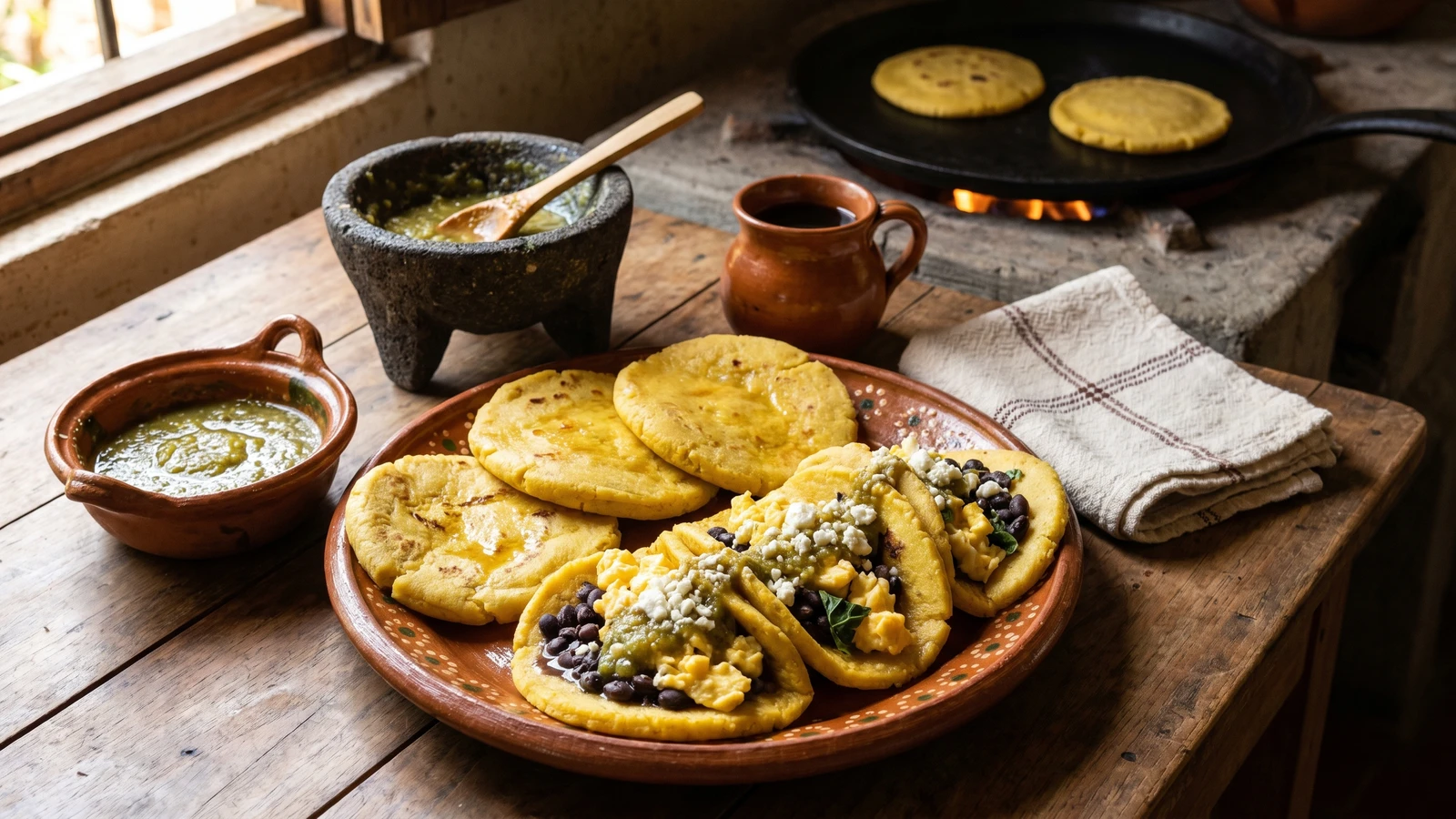
Veracruz's Huasteca breakfast of thick corn cakes worked with manteca de cerdo, cooked on a dark comal, then split open for scrambled egg, black beans with epazote, and serrano salsa.
Veracruz first: the Huasteca veracruzana, the northern band of the state around Tantoyuca, Chicontepec, Tempoal, and Pánuco, where corn cakes sit on the comal before the coffee is poured. Bocoles are not little gorditas wearing another name. They are thicker, richer, and worked with manteca de cerdo until the masa feels soft and obedient under your palm.
I learned this version from a Teenek woman in the Tantoyuca market who shaped them by hand while talking to three customers at once. The defining ingredient is lard. La manteca es el sabor. It shortens the masa, gives the edge tenderness, and lets the bocol split without crumbling. The beans are black beans cooked with epazote, not pinto beans from a Tex-Mex plate. The chile is serrano in a small green salsa, sharp enough to wake the egg but not enough to hide the corn.
The lesson from the women of the Huasteca is practical: cook the cake slowly enough that the center sets before the outside burns. Rush it and the masa stays raw in the middle. No me vengas con atajos. Split them warm, fill them generously, and set them on barro rojo with more salsa at the table. Saber cocinar es saber vivir.
The bocol belongs to the Huasteca, a cultural region that crosses northern Veracruz, San Luis Potosí, Hidalgo, southern Tamaulipas, northern Puebla, and a corner of Querétaro; in Veracruz it is especially tied to the markets around Tantoyuca, Chicontepec, Tempoal, and Pánuco. Its foundation is pre-Columbian nixtamalized corn, while the manteca de cerdo that gives the cake its tenderness entered the region after pigs arrived with the Spanish in the 16th century. The name is commonly linked to Teenek speech, but the food is shared by Teenek, Nahua, and mestizo households, which is why fillings shift from beans and egg to queso fresco, chorizo, or chile according to the town.
Quantity
1 pound
room temperature; or use 2 cups masa harina hydrated with 1 1/2 cups warm water and rested 20 minutes
Quantity
1/3 cup
softened, for the masa
Quantity
1 teaspoon
Quantity
2 to 4 tablespoons
as needed
Quantity
1 tablespoon
for the black beans
Quantity
2 tablespoons
finely chopped
Quantity
1 cup beans plus 1/3 cup broth
Quantity
1 sprig
Quantity
1/2 teaspoon, plus more to taste
Quantity
5 medium
husked and rinsed
Quantity
2
stemmed
Quantity
1 small
unpeeled
Quantity
1/4 cup
Quantity
1 tablespoon
if needed for the salsa
Quantity
1 tablespoon
for the eggs
Quantity
6
Quantity
1/4 teaspoon
Quantity
1/2 cup
crumbled, for serving
| Ingredient | Quantity |
|---|---|
| fresh nixtamalized corn masa for tortillasroom temperature; or use 2 cups masa harina hydrated with 1 1/2 cups warm water and rested 20 minutes | 1 pound |
| manteca de cerdo (rendered pork lard)softened, for the masa | 1/3 cup |
| fine sea salt | 1 teaspoon |
| warm wateras needed | 2 to 4 tablespoons |
| manteca de cerdofor the black beans | 1 tablespoon |
| white onionfinely chopped | 2 tablespoons |
| cooked black beans with bean broth | 1 cup beans plus 1/3 cup broth |
| fresh epazote | 1 sprig |
| kosher salt | 1/2 teaspoon, plus more to taste |
| tomatilloshusked and rinsed | 5 medium |
| fresh chile serranostemmed | 2 |
| garlic cloveunpeeled | 1 small |
| fresh cilantro leaves and tender stems | 1/4 cup |
| waterif needed for the salsa | 1 tablespoon |
| manteca de cerdofor the eggs | 1 tablespoon |
| large eggs | 6 |
| kosher salt | 1/4 teaspoon |
| queso fresco de rancho (optional)crumbled, for serving | 1/2 cup |
Put the fresh masa in a bowl and break it up with your fingers. Add the softened manteca de cerdo and fine sea salt. Knead with the heel of your hand until the lard disappears into the masa and the dough feels smooth, soft, and slightly rich under your palm. If it cracks at the edges, add warm water one tablespoon at a time. If you had to use masa harina, hydrate it first and let it rest 20 minutes before adding the lard. That rest matters.
Melt 1 tablespoon manteca de cerdo in a small cazuela or skillet over medium heat. Add the chopped white onion and cook until translucent, about 2 minutes. Add the black beans, bean broth, epazote, and salt. Mash only half the beans with the back of a spoon, then simmer 6 to 8 minutes until thick but still spoonable. Remove the epazote sprig. The beans should taste of corn's old companion: black bean, herb, salt, and fat.
Heat a dry comal over medium. Roast the tomatillos, chile serrano, and unpeeled garlic, turning until the tomatillos soften and get dark freckles, the serranos blister, and the garlic smells sweet. Peel the garlic. Grind everything in a molcajete with the cilantro and salt, or pulse in a blender with 1 tablespoon water only if it needs help moving. Do not make it watery. This salsa is for spooning inside a bocol, not drowning it.
Divide the masa into 8 equal balls. Pat each one by hand into a thick round, about 3 1/2 inches wide and 1/2 inch thick. Keep the edges neat but do not chase perfection. A bocol should look hand-pressed. If you use a tortilla press, press lightly between plastic just to start the shape, then finish with your hands. Thin bocoles are not bocoles. Así se hace y punto.
Set the comal over medium-low heat. Cook the bocoles in batches, 5 to 6 minutes per side, turning only when the surface releases easily and shows toasted brown spots. They should feel firm at the edges and no longer smell like raw masa. If the outside browns too fast, lower the heat. The center needs time. This is the step that tells me whether you are cooking or just rushing.
Beat the eggs with 1/4 teaspoon kosher salt. Melt 1 tablespoon manteca de cerdo in a skillet over medium-low heat. Add the eggs and stir slowly until they form soft curds that are just set and still glossy. Pull them off the heat before they dry out. The bocol is sturdy, but the filling should stay tender.
While the bocoles are still warm, open each one from the side with a small knife, making a pocket without cutting all the way through. Spread in a spoonful of black beans, add scrambled egg, then spoon in the salsa de chile serrano. Add queso fresco if using. Serve immediately on a clay plate with more salsa at the table and black coffee in a jarro. Recetas probadas y garantizadas.
1 serving (about 320g)
Culinary guides, cultural storytelling, and the editorial depth that makes cooking meaningful.
Discover Culinary ExplorerChef Lupita
Michoacán's Tierra Caliente almuerzo, where salted beef is softened, pounded, fried in lard, folded with egg and chile perón salsa, then served beside morisqueta like a proper working table.

Chef Lupita
Guerrero's Costa Grande aporreado is salted cecina pounded soft, scrambled with egg, and finished in a red guajillo and chile de árbol salsa loud with garlic and cilantro.

Chef Lupita
Los Altos de Chiapas turns two-night fermented white corn into a tart-sweet atole, cooked with canela and piloncillo, then poured hot into jícaras for desayuno.

Chef Lupita
Oaxaca's Mixteca region ferments nixtamalized masa for days until it turns tart and alive, then simmers it with piloncillo and canela into a thick, warm atole served at first light in clay.