
Chef Thomas
A Proper Ploughman's Board
A board of good cheddar, thick ham, proper pickle, hard-boiled eggs, and crusty bread. Not cooking so much as assembling with conviction, and one of the finest lunches the English kitchen has ever produced.
A cooking platform built around craft, culture, and the stories behind what we eat.
Created by Chef Thomas
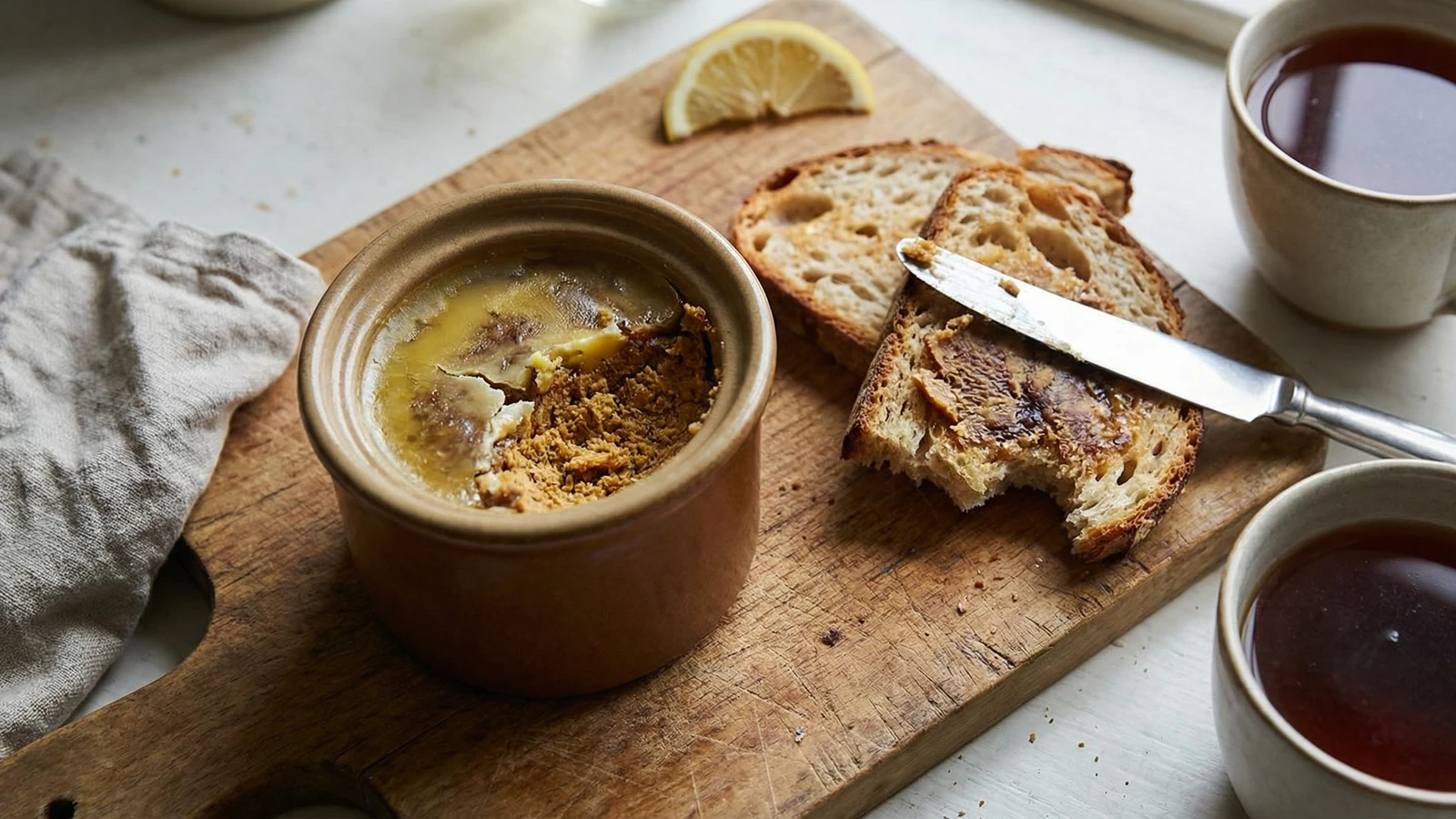
Smoked herring pounded with butter, lemon, and a thread of cayenne into something pungent and deeply savoury, potted under clarified butter the way they've done it in Yarmouth for two hundred years.
The smell hits you first. Not the polite, clean smoke of a kipper, but something lower and wilder, the kind of smell that fills a room and divides opinion. A bloater is a herring smoked whole, guts and all, and that's what gives it the gamey, almost fermented depth that no other smoked fish can touch. If kippers are the well-mannered cousin, bloaters are the one who tells stories that make the table go quiet.
Bloater paste was once as ordinary as Marmite. Every fishmonger's window in the east of England had a pot of it. Yarmouth built a whole industry around these fish, and for a century or more, a small pot of bloater paste on the tea table was simply what you had with toast. It's nearly gone now. The smokehouses have closed, the bloaters are hard to find, and the taste has slipped out of living memory for most people. That feels like a loss worth resisting.
The making of it is nothing complicated. You skin and bone the bloaters, pound the flesh with good butter, sharpen it with lemon and cayenne, and press it into a pot. Fifteen minutes of work. The result is something rich, salty, smoky, and utterly unlike anything you can buy. Spread it thinly on hot toast. A little goes a long way. There are few better feelings than putting something this honest in front of someone who has never tasted it and watching them try to place the flavour.
I wrote it down in the notebook last winter: bloaters, butter, cayenne, Tuesday. Cold rain outside. This is that kind of food. Right food, right evening.
Quantity
2 whole
whole smoked herring
Quantity
80g, plus 40g for sealing
softened
Quantity
half a lemon
juiced
Quantity
good pinch
Quantity
pinch
Quantity
to taste
freshly ground
Quantity
to serve
| Ingredient | Quantity |
|---|---|
| bloaterswhole smoked herring | 2 whole |
| unsalted buttersoftened | 80g, plus 40g for sealing |
| lemon juicejuiced | half a lemon |
| cayenne pepper | good pinch |
| ground mace | pinch |
| black pepperfreshly ground | to taste |
| hot toast or good bread (optional) | to serve |
Lay the bloaters on a board. They'll smell extraordinary, somewhere between bonfire smoke and the sea, richer and more animal than a kipper. Slit each one along the belly and open them out flat. Pull away the backbone and as many of the smaller bones as you can manage, working with your fingers and a knife tip. Peel off the skin. It should come away in sheets. You'll be left with soft, amber-gold flakes of fish. Don't worry about the odd small bone. They'll break down in the pounding.
Put the bloater flesh into a mortar, or a bowl if you're using the back of a fork. Add the softened butter and start working them together. A pestle and mortar gives the best texture, rough and spreadable with a bit of character left in it. A fork will do the job, just takes longer. You want the fish and butter to become a cohesive paste, but not smooth like something from a factory. Keep some texture. That's where the pleasure is.
Add the lemon juice, cayenne, mace, and a few grinds of black pepper. Mix through. Now taste it on a scrap of bread or toast. The lemon should cut through the richness without dominating. The cayenne should be there as warmth at the back of the throat, not heat. The mace is quiet, old-fashioned, and exactly right. Adjust until it tastes like something you'd want to eat standing at the kitchen counter with a glass of cold white wine. Season and taste. Then taste again.
Press the paste firmly into a small pot, a ramekin, or a couple of small jars, smoothing the top with the back of a spoon. Melt the remaining butter gently in a small pan until it foams, then let it settle. Pour the clear golden butter over the top of the paste, leaving the milky solids behind. This seal of clarified butter keeps the air out and the paste good for days. Refrigerate until the butter sets.
1 serving (about 73g)
Culinary guides, cultural storytelling, and the editorial depth that makes cooking meaningful.
Discover Culinary ExplorerChef Thomas
A board of good cheddar, thick ham, proper pickle, hard-boiled eggs, and crusty bread. Not cooking so much as assembling with conviction, and one of the finest lunches the English kitchen has ever produced.

Chef Thomas
Puff pastry twisted with anchovy and Parmesan, baked until golden and shattering and salty, the kind of thing you put out with drinks that disappears before anyone sits down.

Chef Thomas
Fresh oysters wrapped in crisp streaky bacon and grilled until the salt of the sea meets the smoke of the cure, served on hot buttered toast the way the Victorians intended, only simpler and at home.

Chef Thomas
Boiled eggs wrapped in a dark, spiced coat of sausage meat and crumbled black pudding, fried to a deep gold. The kind of thing you eat standing up in the kitchen, still warm, with mustard on your thumb.