
Chef Dean
Antipasto Skewers
The abundance of an Italian antipasto platter captured on a single pick: folded salami, sharp provolone, briny olives, and tender artichoke hearts, finished with fresh basil and a bright olive oil drizzle.
A cooking platform built around craft, culture, and the stories behind what we eat.
Created by
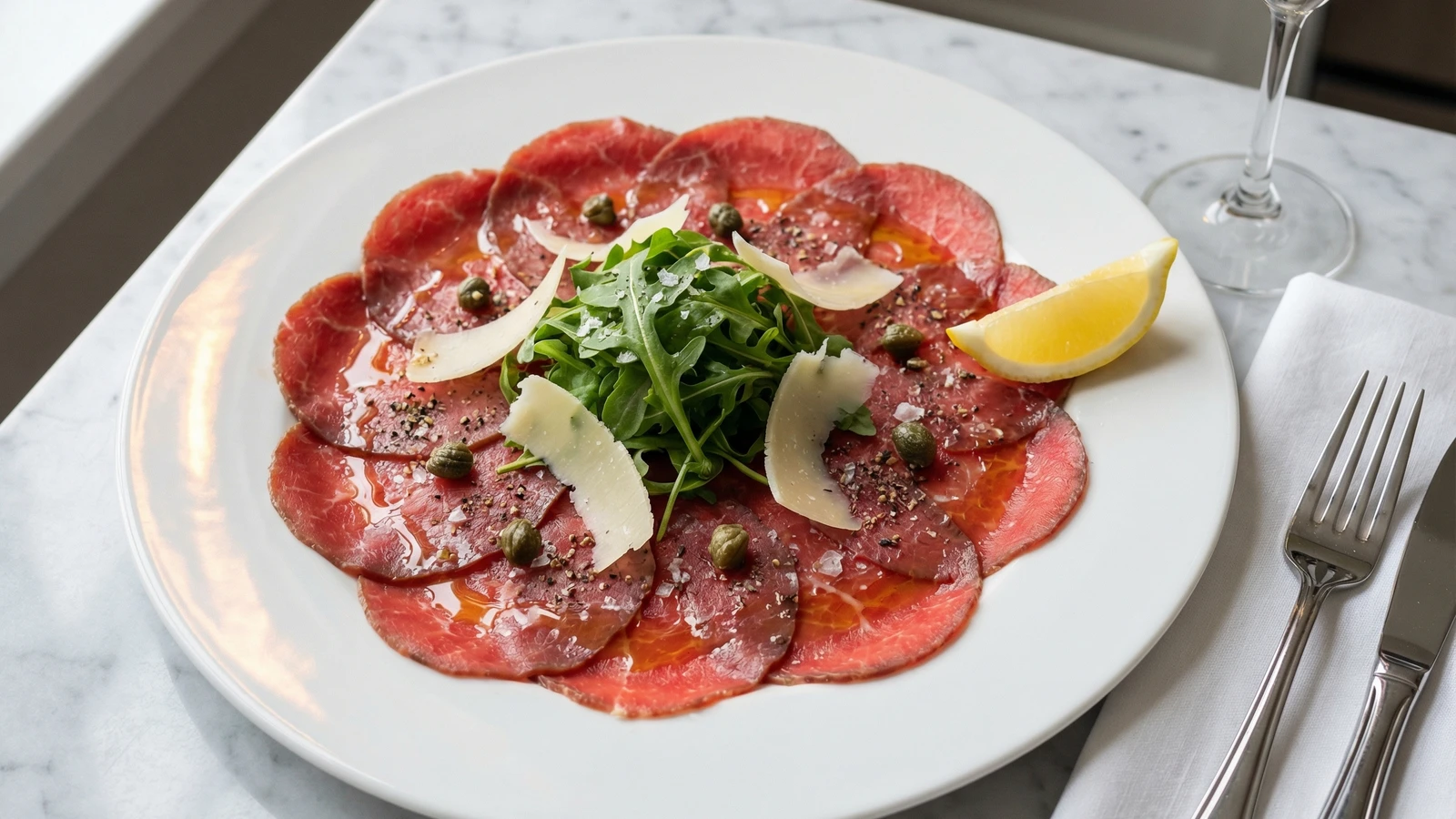
Silky slices of raw beef tenderloin dressed in the Venetian style with extra-virgin olive oil, bright lemon, peppery arugula, and snow-white shards of aged Parmesan. This is elegance that requires no cooking at all.
Giuseppe Cipriani invented this dish at Harry's Bar in Venice in 1950. A countess needed to eat raw meat on doctor's orders, and Cipriani, ever the gentleman, refused to serve her something ugly. He sliced beef tenderloin thin as parchment, dressed it simply, and named it after the Renaissance painter Vittore Carpaccio, whose reds and whites the plate resembled. The dish conquered fine dining within a decade.
What makes carpaccio remarkable is its honesty. There's nowhere to hide. The beef must be impeccable, the olive oil fruity and fresh, the lemon sharp, the Parmesan properly aged. You're not cooking anything. You're curating an arrangement of perfect ingredients and trusting them to speak.
For New Year's gatherings, carpaccio solves problems most appetizers create. It demands attention during preparation, then asks nothing of you during the party. Slice the beef in the morning. Arrange the plates an hour before guests arrive. Dress them at the last moment. You'll look like you spent hours in the kitchen when you spent twenty minutes, most of it enjoying the meditative rhythm of slicing.
I've served this to hundreds of guests over the years. The reaction never varies. People lean in, admire the translucent ruby sheets, take their first bite, and fall silent. That silence is the highest compliment a cook can receive.
Quantity
1 pound
trimmed of all fat and silverskin
Quantity
4 tablespoons, plus more for drizzling
Quantity
2
juiced
Quantity
4 ounces
in one piece for shaving
Quantity
4 cups
Quantity
2 tablespoons
rinsed and drained
Quantity
to taste
Quantity
to taste
freshly cracked
| Ingredient | Quantity |
|---|---|
| beef tenderloin, center cuttrimmed of all fat and silverskin | 1 pound |
| extra-virgin olive oil | 4 tablespoons, plus more for drizzling |
| lemonsjuiced | 2 |
| Parmigiano-Reggianoin one piece for shaving | 4 ounces |
| baby arugula | 4 cups |
| capersrinsed and drained | 2 tablespoons |
| flaky sea salt | to taste |
| black pepperfreshly cracked | to taste |
Wrap the trimmed tenderloin tightly in plastic wrap, pressing out all air to form a compact cylinder. Place in the freezer for 1 to 2 hours until the meat is firm but not frozen solid. You're looking for the texture of a very cold stick of butter. Press the center with your finger: it should resist but give slightly. Frozen too hard, the meat will shatter when sliced. Not firm enough, and your slices will tear and bunch.
Unwrap the chilled tenderloin and place it on a cutting board. Using your sharpest knife (a long slicing knife works best), cut against the grain into slices no thicker than an eighth of an inch. Work steadily and confidently. Single long strokes produce cleaner cuts than sawing motions. If the beef begins to soften and stick to your blade, return it to the freezer for ten minutes. Arrange each slice flat on a sheet of parchment paper as you work, slightly overlapping if needed.
This step separates good carpaccio from great. Lay a single layer of beef slices on a large sheet of plastic wrap. Cover with another sheet. Using a meat mallet or the bottom of a small heavy pan, gently pound the beef until nearly translucent. You should almost be able to read a newspaper through it. Work from the center outward with light, even strokes. The meat should spread but not tear. Repeat with remaining slices.
Peel the pounded beef from the plastic and arrange in a single overlapping layer on chilled plates, covering the surface completely. The slices should lie flat with no wrinkles or folds. If preparing ahead, cover each plate tightly with plastic wrap, pressing it directly against the surface of the meat to prevent oxidation. Refrigerate for up to 4 hours.
In a small bowl, whisk together the olive oil and lemon juice until emulsified, about 30 seconds of vigorous whisking. The mixture should look slightly creamy and unified, not separated. Season with a pinch of salt. Taste it. The balance should lean toward brightness from the lemon with the oil providing body and richness. Adjust as needed. This dressing won't hold, so make it just before serving.
Remove the plates from the refrigerator and uncover them. Drizzle the lemon-oil dressing evenly over each portion of beef, using a spoon to distribute it in thin streams. Scatter a small handful of arugula in the center of each plate, leaving a border of beef visible. Using a vegetable peeler, shave long curls of Parmesan over the arugula. Distribute the capers among the plates. Finish with flaky salt and several grinds of black pepper. Serve immediately.
1 serving (about 35g)
Culinary guides, cultural storytelling, and the editorial depth that makes cooking meaningful.
Discover Culinary ExplorerChef Dean
The abundance of an Italian antipasto platter captured on a single pick: folded salami, sharp provolone, briny olives, and tender artichoke hearts, finished with fresh basil and a bright olive oil drizzle.

Chef Dean
Shattering golden shells give way to creamy risotto and stretchy mozzarella centers, served with a bright, garlicky marinara that cuts through the richness. Sicilian street food elevated to dinner party status.

Chef Ally
A warm Piedmontese bath of melted garlic, butter, and anchovies for dipping whatever the market offers today. Communal, primal, and impossible to stop eating.
Chef Dean
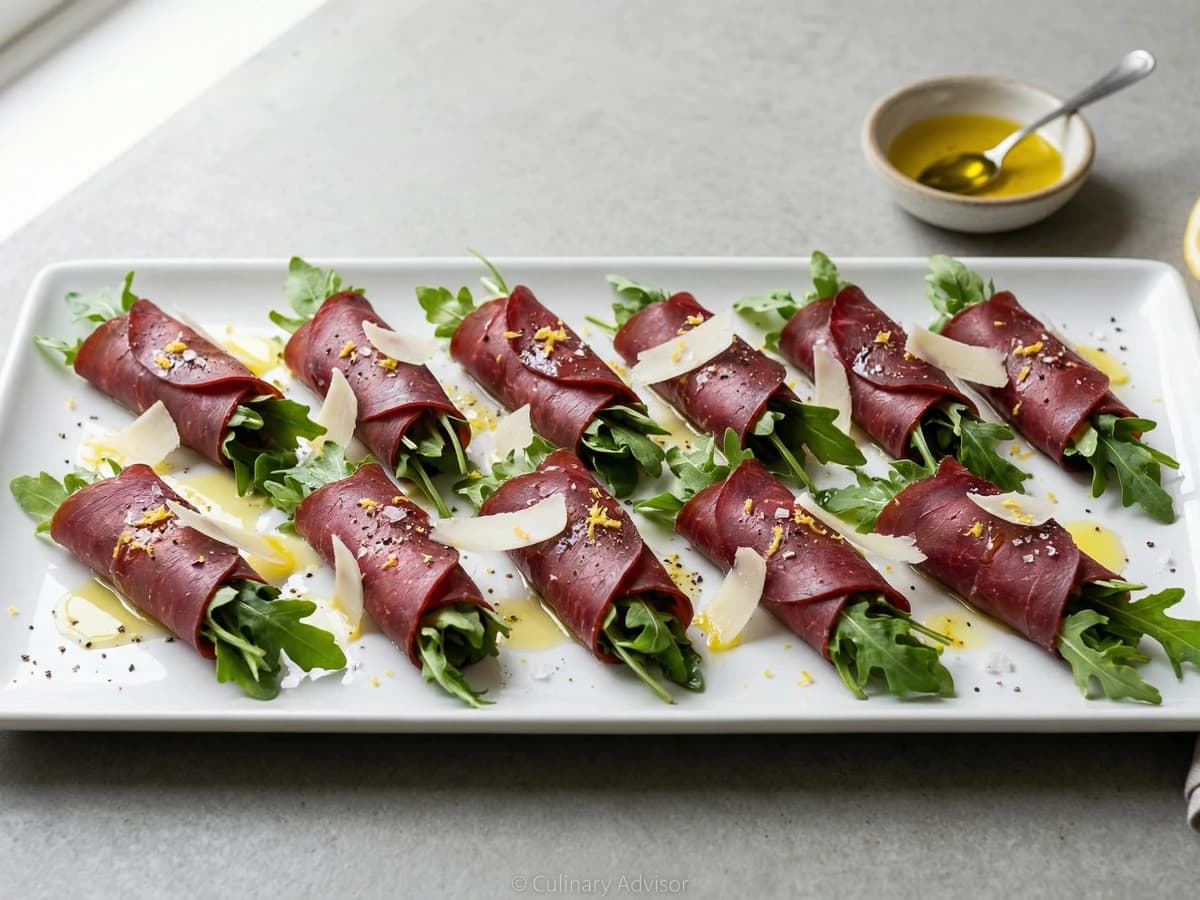
Silky ribbons of air-cured beef embrace wild arugula, crowned with shaved Parmesan and bright lemon. This is the elegant Italian appetizer that requires no cooking, only confidence and quality ingredients.