Chef Joost
Aardappelgratin
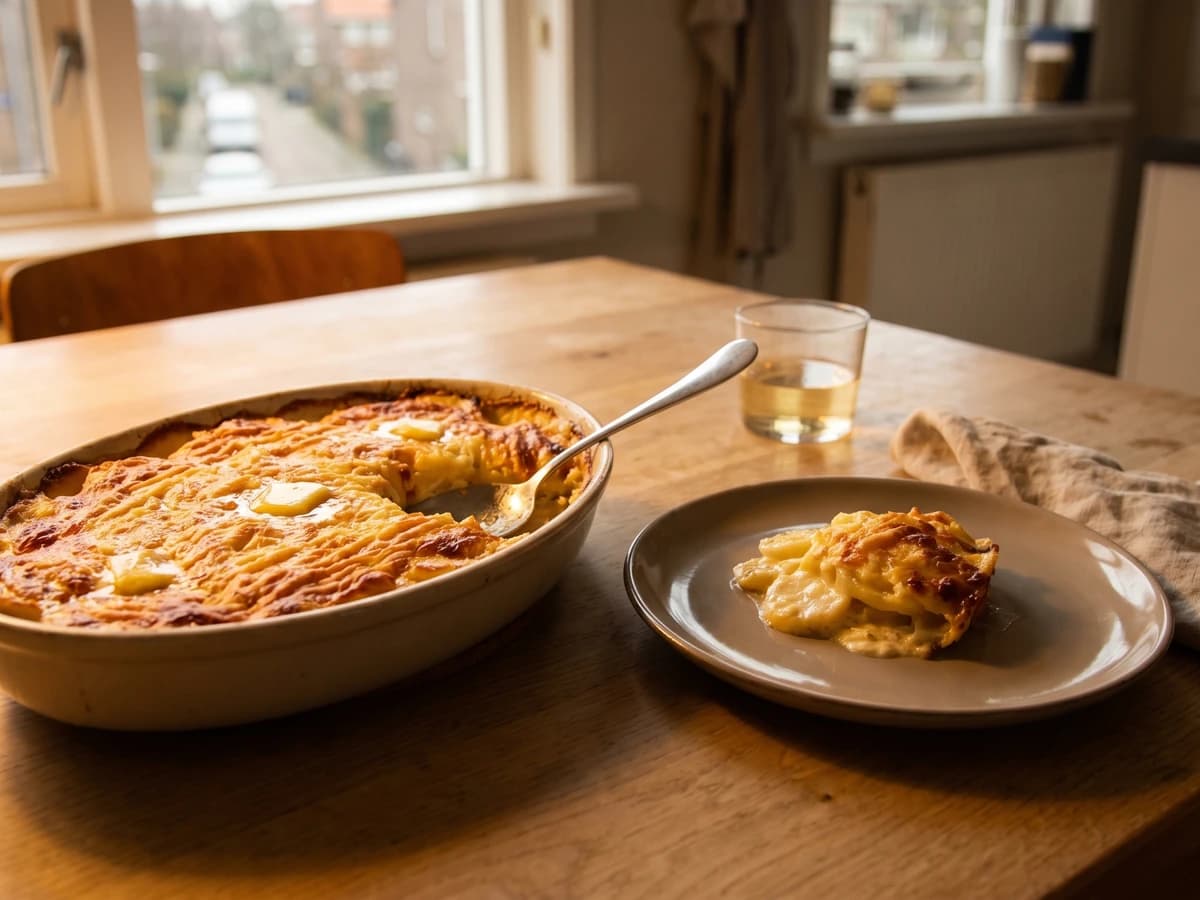
A French name, a Dutch potato, and a Sunday table: aardappelgratin is what happens when a frugal kitchen borrows richness and behaves as if it had always belonged.
A cooking platform built around craft, culture, and the stories behind what we eat.
Created by
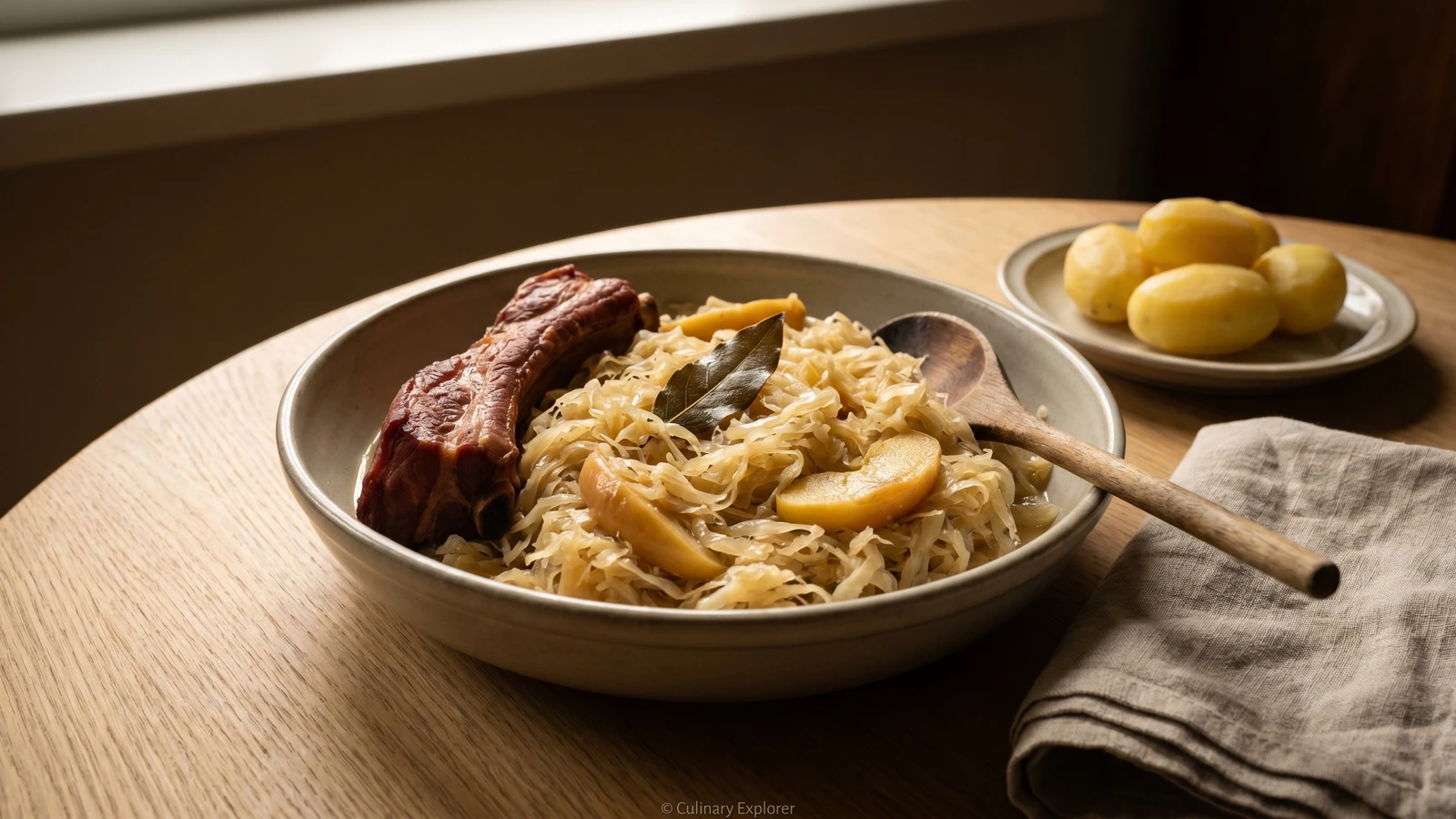
Before zuurkool hid beneath potatoes, it was the sharp winter side that made smoked pork behave: sour cabbage, bay leaf, apple, and patience from the fermenting crock.
In my grandmother's second notebook, the page for zuurkool is one of the plainest. No flourish, no little drawing, only cabbage, bay, smoked rib, and the instruction: laat rustig gaar worden, let it become done quietly. That is almost the whole Dutch kitchen in five words. We have never trusted drama when a lidded pan can do the work.
The name already tells you: zuur is sour, kool is cabbage. It sounds blunt because it is. But let me tell you a secret: before zuurkool vanished under mashed potatoes as stamppot, it stood on the table as its own sharp, lively side, the thing that cut through fat pork and made boiled potatoes taste awake. The ferment was winter's little rebellion, cabbage refusing to die politely in the cellar.
History and cookery, they cannot be separated here. Salted cabbage ferments by lactic acid, the same quiet chemistry that kept northern households fed when the fields were hard and the fresh garden was only a memory. Do not rinse away its character unless it bites like vinegar. Saute a little onion, tuck in bay and smoked rib, then let the pan murmur until the acid softens and the smoke moves through every strand. Hou het altijd simpel, always keep it simple: sour, smoke, patience.
Zuurkool is the Dutch name for lacto-fermented white cabbage, literally sour cabbage, and it belonged to the northern winter larder long before refrigeration made fresh vegetables routine. The cabbage culture behind it was especially strong in the Langedijk district of Noord-Holland, where Broek op Langedijk opened its sail-through vegetable auction in 1887, moving great loads of cabbages by boat straight through the auction hall. The familiar zuurkoolstamppot made the ferment famous, but older household practice also served it separately with smoked pork, where its acidity balanced the fat rather than disappearing into potatoes.
Quantity
750g
drained but not rinsed
Quantity
1 tablespoon
Quantity
1 small
thinly sliced
Quantity
1
peeled, cored, and diced
Quantity
300g rib or 150g bacon
Quantity
1
Quantity
4
lightly crushed
Quantity
150ml
Quantity
to taste
Quantity
only if needed
| Ingredient | Quantity |
|---|---|
| sauerkraut (zuurkool)drained but not rinsed | 750g |
| butter or rendered bacon fat | 1 tablespoon |
| onionthinly sliced | 1 small |
| tart applepeeled, cored, and diced | 1 |
| smoked cooked pork rib (gerookt ribbetje) or smoked bacon | 300g rib or 150g bacon |
| bay leaf | 1 |
| juniper berries (optional)lightly crushed | 4 |
| water or dry white wine | 150ml |
| freshly ground black pepper | to taste |
| salt (optional) | only if needed |
Put the zuurkool in a colander and press out only the loose brine. Taste it. If it is sharply sour in the mouth, rinse one handful under cold water and mix it back through the rest; do not wash the whole lot clean, because the acid is the point. Cut any very long strands once or twice so they sit politely on the fork.
Melt the butter or bacon fat in a heavy pan over medium-low heat. Add the onion and cook for 6 to 8 minutes, stirring now and then, until soft and pale but not browned. Add the diced apple and cook for 2 minutes more, just until it begins to give up a little juice.
Add the drained zuurkool, bay leaf, juniper berries if using, and a few turns of black pepper. Toss everything through the onion and apple, then nestle the smoked rib into the cabbage and pour in the water or wine. You want liquid just visible at the edges, not a soup. The cabbage must stew, not swim.
Cover the pan and let the zuurkool cook very gently for 35 to 45 minutes, stirring once or twice and adding a small splash of water if the bottom goes dry. The cabbage is ready when the strands are tender but still distinct, the apple has softened into the background, and the smoke has moved through the pan without bullying the sourness.
Lift out the rib. If there is meat on it, slice or pull it off the bone and fold it back through the cabbage, or serve it on top for the person who has been hovering nearest the stove. Remove the bay leaf, taste, and add salt only if needed. Serve beside boiled potatoes, brown bread, or pork chops, and remember that this was a side dish before it ever became a mash.
1 serving (about 300g)
Culinary guides, cultural storytelling, and the editorial depth that makes cooking meaningful.
Discover Culinary ExplorerChef Joost
A French name, a Dutch potato, and a Sunday table: aardappelgratin is what happens when a frugal kitchen borrows richness and behaves as if it had always belonged.
Chef Joost
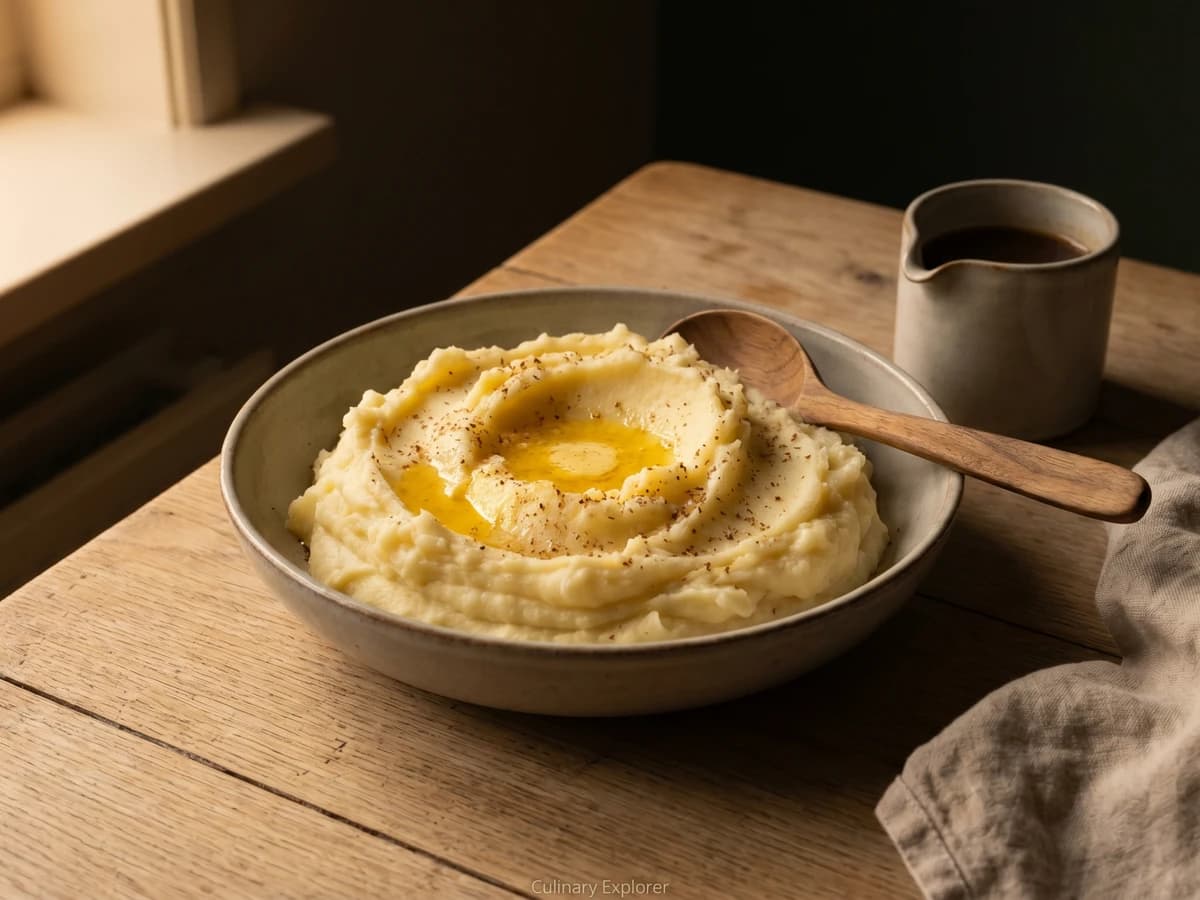
Aardappelpuree is the quiet heart of the Dutch AVG'tje: floury potatoes, warm milk, butter, nutmeg, and a small kuiltje, little well, built for the jus.

Chef Joost
Flower cabbage under old Gouda sauce: the quiet Dutch side dish that turns one boiled vegetable into the reason everyone reaches for the spoon twice.

Chef Joost
White beans peeking through green snijbonen give this old Dutch side its nursery-table joke: bare little children in the grass, sweet garden thrift with butter, nutmeg, and no apology.