Chef Graziella
Minestrone alla Milanese
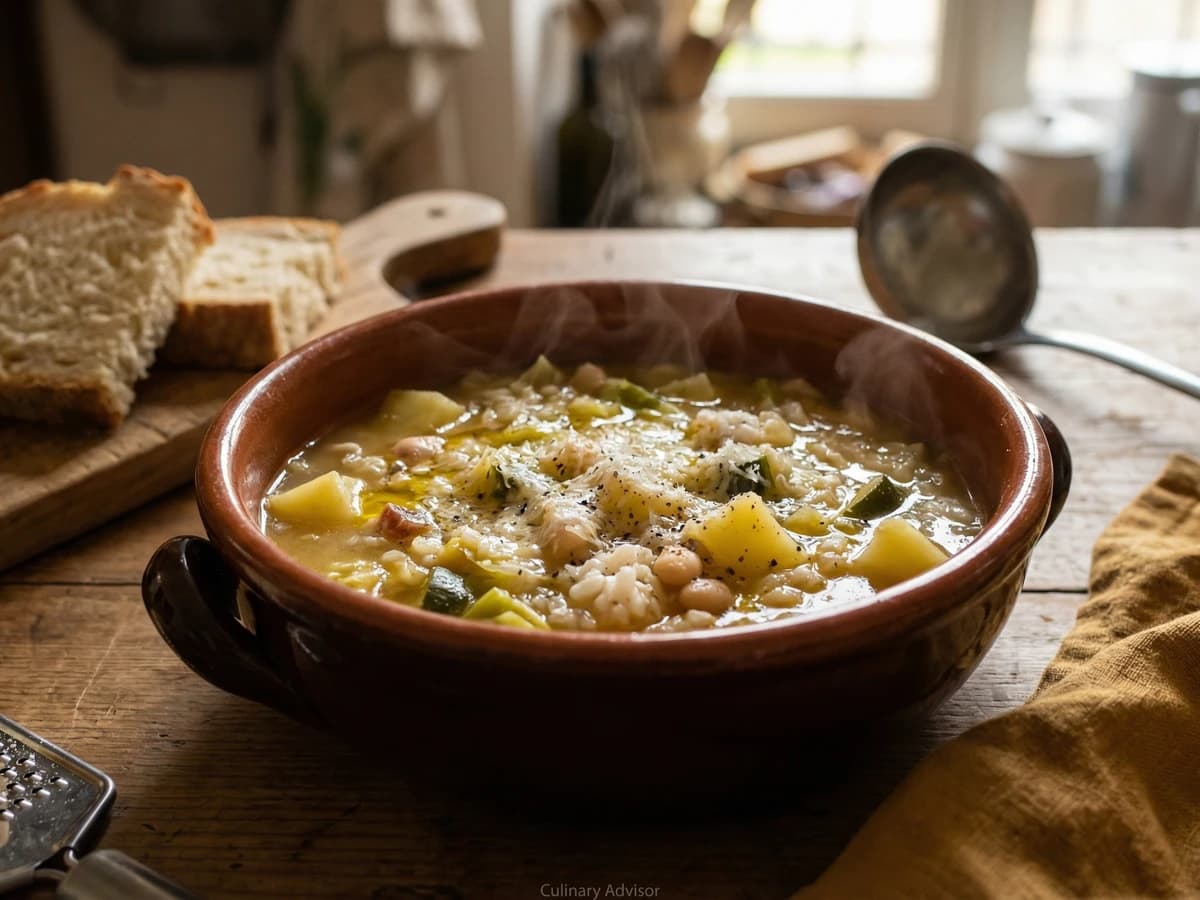
Milan's definitive vegetable soup, finished with rice and enriched with pancetta. Not the thin broth Americans call minestrone, but a substantial bowl that stands as a meal.
A cooking platform built around craft, culture, and the stories behind what we eat.
Created by
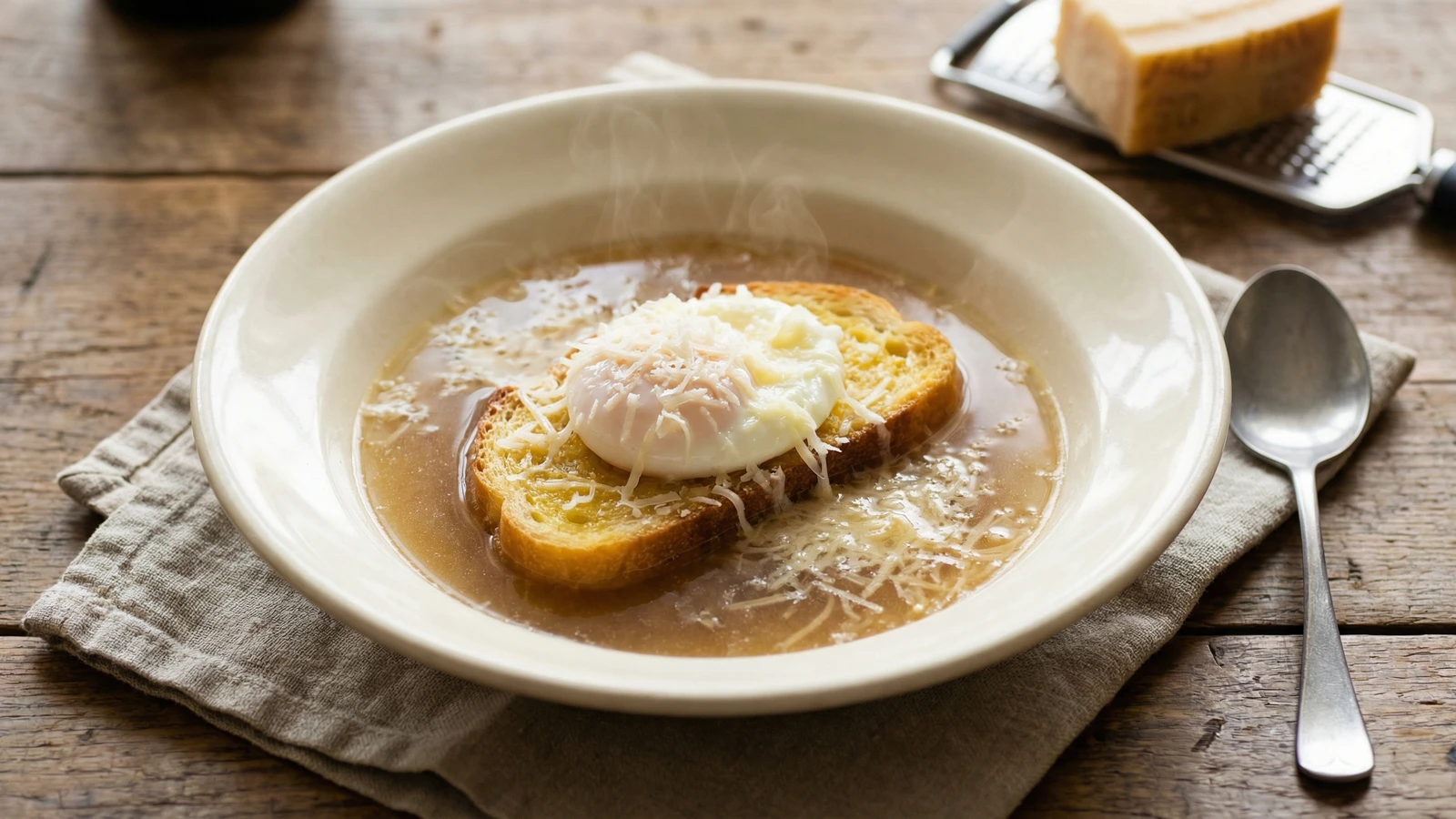
The soup that sustained a defeated king: nothing but toasted bread, a trembling egg, and broth hot enough to barely set it. Lombardy's proof that desperation can create genius.
This is a soup of three ingredients, which means there is no room for error. The broth must be homemade, deeply flavored, and hot enough to cook a raw egg through the sheer force of its temperature. The bread must be stale, not fresh, toasted in butter until golden. The egg must be fresh enough that the white clings tight to the yolk and sets into a delicate veil when the broth hits it.
Americans want to add things. They see three ingredients and assume something is missing. Nothing is missing. What you keep out is as significant as what you put in. A clove of garlic would be an intrusion. Herbs would muddy the purity. This soup exists to prove that restraint is not limitation.
The technique requires speed and confidence. The broth must be at a rolling boil when you ladle it. The bowls should be warmed. The egg goes onto the bread, the broth goes over the egg, and within 30 seconds you are at the table. There is no holding this soup. There is no making it ahead. You make it and you eat it, in that order, without delay.
The legend places this soup at the Battle of Pavia in 1525, where King Francis I of France, captured and starving after his defeat by Charles V's forces, was fed by a peasant woman who had only bread, eggs, and broth. Whether the story is true matters less than what it teaches: greatness does not require wealth. It requires understanding what you have and using it perfectly.
Quantity
8 cups
completely fat-free and clear
Quantity
4 slices
cut 3/4-inch thick
Quantity
4 tablespoons
Quantity
4 large
the freshest you can find
Quantity
1 cup
freshly grated
Quantity
to taste
| Ingredient | Quantity |
|---|---|
| homemade beef brothcompletely fat-free and clear | 8 cups |
| stale country breadcut 3/4-inch thick | 4 slices |
| unsalted butter | 4 tablespoons |
| eggsthe freshest you can find | 4 large |
| Parmigiano-Reggianofreshly grated | 1 cup |
| kosher salt | to taste |
Bring the beef broth to a full boil in a saucepan, then reduce to maintain a vigorous simmer. The broth must be very hot, at least 200°F, or the eggs will not set properly. Taste and adjust salt. The broth should be deeply flavored because it carries the entire dish. If your broth is weak, the soup will be weak. There is nowhere to hide.
Melt one tablespoon of butter in a skillet over medium heat. When the foam subsides, add one slice of bread and toast until golden on both sides, about 2 minutes per side. The bread should be crisp at the edges but still have some give at the center. Repeat with remaining butter and bread slices. Place one slice in the bottom of each of four warmed soup bowls.
Working quickly now, crack one egg directly onto each slice of toasted bread. The yolk must remain intact. Do not break it. If you cannot crack an egg cleanly, practice until you can. This is elementary technique.
Bring the bowls to the stove. Ladle the boiling broth around the edges of the bread first, allowing the heat to begin setting the egg white from the sides. Then carefully pour broth over the top of the egg. The white should turn opaque while the yolk remains liquid beneath its thin veil of cooked white. Use approximately 2 cups of broth per bowl.
Scatter a generous amount of grated Parmigiano-Reggiano over each bowl. Serve immediately. The soup waits for no one. When the spoon breaks the yolk, it should run golden into the broth. If it does not, your broth was not hot enough or you waited too long. Next time, work faster.
1 serving (about 550g)
Culinary guides, cultural storytelling, and the editorial depth that makes cooking meaningful.
Discover Culinary ExplorerChef Graziella
Milan's definitive vegetable soup, finished with rice and enriched with pancetta. Not the thin broth Americans call minestrone, but a substantial bowl that stands as a meal.
Chef Juliette
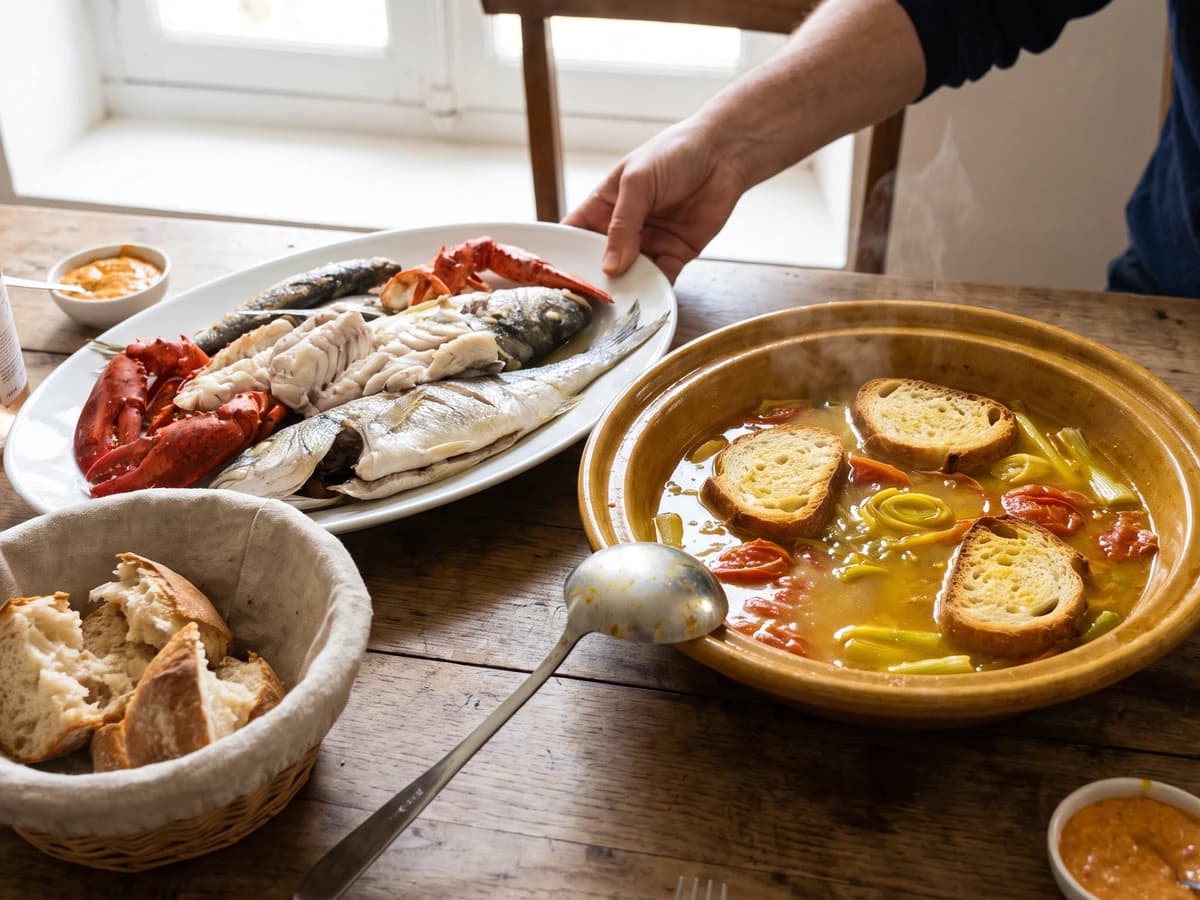
Marseille's great fish stew, saffron-gold and garlic-scented, proves that a hard boil can be the careful choice: it binds olive oil into broth before the whole pot meets bread.
Chef Juliette
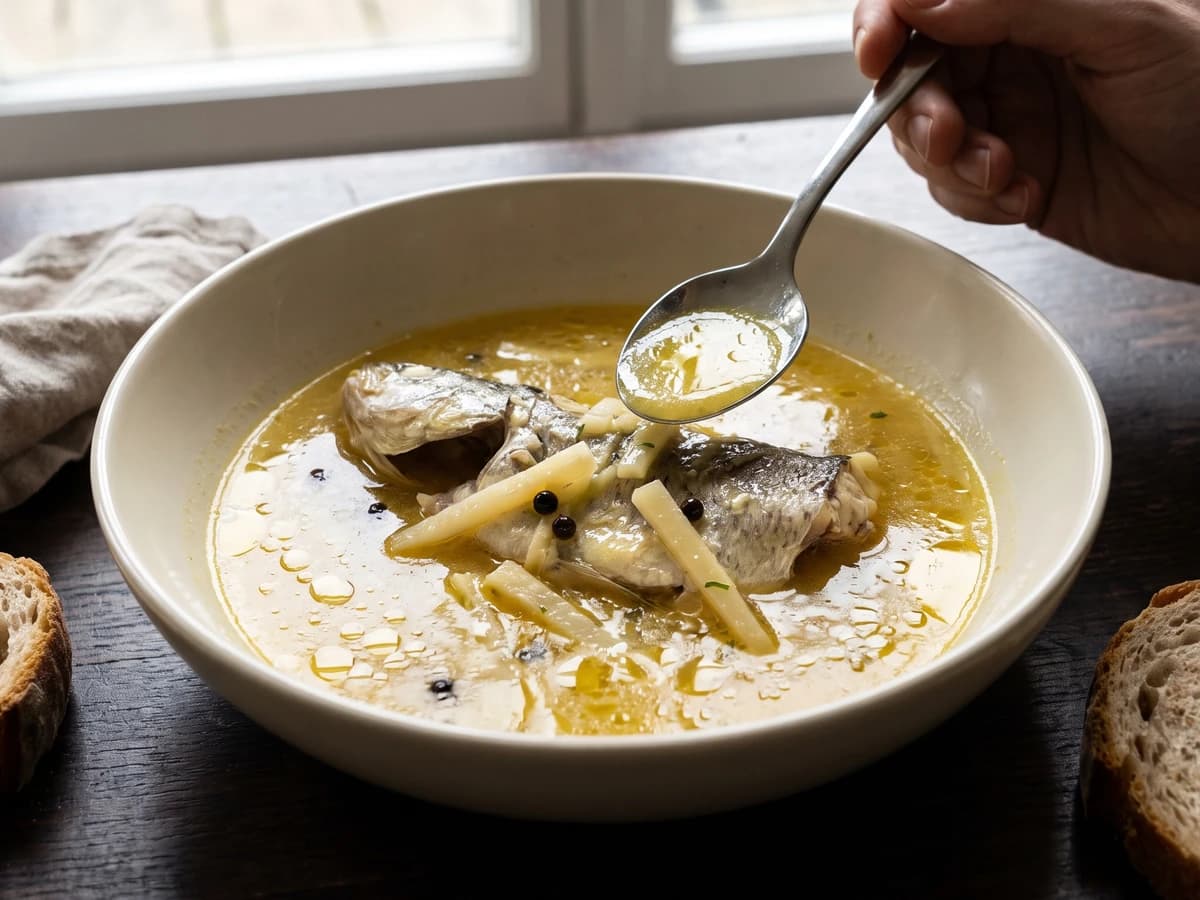
Waterzoi asks fresh, bone-in river fish to thicken its own buttery broth, with parsley root and pepper for company. No flour, no stockpot, just a brisk simmer watched closely.
Chef Juliette
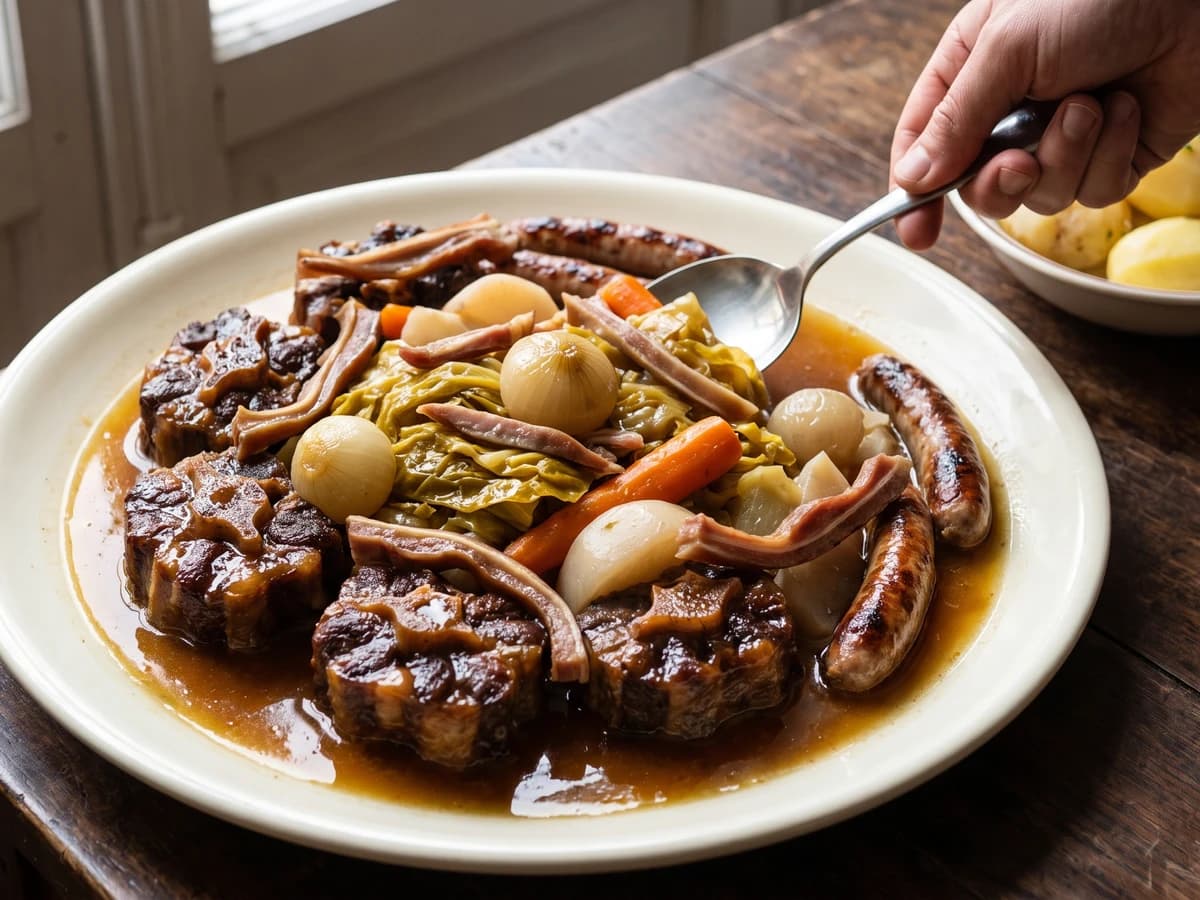
Queue de Bœuf en Hochepot gathers oxtail, pig's trotter and ear, cabbage, roots, and grilled chipolatas around a clear, gelatin-rich broth whose quiet simmer keeps every piece tender and distinct.