
Chef Takumi
Butadon (豚丼, Obihiro grilled pork rice bowl)
A good butadon is pork, rice, and a tare that catches at the edge of the grill. The trick is not heaviness. It is timing.
A cooking platform built around craft, culture, and the stories behind what we eat.
Created by
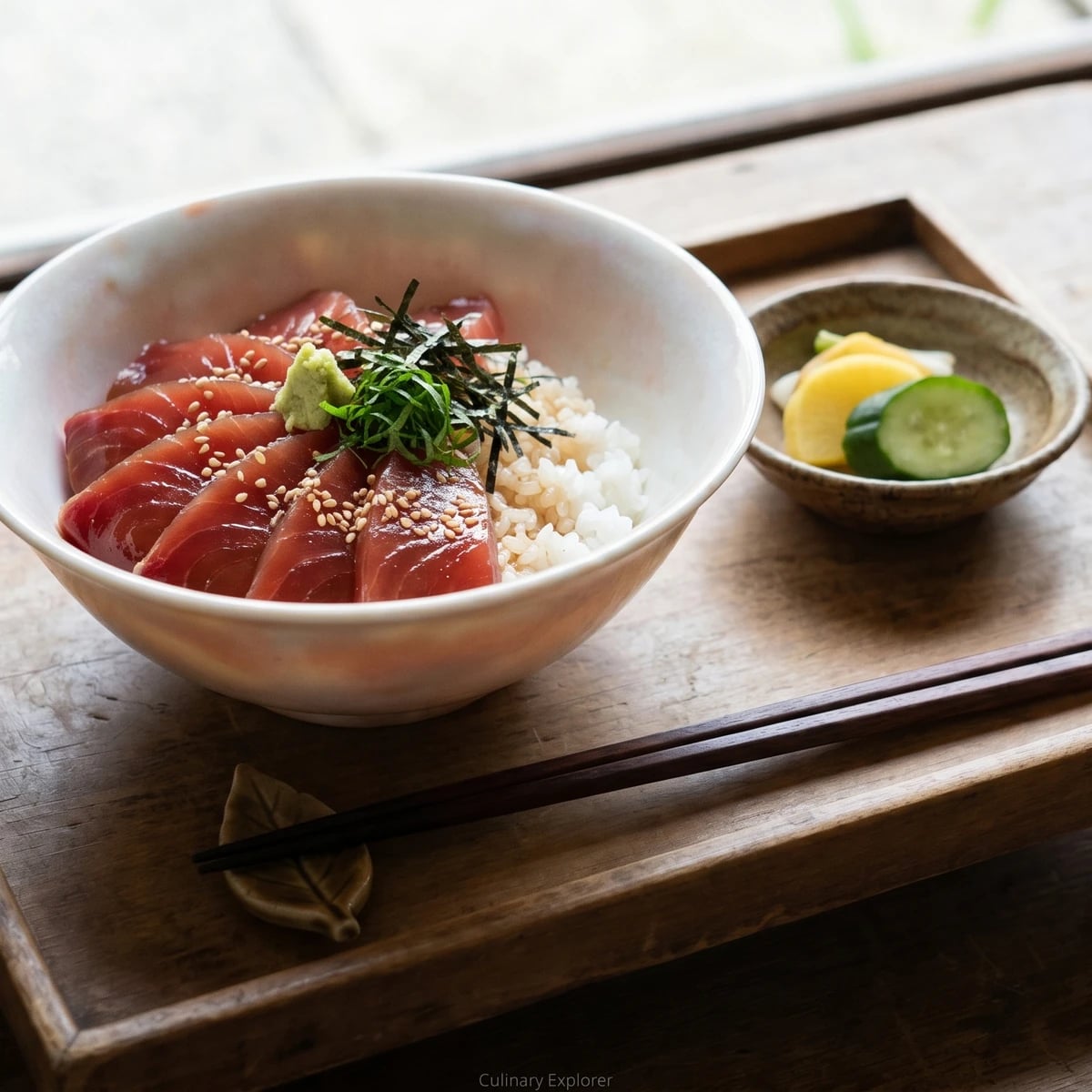
Zukedon is the weeknight answer to sashimi: good fish, a brief soy marinade, warm rice cooled enough to respect it, and a bowl that tastes composed without pretending to be grand.
Zukedon belongs to the day the fish is good. 旬 (shun), the ingredient at its prime, is not a date in a book here; it is the tuna at the counter, clean-smelling and glistening fresh, that the monger would eat raw. Once you have that, the bowl stops looking difficult. It is rice, a brief soy marinade, and a little restraint.
People call this a marinated sashimi bowl and then worry that marinade means hours. No. The first secret is brevity. We warm the mirin and sake to quiet the raw alcohol, cool them, add soy, and let the fish sit only long enough to take on a dark gloss. Ten minutes seasons. An hour cures. A clever trick becomes a salty mistake if you admire it too long.
The rice matters as much as the sauce. It should be freshly cooked and warm, never hot enough to tighten the slices and never cold enough to turn hard in the bowl. Zukedon belongs to the donburi table, comfort food held in both hands, but it carries an old Edomae intelligence: prepare the fish enough to steady it, then get out of its way. Nothing hidden. The one detail to watch is temperature: cool sauce, warm rice, cold fish.
Zuke was one of the standard Edomae preparations in nineteenth-century Edo, alongside simmering shellfish, salting, and vinegar-curing fish before modern refrigeration. Lean tuna, akami, was especially suited to a soy soak because it firmed cleanly and took on a polished color without needing a heavy topping. The donburi form carried the zuke method from sushi practice to everyday rice.
Quantity
1 rice-cooker cup (180ml, about 150g)
Quantity
200ml, or to your rice cooker's line
Quantity
300g
preferably lean akami, kept very cold
Quantity
3 tablespoons
Quantity
2 tablespoons
Quantity
2 tablespoons
Quantity
2
thinly sliced
Quantity
1/2 sheet
cut into fine strips
Quantity
1 teaspoon
Quantity
for serving
| Ingredient | Quantity |
|---|---|
| Japanese short-grain rice | 1 rice-cooker cup (180ml, about 150g) |
| water | 200ml, or to your rice cooker's line |
| sashimi-quality tuna (maguro)preferably lean akami, kept very cold | 300g |
| Japanese soy sauce (koikuchi shōyu) | 3 tablespoons |
| mirin | 2 tablespoons |
| sake | 2 tablespoons |
| shiso leavesthinly sliced | 2 |
| toasted noricut into fine strips | 1/2 sheet |
| toasted white sesame seeds | 1 teaspoon |
| grated wasabi (optional) | for serving |
Buy the fish the day you will serve it. Ask the fishmonger what came in today that they would eat raw; if the answer is uncertain, choose a cooked dish instead. The flesh should smell clean and faintly sweet, not strongly of the sea, and it should look glistening fresh. Keep it wrapped over ice or in the coldest part of the refrigerator until the rice and sauce are ready.
Rinse the rice in a bowl, changing the water until it runs almost clear, then drain for 10 minutes. Cook with the measured water in a rice cooker or heavy pot. When it is done, rest it 10 minutes, fluff gently, and let it sit uncovered for 5 minutes until warm. Hot rice tightens raw fish; cold rice turns firm and dull. You want the sweetness of fresh rice without heat pushing into the tuna.
In a small saucepan, bring the mirin and sake to a lively simmer for 60 to 90 seconds. This cooks off the raw edge of the alcohol so it doesn't bite at the fish. Take the pan off the heat, stir in the soy sauce, and pour the sauce into a shallow bowl to cool completely. Before any fish touches it, set aside 2 tablespoons of the cooled sauce in a clean dish for the rice.
Pat the tuna dry and set it on a chilled board if you can. Cut across the grain into 5mm slices with one long pull of a yanagiba, or the longest sharp knife you own. Wipe the blade when it feels sticky. A smooth cut gives the soy an even face to season; a sawn cut bruises the fish and catches the sauce in ragged edges.
Lay the tuna slices in a shallow nonreactive tray and pour the remaining cooled sauce over them. Turn once so both faces darken evenly, cover, and refrigerate for 8 to 12 minutes. Lift the fish out and let the excess sauce drip back into the tray. Discard the used marinade. Ten minutes seasons the fish; a long soak draws out moisture and makes it salty and firm.
Divide the warm rice between two donburi bowls. Spoon the reserved clean sauce over the rice, just enough to scent it. Fan five or seven tuna slices over each bowl, building a little height and leaving a crescent of rice visible. Finish with shiso, nori, sesame, and a small mound of wasabi. Serve at once, while the fish is cold and the rice is still warm.
1 serving (about 375g)
Culinary guides, cultural storytelling, and the editorial depth that makes cooking meaningful.
Discover Culinary Explorer
Chef Takumi
A good butadon is pork, rice, and a tare that catches at the edge of the grill. The trick is not heaviness. It is timing.

Chef Takumi
Chūkadon looks crowded, but its lesson is simple: cut everything first, cook it in order, then let a clear dashi sauce turn glossy around pork, seafood, and vegetables.

Chef Takumi
A Kansai rice bowl with no meat and no fuss: thin kamaboko, shiitake, and scallion simmered in clear dashi, then softly covered with egg over hot rice.

Chef Takumi
Fukagawadon is the old Tokyo fisherman's bowl: asari opened in dashi, miso stirred in gently, scallions softened, then everything ladled over hot rice, exact enough to taste of the bay.