Chef Lupita
Acúmara Tatemada al Comal
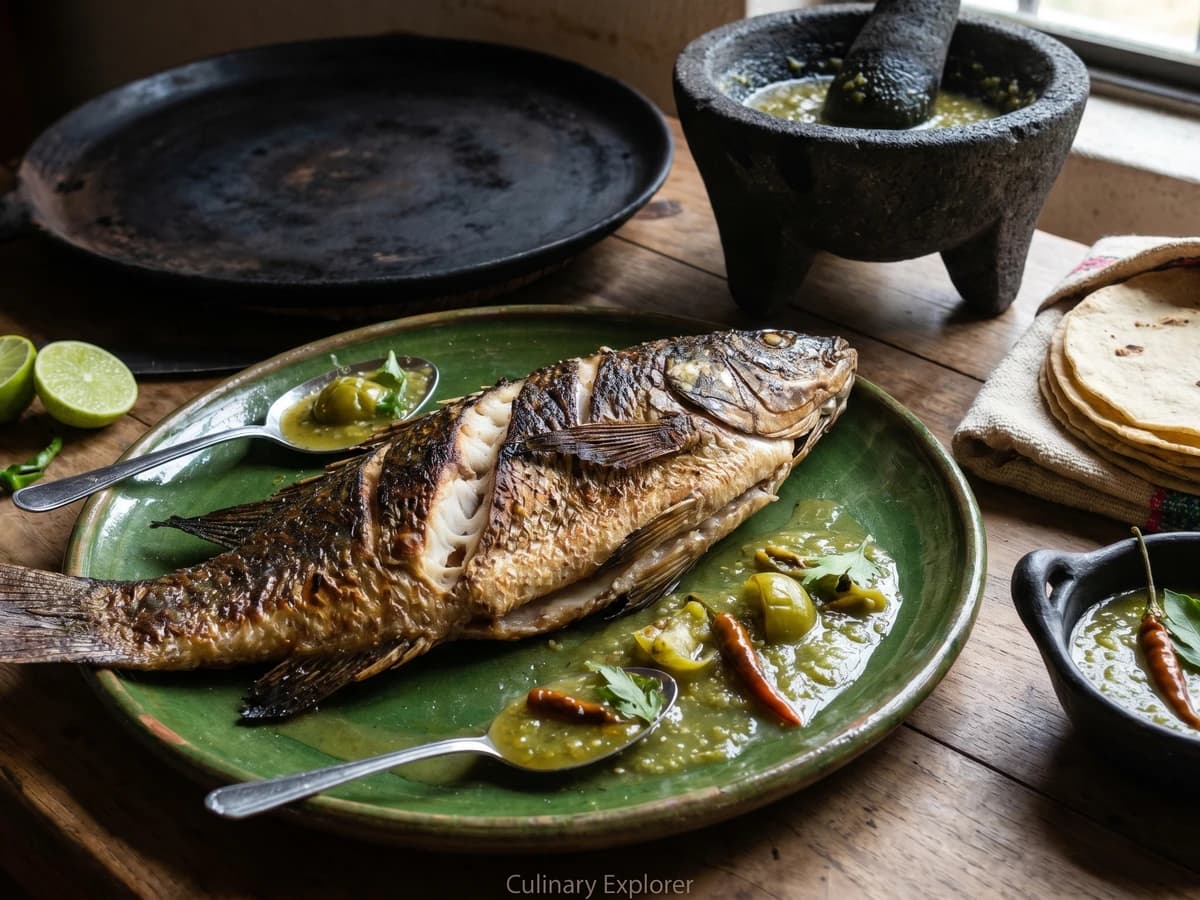
Michoacán's Lake Pátzcuaro acúmara, a whole kurucha from the lago tatemada on a comal de leña and served with chile perón atápakua, corn tortillas, and P'urhépecha discipline.
A cooking platform built around craft, culture, and the stories behind what we eat.
Created by
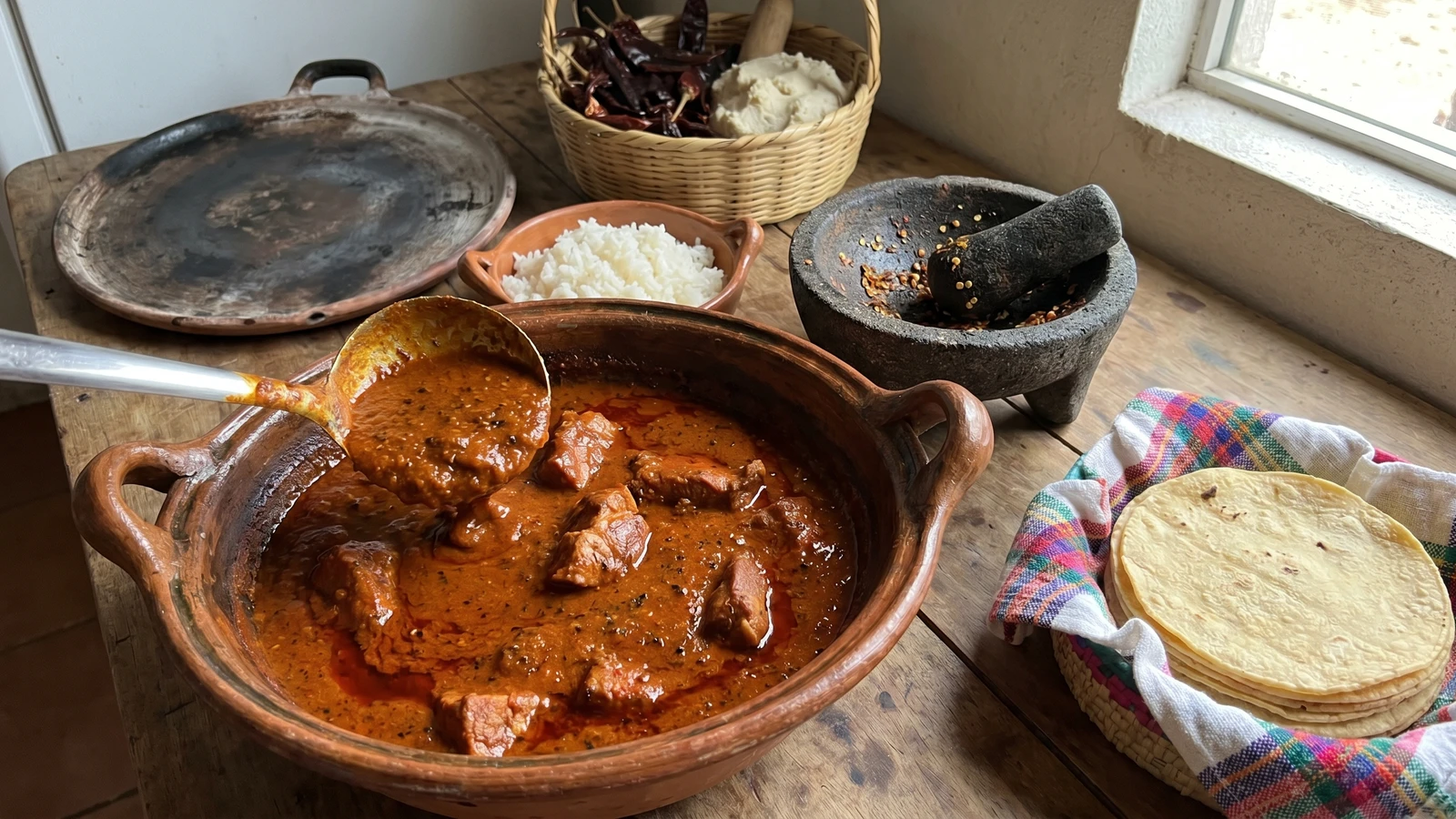
Chiapas's Zoque ninguijuti is pork simmered in a thick masa mole of chile chimborote, roasted tomato, garlic, and warm spices, the kind of dish made for fiestas, not for rushing.
Chiapas, the central Zoque region around Tuxtla Gutierrez, is where ninguijuti belongs. Not Puebla mole. Not Oaxaca mole. This is Zoque cooking: pork, corn masa, chile chimborote, roasted tomato, garlic, and spices worked into a sauce thick enough to cling to the meat and feed a table during a fiesta.
The chile that marks this dish is chile chimborote, a local Chiapas chile with dark fruit, earth, and a quiet heat. If your vendor in a Mexican mercado does not know it, ask the older chile women, not the teenager restocking plastic bags. Preguntale a las senoras del mercado. When chimborote is impossible to find, chile ancho with a little chile guajillo will stand in, but know what you are losing: the regional shadow of the sauce.
The masa is not a trick for thickening. It is the spine of the dish. Zoque cooks built this mole around corn because corn is not garnish in Mexico, it is structure. You dissolve fresh nixtamal masa into broth, then stir it into the chile base until the sauce turns glossy and heavy. No me vengas con atajos. Flour will thicken it, yes. It will also make it wrong.
I learned a version of this from a woman near the Tuxtla market who served it in a deep clay cazuela with white rice and warm corn tortillas wrapped in a cloth. She watched the pot like it owed her money. That is how you cook ninguijuti: low, steady, and with respect for the people who kept it alive. Cada estado, su propia cocina.
Ninguijuti is associated with the Zoque people of central Chiapas, especially the Tuxtla Gutierrez region, where pork entered Indigenous corn-and-chile cooking after the Spanish introduced pigs in the 16th century. The dish preserves an older Mesoamerican method of thickening sauces with nixtamal masa rather than wheat flour, tying the colonial ingredient, pork, to a pre-Columbian corn technique. Chile chimborote remains a regional marker in Chiapas cooking, one reason ninguijuti does not taste like the better-known moles of Puebla or Oaxaca.
Quantity
2 1/2 pounds
cut into 2-inch pieces
Quantity
1 pound
for broth
Quantity
8 cups
Quantity
1/2 medium
for the broth
Quantity
4
divided
Quantity
2
Quantity
1 tablespoon, plus more to taste
Quantity
6
stemmed and seeded
Quantity
2
stemmed and seeded
Quantity
2 medium
roasted
Quantity
1/4 medium
roasted for the sauce
Quantity
1/2 teaspoon
Quantity
3
Quantity
1/2 inch
Quantity
1/2 teaspoon
Quantity
1/4 teaspoon
Quantity
3 tablespoons
Quantity
1/2 cup
or masa harina mixed with 1/2 cup warm water
Quantity
2 cups, plus more as needed
Quantity
for serving
Quantity
for serving
| Ingredient | Quantity |
|---|---|
| pork loin or pork shouldercut into 2-inch pieces | 2 1/2 pounds |
| pork ribs or pork backbonefor broth | 1 pound |
| water | 8 cups |
| white onionfor the broth | 1/2 medium |
| garlic clovesdivided | 4 |
| bay leaves | 2 |
| kosher salt | 1 tablespoon, plus more to taste |
| dried chile chimborotestemmed and seeded | 6 |
| dried chile anchostemmed and seeded | 2 |
| Roma tomatoesroasted | 2 medium |
| white onionroasted for the sauce | 1/4 medium |
| whole black peppercorns | 1/2 teaspoon |
| whole cloves | 3 |
| Mexican cinnamon stick | 1/2 inch |
| dried Mexican oregano | 1/2 teaspoon |
| dried thyme | 1/4 teaspoon |
| manteca de cerdo | 3 tablespoons |
| fresh nixtamal masaor masa harina mixed with 1/2 cup warm water | 1/2 cup |
| reserved pork broth | 2 cups, plus more as needed |
| warm corn tortillas (optional) | for serving |
| white rice (optional) | for serving |
Put the pork pieces, pork ribs or backbone, water, 1/2 onion, 2 garlic cloves, bay leaves, and salt in a heavy pot. Bring to a gentle simmer and skim the gray foam during the first 15 minutes. Lower the heat and cook until the pork is tender but still holds its shape, about 1 hour. The bones are there for body. Lean pork alone gives you a thin broth, and ninguijuti needs strength.
Heat a dry comal over medium. Toast the chile chimborote and chile ancho one or two at a time, about 20 to 30 seconds per side, just until the skins darken slightly and smell deep and fruity. Do not blacken them. Burned chile turns the whole cazuela bitter, and there is no fixing that later.
Place the toasted chiles in a bowl and cover with hot water. Hot, not boiling. Let them soften for 20 minutes, then drain. Boiling water toughens the skins and can pull bitterness into the sauce. A serious mole starts before the blender.
On the same comal, roast the tomatoes, the 1/4 onion, and the remaining 2 garlic cloves until the tomatoes blister, the onion chars at the edges, and the garlic softens in its skin. Peel the garlic. The roasted tomato gives the sauce body and acidity, but it should not taste like tomato sauce. The chile and masa are in charge here.
Toast the black peppercorns, cloves, cinnamon, oregano, and thyme on the comal for 20 to 30 seconds, just until fragrant. Grind them in a molcajete or spice grinder. Spices this small burn fast, so keep your attention on the comal. La cocina no es decoracion, es trabajo.
Transfer the soaked chiles, roasted tomatoes, roasted onion, peeled garlic, ground spices, and 1 cup of the pork broth to a blender. Blend until completely smooth, longer than you think. If the blender struggles, add a little more broth. Strain through a fine-mesh sieve into a bowl, pressing hard on the solids. The sauce should be dark brick red and clean, not gritty.
Melt the manteca de cerdo in a wide clay cazuela or heavy Dutch oven over medium heat. Add the strained chile base carefully. It will sputter. Stir for 8 to 10 minutes, until the sauce darkens, thickens, and the fat begins to shine at the edges. La manteca es el sabor. Oil will cook the sauce, but lard gives it the taste of a Chiapas kitchen.
Whisk the fresh masa with 1 cup of warm pork broth until smooth and pourable. Strain it if there are lumps. Stir the masa mixture into the fried chile sauce in a slow stream, then add another cup of broth. Keep stirring as it thickens. This is where ninguijuti becomes itself: a corn-thickened mole, not a flour gravy and not chocolate sauce.
Lift the cooked pork from the broth and add it to the sauce. Add more broth until the sauce coats the meat generously but still moves in the pot. Simmer on low for 25 to 30 minutes, stirring often so the masa does not catch on the bottom. Taste for salt. The finished mole should cling to a spoon, glossy and heavy, with the flavor of chile first, corn underneath, and pork all the way through.
Rest the ninguijuti for 10 minutes before serving. Bring it to the table in the cazuela with warm corn tortillas and white rice. No cheddar. No sour cream. No lettuce pretending it was invited. This is Chiapas fiesta food. Asi se hace y punto.
1 serving (about 370g)
Culinary guides, cultural storytelling, and the editorial depth that makes cooking meaningful.
Discover Culinary ExplorerChef Lupita
Michoacán's Lake Pátzcuaro acúmara, a whole kurucha from the lago tatemada on a comal de leña and served with chile perón atápakua, corn tortillas, and P'urhépecha discipline.

Chef Lupita
Puebla's weekday adobo of pork shoulder braised in a thick guajillo and ancho sauce sharpened with vinegar, cumin, and clove. The deep red of a market spice stall, the dish a poblana cooks without thinking.

Chef Lupita
Loreto's pit-roasted clams, planted hinge-up in beach sand and tatemadas under a fast fire of dried romerillo brush, the resinous Baja desert shrub that gives this dish its smoke.

Chef Lupita
Oaxaca's eighth mole, the silky, almond-and-cinnamon almendrado, served over poached chicken. Mild, sweet, restrained, and a quiet rebuttal to anyone who thinks Mexican food has to be hot to be Mexican.