
Chef Joost
Bavarois met Frambozensaus
A French-Bavarian name, a Dutch party mould, and the quiet trick of gelatine: custard cooled just enough, cream folded gently, and a dessert made ahead like a host with sense.
A cooking platform built around craft, culture, and the stories behind what we eat.
Created by
The name says it plainly in Gronings: zoepen is buttermilk, brij is porridge, and together they make the northern clay's thriftiest little pudding.
Some dishes arrive with silver spoons. Zoepenbrij arrives with a work spoon, and I trust it more for that. In Groningen, where the clay is heavy and the farms were never sentimental about waste, buttermilk left from churning did not become an afterthought. It became breakfast, supper, and later a toetje, a dessert, because Dutch kitchens have always known that thrift can be sweeter than display.
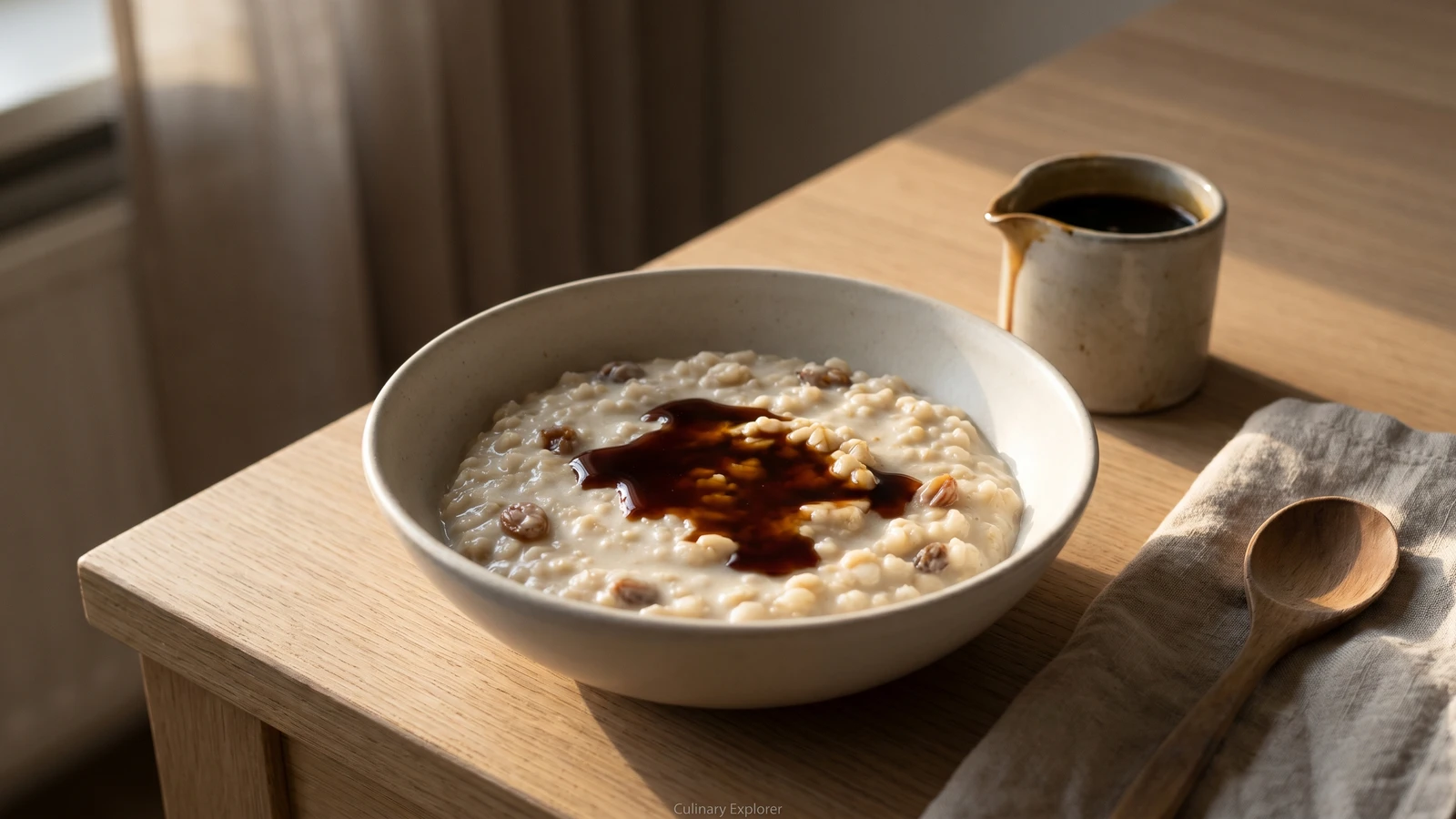
The name already tells you. Zoepen is Gronings for karnemelk, buttermilk, and brij is porridge, that old Dutch word for something soft enough to spoon and strong enough to keep you standing. Barley, or gort, swells slowly in the buttermilk until it turns creamy and pleasantly sour, while raisins give little dark interruptions of sweetness. But let me tell you a secret: the stroop is not decoration. It is the argument that finishes the dish, dark syrup against lactic tang, the northern farmyard finding its balance in one bowl.
Hou het altijd simpel. Soak the barley, cook it gently, stir often, and don't bully the buttermilk with hard boiling. Acid and haste are poor friends. You want a soft brij that still remembers the grain, not a paste pretending to be pudding. Serve it warm on a wet evening or cold the next day, when it sets firmer and slices the hunger out of an afternoon.
Zoepenbrij belongs to the Low Saxon-speaking north, especially Groningen, where zoepen denotes buttermilk and brij denotes a thick grain porridge. The dish reflects the farm economy of the nineteenth and early twentieth centuries, when churning butter left buttermilk in useful quantity and barley was a cheap, local grain that stored well through winter. Its move from farmhand breakfast to household dessert is typical of Dutch regional cookery: the practical dish survives because later generations discover it was good all along.
Quantity
150g
Quantity
1 liter
Quantity
50g
Quantity
1 tablespoon, plus more to taste
Quantity
1/4 teaspoon
Quantity
1 stick or 1/2 teaspoon
Quantity
to serve
| Ingredient | Quantity |
|---|---|
| pearl barley (gort) | 150g |
| buttermilk (karnemelk) | 1 liter |
| raisins | 50g |
| light brown sugar | 1 tablespoon, plus more to taste |
| fine salt | 1/4 teaspoon |
| cinnamon stick or ground cinnamon | 1 stick or 1/2 teaspoon |
| dark stroop or keukenstroop | to serve |
Put the pearl barley in a bowl, cover it with cold water, and leave it overnight. Drain it well before cooking. This is the quiet step that makes the dish honest: soaked barley softens evenly, cooks faster, and keeps a pleasant chew instead of staying hard at the centre.
Pour the buttermilk into a heavy pan and add the drained barley, raisins, sugar, salt, and cinnamon. Set the pan over low heat and warm it slowly, stirring often with a wooden spoon. Do not let it boil hard; buttermilk is sour milk, and if you treat it roughly it will show you its temper.
Let the mixture murmur very gently for 50 to 60 minutes, stirring along the bottom every few minutes, until the barley is tender and the buttermilk has thickened into a loose porridge. If it catches, the whole pot tastes scorched, so keep the spoon moving. The brij is ready when a spoon dragged through it leaves a slow path that closes behind itself.
Remove the cinnamon stick if you used one, then taste and add a little more sugar only if the buttermilk is too sharp. Spoon the zoepenbrij into bowls and finish each with a dark ribbon of stroop. Serve warm, or chill it for several hours and eat it cold, thicker and firmer, the way many Groningen households still prefer it.
1 serving (about 290g)
Culinary guides, cultural storytelling, and the editorial depth that makes cooking meaningful.
Discover Culinary ExplorerChef Joost
A French-Bavarian name, a Dutch party mould, and the quiet trick of gelatine: custard cooled just enough, cream folded gently, and a dessert made ahead like a host with sense.

Chef Joost
An old Dutch moulded toetje, where bitter-almond macaroons soften into milk pudding and turn thrift, patience, and one good puddingvorm into celebration.

Chef Joost
A bowl of vanillevla with bitterkoekjes folded through it is the quiet Dutch trick that turns milk, eggs, sugar, and a few almond biscuits into a proper toetje.

Chef Joost
Goat-hoof biscuits made into a whole taart: almond meringue, chocolate, advocaat, and cream, the Dutch bakery counter quietly becoming a dinner-party secret.