Chef Lesia
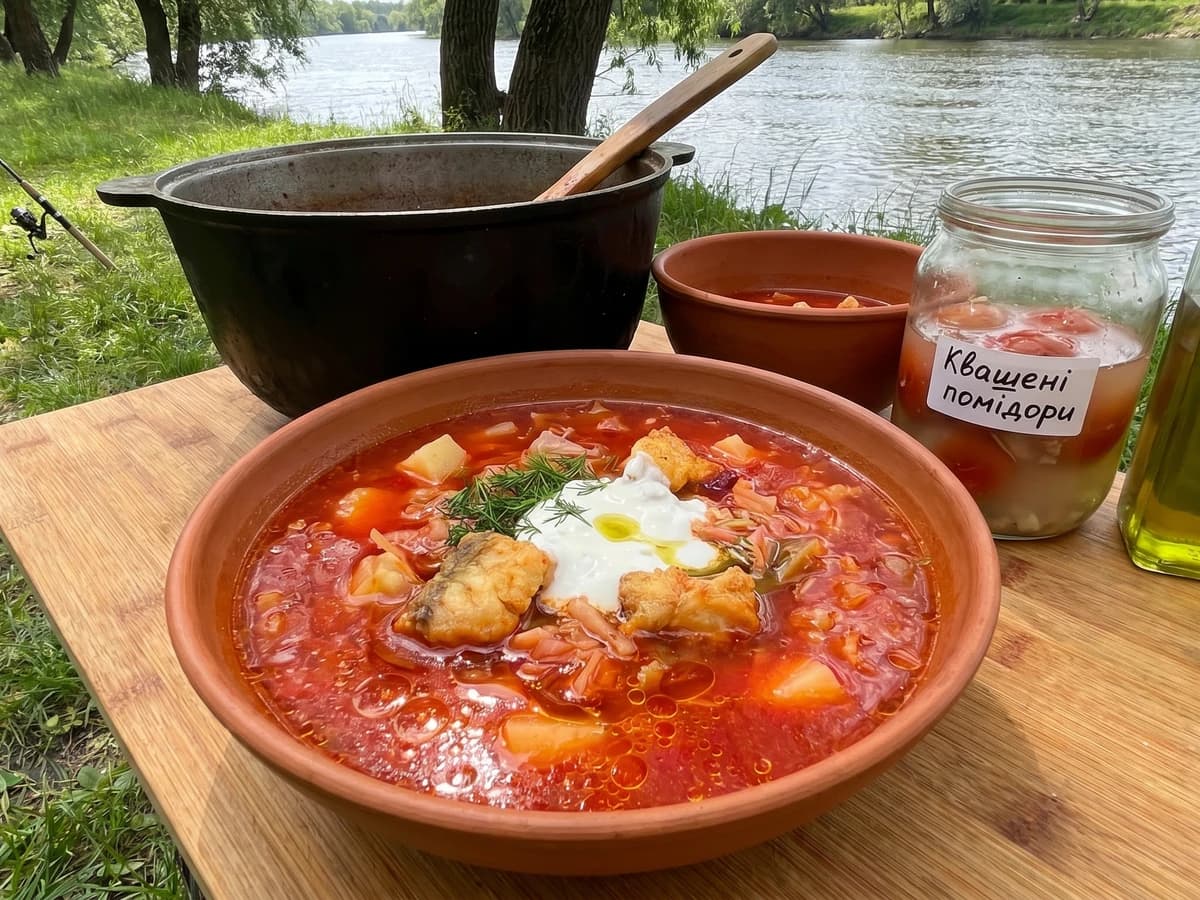
Bessarabskyi Borshch (бессарабський борщ, fish borshch)
The catch goes into the pan before it ever meets the pot, so Danube fish stays whole in a tomato-red broth sour enough to wake the table.
A cooking platform built around craft, culture, and the stories behind what we eat.
Created by
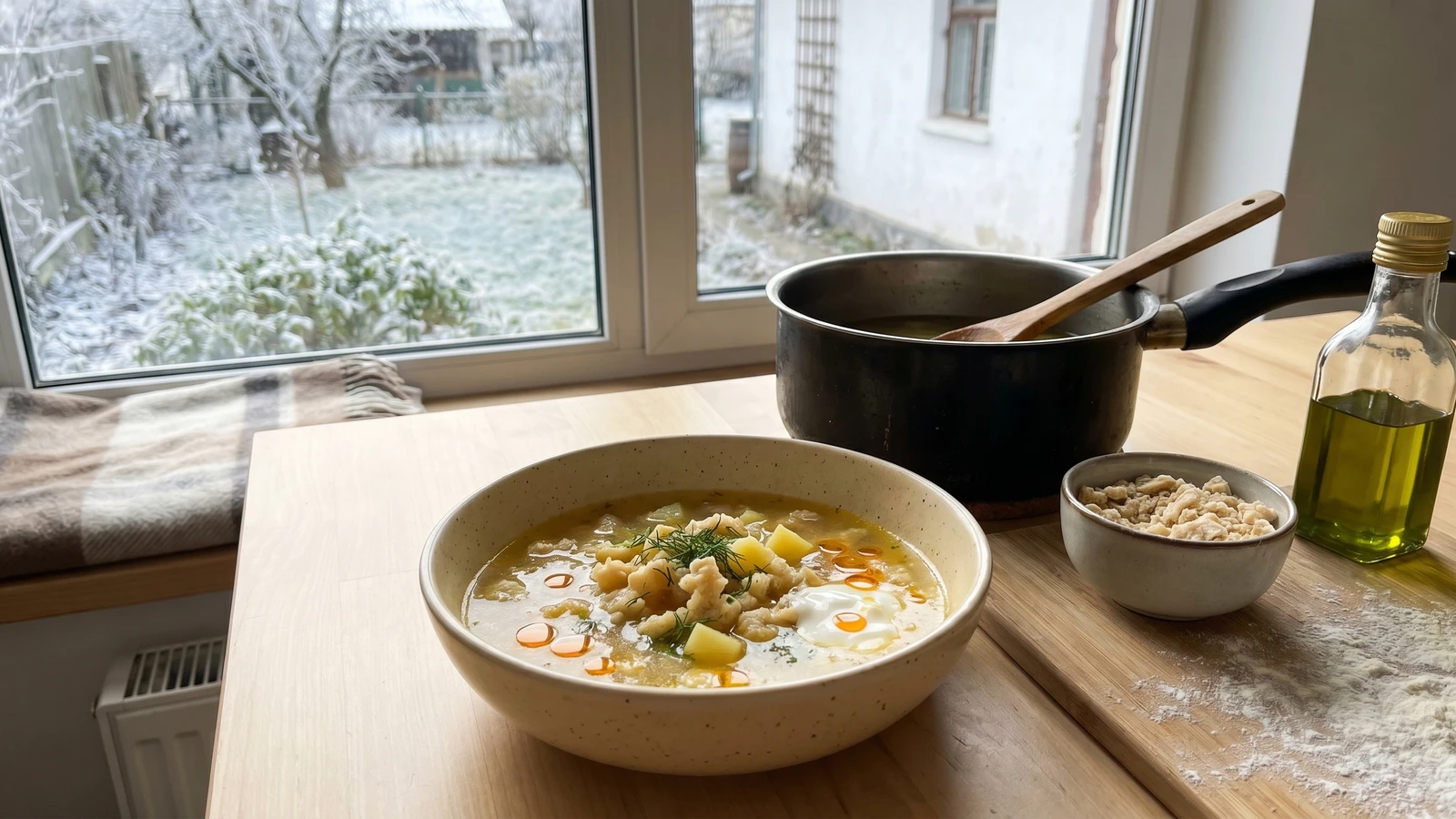
Flour and egg rubbed between your palms become tiny dumplings, rough as millet and soft in the middle, turning a plain pot of broth into supper before anyone has time to complain.
The dough is not rolled, shaped, or made pretty. It is rubbed between your palms until flour and egg break into tiny rough crumbs, some no bigger than buckwheat, some fat as peas, and that unevenness is the whole comfort of the bowl. They drop into broth and rise when they're ready, little pale flecks bobbing under dill and orange beads of sunflower oil.
Zatirka is the soup people made when the cupboard looked bare and still somebody had to be fed. A handful of flour, an egg if the hens were generous, broth if there was a chicken back, milk or water if there wasn't. Aunt Nadia wrote only, "rub until it feels sandy," which is exactly annoying and exactly correct. Dry crumbs stay separate; wet paste turns the pot cloudy and sulks.
The one thing that decides the dish is the zasmazhka, the slow-sweated onion and carrot. Add it at the end so its sweetness sits brightly on the broth instead of flattening into the stock. Then dill. Always dill. This is enough for eight guests or one hungry Ukrainian, and if your crumbs are uneven, good. Your hands were paying attention.
Zatirka takes its name from the Ukrainian verb zatyraty, to rub, and belongs to the old family of flour-and-water soups cooked across central and eastern Ukraine, especially in Poltava and Slobozhanshchyna households where wheat flour was always within reach. Milk versions were common for children and lean days; broth versions appeared when a chicken had been stretched from one meal into the next. Soviet canteens rarely bothered with such hand-rubbed dishes, so zatirka survived mostly in home kitchens, where a grandmother's palms were a better measuring cup than any printed recipe.
Quantity
2 litres
light but well salted
Quantity
1 medium
finely diced
Quantity
1 medium
coarsely grated
Quantity
2 tablespoons
Quantity
2 medium
peeled and diced small
Quantity
1
Quantity
180g
plus more if needed
Quantity
1 large
Quantity
2 tablespoons
if needed
Quantity
1 small bunch
finely chopped
Quantity
to taste
Quantity
to serve
| Ingredient | Quantity |
|---|---|
| chicken brothlight but well salted | 2 litres |
| onionfinely diced | 1 medium |
| carrotcoarsely grated | 1 medium |
| unrefined sunflower oil or chicken fat | 2 tablespoons |
| potatoespeeled and diced small | 2 medium |
| bay leaf | 1 |
| plain flourplus more if needed | 180g |
| egg | 1 large |
| cold water (optional)if needed | 2 tablespoons |
| dillfinely chopped | 1 small bunch |
| sea salt and black pepper | to taste |
| smetana (sour cream) (optional) | to serve |
Bring the broth to a gentle simmer with the bay leaf and potatoes. Let it murmur, not crash about, until the potatoes are tender at the edges but not falling apart. Taste now, because the dough will drink the salt and make a shy broth even quieter.
Put the flour in a wide bowl and beat the egg with a pinch of salt. Drizzle the egg into the flour while rubbing everything between your palms and fingertips, lifting and crumbling until you have rough sandy crumbs with a few larger nubs. If dry flour sits at the bottom, flick in cold water a teaspoon at a time; if it clumps into paste, dust in more flour and rub again.
Tip the rubbed dough into a sieve or colander and shake off the loose flour. Don't be too perfect about it. A little flour thickens the soup softly; too much makes the broth taste raw and dusty.
Warm the sunflower oil or chicken fat in a wide pan and add the onion. Let it turn translucent and sweet before the carrot joins it. You're not browning anything. Cook slowly until the carrot softens, the oil turns orange, and the kitchen smell changes from raw onion to supper.
Scatter the dough crumbs into the simmering broth with your fingers, stirring gently so they don't gather into one lump. At first they sink, then they bob up and turn tender. Taste one. It should be soft in the middle but still its own little thing, not dissolved into porridge.
Stir in the zasmazhka, most of the dill, and black pepper. Let the soup settle for a few minutes off the heat so the broth tastes round and the crumbs finish swelling. Ladle deep bowls, add smetana if you like, and finish with the last green fistful of dill.
1 serving (about 345g)
Culinary guides, cultural storytelling, and the editorial depth that makes cooking meaningful.
Discover Culinary ExplorerChef Lesia
The catch goes into the pan before it ever meets the pot, so Danube fish stays whole in a tomato-red broth sour enough to wake the table.

Chef Lesia
The fish leaves the pot before the soup reaches the table: broth in the bowl, river fish on a platter, garlic salamur waiting to wake both.

Chef Lesia
Brick-red paprika blooms in bacon fat, beef darkens at the edges, and potatoes thicken the cauldron until it stands between soup and stew. This is comfort with a fire under it.
Chef Lesia
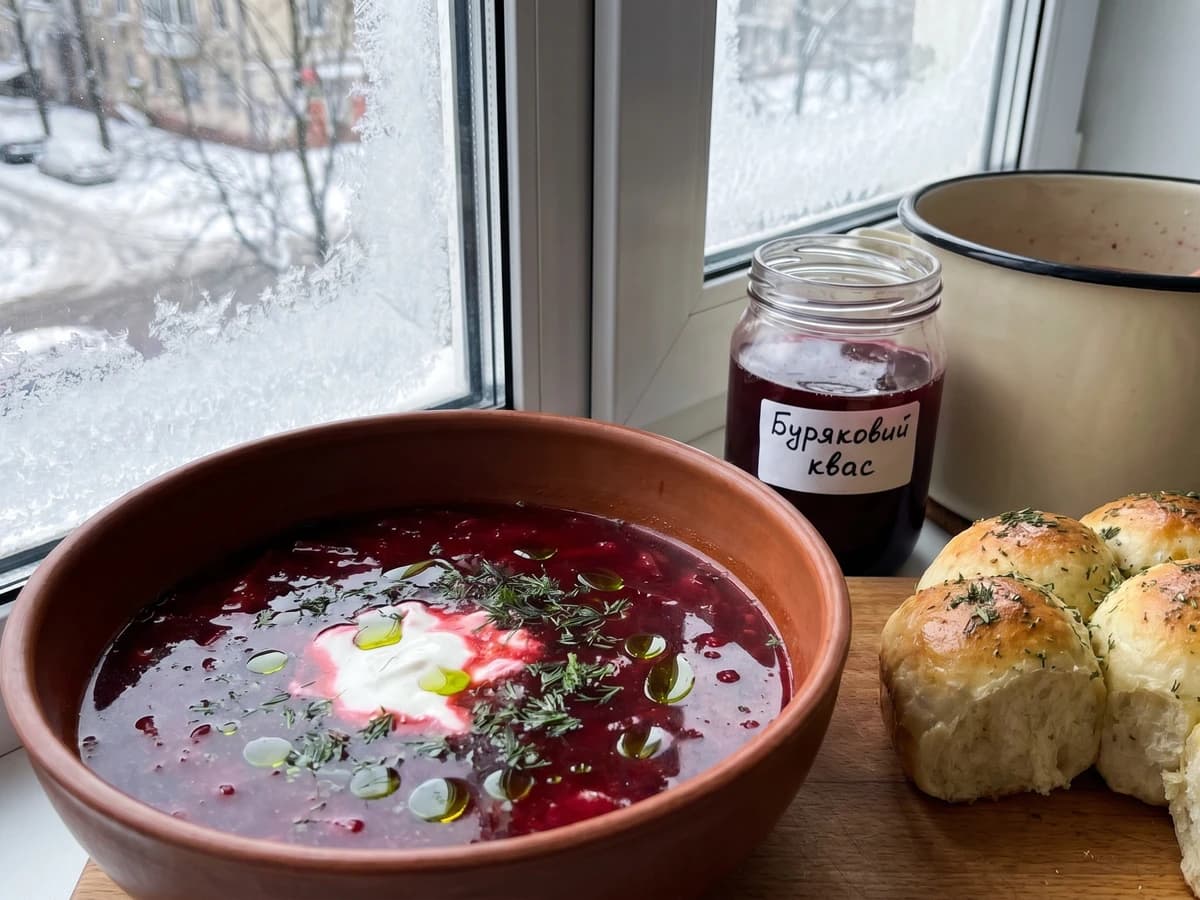
Beets hit slow-sweated zasmazhka and the broth goes dark ruby, sour from beet zakwas, sweet from bone and garden, thick enough for the spoon to stand up straight.