
Chef Lupita
Acitrón de Cidra Conventual
Puebla's convent-style acitrón, made from cidra peel instead of endangered biznaga, built through repeated syrup soakings until the cubes turn firm, translucent, and ready for rosca or chiles en nogada.
A cooking platform built around craft, culture, and the stories behind what we eat.
Created by
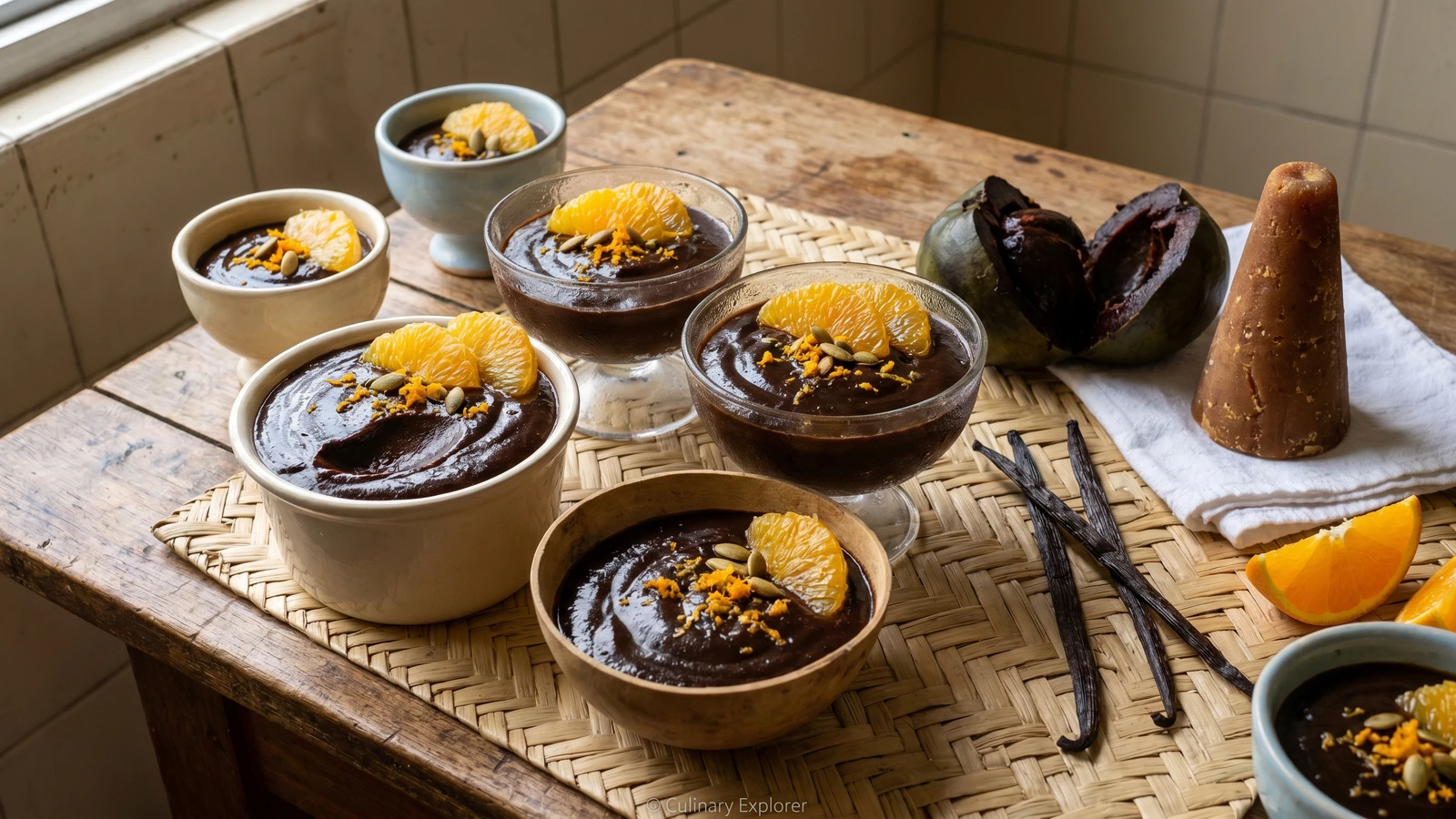
Veracruz's Gulf lowland dessert: ripe black sapote beaten with fresh jugo de naranja and a little piloncillo until it turns coffee-dark, silken, cold, and ready for a spoon.
Veracruz, especially the humid Gulf lowlands from Totonacapan down toward the Sotavento, knows this fruit. Zapote negro does not ask for a pastry chef. It asks for patience at the market. Buy it hard and you'll have nothing. Buy it ripe, skin olive-green and soft under your thumb, and the pulp opens dark as coffee, sweet, earthy, almost custard already.
In the markets near Papantla and Veracruz puerto, the women who sell fruit will tell you the same thing: wait until the zapote looks too soft for a foreign supermarket. Then you split it, pull out the seeds, mash the pulp with jugo de naranja, and sweeten only enough to wake it up. No chocolate. No cream. No cinnamon pretending to improve what the tree already did. No me vengas con atajos when the shortcut is buying fruit before its time.
This is a Veracruz dessert because the citrus belongs here too. Orange from the Gulf heat, piloncillo from cane country, and black sapote from the tropical patios where fruit drops when it is ready. Serve it cold in copitas or jicaras, on a woven palma mat, with the afternoon damp coming through the window. Cada estado, su propia cocina.
Black sapote, Diospyros digyna, is native to Mexico and Central America and has been eaten in the tropical lowlands since before the Spanish conquest. In Veracruz, where citrus and sugarcane became major crops under colonial and post-colonial agriculture, home cooks paired the ripe pulp with orange juice and piloncillo to sharpen its sweetness and keep the dessert inexpensive. The nickname 'chocolate pudding fruit' is a foreign description; in Veracruz kitchens it is zapote negro, treated as fruit, not as a substitute for chocolate.
Quantity
3 large (about 2 pounds total)
soft, heavy, and fully ripe
Quantity
1/2 cup
preferably from sweet Veracruz-style oranges
Quantity
1 teaspoon
finely grated
Quantity
2 tablespoons, plus more to taste
finely grated
Quantity
1 pinch
Quantity
1 teaspoon
only if the oranges are flat
Quantity
for serving
Quantity
for serving
| Ingredient | Quantity |
|---|---|
| very ripe black sapotessoft, heavy, and fully ripe | 3 large (about 2 pounds total) |
| fresh orange juicepreferably from sweet Veracruz-style oranges | 1/2 cup |
| orange zestfinely grated | 1 teaspoon |
| piloncillofinely grated | 2 tablespoons, plus more to taste |
| fine sea salt | 1 pinch |
| fresh lime juice (optional)only if the oranges are flat | 1 teaspoon |
| orange segments (optional) | for serving |
| toasted pepitas (optional) | for serving |
Use only black sapotes that are fully ripe. The skin should look dull olive-green to brown-green, and the fruit should yield easily when pressed. If it is firm, leave it on the counter another day or two. An unripe zapote is chalky and bitter, and no amount of orange or piloncillo will fix it.
Cut each zapote in half around the middle. Scoop the dark pulp into a bowl and remove every glossy black seed. Scrape close to the skin, but do not include tough green bits. The pulp should look like thick chocolate custard, even though there is no chocolate here. Say that twice if you have to.
Warm 2 tablespoons of the orange juice in a small clay cazuelita or saucepan over low heat. Stir in the grated piloncillo until it dissolves, about 2 minutes. Do not boil it hard. You are not making candy, just loosening the piloncillo so it disappears evenly into the fruit.
Add the piloncillo-orange mixture, the remaining orange juice, orange zest, and salt to the zapote pulp. Mash with a wooden spoon, potato masher, or molinillo until smooth and glossy. A few tiny fruit fibers are normal. If you want it very silken, pass it through a fine-mesh strainer. Blender works, but only in short pulses. Overblending makes it loose.
Taste before you add anything else. Good zapote should be sweet, deep, and mellow, with the orange cutting through cleanly. If the oranges are dull, add the lime juice. If the fruit is not sweet enough, add another teaspoon or two of grated piloncillo. Sweeten with discipline. This is fruit, not frosting.
Spoon the mixture into copitas, small jicaras, or chilled glasses. Cover and refrigerate for at least 2 hours, until cold and softly set. Serve with orange segments and a few toasted pepitas if you like the contrast. Cold is part of the texture here. Así se hace y punto.
1 serving (about 160g)
Culinary guides, cultural storytelling, and the editorial depth that makes cooking meaningful.
Discover Culinary ExplorerChef Lupita
Puebla's convent-style acitrón, made from cidra peel instead of endangered biznaga, built through repeated syrup soakings until the cubes turn firm, translucent, and ready for rosca or chiles en nogada.

Chef Lupita
Ciudad de México's Tulyehualco alegría is popped huautli folded into piloncillo honey, pressed with peanuts, pepitas, and raisins, then cut into the rectangular bars that built a pueblo's identity.

Chef Lupita
Oaxaca's pre-Columbian amaranth bar, popped on a hot comal and bound with piloncillo, honey, and the sacred Zapotec grain that the Spanish tried, and failed, to outlaw.

Chef Lupita
Querétaro's mercado candy of popped amaranto pressed with dark piloncillo syrup, pepitas, pecans, and cacahuate, a Bajío sweet that respects the seed before it decorates the table.