
Chef Lesia
Buzhenyna (буженина, garlic-studded roast pork)
A whole pork neck takes garlic into little knife pockets, roasts until the crust goes dark and fragrant, then rests overnight so every cold slice tastes better than shop ham.
A cooking platform built around craft, culture, and the stories behind what we eat.
Created by
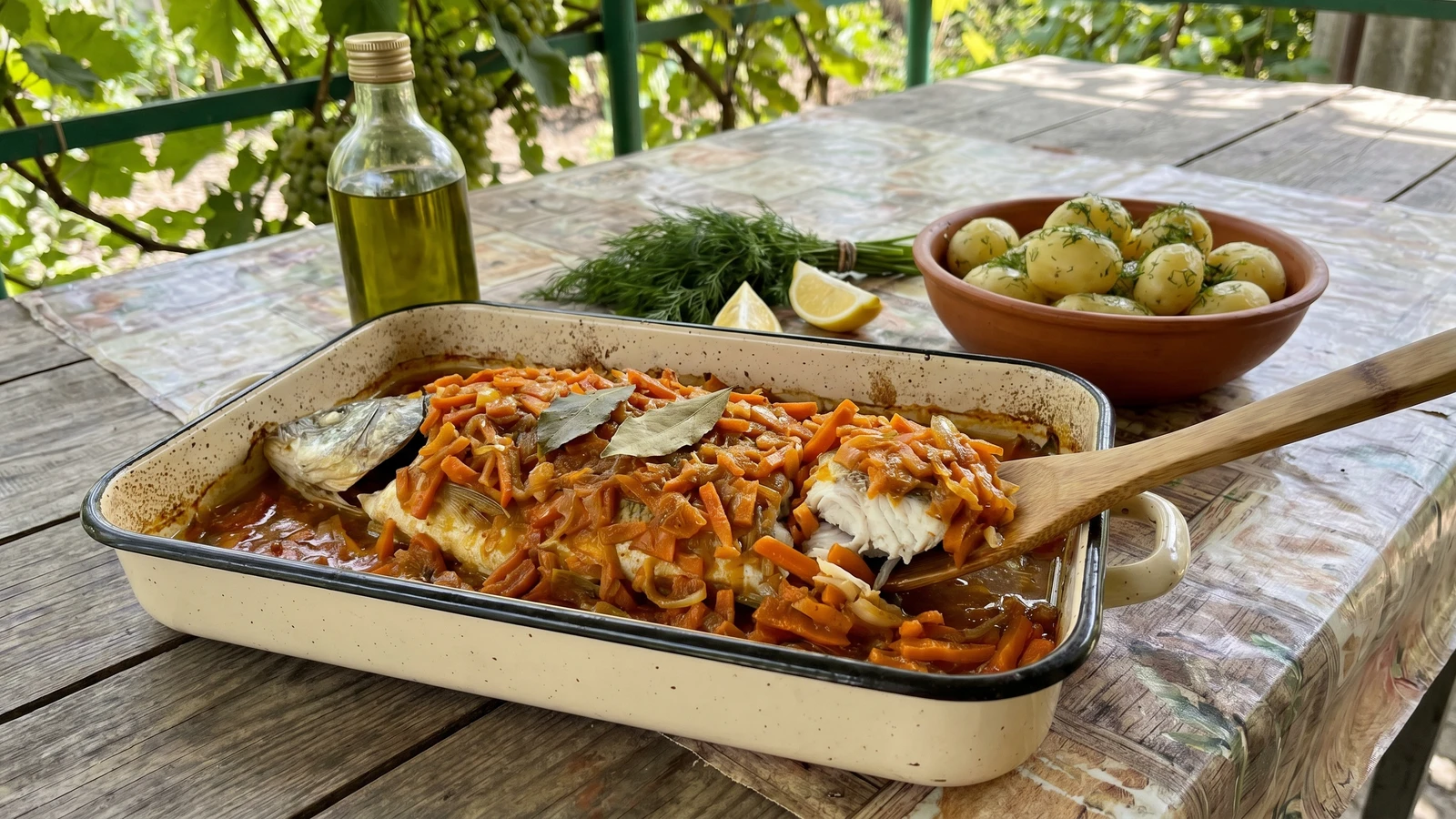
The carrots do the loud work here: they collapse into sunflower oil, turn amber-orange, and make a sweet blanket for fish that tastes even better after resting.
The first thing you notice is the color: carrot-orange oil seeping into white fish, onion gone soft and sweet, dill landing green at the end like somebody opened the garden gate. This is the southern Sunday bake I know best, fish covered rather than displayed, generous enough for the table to reach into twice. Hot from the oven it's soft and glossy; cold the next day, it settles into something almost like a pickle without vinegar shouting over it.
The method is simple, but it has one stubborn truth. You must cook the carrot and onion before they meet the fish. Raw carrot in the oven stays separate and polite; slow-sweated carrot gives up its sweetness into the sunflower oil, and that oil carries the fish instead of drying it. Aunt Nadia wrote only, "until the smell changes," which was annoying until it became useful: the raw onion sharpness disappears, the carrot smells round and warm, and the pan goes quiet.
Use what fish you can get. Carp, bream, pike-perch, sea bass, hake, cod loin, all of them can sit under this orange coat and behave. A whole fish feels like a celebration, thick fillets are easier for a weeknight. The dish is the act of making it for someone, not the shopping list.
Baked and marinated fish dishes belong strongly to southern Ukrainian kitchens, especially around the Black Sea, the lower Dnipro, Odesa, Mykolaiv, Kherson, and the Danube delta, where river fish and sea fish both shaped home cooking. The carrot-onion layer echoes ryba pid marynadom, fish under a sweet-sour vegetable dressing, but in many households the sharper canteen version softened into a Sunday bake with sunflower oil, tomato, bay leaf, and dill. It is often served cold for holidays or make-ahead tables, proof that Ukrainian comfort food can be bright, oily, sour-sweet, and full of fish bones people know how to navigate.
Quantity
1.5 kg whole fish or 1.2 kg fillets
Quantity
1 1/2 teaspoons, plus more to taste
Quantity
to taste
freshly ground
Quantity
3 large
coarsely grated
Quantity
2 large
thinly sliced
Quantity
4 tablespoons
Quantity
2 tablespoons
Quantity
2 ripe tomatoes or 200g canned
grated if fresh
Quantity
2 tablespoons
Quantity
2
Quantity
6
Quantity
1 teaspoon
Quantity
3 cloves
finely grated
Quantity
1 small bunch
chopped
Quantity
1
cut into wedges
| Ingredient | Quantity |
|---|---|
| whole cleaned fish, such as carp, bream, pike-perch, or sea bass, or thick fish fillets | 1.5 kg whole fish or 1.2 kg fillets |
| fine sea salt | 1 1/2 teaspoons, plus more to taste |
| black pepperfreshly ground | to taste |
| carrotscoarsely grated | 3 large |
| onionsthinly sliced | 2 large |
| unrefined sunflower oil | 4 tablespoons |
| tomato paste | 2 tablespoons |
| ripe tomatoes or canned chopped tomatoesgrated if fresh | 2 ripe tomatoes or 200g canned |
| fermented tomato brine, cucumber brine, or lemon juice | 2 tablespoons |
| bay leaves | 2 |
| black peppercorns | 6 |
| sugar (optional) | 1 teaspoon |
| garlicfinely grated | 3 cloves |
| dillchopped | 1 small bunch |
| lemon (optional)cut into wedges | 1 |
Pat the fish dry. If using a whole fish, slash the thickest part of each side a few times down to the bone; if using fillets, leave them in large pieces so they don't dry out. Season all over with the salt and black pepper, including the belly cavity, and let it sit while you make the carrot layer. The surface should lose its slippery feel and turn slightly tacky.
Warm the sunflower oil in a wide pan and add the onions with a pinch of salt. Cook gently until they slump and turn translucent, then add the grated carrots. Keep the heat low enough that nothing browns hard. You want the carrot to soften, stain the oil orange, and smell sweet instead of raw. Cook until the smell changes.
Stir the tomato paste into the carrot and onion and let it darken slightly in the oil, then add the grated tomatoes, brine or lemon juice, bay leaves, peppercorns, and sugar if your tomatoes are sharp. Simmer gently until the mixture is loose but not watery, like a soft vegetable jam. Stir in the garlic at the end so it stays bright.
Heat the oven to 190C. Spread a third of the carrot mixture in a baking dish, lay the fish on top, then cover it with the rest, tucking some into the belly if using a whole fish. Cover loosely with foil and bake until the fish flakes at the thickest part and the juices run clear near the bone. Listen at the dish: it should bubble lazily around the edges, not hiss angrily dry.
Uncover for the last few minutes if the top looks too wet, just enough for the carrot to settle and gloss over. Let the fish rest at least fifteen minutes before serving, because the juices need to come back to themselves. Scatter with dill. Serve hot, warm, or cold, with black bread, boiled potatoes, or nothing but forks and patience for the bones.
1 serving (about 235g)
Culinary guides, cultural storytelling, and the editorial depth that makes cooking meaningful.
Discover Culinary ExplorerChef Lesia
A whole pork neck takes garlic into little knife pockets, roasts until the crust goes dark and fragrant, then rests overnight so every cold slice tastes better than shop ham.
Chef Lesia
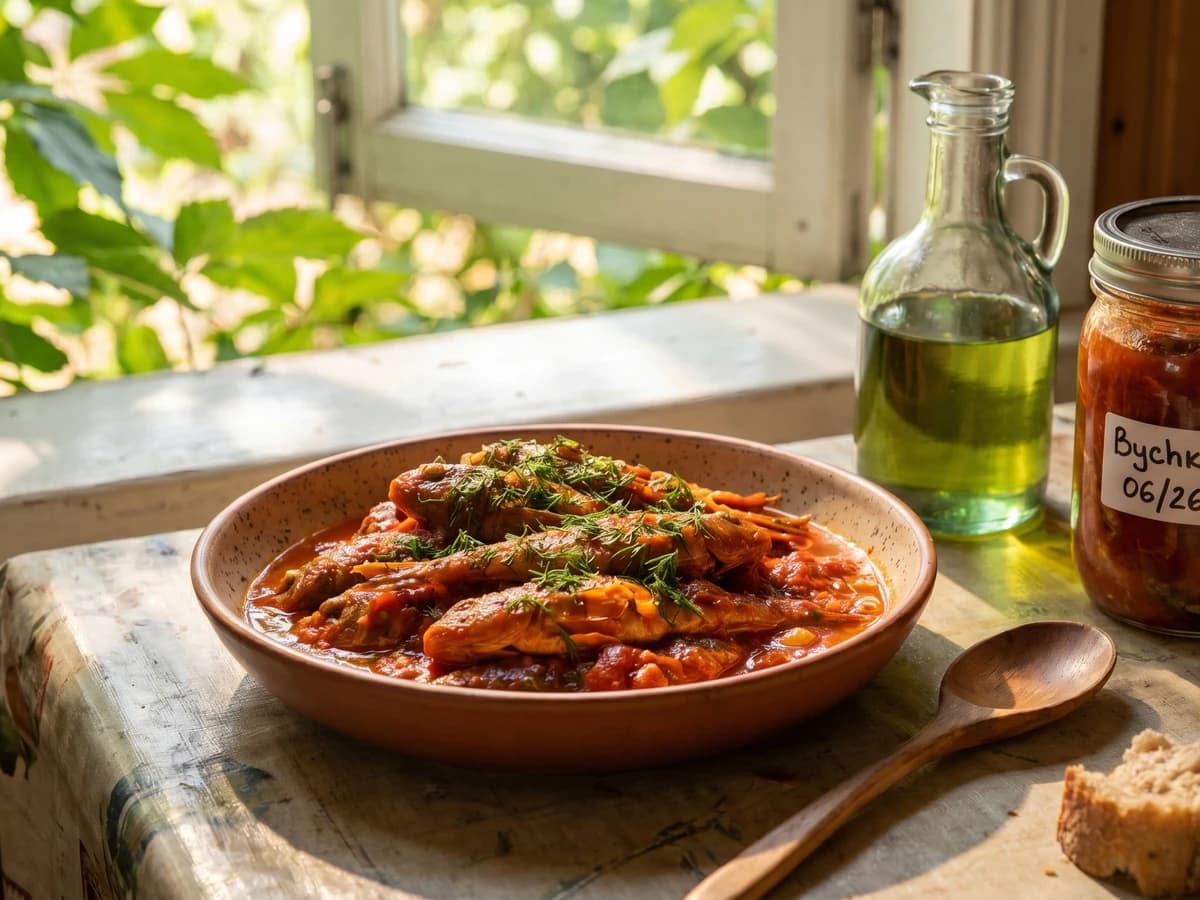
Small Azov gobies go into tomato bright as market cloth and come out soft enough that the bones give up. This is Mariupol food: cheap, red, generous, and better tomorrow.

Chef Lesia
The first sound is the meat against the board: flat, sharp, changing as the fibres loosen. Fry the cutlets fast, then let onion gravy do the soft finishing.

Chef Lesia
A heap of tiny silver fish becomes supper by the oldest Odesa trick: clean them, press them together, fry until the edges crackle, and let lemon and dill do the talking.