
Chef Zohra
Bakoula (بقولة)
Mallow greens cooked soft and dark with garlic, cumin, preserved lemon, and olives, the Moroccan cooked salad that tastes of spring rain and a loaf of khobz shared warm.
A cooking platform built around craft, culture, and the stories behind what we eat.
Created by
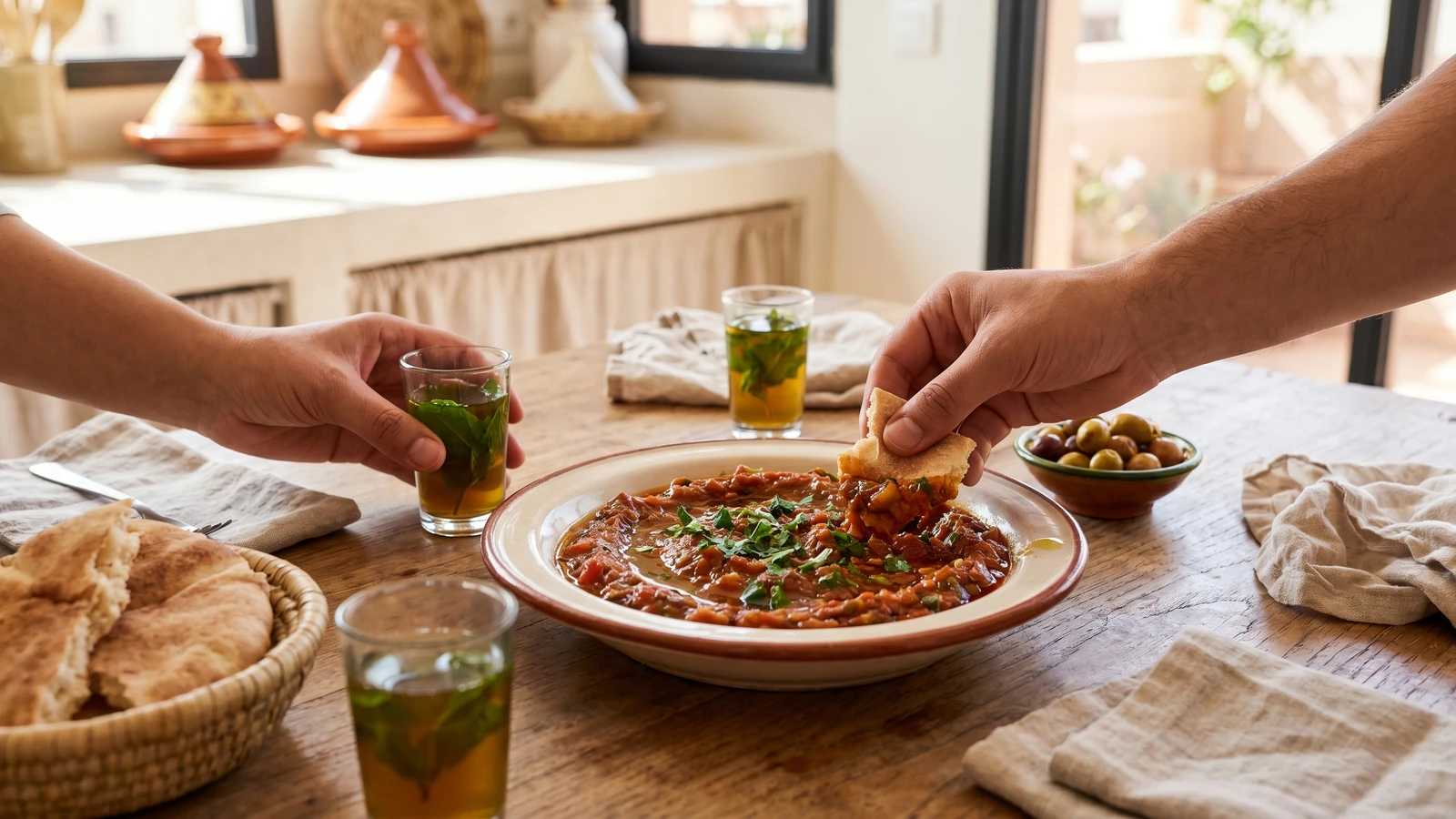
Eggplant cooked past soft with tomatoes, garlic, cumin, and good olive oil until it collapses into the warm Moroccan salad you scoop up with bread.
The eggplant goes first, and you let it cook further than feels polite. Past soft. Past holding its shape. It must collapse, because that collapse is the dish. If you stop too soon, zaalouk tastes watery and unfinished. Let the flesh slump into the tomatoes with olive oil, garlic, cumin, and paprika, and it becomes smoky, sweet, and deep.
This is an everyday salad, the kind that sits in the middle of the table while bread does the work of forks. You can serve it warm, room temperature, or chilled, but don't rush the pan. Drag a spoon through it near the end. If the path holds for a breath before closing, you're there.
Use eggplants that feel heavy for their size, tomatoes that smell like tomatoes, and olive oil you would be proud to pour at the table. Sourcing comes first. No gesture rescues a tired vegetable. Cook a little more than you need, because a bowl of zaalouk with round khobz is how you make room for one more hand reaching in. Une table, c'est une porte qu'on laisse ouverte.
Zaalouk belongs to the family of cooked Moroccan salads served before or beside the main dish, especially across the northern and Atlantic cities where eggplant, tomato, olive oil, and cumin meet easily in the market. Eggplant entered North African cooking through medieval Arab and Andalusi agricultural exchange, while tomatoes became common only after the Columbian exchange reached Moroccan kitchens in the early modern period. Its exact dating is not fixed, but the method sits firmly inside des cuisines marocaines: vegetables cooked down until concentrated, then eaten communally with bread.
Quantity
2 large, about 900g total
Quantity
4
peeled and chopped, or use 400g canned crushed tomatoes
Quantity
4 tbsp, plus more to finish
Quantity
3
finely grated or minced
Quantity
1 1/2 tsp
Quantity
1 tsp
Quantity
1/4 tsp
Quantity
1 tsp, plus more to taste
Quantity
1/2 tsp
Quantity
1 small handful
chopped
Quantity
1 small handful
chopped
Quantity
1 tbsp
finely chopped
Quantity
for serving
| Ingredient | Quantity |
|---|---|
| eggplants | 2 large, about 900g total |
| ripe tomatoespeeled and chopped, or use 400g canned crushed tomatoes | 4 |
| extra virgin olive oil | 4 tbsp, plus more to finish |
| garlic clovesfinely grated or minced | 3 |
| ground cumin | 1 1/2 tsp |
| sweet paprika | 1 tsp |
| cayenne pepper (optional) | 1/4 tsp |
| sea salt | 1 tsp, plus more to taste |
| freshly ground black pepper | 1/2 tsp |
| fresh corianderchopped | 1 small handful |
| flat-leaf parsleychopped | 1 small handful |
| preserved lemon peel (optional)finely chopped | 1 tbsp |
| round khobz | for serving |
Trim the eggplants and cut them into large cubes. Put them in a wide pan with 2 tablespoons of the olive oil, a pinch of salt, and 3 tablespoons of water. Cover and cook over medium heat for 12 to 15 minutes, stirring now and then, until the pieces have softened and begun to collapse.
Add the remaining olive oil, garlic, tomatoes, cumin, paprika, cayenne if using, salt, and black pepper. Stir well and let the pan bubble gently, uncovered, for 15 to 20 minutes. The tomatoes should lose their raw smell and turn thick and red around the eggplant.
Use a wooden spoon to press the eggplant into the tomato sauce. Don't make it smooth. Zaalouk should be soft and spoonable, with small pieces still finding the teeth. Keep cooking until the water has gone and the olive oil begins to glisten at the edges.
Stir in most of the coriander and parsley, and the preserved lemon peel if using. Cook 2 minutes more. Taste with bread, not a spoon, because bread tells you the truth about salt, oil, and spice. Adjust until it tastes full.
Spoon the zaalouk into a shallow bowl, make a small hollow with the back of the spoon, and pour in a little olive oil. Scatter over the remaining herbs. Serve warm or at room temperature with torn khobz, set in the center where everyone can reach.
1 serving (about 240g)
Culinary guides, cultural storytelling, and the editorial depth that makes cooking meaningful.
Discover Culinary ExplorerChef Zohra
Mallow greens cooked soft and dark with garlic, cumin, preserved lemon, and olives, the Moroccan cooked salad that tastes of spring rain and a loaf of khobz shared warm.

Chef Zohra
Potatoes simmered until tender, then turned while warm through chermoula, garlic, cumin, paprika, coriander, olive oil, and preserved lemon. This is a weeknight Moroccan salad that still opens the table.

Chef Zohra
Fresh fava beans cooked until tender, then folded warm into chermoula of garlic, cumin, paprika, coriander, and preserved lemon. Spring food for a shared bowl, carried to the table with bread.
Chef Zohra
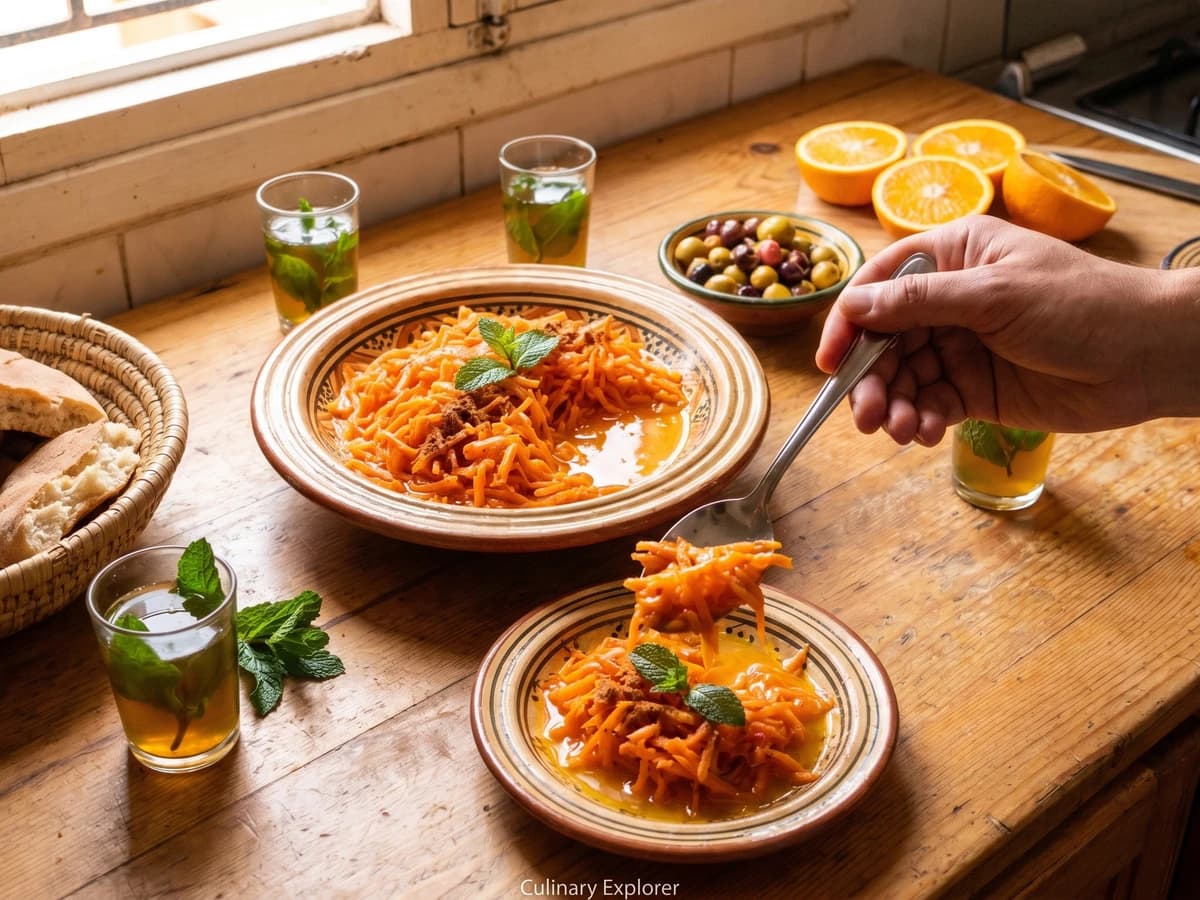
Fine-grated carrot dressed with orange juice, a little sugar, orange-flower water, and cinnamon. Khizou bel limoun is the fresh raw counterpoint that wakes up a Moroccan table.