Culinary Explorer

A cooking platform built around craft, culture, and the stories behind what we eat.
Discover Culinary Explorer
Yuchae-namul (Seasoned Rapeseed Greens)

Yuchae-namul (Seasoned Rapeseed Greens)

Created by

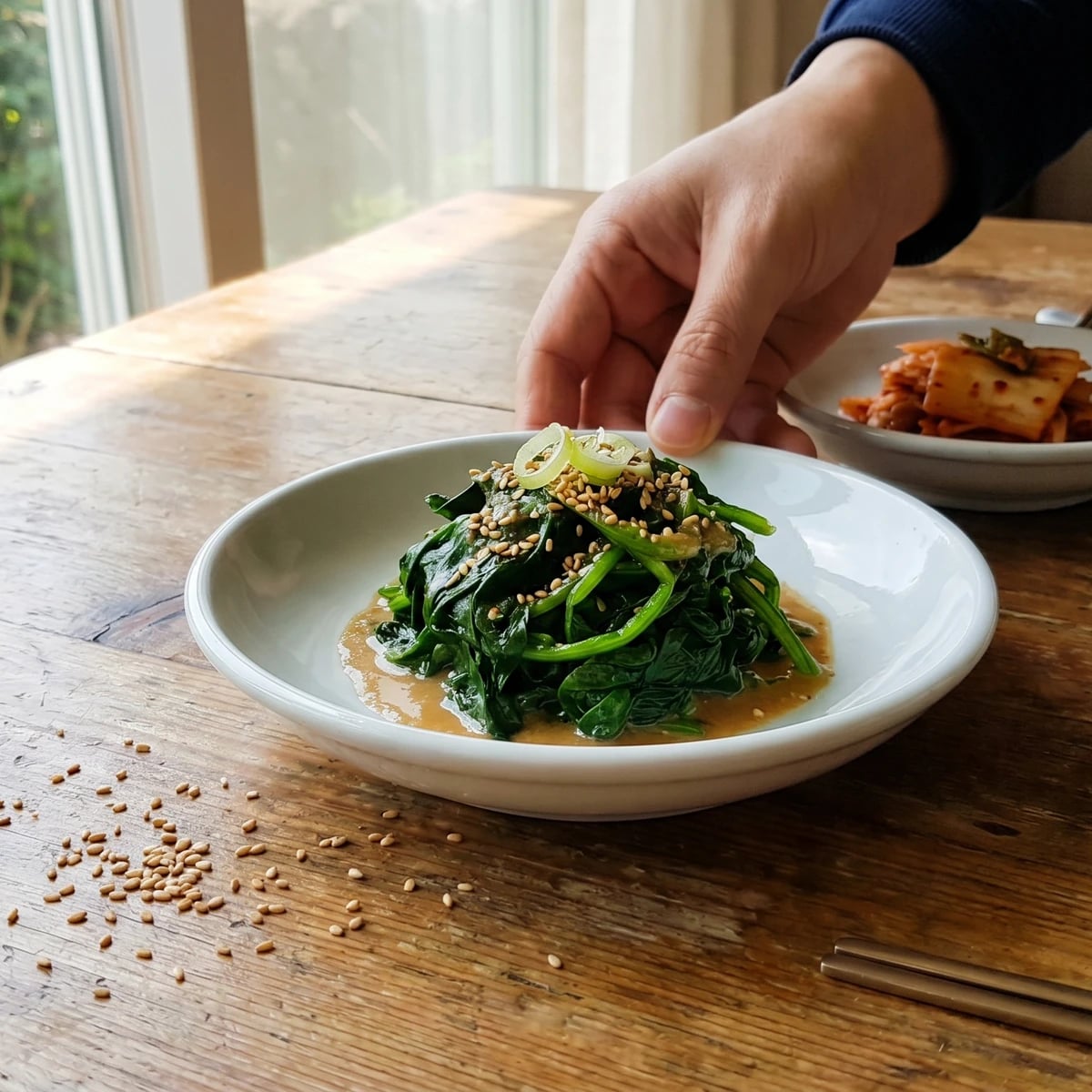
Tender rapeseed greens from the cold edge of spring, blanched just until pliant and hand-seasoned with doenjang, garlic, and sesame so their faint sweetness still speaks.

Side Dishes
Korean
Weeknight
Comfort Food
15 min
Active Time
5 min cook20 min total
Yield4 small banchan servings

Yuchae greens belong to the weeks when winter hasn't fully left and the market is already arguing with it. In the south, especially Jeju, the yellow rapeseed flowers get the postcards, but the tender leaves are the part a cook takes home for dinner. Cook the month you're standing in. This namul tastes best from late winter into spring, when the stems are still young and the leaves haven't grown tough.

Rapeseed has been grown in Korea both as an oil crop and as a spring green, with Jeju becoming especially associated with its yellow yuchae fields in the twentieth century as large plantings spread across the island. The greens are part of the southern and Jeju cold-weather namul table, eaten before the plant flowers fully and seasoned simply with jang, garlic, and sesame rather than heavy chili. Like many everyday banchan, yuchae-namul is more a market-season dish than a court dish, and its record belongs with home cooks who knew when the stems were tender enough to buy.

The technique, the tradition, and the story behind every dish.

Discover Culinary Explorer

Ingredients

young yuchae (rapeseed greens)

Quantity

300g

tough ends trimmed

water

Quantity

6 cups

for blanching

coarse salt

Quantity

1 tablespoon

for blanching water

doenjang (Korean fermented soybean paste)

Quantity

1 tablespoon

soup soy sauce (guk-ganjang)

Quantity

1 teaspoon

or 3/4 teaspoon regular soy sauce

toasted sesame oil

Quantity

1 teaspoon

maesil-cheong (green plum syrup)

Quantity

1 teaspoon

or 1/2 teaspoon sugar

garlic

Quantity

1 small clove

finely minced

scallion

Quantity

1

finely sliced

toasted sesame seeds

Quantity

1 teaspoon

lightly crushed

gochugaru (Korean chili flakes) (optional)

Quantity

1/2 teaspoon

Equipment Needed

  • Medium pot, 3-quart or larger
  • Large bowl for cold water
  • Mixing bowl
  • Tongs or chopsticks
  • Sharp knife

Instructions

  1. 1

    Trim and wash

    Trim away only the dry, fibrous stem ends. Keep the tender stems attached to the leaves, because yuchae-namul should have a little bite, not collapse into a green rag. Wash the greens in two changes of cold water, lifting them out each time so any sand stays behind.

  2. 2

    Blanch briefly

    Bring 6 cups water to a full boil and add 1 tablespoon coarse salt. Add the greens stem ends first, then press the leaves under. Blanch 45 to 60 seconds for young greens, up to 90 seconds if the stems are thicker. The salt seasons lightly and keeps the green color clear. Overcook them and the faint sweetness disappears.

  3. 3

    Cool and squeeze

    Lift the greens into cold water and swish once to stop the cooking. Drain, gather them in both hands, and squeeze firmly but not cruelly. You want about 180g cooked greens after squeezing. Too much water thins the seasoning; too much force bruises the leaves.

    If the bundle still drips when you press it, squeeze again. Namul seasoning clings to a dry surface, not to water.
  4. 4

    Cut the bundle

    Lay the squeezed greens on the board and cut them into 2-inch lengths. This is not decoration. Short lengths let each bite carry stem, leaf, and seasoning together, and they sit properly beside rice.

  5. 5

    Make the seasoning

    In a mixing bowl, mash together the doenjang, soup soy sauce, sesame oil, maesil-cheong, garlic, scallion, sesame seeds, and gochugaru if using. Mash until the doenjang loosens and no salty lump remains. Taste the paste before the greens go in. It should be savory and a little sweet, not sharp with raw garlic.

  6. 6

    Season by hand

    Add the cut greens to the bowl and loosen them with your fingers before rubbing in the seasoning. Work gently, separating the stems and leaves so the doenjang reaches everything. Taste one stem and one leaf. If it tastes flat, add 1/4 teaspoon more soup soy sauce. If your doenjang is very salty, stop there. 손맛 is real; I measure it anyway.

    Season this namul alone, in its own bowl, before it ever meets rice or other banchan. Greens do not all want the same hand.
  7. 7

    Rest and serve

    Let the namul sit 5 minutes so the doenjang settles into the stems, then toss once more and mound it in a small dish. Serve at room temperature with rice, soup, and one or two other banchan. It should taste green first, then soybean paste, garlic, and sesame behind it.

Chef Tips

  • Buy yuchae before the stems grow woody. If the market bundle has open flowers and thick stems, it is better for looking at than eating. Choose slim stems, fresh leaves, and small buds if they are present.
  • A mild, home-style doenjang is best here. If your paste is dark, aged, and very salty, start with 2 teaspoons instead of 1 tablespoon, then adjust after tasting.
  • No yuchae at your market? In the same season, tender napa cabbage greens, young mustard greens, or spinach can take a similar seasoning, but blanching times change. Spinach needs only 20 to 30 seconds. Mustard greens need closer to 90 seconds.

Advance Preparation

  • The greens can be washed and trimmed up to 1 day ahead, wrapped in a barely damp towel, and refrigerated in a loose bag.
  • Yuchae-namul is best within 24 hours after seasoning. Refrigerate leftovers in a covered container and bring them back toward room temperature before serving, because cold sesame oil tastes dull.
  • Do not freeze this dish. The stems lose their clean bite and the leaves turn watery.

Frequently Asked Questions

Nutrition Information

1 serving (about 65g)

Calories
50 calories
Total Fat
2 g
Saturated Fat
0 g
Trans Fat
0 g
Unsaturated Fat
2 g
Cholesterol
0 mg
Sodium
430 mg
Total Carbohydrates
5 g
Dietary Fiber
2 g
Sugars
2 g
Protein
3 g

Note: Chef personas and recipes are created with AI assistance. Cook with care: follow safe food-handling practices, check doneness with a thermometer when needed, and adapt for allergies and your kitchen.

Where cooking meets culture.

Culinary guides, cultural storytelling, and the editorial depth that makes cooking meaningful.

Discover Culinary Explorer

More from Namul: The Banchan Grammar

Browse the full collection