
Chef Lupita
Arroz a la Oaxaqueña
Oaxaca's red rice, stained with tomato and fried in lard, steamed with carrots, ejotes, black beans, and epazote. The side that anchors a Oaxacan family meal and earns its place beside the main.
A cooking platform built around craft, culture, and the stories behind what we eat.
Created by
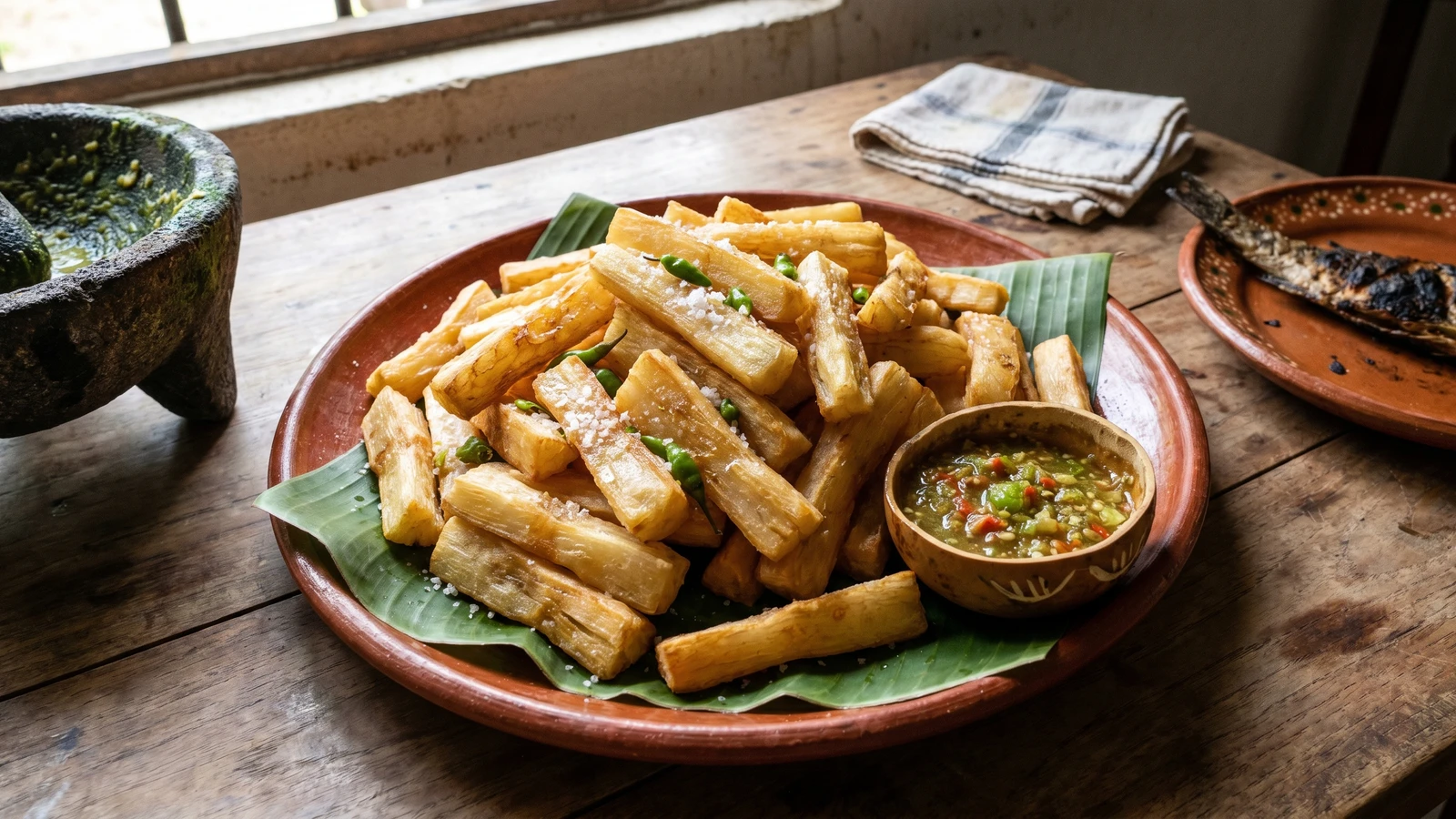
Tabasco's lowland cassava, boiled until creamy, dried on a tray, then fried in manteca de cerdo until the edges crackle, with chile amashito and lime doing the sharp work at the table.
Tabasco's humid lowlands, from the Chontalpa to the river towns near the Grijalva and Usumacinta, are where this yuca belongs. This is not a garnish for a clever plate. It is the side you put next to pejelagarto asado, fried mojarra, or a clay cazuela of beans when the day has been long and the kitchen still has to feed people.
The ingredient is yuca, cassava, a lowland tuber that likes heat, rain, and heavy soil. Corn is the heart of Mexico, yes, but this is a 32-state cuisine, and Tabasco's table has always made room for what the wetlands grow well. The technique is plain and exact: boil the yuca until tender, dry it, then fry it in manteca de cerdo until the crust crackles and the center stays creamy. Skip the drying and it spits. Skip the lard and you lose the flavor. Así se hace y punto.
I learned this version near the Mercado José María Pino Suárez in Villahermosa from a woman who sold fried fish wrapped in paper with yuca on the side. She crushed chile amashito with salt and lime in a molcajete so worn the stone looked polished. Tiny chile, big lesson. You do not need twenty ingredients when the right three are doing their work.
My mother was from Jalisco, so this was not in her notebook. Good. That is the point. Jalisco has pozole rojo. Michoacán has carnitas. Tabasco has its lowland yuca, its chile amashito, its banana leaves, its fish from river and lagoon. Cada estado, su propia cocina.
Cassava (Manihot esculenta) was domesticated in South America thousands of years before the conquest and reached the humid Maya lowlands through pre-Columbian exchange, where it became useful in regions with heavy rain and flood-prone soils. In Tabasco, Yokot'an Maya and rural mestizo kitchens kept yuca as a practical tuber alongside corn, plantain, fish, and cacao, especially in the Chontalpa and river communities. Frying yuca in pork lard reflects the colonial-era arrival of Spanish pigs in the 16th century, joining an older lowland crop to the rendered fat that Mexican kitchens learned to use with precision.
Quantity
2 pounds
peeled and cut into 3-inch pieces
Quantity
1 tablespoon, plus more for finishing
Quantity
3
lightly crushed
Quantity
1 1/2 to 2 cups
enough for 1 inch in the pan
Quantity
12
stems removed
Quantity
1/2 teaspoon
Quantity
3 tablespoons
preferably from limones criollos
Quantity
1
rinsed and passed quickly over a flame to soften, for serving
Quantity
for serving
Quantity
for serving
| Ingredient | Quantity |
|---|---|
| fresh sweet yuca (cassava)peeled and cut into 3-inch pieces | 2 pounds |
| kosher salt | 1 tablespoon, plus more for finishing |
| garlic cloveslightly crushed | 3 |
| pork lard (manteca de cerdo)enough for 1 inch in the pan | 1 1/2 to 2 cups |
| fresh chile amashitostems removed | 12 |
| sal de grano or kosher salt | 1/2 teaspoon |
| fresh lime juicepreferably from limones criollos | 3 tablespoons |
| hoja de plátano (optional)rinsed and passed quickly over a flame to soften, for serving | 1 |
| lime halves (optional) | for serving |
| fresh chile amashito (optional) | for serving |
Cut the yuca crosswise into 3-inch pieces. Stand each piece upright and slice away the thick brown skin and the pinkish layer under it until you reach clean white flesh. Split the pieces lengthwise and remove the woody cord from the center if you can see it. If the core is stubborn, remove it after boiling. Use sweet yuca for this recipe. Bitter cassava belongs to another set of techniques and needs proper processing. No me vengas con atajos.
Put the yuca in a large pot and cover with cold water by 2 inches. Add the tablespoon of kosher salt and the crushed garlic. Bring to a steady boil, then lower to a firm simmer and cook 20 to 28 minutes, until a knife enters the thickest piece without resistance and the edges begin to open. Do not fry raw yuca. It must be boiled tender first, for texture and for safety. Drain it and discard the cooking water.
Spread the drained yuca on a tray in a single layer. Pull out any remaining woody cores while the pieces are warm. Let the yuca dry for 10 to 15 minutes, turning once. The surface should look matte, not wet. This little pause is what gives you a crust instead of a greasy skin. The women frying yuca beside fish stalls in Tabasco know this. They are not wasting time.
In a molcajete, crush the chile amashito with the sal de grano until the chiles break into a rough green paste. Stir in the lime juice. That is the table sauce: sharp, hot, and direct. Do not turn it into a watery blender salsa. Chile amashito is tiny but serious, and in Tabasco it does not need a costume.
Melt the manteca de cerdo in a 12-inch heavy skillet over medium-high heat until it reaches 350F, or until a small crumb of yuca sizzles immediately when it touches the fat. You need about 1 inch of lard. La manteca es el sabor. Vegetable oil will fry the yuca, yes, but it will not taste like the lowland kitchens of Tabasco.
Fry the yuca in batches, leaving space between the pieces. Turn them with tongs every minute or so until the outside is golden, blistered, and crisp at the edges, 5 to 7 minutes per batch. The inside should stay creamy and pale. If the pieces brown too fast, lower the heat. If they sit quietly in the fat, the lard is too cool and they will drink it.
Lift the yuca onto a wire rack or brown paper and salt it while the lard still glistens on the surface. Line a clay platter with the softened hoja de plátano and pile the yuca generously on top. Serve with lime halves, fresh chile amashito, and the crushed chile-lime sauce in a small jícara. Put it beside pejelagarto asado, fried mojarra, or any fish dinner that needs something sturdy on the table. Cada estado, su propia cocina.
1 serving (about 200g)
Culinary guides, cultural storytelling, and the editorial depth that makes cooking meaningful.
Discover Culinary ExplorerChef Lupita
Oaxaca's red rice, stained with tomato and fried in lard, steamed with carrots, ejotes, black beans, and epazote. The side that anchors a Oaxacan family meal and earns its place beside the main.
Chef Lupita
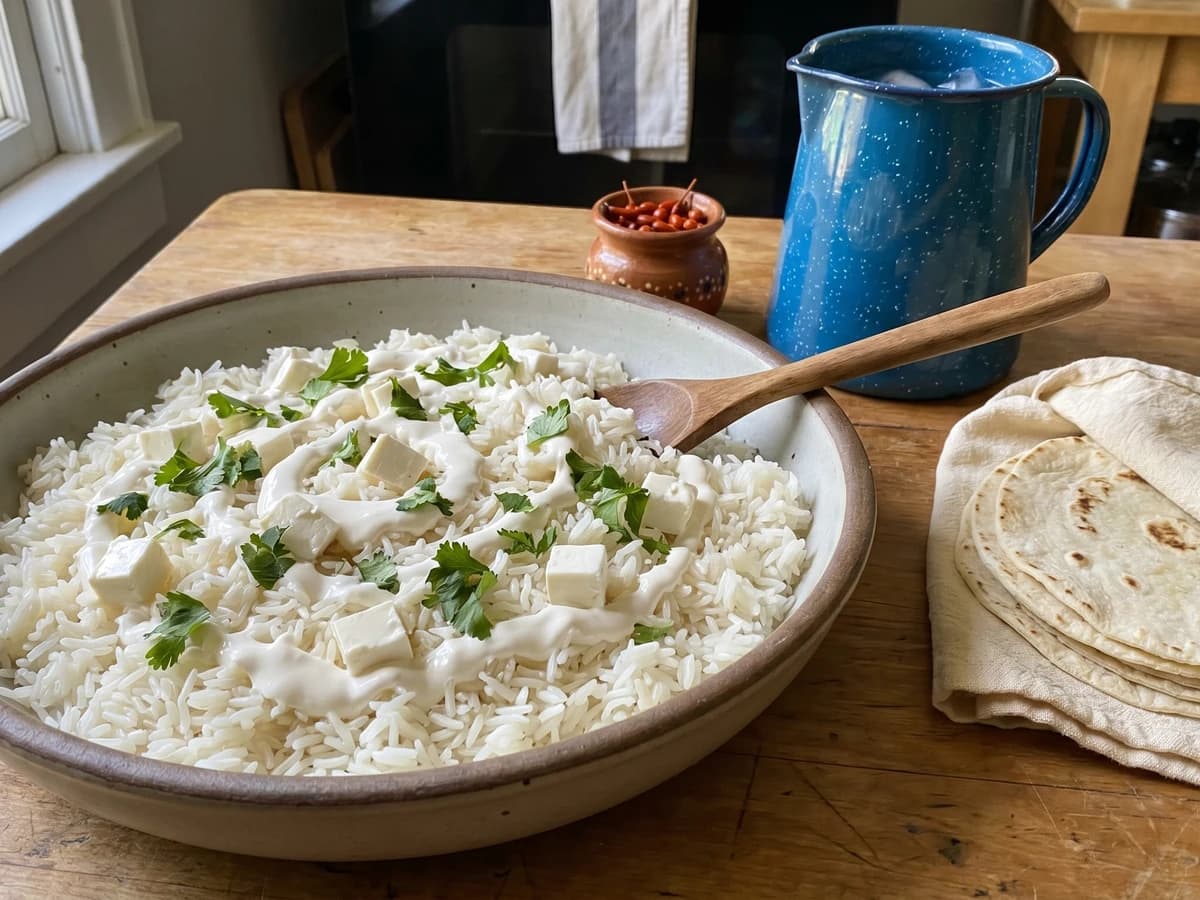
Sinaloa's home-cook white rice topped with cold cubes of cream cheese that soften into the warm grain, finished with crema and a sprinkle of chiltepin at the table. The trick that makes a side dish feel like a small luxury.
Chef Lupita
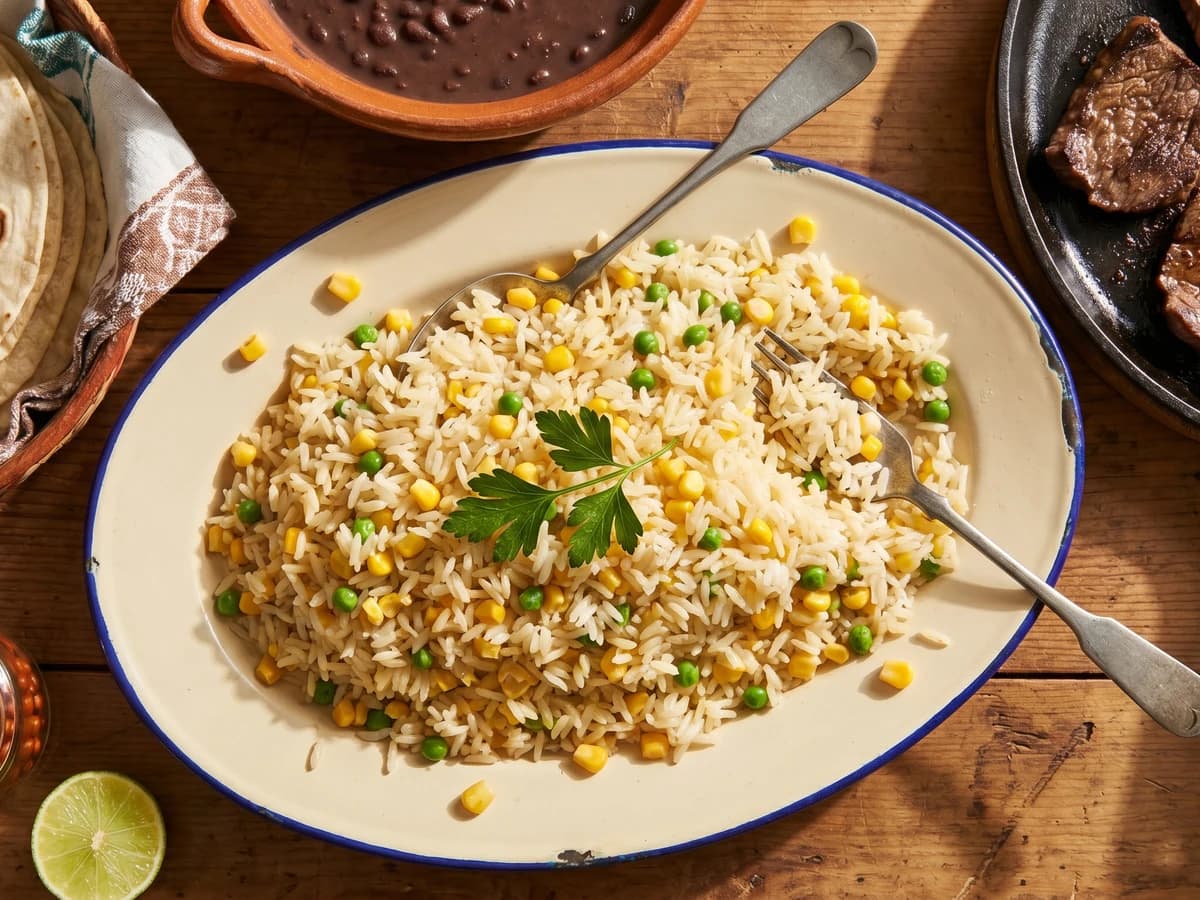
Sonora's white rice, toasted in butter and steamed with sweet corn and tender peas. The clean, quiet partner to a plate of carne asada, not the red rice of central Mexico.

Chef Lupita
Yucatán's white rice with sweet corn kernels, toasted in lard with garlic and onion. The quiet base that holds up against the peninsula's bold achiote-stained stews.